Understanding the National Sustainability Reporting Framework (NSRF)
On 24 September 2024, Malaysia launched the National Sustainability Reporting Framework (NSRF) to guide companies in disclosing environmental, social, and governance (ESG) performance in a clear, consistent, and globally aligned way. Developed in response to growing regulatory and investor expectations, the NSRF supports Malaysia’s shift towards sustainable business practices and reflects international benchmarks, including the standards of the International Sustainability Standards Board (ISSB)—specifically IFRS S1, which covers general sustainability-related disclosures, and IFRS S2, which focuses on climate-related risks and opportunities.
In this article, we will break down the NSRF, its relevance to Malaysian businesses, and the steps companies can take to align with the sustainability reporting framework and meet evolving ESG requirements.
What is the National Sustainability Reporting Framework (NSRF)?
The national sustainability reporting framework provides a structured approach for Malaysian companies to disclose ESG-related risks, opportunities, and performance. It sets out clear reporting expectations, aiming to build trust and accountability while helping organisations stay competitive in a rapidly evolving market.
By aligning closely with global frameworks such as the ISSB standards, IFRS S1, and IFRS S2, the NSRF ensures Malaysian companies can meet both local compliance obligations and international investor expectations.

The Role of the NSRF in Malaysia’s ESG Landscape
The NSRF plays a central role in Malaysia’s broader ESG strategy, complementing both the Malaysia ESG framework and the SSA framework developed by Bursa Malaysia. It integrates key global reporting references, including the UN Sustainable Development Goals (SDGs), the Global Reporting Initiative (GRI), and the Task Force on Climate-Related Financial Disclosures (TCFD).
To support digital and standardised reporting, Bursa Malaysia has also introduced the Centralised Sustainability Intelligence (CSI) platform, which is the official platform for submitting ESG disclosures under the sustainability reporting framework.
Additionally, leading providers work in close collaboration with Bursa Malaysia to support companies with ESG reporting, offering practical guidance on data preparation and platform submission for ongoing compliance.
Who Needs to Comply with the NSRF?
The NSRF applies to a wide range of organisations in Malaysia, from listed issuers to large non-listed entities. While initial adoption may be voluntary for some, compliance is gradually becoming mandatory across company tiers, in line with national ESG objectives.
Phased Implementation
The rollout of the NSRF follows a structured, three-year timeline:
- 2025: Large Main Market issuers with a market capitalisation of RM2 billion or more
- 2026: All other Main Market issuers
- 2027: ACE Market issuers and large non-listed companies
This phased approach allows businesses time to build internal capabilities and integrate ESG reporting into existing operations.
Why Does the NSRF Matter for Malaysian Businesses?
Enhancing Corporate Sustainability
The NSRF encourages organisations to embed sustainability into their business strategies. By reporting on emissions, resource consumption, and labour practices, companies can identify operational risks and set measurable improvement targets. This also supports broader national priorities such as climate adaptation and low-carbon development.
Building Stakeholder Trust
Investors, regulators, and consumers now expect transparency in ESG performance. A well-prepared sustainability report in Malaysia can strengthen credibility and demonstrate commitment to long-term value creation. The NSRF gives companies a standardised way to communicate ESG efforts, improving trust and stakeholder engagement.
Staying Competitive in a Global Market
Alignment with IFRS S1, IFRS S2, and the broader ISSB standards allows Malaysian companies to meet the expectations of global investors and business partners. This positions them more favourably in cross-border transactions, especially in sectors where ESG reporting is a key part of procurement or partnership decisions.
Supporting Malaysia’s Net-Zero Goals
As part of its national low-carbon roadmap, Malaysia has committed to achieving net-zero emissions by 2050. The NSRF contributes to this by helping companies track and disclose climate data, ultimately improving the quality and availability of climate reporting at the national level.
Key Requirements of the NSRF
Core Components of the Sustainability Reporting Framework
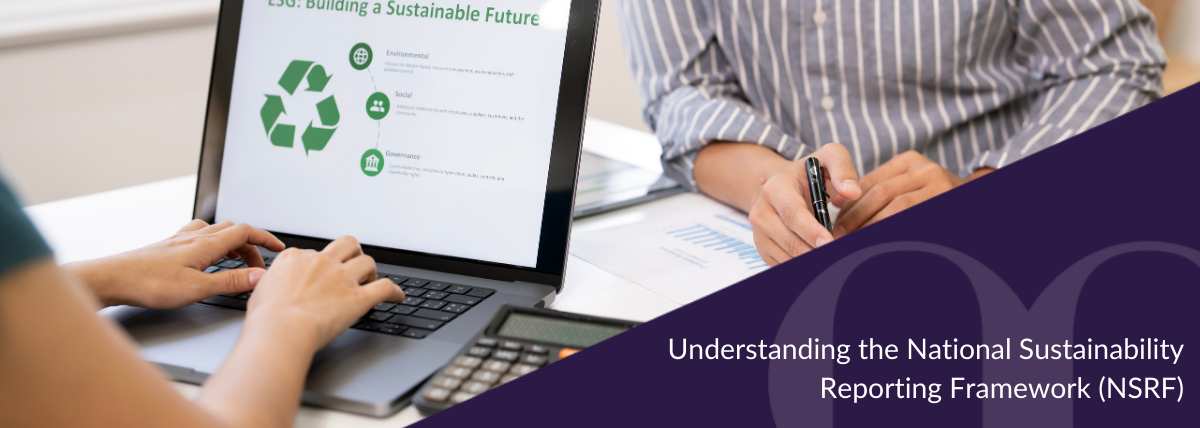
The sustainability reporting framework requires companies to report across three ESG pillars:
- Environmental: Carbon emissions, energy use, waste management, water efficiency
- Social: Labour practices, diversity and inclusion, employee well-being
- Governance: Board diversity, ethics policies, anti-corruption measures
These indicators enable stakeholders to assess both risk exposure and the company’s long-term sustainability strategy.
Reporting Standards and Guidelines
The NSRF aligns closely with international frameworks such as the GRI, Sustainability Accounting Standards Board (SASB), and ISSB standards. In particular, IFRS S1 outlines general sustainability-related disclosures, while IFRS S2 focuses on climate reporting. Companies are expected to reference these standards in developing their sustainability report in Malaysia.
Templates and guidance documents are available through Bursa Malaysia, designed to standardise reporting formats and improve comparability.
Data Collection and Documentation
Accurate data collection is central to effective ESG reporting. Companies need to gather quantitative and qualitative data from across departments, including environmental performance metrics, HR records, and board governance disclosures. Transparency and consistency are key to avoiding greenwashing concerns.
Centralised Sustainability Intelligence (CSI) Platform
Bursa Malaysia’s CSI platform is the designated system for submitting NSRF reports. It facilitates centralised data uploads, real-time analytics, and benchmarking tools, improving the quality and efficiency of climate reporting. Adoption of the CSI platform is mandatory for all reporting entities under the framework.
Compliance Deadlines and Reporting Frequency
Reporting frequency is expected to be annual, timed to follow financial year cycles. Companies must submit their sustainability report in Malaysia by the deadline specified under the NSRF, depending on their categorisation. Non-compliance may affect listing status or trigger regulatory scrutiny.
Steps to Start Sustainability Reporting Under the NSRF
Understand the Framework
Begin by reviewing the national sustainability reporting framework, including its timelines, reporting templates, and guidance documents. Identify your organisation’s ESG priorities and align them with the reporting requirements under IFRS S1 and IFRS S2.
Build Internal Capacity
Form a sustainability working group or appoint an ESG officer to oversee data collection and compliance. Training sessions can help operational teams become familiar with reporting expectations, risk areas, and the importance of accurate climate reporting.
Invest in Technology and Tools
Digital tools play a key role in managing ESG disclosures. ESG software can simplify data consolidation, generate reports based on ISSB standards, and facilitate submission through the CSI platform. Some platforms now incorporate AI features that assist with data mapping, flagging inconsistencies, and generating draft narrative content aligned with IFRS S1 and IFRS S2, supporting a more efficient and accurate reporting process.
Engage Stakeholders
Communicate your sustainability goals and reporting commitments to key stakeholders. This includes internal teams, shareholders, regulators, and customers. Businesses may also consider engaging third-party consultants or ESG specialists to improve reporting quality and navigate regulatory requirements.
Submit and Monitor Reports
Once data is compiled and validated, submit it via the CSI platform according to your reporting schedule. Post-submission, track performance against industry benchmarks and update your ESG strategy based on stakeholder feedback.
Next Steps for Climate Reporting Under the NSRF
The national sustainability reporting framework marks a turning point for companies operating in Malaysia, particularly as investor scrutiny and regulatory requirements continue to rise. With the phased rollout already underway, businesses need to prioritise ESG readiness—not just to remain compliant, but to stay competitive in a shifting global landscape.
As sustainability reporting becomes more technical and time-sensitive, having the right support can significantly ease the process.
Partnership with BoardRoom
BoardRoom Malaysia offers tailored support to businesses preparing for the NSRF, particularly through our SSA-related services. In collaboration with Bursa Malaysia, we provide expert guidance on ESG disclosure, regulatory compliance, and platform submission via the CSI platform.
Whether you’re developing your first sustainability report in Malaysia or looking to improve existing practices, we help streamline the reporting journey—from early planning through to final publication. Get in touch with us here at BoardRoom Malaysia to explore how we can support your next reporting cycle.
Contact BoardRoom for more information:

Related Business Insights
-

27 Mar 2026
Sustainability Reporting in Malaysia: Why It Is Time to Take It Seriously
Sustainability is no longer just a Corporate Social Responsibility (CSR) initiative or a section in the annual repo …
READ MORE -

26 Feb 2026
An Essential Guide to Hybrid Annual General Meetings (AGMs)
As the corporate landscape continues to evolve, companies across Malaysia are rethinking how they conduct their ann …
READ MORE -

01 Nov 2025
Corporate Tax in Malaysia: Turning Annual Tax Returns and Pre-Planning into a Strategic Advantage
Understanding corporate tax in Malaysia is key to smarter business decisions. Strategic planning can turn tax compl …
READ MORE