Mitigating Costs in an Economic Downturn

mitigating_costs_in_an_economic_downturn

Mitigating Costs in an Economic Downturn

The onset of the COVID-19 pandemic along with efforts to contain it has plunged much of the global economy into a recession. In April, the International Monetary Fund’s World Economic Outlook (WEO) projects global growth to shrink by 3 per cent. However, its October publication amended the projection to 4.9 per cent. The impact of the pandemic will continue into 2021, where the WEO projects global growth to be at 5.4 per cent, which is 6.5 per cent lower than the pre-COVID-19 projections of January 2020.
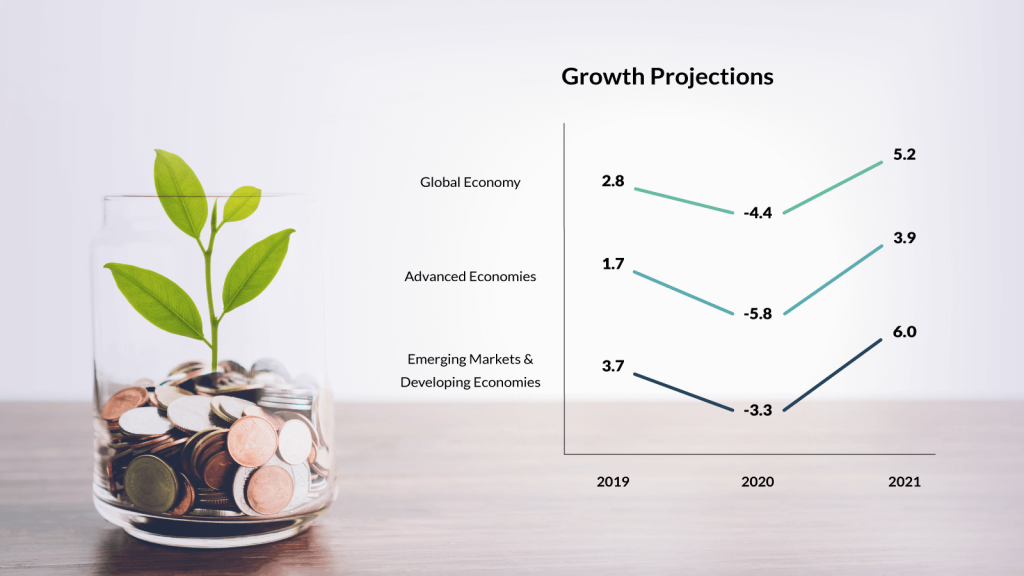
Mitigating costs in an economic downturn-Growth projection

Looking forward, we can expect the recession to leave lasting scars despite the extraordinary efforts of governments worldwide to alleviate the situation through fiscal and monetary policy support.

During these unprecedented times, companies need to take affirmative action to mitigate risk amidst the economic downturn. Crafting recession strategies to retain or expand your customer base, learning to embark on affordable yet effective marketing or even taking this opportunity to review and better optimise business operations are all practical solutions businesses can explore. However, the immediate strategy for most companies would be to adopt cost-cutting measures.

In this article, we will share some of the most popular and effective measures companies can take to mitigate costs during an economic downturn.

Look to outsource

Outsourcing is when a company engages a third-party service provider to handle or manage a business function externally instead of choosing to manage the particular service in-house.

Of the numerous functions that exist in a company, payroll is perhaps the one that will offer the most significant benefit when outsourced during an economic downturn. By outsourcing payroll, your company can effectively improve its focus and expand its accessible talent pool, which are all essential to helping the company navigate through an economic recession. But most notably (and most beneficial during an economic downturn), outsourcing can reduce and control a company’s operating cost.

While the actual cost-savings of outsourcing HR and payroll services may vary between businesses, the most common areas where they could come from are:

  • Reduced payroll employees or headcounts
  • Elimination or change of existing payroll management software (often to something like a cloud-based payroll system that offers automation solution)
  • HR and payroll system updates
  • Employee training
  • Hefty penalties that are incurred when payroll mistakes happen

Outside of payroll, some of the most popular services that companies often outsource to mitigate and manage costs are accounting, administrative services (corporate secretary) and human resources.

Look to your accountants

During an economic downturn, it becomes imperative that you have experienced accountants to help you financially navigate through this challenging landscape. Beyond their capacity for keeping financial records, accountants can interpret them and provide you with a clear and succinct evaluation of the company’s current performance and financial position that could positively influence the outcome of any business decision during a recession.

Given their unique position and objectivity, a critical and core function of accountants on mitigating costs during an economic downturn is to uncover opportunities to eliminate unnecessary expenses and save costs. In areas where it is not possible to cut costs completely, your accountant can strategically advise on how payments can be deferred to maintain a healthy cash flow during difficult periods.

In addition to cutting cost, seasoned accountants can also analyse your business trends and provide effective forecasting. Such input is critical to helping you understand the changing performance of your business and assist with realigning projections, which can help you assess the viability of your current business plan and provide insights for new alternatives should the need arise.

Look at tax relief and economic stimulus packages

In an economic downturn, it is essential to monitor tax policy changes that can aid in providing financial relief for the company and improve cashflow. During such times, it is common for banks to begin cutting their interest rates while the government actively works to put forward spending and tax packages as well as offer administrative relief by extending tax-filing deadlines. Governments across the world might even introduce tax credits and tax cuts for companies that have experienced a significant drop in revenue.

Additionally, most governments would also roll out stimulus packages as part of their plan to spur their respective economies. However, it is worthwhile to note that in the long term, these governments intend to recoup the funds that were used to finance the stimulus packages and their plans could impact the bottom line of many businesses later. A likely course of action would be adjustments made to policies and tax rates, including but not limited to Corporate Taxes and the Sales and Service Tax (SST). Therefore, we strongly advise that businesses continually revise their tax plan in response to any possible policy changes to achieve greater savings and maximising any tax benefits.

As you embark on any tax planning efforts and find yourself lacking in experience or resources to do so adequately, it is a good idea to engage a professional. In doing so, you can ensure that your tax plan is continuously revised to strategically leverage every tax benefit, maximise tax deductions, and comply with the local tax regulation and statutory requirements.

Look at better managing your working capital

An economic downturn presents several working capital challenges for businesses across industries. To stay operational, companies must look for new ways to finance their working capital. According to the Hackett Group’s 2020 Working Capital Survey, organisations have focused on the availability of corporate debt as a source of working capital for too long. While this may be a common practice, it increases the company’s exposure to unavoidable risks, such as changing customer demands and disruption to the supply chain. During an economic downturn, these potential risks to your working capital could prove detrimental to the survival of the company.

Companies need to manage their working capital during an economic downturn effectively to mitigate cost through individual strategies that address their levels of debtors, creditors, procurement and inventory, and receivables process.
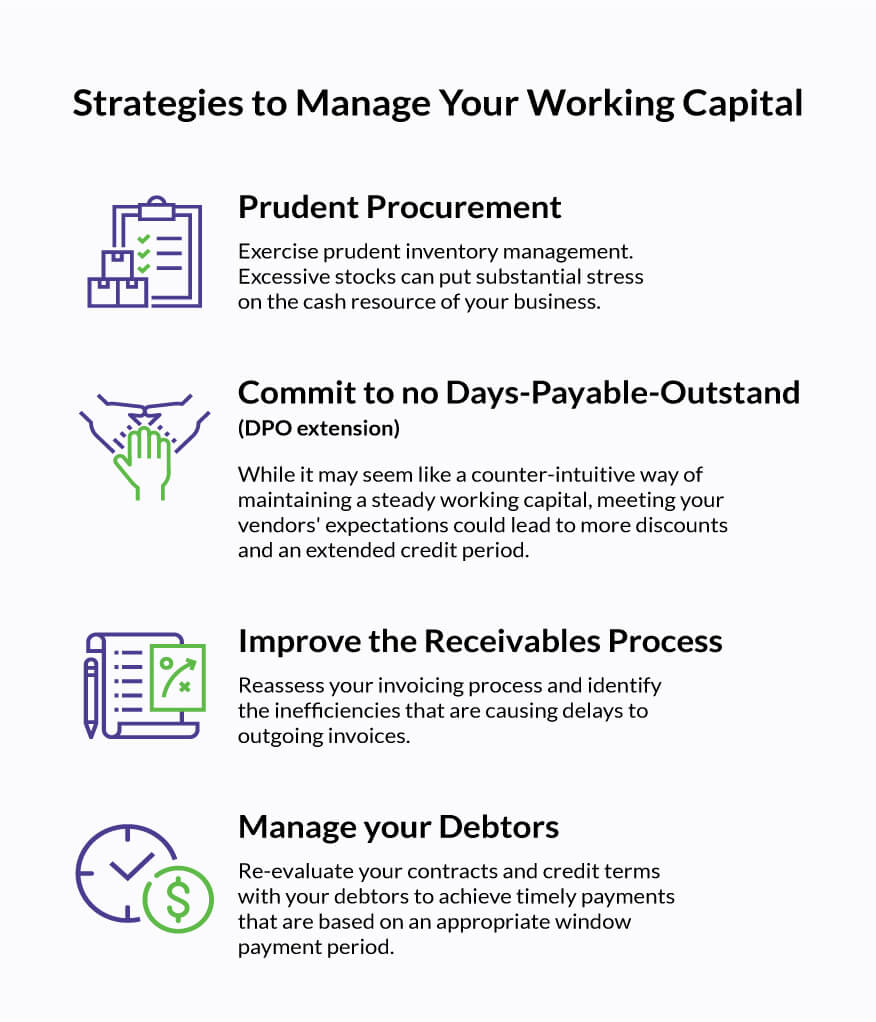
Mitigating cost and managing working capital in an economic downturn

Look at BoardRoom to help you through this crisis

During an economic downturn, when faced with numerous challenges, companies will naturally seek to hunker down and begin cost-cutting strategies. Such strategies are necessary, but it is also vital to note that even in crisis, there are opportunities. Companies will have to practice greater diligence and adapt to the changing landscape quickly through the adoption of forward-looking, growth-oriented plans that prepare the company for when the economy improves.

BoardRoom can help you through any recession period and prepare your business for the inevitable upturn. As a market leader in providing accounting, payroll and corporate services, our in-house team of dedicated experts can help to provide effective cost strategies regardless of your business size or needs. Our in-depth understanding and experience of economic trends will empower your business to discover and explore new opportunities.

Are you looking for a trusted partner and advisor as you weather this difficult time? We are here for you with your tax services needs. Contact our BoardRoom outsourcing experts here!

Related Business Insights

Payroll Outsourcing or SaaS: Which is Best for Payroll Management

Payroll Outsourcing or SaaS: Which is Best for Payroll Management

Payroll Outsourcing or SaaS: Which is Best for Payroll Management

Payroll Outsourcing or SaaS: Which is Best for Payroll Management

A well-managed payroll process is one of the key drivers for achieving employee satisfaction. However, it also hinges heavily on an effective payroll system that cuts through tedious paperwork to present pay checks to employees on a timely basis.

Today, Human Resource (“HR”) managers are doing away with cumbersome payroll processing and opting for more efficient solutions. Such solutions include engaging payroll outsourcing service providers or leveraging an all-in-one cloud-based Software as a Service (“SaaS”) Human Resource Management System (“HRMS”) solution. A SaaS HRMS is a method of software delivery where HRMS applications are located on external servers and accessed remotely over a network to manage payroll and handle employees.

How do these two payroll models benefit HR managers? How do they compare to each other? When determining which type of model is most appropriate for managing payroll, HR managers must first understand how each model can benefit their corporate objectives while managing costs; cross border functionality and; confidentiality of employees’ personal data.

In this article, we will discuss the key difference between the two payroll models so that HR managers can make informed decisions when selecting a solution that best fits their payroll needs.

01 Task & Responsibility – Who is Doing What?

With a cloud-based SaaS model, the payroll software is hosted offsite and HR managers gain access to the software via a network. With such a model, the SaaS service provider undertakes maintenance of the software and server, technical support, and data backup of the software system for a subscription fee. As such, HR managers do not have to pay a hefty price tag for owning the software. This is not only cost-saving for the business but takes away the burden of maintaining a proprietary system, consequently allowing HR managers to spend more time on handling employee requests, processing payroll and other primary HR duties.

Comparatively, a full or partial payroll outsourcing service can provide an even higher level of ease to HR managers. Such services take on most, if not all, of the payroll function with little need for HR management intervention. This implies that the HR department can enjoy greater flexibility in deploying its manpower to manage other in-house duties.

Let’s look at a summary of the key tasks and who is responsible in both scenarios.

Tasks Who is Responsible?
Cloud-based SaaS Outsourced Payroll
Payroll processing HR manager Service provider
Handling employee & management enquiries HR manager HR manager
Data backup & system recovery Service provider Service provider
System upgrades Service provider Service provider
System support & development Service provider Service provider

02 Ease of Payroll Management – Cross Border Expansion

As a company expands operations to global markets, the complexity of payroll management will multiply because of legislative requirements, market regulations and even differences in cultural practice.  Furthermore, employees’ expatriate terms and tax obligations can make payroll processing increasing tricky especially if HR managers are unfamiliar with local regulations.

Take China as an example, due to the city-tier classification within the country, companies that are expanding their business into this market are faced with complex regulatory requirements because each city-tier has its own set of rules and conditions.  As such, the structure of employee tax, insurance and allowance are also processed very differently across different states.

For companies venturing into new markets abroad, payroll outsourcing can offer an efficient and effective solution to this problem.  Such service providers are usually well-versed with local policies and are in the best position to respond to dynamic changes that are happening in the global market. Entrusting payroll processing to an experienced service provider can reduce the risk of errors and non-compliance, freeing up local managers to concentrate on the growing business.

While the cloud-based SaaS model can provide software support that is essential for upkeeping payroll processing, HR managers who are unfamiliar with the foreign markets are still faced with tremendous difficulties in managing the payroll and employees’ enquiries.  Unless the in-house HR team has a clear understanding of the foreign regulations, adopting a SaaS solution alone may still present a high degree of challenges for the business.

03 Time & Cost Efficiency – Operating in Multiple Markets

For larger companies that operate in multiple markets with a fair number of employees (usually more than 100), outsourced payroll can serve as an efficient solution that is both timely and cost-effective. With such services, companies need not invest in costly proprietary payroll software or hire and train an in-house HR team in each market to facilitate payroll processing.

This is especially true for foreign companies that are managing payroll out of a regional headquarter. As per the example on China, illustrated in the above point, it can be a mammoth task for HR managers to keep abreast of regulatory standards and changes across multiple countries/regions when they are not physically based there. At the most basic level every market has its own unique tax rates, standard employee entitlements, currency exchange and employee social security contributions. HR managers will need to spend a significant amount of time to acquire this information and more importantly stay up to date with any changes happening across the individual markets.

Appointing an outsourced payroll service provider that has a deep understanding of the local market can ensure that payroll processing is executed professionally and according to government standards.

Is a cloud-based SaaS model beneficial for companies that operate in multiple markets then? Using SaaS does present its own advantages, especially for companies with smaller headcounts. The subscription-based model is cost-effective and easy to implement across various markets. In addition, many SaaS solutions are robust enough that once the initial setup is complete the remainder is largely automated, simplifying payroll handling. However, for it to be successful HR managers will need to be prepared to spend time on staying up to date with the requirements of each market they operate within and updating the system settings accordingly, which in itself can be a time consuming task.

04 Confidentiality and Security – Is Employee & Company Data Secure?

One of the key concerns of HR managers when selecting between an outsourced payroll service provider and a cloud-based SaaS solution lies in confidentiality and security issues. Payroll processing is an extremely sensitive matter that involves employees’ personal data and compensation details, the risks of such information becoming public knowledge can be detrimental for any organisation.

While it is common knowledge that payroll service or software providers will attest to maintaining the confidentiality of data provided to them, HR managers must still take steps to consider if these partners have legitimate security features and robust processes in place to uphold the claim.

This is especially true for payroll outsourcing service providers that have full access to employees’ records, the risk/cost of a confidentiality breach may far outweigh that of the increased time required to implement a cloud-based SaaS model. The lack of in-house HR personnel involved in the outsourced process can certainly heighten the risk of exposure.

In the case of the cloud-based SaaS model, it is not without its risk too. Fundamentally, the cloud-based system is hosted on a network that has potential for security breaches by external parties.

Choose a Payroll Model That Aligns with HR Objectives

Every company has its own unique objectives and considerations when selecting a payroll solution. There is no right or wrong option but rather one that fits into the specific HR strategy seamlessly.

Outsourced payroll processing may be the easiest option for most HR managers, however, choosing the cloud-based SaaS model can be just as beneficial if the HR team requires a flexible and cost-effective solution that can simplify a legacy in-house process.

Whatever the choice, selecting a model that aligns with the company’s go-to-market plan can certainly optimise business potential and encourage long-term growth.

Looking for a Software Solution or an Outsourcing Partner?

At Boardroom, we are experts in helping companies, from corporations to fast-growing SMEs, with their payroll, allowing them to focus on what matters – growth and profitability.

From local payroll services handling to managing substantial payroll obligations for bigger companies spread across Asia-Pacific, we help businesses comply with local statutory regulations while ensuring their most valuable asset, the employees, are paid on time.

Contact us today and empower your organisation with greater freedom through our payroll solutions.

Or you can also learn more about our payroll solutions here.

This article is for informational purposes only and not intended to convey or constitute legal or any other advice. It is not a substitute for advice from a qualified professional.

Related Business Insights