Understanding the National Sustainability Reporting Framework (NSRF)

Understanding the National Sustainability Reporting Framework (NSRF)

Understanding the National Sustainability Reporting Framework (NSRF)

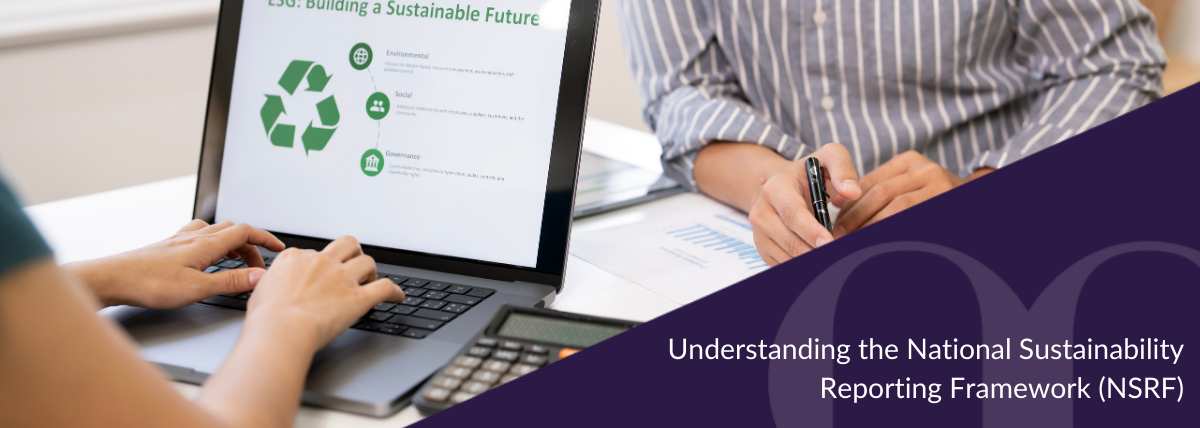
On 24 September 2024, Malaysia launched the National Sustainability Reporting Framework (NSRF) to guide companies in disclosing environmental, social, and governance (ESG) performance in a clear, consistent, and globally aligned way. Developed in response to growing regulatory and investor expectations, the NSRF supports Malaysia’s shift towards sustainable business practices and reflects international benchmarks, including the standards of the International Sustainability Standards Board (ISSB)—specifically IFRS S1, which covers general sustainability-related disclosures, and IFRS S2, which focuses on climate-related risks and opportunities.

In this article, we will break down the NSRF, its relevance to Malaysian businesses, and the steps companies can take to align with the sustainability reporting framework and meet evolving ESG requirements.

What is the National Sustainability Reporting Framework (NSRF)?

The national sustainability reporting framework provides a structured approach for Malaysian companies to disclose ESG-related risks, opportunities, and performance. It sets out clear reporting expectations, aiming to build trust and accountability while helping organisations stay competitive in a rapidly evolving market.

By aligning closely with global frameworks such as the ISSB standardsIFRS S1, and IFRS S2, the NSRF ensures Malaysian companies can meet both local compliance obligations and international investor expectations.

The Role of the NSRF in Malaysia’s ESG Landscape

The NSRF plays a central role in Malaysia’s broader ESG strategy, complementing both the Malaysia ESG framework and the SSA framework developed by Bursa Malaysia. It integrates key global reporting references, including the UN Sustainable Development Goals (SDGs), the Global Reporting Initiative (GRI), and the Task Force on Climate-Related Financial Disclosures (TCFD). 

To support digital and standardised reporting, Bursa Malaysia has also introduced the Centralised Sustainability Intelligence (CSI) platform, which is the official platform for submitting ESG disclosures under the sustainability reporting framework.

Additionally, leading providers work in close collaboration with Bursa Malaysia to support companies with ESG reporting, offering practical guidance on data preparation and platform submission for ongoing compliance.

Who Needs to Comply with the NSRF?

The NSRF applies to a wide range of organisations in Malaysia, from listed issuers to large non-listed entities. While initial adoption may be voluntary for some, compliance is gradually becoming mandatory across company tiers, in line with national ESG objectives.

Phased Implementation

The rollout of the NSRF follows a structured, three-year timeline: 

  • 2025: Large Main Market issuers with a market capitalisation of RM2 billion or more 
  • 2026: All other Main Market issuers 
  • 2027: ACE Market issuers and large non-listed companies 

This phased approach allows businesses time to build internal capabilities and integrate ESG reporting into existing operations.

Why Does the NSRF Matter for Malaysian Businesses?

Enhancing Corporate Sustainability

The NSRF encourages organisations to embed sustainability into their business strategies. By reporting on emissions, resource consumption, and labour practices, companies can identify operational risks and set measurable improvement targets. This also supports broader national priorities such as climate adaptation and low-carbon development.

Building Stakeholder Trust

Investors, regulators, and consumers now expect transparency in ESG performance. A well-prepared sustainability report in Malaysia can strengthen credibility and demonstrate commitment to long-term value creation. The NSRF gives companies a standardised way to communicate ESG efforts, improving trust and stakeholder engagement.

Staying Competitive in a Global Market

Alignment with IFRS S1, IFRS S2, and the broader ISSB standards allows Malaysian companies to meet the expectations of global investors and business partners. This positions them more favourably in cross-border transactions, especially in sectors where ESG reporting is a key part of procurement or partnership decisions.

Supporting Malaysia’s Net-Zero Goals

As part of its national low-carbon roadmap, Malaysia has committed to achieving net-zero emissions by 2050. The NSRF contributes to this by helping companies track and disclose climate data, ultimately improving the quality and availability of climate reporting at the national level.

Key Requirements of the NSRF

Core Components of the Sustainability Reporting Framework

The sustainability reporting framework requires companies to report across three ESG pillars: 

  • Environmental: Carbon emissions, energy use, waste management, water efficiency 
  • Social: Labour practices, diversity and inclusion, employee well-being 
  • Governance: Board diversity, ethics policies, anti-corruption measures 

These indicators enable stakeholders to assess both risk exposure and the company’s long-term sustainability strategy.

Reporting Standards and Guidelines

The NSRF aligns closely with international frameworks such as the GRI, Sustainability Accounting Standards Board (SASB), and ISSB standards. In particular, IFRS S1 outlines general sustainability-related disclosures, while IFRS S2 focuses on climate reporting. Companies are expected to reference these standards in developing their sustainability report in Malaysia.

Templates and guidance documents are available through Bursa Malaysia, designed to standardise reporting formats and improve comparability.

Data Collection and Documentation

Accurate data collection is central to effective ESG reporting. Companies need to gather quantitative and qualitative data from across departments, including environmental performance metrics, HR records, and board governance disclosures. Transparency and consistency are key to avoiding greenwashing concerns.

Centralised Sustainability Intelligence (CSI) Platform

Bursa Malaysia’s CSI platform is the designated system for submitting NSRF reports. It facilitates centralised data uploads, real-time analytics, and benchmarking tools, improving the quality and efficiency of climate reporting. Adoption of the CSI platform is mandatory for all reporting entities under the framework.

Compliance Deadlines and Reporting Frequency

Reporting frequency is expected to be annual, timed to follow financial year cycles. Companies must submit their sustainability report in Malaysia by the deadline specified under the NSRF, depending on their categorisation. Non-compliance may affect listing status or trigger regulatory scrutiny.

Steps to Start Sustainability Reporting Under the NSRF

Understand the Framework

Begin by reviewing the national sustainability reporting framework, including its timelines, reporting templates, and guidance documents. Identify your organisation’s ESG priorities and align them with the reporting requirements under IFRS S1 and IFRS S2.

Build Internal Capacity

Form a sustainability working group or appoint an ESG officer to oversee data collection and compliance. Training sessions can help operational teams become familiar with reporting expectations, risk areas, and the importance of accurate climate reporting.

Invest in Technology and Tools

Digital tools play a key role in managing ESG disclosures. ESG software can simplify data consolidation, generate reports based on ISSB standards, and facilitate submission through the CSI platform. Some platforms now incorporate AI features that assist with data mapping, flagging inconsistencies, and generating draft narrative content aligned with IFRS S1 and IFRS S2, supporting a more efficient and accurate reporting process.

Engage Stakeholders

Communicate your sustainability goals and reporting commitments to key stakeholders. This includes internal teams, shareholders, regulators, and customers. Businesses may also consider engaging third-party consultants or ESG specialists to improve reporting quality and navigate regulatory requirements.

Submit and Monitor Reports

Once data is compiled and validated, submit it via the CSI platform according to your reporting schedule. Post-submission, track performance against industry benchmarks and update your ESG strategy based on stakeholder feedback.

Next Steps for Climate Reporting Under the NSRF

The national sustainability reporting framework marks a turning point for companies operating in Malaysia, particularly as investor scrutiny and regulatory requirements continue to rise. With the phased rollout already underway, businesses need to prioritise ESG readiness—not just to remain compliant, but to stay competitive in a shifting global landscape.

As sustainability reporting becomes more technical and time-sensitive, having the right support can significantly ease the process.

Partnership with BoardRoom

BoardRoom Malaysia offers tailored support to businesses preparing for the NSRF, particularly through our SSA-related services. In collaboration with Bursa Malaysia, we provide expert guidance on ESG disclosure, regulatory compliance, and platform submission via the CSI platform. 

Whether you’re developing your first sustainability report in Malaysia or looking to improve existing practices, we help streamline the reporting journey—from early planning through to final publication. Get in touch with us here at BoardRoom Malaysia to explore how we can support your next reporting cycle.

Contact BoardRoom for more information:

Chong Kok Wai

Chong Kok Wai

Regional Director of Sustainability

E: [email protected]

Related Business Insights

An Essential Guide to Hybrid Annual General Meetings (AGMs)

An Essential Guide to Hybrid Annual General Meetings (AGMs)

An Essential Guide to Hybrid Annual General Meetings (AGMs)

As the corporate landscape continues to evolve, companies across Malaysia are rethinking how they conduct their annual general meetings (AGMs). The global pandemic accelerated digital adoption, making it clear that flexible, technology-driven solutions are not just convenient but also essential. Enter the hybrid AGM, a format that merges the best of both physical and virtual general meetings to meet the needs of diverse shareholders.

This guide explores what makes a hybrid AGM work, how technology plays a pivotal role in AGM management, and what organisations should prioritise to host effective and compliant AGM meetings in 2025 and beyond.

What is a Hybrid AGM?

A hybrid AGM allows shareholders to participate either in person or online. While physical AGMs may still appeal to some stakeholders, the hybrid AGM model has emerged as a more inclusive format, giving shareholders flexibility without compromising engagement or compliance.

Why Hybrid?

The appeal lies in its balance. Physical attendance allows face-to-face interaction, while the virtual component widens access to shareholders who are unable to be present due to geography, mobility, or other constraints.

In Malaysia, the acceptance of virtual general meetings by regulators such as the Companies Commission of Malaysia and the Securities Commission has made the hybrid AGM a compliant and forward-thinking option for listed and non-listed companies alike.

Key Benefits

  • Wider Participation: Shareholders from different regions or even overseas can join via online AGM platforms without the need to travel. 
  • Cost Efficiency: Reduced spending on venue logistics, printed materials, and travel arrangements. 
  • Enhanced Shareholder Experience: Technology-enabled engagement tools such as live polling and Q&As create an interactive environment that’s accessible to all attendees.

Technology as the Backbone of Hybrid AGMs

At the core of a successful hybrid AGM is the right technology. It needs to facilitate smooth communication, secure participation, and real-time decision-making—without fail.

Must-Have Features in AGM Technology

To support a modern AGM meeting, companies should look for platforms that offer: 

  • Real-time Polling and Voting: Integrated systems that allow for secure and transparent shareholder voting, both onsite and online. 
  • High-Quality Live Streaming: Reliable video and audio tools that ensure all shareholders, regardless of location, can follow proceedings without disruption. 
  • Interactive Q&A Functions: Moderated channels that allow shareholders to submit questions live, ensuring inclusive participation. 

Platform Selection Considerations

When choosing a hybrid AGM platform, consider: 

  • Security and Compliance: Look for features like multi-factor authentication, encrypted voting, and audit trails. In Malaysia, platforms should also meet the requirements set by Bursa Malaysia and the Companies Act 2016. 
  • Scalability: Whether you’re managing 200 or 20,000 shareholders, your system must perform at scale without lag or downtime. 
  • Accessibility: Features like mobile compatibility and language support can make a big difference for shareholders with varied needs. 

Partnering with a provider that offers comprehensive shareholder meeting services can help streamline the entire process, from secure voting to shareholder communications and post-meeting reporting, making it easier to manage both compliance and engagement.

The Role of Polling Devices and E-Voting

Modern AGM meetings require poll voting processes that are fast, secure, and transparent. Hybrid formats make this more complex, as votes must be accurately synchronised between in-person devices and online AGM participants.

Reliable poll voting services support real-time results, protect voter anonymity, and verify participation across channels, helping companies uphold integrity and confidence in decision-making.

Reliability and Technical Assurance

Technical hiccups during a virtual general meeting can disrupt participation and damage shareholder trust. Choosing a platform with strong connectivity, real-time system monitoring, and access to live technical support is essential for a smooth experience.

Preparation is equally important. Conduct a mock AGM meeting to test the platform, refine the agenda, and identify potential issues in advance. This gives organisers and attendees greater confidence going into the live session.

Best Practices for Hosting Hybrid AGMs

A smooth hybrid AGM relies on clear processes, not just reliable tools. From preparation to post-meeting tasks, every detail plays a part in meeting expectations and staying compliant.

Plan Strategically

Prepare detailed agendas in advance and share them with shareholders. Confirm the quorum requirements for hybrid formats and take note of any regulatory updates from the Securities Commission Malaysia.

Cybersecurity & Data Protection

Shareholder data is sensitive. Companies must use platforms that offer encrypted communication, secure login protocols, and access controls. Staff should be trained to recognise phishing threats or suspicious activities.

Make It Accessible

Even the best platform falls short if shareholders can’t navigate it. Clear instructions, basic tech support, and tools like e-voting and live Q&A help online AGM participants stay fully engaged.

Support on the Day

Both on-site and virtual IT support help avoid disruptions during a hybrid AGM. Technical issues can quickly escalate into governance concerns, so rehearsals or mock meetings are useful for identifying and resolving risks early.

Accurate Records and Reporting

Meeting records must be complete, accurate, and submitted on time to meet regulatory requirements. This includes formal minutes, resolutions passed, and post-meeting reports, all of which may be subject to audit or review.

The Future of Hybrid AGMs

Hybrid meetings are no longer a stopgap; they’re becoming a core practice in modern corporate governance. As expectations grow, so must the way companies connect with shareholders.

Greater Inclusivity

Online AGM tools make it easier for minority and retail shareholders to participate. Mobile-friendly platforms, language options, and remote voting help create a more balanced and representative shareholder voice.

Cost and Environmental Gains

By reducing venue, travel, and printing costs, hybrid formats offer real savings. Going digital also supports ESG efforts by cutting down on emissions and paper use linked to traditional AGM meetings.

Evolving Technologies

The integration of artificial intelligence (AI) is already underway in some AGM management platforms. Features like automated transcription, data analytics, and sentiment tracking during Q&As are enhancing how companies capture insights from their meetings.

Future-Proofing Governance

Companies that adopt secure, transparent hybrid formats are better positioned to build shareholder trust and meet future regulatory expectations. In time, hybrid AGM structures may well become the industry standard—not the exception.

Plan Your Next Online AGM with Confidence

The future of corporate governance in Malaysia is hybrid, and businesses that adapt early stand to gain the most. With the right mix of planning, technology, and stakeholder engagement, a hybrid AGM can be as effective—if not more so—than a traditional meeting format. 

Partnering with an experienced provider like BoardRoom Malaysia means more than just having the tools in place. It means having a dedicated team with deep knowledge of AGM management, regulatory compliance, and shareholder engagement. Whether you’re hosting your first online AGM or refining your existing setup, the path to a seamless, inclusive AGM meeting starts with trusted expertise. Contact us today to get started! 

Contact BoardRoom for more information:

Jonathan Lim

Jonathan Lim

Managing Director Asia, Share Registrar Services

E: [email protected]

Related Business Insights

Corporate Tax in Malaysia: Turning Annual Tax Returns and Pre-Planning into a Strategic Advantage

Corporate Tax in Malaysia Turning Annual Tax Returns and Pre-Planning into a Strategic Advantag

Corporate Tax in Malaysia: Turning Annual Tax Returns and Pre-Planning into a Strategic Advantage

For many Malaysian businesses, corporate tax filing is still treated as a routine, once-a-year compliance requirement – something to tick off a list – rather than a strategic lever for business performance. However, this traditional mindset is costing companies more than they realise.

When corporate tax in Malaysia is approached solely as an annual chore, organisations miss opportunities, risk inefficiencies, and are exposed to compliance pitfalls.

In Malaysia and across the region, the annual tax return process has transformed into a business-critical function in today’s regulatory environment. It’s no longer just about filing correctly; it’s about filing smartly. Strategic tax planning and proactive oversight can uncover cost savings and deliver sharper financial visibility to the executive team.

It’s time for finance leaders to elevate the tax conversation. In Malaysia, corporate tax should be treated not just as a back-office function but as a board-level priority with the power to shape enterprise value.

In this article, Eunice Hooi, Managing Director Asia, Accounting and Tax at BoardRoom Group and Victor Cheow, Tax Manager at BoardRoom Malaysia, explore how forward-thinking leaders can shift from compliance-first thinking to treating tax as a core part of business strategy to help unlock efficiency, minimise risk and enhance financial clarity.

An Overview of Corporate Tax in Malaysia

Malaysia’s corporate income tax regime is a central pillar of the country’s financial infrastructure. It is governed by the Inland Revenue Board (IRB) under the Income Tax Act 1967. The regime applies to both resident and non-resident companies, with resident corporations taxed on global income and non-residents taxed only on income sourced from Malaysia. However, many businesses still struggle to understand how to file company tax returns efficiently.

At a glance, here’s what companies need to know about the corporate tax rate in Malaysia:

Company Type Tax Rate
Resident Company (Standard) 24%
SME (First RM150,000) 15%
SME (RM150,001 – RM600,000) 17%
SME (Above RM600,000) 24%
Non-Resident Company 24%

Corporate income tax is charged on a wide range of earnings, from profits and dividends to royalties, rents and capital gains. All Malaysian-incorporated companies (Sdn Bhd) must file Form C within seven months of their financial year-end (FYE) and settle payment within eight months.

Here is an example based on the fiscal year ending on 31 December.

  • Fiscal Year-End: 31 December 2025
  • Form C Due: 31 July 2026
  • Tax Payment Due: 31 July 2026

It may sound straightforward, but changing regulations, manual data entry and missed deadlines often complicate the process. Missing these deadlines can trigger financial penalties and legal action, not to mention reputational risks. It’s important to remember that the due date isn’t the same for every company, and your business’s deadline is determined by its classification.

While these obligations may seem procedural, they’re far more than a compliance checkbox. As Victor explains, “Executive leaders should pay close attention to tax because it’s about reputation management. Tax issues can damage trust with stakeholders and investors. And because tax spending is a business strategy, it affects strategic decisions like mergers, acquisitions, and investment.”

In other words, modern corporate tax planning isn’t just about staying compliant; it’s a governance issue that directly impacts operational integrity and long-term value creation.

Companies winding down operations must also consider how to close a company tax file in Malaysia. This involves finalising tax obligations, filing outstanding returns and notifying the IRB, a process that, if mismanaged, can lead to lingering liabilities and legal issues.

The Hidden Costs of Traditional Tax Filing

Traditional tax workflows may appear reliable on the surface, but beneath that familiarity lies a series of inefficiencies that quietly erode business value. For C-suite leaders, the hidden costs of legacy processes are becoming too significant to ignore. Manual systems, siloed communication, and reactive planning drain resources and expose companies to compliance risks, missed tax savings, and strategic blind spots.

“In Malaysia, traditional workflows are often built around manual processes: filling out physical forms for updates, managing fragmented communications, and dealing with a lack of automation,” Victor says. “These inefficiencies weigh heavily on finance teams and increase the risk of costly errors.”

The Risks of Reactive Tax Planning

A key vulnerability is the failure to plan. Waiting until the corporate tax filing deadline to address tax obligations is a reactive approach that limits optimisation opportunities. When companies only act when required to file corporation tax, they miss strategic tax deductions and risk penalties and can even face cash flow issues due to poor forecasting.

“Reactive tax planning leads to short-term thinking, which can cause companies to overlook savings opportunities,” says Victor. “It also creates operational inefficiencies and heavier administrative burdens. If finance teams aren’t current on new reporting or e-invoicing rules, that can trigger fines or penalties.”

The impact of traditional tax handling extends beyond finance. Disconnected tax processes create friction across legal, compliance and operational systems. Each department may operate on outdated or incomplete information, slowing decision-making and increasing regulatory exposure.

In today’s complex business environment, a fragmented approach to tax is no longer sustainable. Executives must demand systems and processes that support integration, transparency and foresight.

Strategic Tax Filing: A New Lever for Growth, Governance and Efficiency

Forward-looking companies in Malaysia no longer view taxes as a compliance function. Instead, they’re turning their corporation tax return process into a strategic tool to improve efficiency and support business growth.

“The real shift is in mindset,” Eunice explains. “Tax should no longer be seen as a year-end task. It needs to be embedded in business planning. Every strategic decision, from cross-border expansion to supply chain changes, carries tax implications. Finance leaders must move from just meeting deadlines to leveraging tax data for informed decisions.”

This strategic approach to corporate tax filing allows organisations to stay ahead of regulatory requirements, giving them sharper financial visibility and the ability to identify cost-saving opportunities throughout the year.

A core benefit of strategic tax planning is discovering how to reduce corporation tax through early detection of incentives, deductions, and rebates often missed during last-minute filings.

“If we stop treating tax as a once-a-year activity,” adds Victor, “we can identify incentives early, optimise deductions and improve cash flow through better tax estimation and planning.”

A properly executed tax strategy can:

  • strengthen governance by ensuring full compliance with Malaysian tax regulations
  • enhance efficiency through automated workflows that reduce human error and administrative burden
  • improve agility and insight t with real-time tax data feeding into forecasting and financial planning
  • unlock savings by identifying how to reduce tax through timely deductions, incentives and informed decision-making.


One example is a regional retail group that partnered with BoardRoom to optimise its tax structure. BoardRoom’s tax specialists identified inefficiencies within the client’s group setup and implemented a more tax-efficient holding company model. Through strategic restructuring and cross-border tax planning, the client achieved a 15% reduction in its overall tax burden while improving governance and maintaining full compliance across multiple jurisdictions.

Another example is e-invoicing in Malaysia. With Malaysia’s e-invoicing mandate, traditional paper-based processes are being replaced with automated, digital invoicing. Implemented with cloud accounting systems, businesses can now have real-time visibility into their financial data. Beyond just improving operational efficiency, e-invoicing empowers companies to make strategic tax planning decisions with up-to-date transactional data. This real-time data capability also improves cash flow forecasting, strengthens audit readiness and reduces tax compliance risks. With digitalisation, companies can move from reactive tax filing to proactive, data-driven financial and tax strategy.

Outsourcing to a trusted corporation tax service provider like BoardRoom brings additional advantages. With deep technical expertise and a proactive approach, BoardRoom helps companies stay compliant, avoid penalties (like the 10% penalty when actual tax payable exceeds the estimated amount by more than 30%) and reduce overhead costs. Rather than maintaining an in-house team and absorbing the associated costs of salaries, training and software, companies gain access to a full-service tax function while keeping internal resources focused on growth.

By partnering with BoardRoom, businesses gain a strategic ally that helps elevate tax to a C-suite priority that actively contributes to resilience and performance.

Rethink Tax: From Obligation to Opportunity

As the regulatory landscape evolves, the way businesses approach corporate tax in Malaysia must evolve with it. The traditional view of tax as a once-a-year compliance task is no longer sufficient. Today, your corporation tax return can and should be a tool for strategic advantage.

With the right corporate tax planning services, companies can reduce risk, improve cash flow and strengthen governance. Whether through automation, real-time insights or cross-functional alignment, proactive corporate tax planning strategies unlock real business value. Partnering with an expert corporate service provider ensures you’re filing on time and making informed, forward-looking decisions.

It’s time for leaders to shift the tax function from the back office to the boardroom.

Ready to turn compliance into a competitive edge? Contact BoardRoom for trusted, strategic tax solutions to support smarter decisions at every level.

Malaysia’s Budget 2026: Key Tax Highlights for Businesses and Individuals

Malaysia’s Budget 2026: Key Tax Highlights for Businesses and Individuals

On 10 October 2025, Prime Minister Datuk Seri Anwar Ibrahim tabled Malaysia’s Fourth MADANI Budget: A Budget for the People, setting a record allocation of RM470 billion.

Budget 2026 focuses on enhancing national competitiveness, raising living standards, and strengthening governance, while reinforcing Malaysia’s commitment to fiscal prudence and structural reform. From accelerated capital allowances for digitalisation to new tax reliefs for households, this budget introduces significant measures that will impact businesses and individuals alike.

BoardRoom is committed to support the businesses and individuals in navigating to these measures, driving compliance and achieving sustainable growth in the evolving tax landscape.

Download our comprehensive Budget 2026 Tax Highlights Report to explore:

  • Key business tax reforms and incentives: Budget 2026 introduces targeted measures to drive reinvestment, digitalisation, and competitiveness.
  • Individual measures tax and tax reliefs: While new reliefs are introduced to ease living costs, profit distributions from LLPs to individual partners will now be taxed, ensuring greater equity across business structures.
  • Revenue enhancement measures: To strengthen fiscal sustainability, the Government is enhancing tax base through selective indirect tax and stamp duty adjustments.

If you have any questions, please email our regional tax team at [email protected].

Related Business Insights

Malaysia AGM Report 2025

Malaysia AGM Report 2025

Unveiling Insights into Malaysia’s Annual General Meetings (AGMs)

The 2025 AGM meeting season in Malaysia reflects a dynamic shift toward physical and hybrid meeting formats, driven by regulatory changes and a focus on enhanced shareholder engagement. Companies are adapting to evolving expectations by leveraging advanced digital tools and hybrid-ready solutions to ensure compliance and accessibility. At BoardRoom Malaysia, our expertise in managing AGM meetings underscores our leadership in delivering seamless, engaging, and compliant shareholder experiences.

Our comprehensive report, based on data from AGM and EGM proceedings in 1H 2025, provides actionable insights into meeting trends, attendance patterns, proxy form processing, and strategies to optimise shareholder participation.

Discover how you can navigate the busy AGM season effectively while balancing regulatory demands and stakeholder expectations.

Key Takeaways:

  • Plan AGM Timelines Early: With a high volume of AGMs in May and June, secure optimal dates and venues early to ensure sufficient preparation time for financial reporting and stakeholder engagement, avoiding resource constraints and boosting attendance.
  • Embrace Hybrid Meeting Formats: Balance in-person and virtual accessibility by partnering with reliable service providers equipped with robust AV and digital infrastructure and support for live streaming, e-voting, and real-time polling. This ensures a seamless and compliant AGM meeting experience for both your company and your shareholders.
  • Boost Attendance with Hybrid AGMs: Address logistical barriers of physical meetings by adopting hybrid formats that enhance participation while maintaining in-person interaction.
  • Streamline Proxy Form Processing: Manage the surge in proxy forms in the second quarter, particularly in May, by leveraging digital share registry portals like BoardRoom Smart Investor Portal (BSIP) for efficient e-Proxy submissions and enhanced shareholder engagement.
  • Optimise Meeting Duration: Streamline agendas and allocate timed Q&A segments to manage longer meetings driven by increased shareholder interaction in physical and hybrid formats. Invest in robust technology and pre-meeting rehearsals to minimise delays.
  • Leverage Digital Tools for Support: Utilise BSIP’s self-service features, such as e-Proxy submissions and annual report downloads, to manage high call volumes during peak AGM months (February and June) and ensure seamless shareholder support.
  • Enhance Attendee Experience: Offer cost-effective door gifts and refreshments, such as branded merchandise or locally sourced items, to strengthen shareholder relations and encourage in-person attendance at physical meetings.

Download the full report to read about the AGM meeting trends and gain actionable strategies for optimising your AGM practices, ensuring compliance, and fostering meaningful shareholder engagement.

Related Business Insights