Corporate Tax in Malaysia: Turning Annual Tax Returns and Pre-Planning into a Strategic Advantage

Corporate Tax in Malaysia Turning Annual Tax Returns and Pre-Planning into a Strategic Advantag

Corporate Tax in Malaysia: Turning Annual Tax Returns and Pre-Planning into a Strategic Advantage

For many Malaysian businesses, corporate tax filing is still treated as a routine, once-a-year compliance requirement – something to tick off a list – rather than a strategic lever for business performance. However, this traditional mindset is costing companies more than they realise.

When corporate tax in Malaysia is approached solely as an annual chore, organisations miss opportunities, risk inefficiencies, and are exposed to compliance pitfalls.

In Malaysia and across the region, the annual tax return process has transformed into a business-critical function in today’s regulatory environment. It’s no longer just about filing correctly; it’s about filing smartly. Strategic tax planning and proactive oversight can uncover cost savings and deliver sharper financial visibility to the executive team.

It’s time for finance leaders to elevate the tax conversation. In Malaysia, corporate tax should be treated not just as a back-office function but as a board-level priority with the power to shape enterprise value.

In this article, Eunice Hooi, Managing Director Asia, Accounting and Tax at BoardRoom Group and Victor Cheow, Tax Manager at BoardRoom Malaysia, explore how forward-thinking leaders can shift from compliance-first thinking to treating tax as a core part of business strategy to help unlock efficiency, minimise risk and enhance financial clarity.

An Overview of Corporate Tax in Malaysia

Malaysia’s corporate income tax regime is a central pillar of the country’s financial infrastructure. It is governed by the Inland Revenue Board (IRB) under the Income Tax Act 1967. The regime applies to both resident and non-resident companies, with resident corporations taxed on global income and non-residents taxed only on income sourced from Malaysia. However, many businesses still struggle to understand how to file company tax returns efficiently.

At a glance, here’s what companies need to know about the corporate tax rate in Malaysia:

Company Type Tax Rate
Resident Company (Standard) 24%
SME (First RM150,000) 15%
SME (RM150,001 – RM600,000) 17%
SME (Above RM600,000) 24%
Non-Resident Company 24%

Corporate income tax is charged on a wide range of earnings, from profits and dividends to royalties, rents and capital gains. All Malaysian-incorporated companies (Sdn Bhd) must file Form C within seven months of their financial year-end (FYE) and settle payment within eight months.

Here is an example based on the fiscal year ending on 31 December.

  • Fiscal Year-End: 31 December 2025
  • Form C Due: 31 July 2026
  • Tax Payment Due: 31 July 2026

It may sound straightforward, but changing regulations, manual data entry and missed deadlines often complicate the process. Missing these deadlines can trigger financial penalties and legal action, not to mention reputational risks. It’s important to remember that the due date isn’t the same for every company, and your business’s deadline is determined by its classification.

While these obligations may seem procedural, they’re far more than a compliance checkbox. As Victor explains, “Executive leaders should pay close attention to tax because it’s about reputation management. Tax issues can damage trust with stakeholders and investors. And because tax spending is a business strategy, it affects strategic decisions like mergers, acquisitions, and investment.”

In other words, modern corporate tax planning isn’t just about staying compliant; it’s a governance issue that directly impacts operational integrity and long-term value creation.

Companies winding down operations must also consider how to close a company tax file in Malaysia. This involves finalising tax obligations, filing outstanding returns and notifying the IRB, a process that, if mismanaged, can lead to lingering liabilities and legal issues.

The Hidden Costs of Traditional Tax Filing

Traditional tax workflows may appear reliable on the surface, but beneath that familiarity lies a series of inefficiencies that quietly erode business value. For C-suite leaders, the hidden costs of legacy processes are becoming too significant to ignore. Manual systems, siloed communication, and reactive planning drain resources and expose companies to compliance risks, missed tax savings, and strategic blind spots.

“In Malaysia, traditional workflows are often built around manual processes: filling out physical forms for updates, managing fragmented communications, and dealing with a lack of automation,” Victor says. “These inefficiencies weigh heavily on finance teams and increase the risk of costly errors.”

The Risks of Reactive Tax Planning

A key vulnerability is the failure to plan. Waiting until the corporate tax filing deadline to address tax obligations is a reactive approach that limits optimisation opportunities. When companies only act when required to file corporation tax, they miss strategic tax deductions and risk penalties and can even face cash flow issues due to poor forecasting.

“Reactive tax planning leads to short-term thinking, which can cause companies to overlook savings opportunities,” says Victor. “It also creates operational inefficiencies and heavier administrative burdens. If finance teams aren’t current on new reporting or e-invoicing rules, that can trigger fines or penalties.”

The impact of traditional tax handling extends beyond finance. Disconnected tax processes create friction across legal, compliance and operational systems. Each department may operate on outdated or incomplete information, slowing decision-making and increasing regulatory exposure.

In today’s complex business environment, a fragmented approach to tax is no longer sustainable. Executives must demand systems and processes that support integration, transparency and foresight.

Strategic Tax Filing: A New Lever for Growth, Governance and Efficiency

Forward-looking companies in Malaysia no longer view taxes as a compliance function. Instead, they’re turning their corporation tax return process into a strategic tool to improve efficiency and support business growth.

“The real shift is in mindset,” Eunice explains. “Tax should no longer be seen as a year-end task. It needs to be embedded in business planning. Every strategic decision, from cross-border expansion to supply chain changes, carries tax implications. Finance leaders must move from just meeting deadlines to leveraging tax data for informed decisions.”

This strategic approach to corporate tax filing allows organisations to stay ahead of regulatory requirements, giving them sharper financial visibility and the ability to identify cost-saving opportunities throughout the year.

A core benefit of strategic tax planning is discovering how to reduce corporation tax through early detection of incentives, deductions, and rebates often missed during last-minute filings.

“If we stop treating tax as a once-a-year activity,” adds Victor, “we can identify incentives early, optimise deductions and improve cash flow through better tax estimation and planning.”

A properly executed tax strategy can:

  • strengthen governance by ensuring full compliance with Malaysian tax regulations
  • enhance efficiency through automated workflows that reduce human error and administrative burden
  • improve agility and insight t with real-time tax data feeding into forecasting and financial planning
  • unlock savings by identifying how to reduce tax through timely deductions, incentives and informed decision-making.


One example is a regional retail group that partnered with BoardRoom to optimise its tax structure. BoardRoom’s tax specialists identified inefficiencies within the client’s group setup and implemented a more tax-efficient holding company model. Through strategic restructuring and cross-border tax planning, the client achieved a 15% reduction in its overall tax burden while improving governance and maintaining full compliance across multiple jurisdictions.

Another example is e-invoicing in Malaysia. With Malaysia’s e-invoicing mandate, traditional paper-based processes are being replaced with automated, digital invoicing. Implemented with cloud accounting systems, businesses can now have real-time visibility into their financial data. Beyond just improving operational efficiency, e-invoicing empowers companies to make strategic tax planning decisions with up-to-date transactional data. This real-time data capability also improves cash flow forecasting, strengthens audit readiness and reduces tax compliance risks. With digitalisation, companies can move from reactive tax filing to proactive, data-driven financial and tax strategy.

Outsourcing to a trusted corporation tax service provider like BoardRoom brings additional advantages. With deep technical expertise and a proactive approach, BoardRoom helps companies stay compliant, avoid penalties (like the 10% penalty when actual tax payable exceeds the estimated amount by more than 30%) and reduce overhead costs. Rather than maintaining an in-house team and absorbing the associated costs of salaries, training and software, companies gain access to a full-service tax function while keeping internal resources focused on growth.

By partnering with BoardRoom, businesses gain a strategic ally that helps elevate tax to a C-suite priority that actively contributes to resilience and performance.

Rethink Tax: From Obligation to Opportunity

As the regulatory landscape evolves, the way businesses approach corporate tax in Malaysia must evolve with it. The traditional view of tax as a once-a-year compliance task is no longer sufficient. Today, your corporation tax return can and should be a tool for strategic advantage.

With the right corporate tax planning services, companies can reduce risk, improve cash flow and strengthen governance. Whether through automation, real-time insights or cross-functional alignment, proactive corporate tax planning strategies unlock real business value. Partnering with an expert corporate service provider ensures you’re filing on time and making informed, forward-looking decisions.

It’s time for leaders to shift the tax function from the back office to the boardroom.

Ready to turn compliance into a competitive edge? Contact BoardRoom for trusted, strategic tax solutions to support smarter decisions at every level.

Malaysia’s Budget 2026: Key Tax Highlights for Businesses and Individuals

Malaysia’s Budget 2026: Key Tax Highlights for Businesses and Individuals

On 10 October 2025, Prime Minister Datuk Seri Anwar Ibrahim tabled Malaysia’s Fourth MADANI Budget: A Budget for the People, setting a record allocation of RM470 billion.

Budget 2026 focuses on enhancing national competitiveness, raising living standards, and strengthening governance, while reinforcing Malaysia’s commitment to fiscal prudence and structural reform. From accelerated capital allowances for digitalisation to new tax reliefs for households, this budget introduces significant measures that will impact businesses and individuals alike.

BoardRoom is committed to support the businesses and individuals in navigating to these measures, driving compliance and achieving sustainable growth in the evolving tax landscape.

Download our comprehensive Budget 2026 Tax Highlights Report to explore:

  • Key business tax reforms and incentives: Budget 2026 introduces targeted measures to drive reinvestment, digitalisation, and competitiveness.
  • Individual measures tax and tax reliefs: While new reliefs are introduced to ease living costs, profit distributions from LLPs to individual partners will now be taxed, ensuring greater equity across business structures.
  • Revenue enhancement measures: To strengthen fiscal sustainability, the Government is enhancing tax base through selective indirect tax and stamp duty adjustments.

If you have any questions, please email our regional tax team at [email protected].

Related Business Insights

Employee Statutory Contributions: EPF, SOCSO, EIS & HRD

Employee Statutory Contributions EPF, SOCSO, EIS & HRD

Employee Statutory Contributions: EPF, SOCSO, EIS & HRD

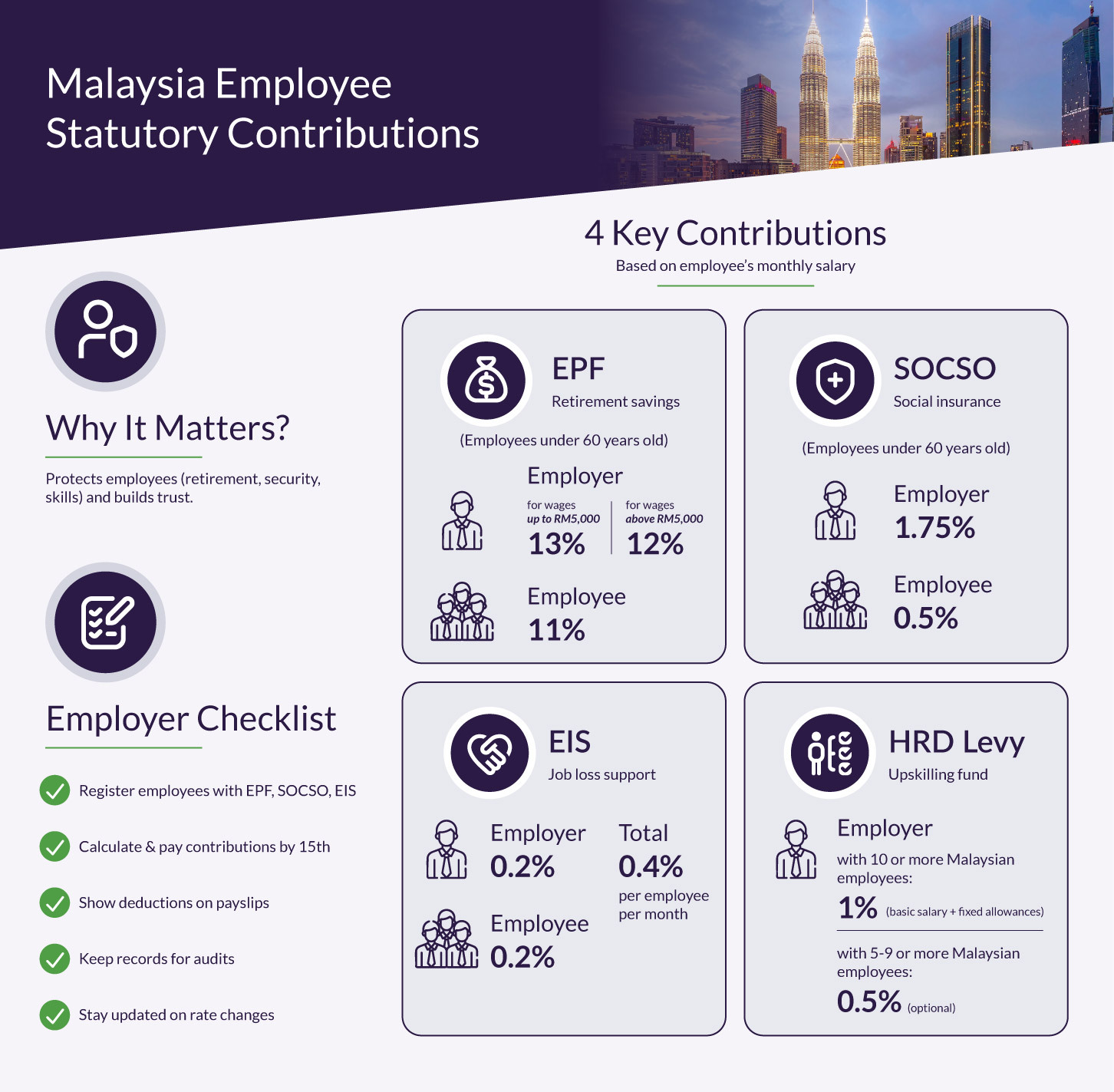
In Malaysia, statutory contributions form an essential framework that safeguards employees’ welfare, providing them with social protection, retirement savings, and access to training and upskilling programmes. Employers need to meet these obligations, as they mean upholding responsibility to staff and preserving the credibility of the business, essentially building employees’ trust in the organisation.

The Employees Provident Fund (EPF), the Social Security Organisation (SOCSO), the Employment Insurance System (EIS), and the Human Resources Development (HRD) levy are the four main statutory payroll contributions in Malaysia. In this guide, you’ll learn how each of them works, including key calculations, employee and employer obligations, and benefits, helping you navigate the challenging landscape of managing statutory employee contributions. A practical checklist is also included so you can take the proper steps to ensure compliance.

Understanding Each Statutory Contribution

Each of these statutory contributions helps establish a comprehensive system, which can benefit employees in the aspects of career development, occupational security, and retirement life, contributing to the wider economy.

EPF (Employees Provident Fund)

The EPF is Malaysia’s main retirement savings scheme, requiring mandatory contributions from both employer and employee. For employees under the age of 60 with a salary of RM5,000 or below, employers typically need to contribute 13% of an employee’s wages, while employees contribute 11%. The rates vary with other income levels and age groups.

Contributions are calculated from the employee’s monthly wages, and employers are required to remit the total sum to the EPF by the 15th day of the following month. Late payment may result in additional charges or penalties.

For employees, EPF contributions are critical to financial security after retirement. Balances grow over time with annual dividends declared by the EPF, and funds can be withdrawn under specific conditions, such as retirement, permanent disability, or reaching the statutory withdrawal age. This system ensures that employees are not left financially vulnerable in later life.

SOCSO (Social Security Organisation)

SOCSO provides social insurance protection, covering employees through two principal schemes: the Employment Injury Scheme, which offers protection in the event of workplace accidents or occupational diseases, and the Invalidity Scheme, which provides coverage for invalidity or death not related to employment.

Both employers and employees are required to contribute to SOCSO, with contribution rates determined by wage brackets and capped at specific ceilings. Typically, employers are required to contribute 1.75% of the employee’s monthly wage, while employees need to contribute 0.5%, provided they are under 60 years old.

Benefits available under SOCSO are extensive and include medical care, temporary disablement benefits, permanent disablement pensions, dependants’ benefits, and rehabilitation programmes. This safety net reassures employees that they and their families will receive support if unforeseen circumstances arise.

EIS (Employment Insurance System)

The Employment Insurance System was introduced to provide financial relief and job search support to employees who lose their jobs through retrenchment, redundancy, or other economic reasons. The scheme is applicable to all citizens and permanent residents in Malaysia aged between 18 and 60 years old working in the private sector, with certain exclusions, such as domestic workers, self-employed persons, and retirees.

Under the EIS, both employer and employee contribute 0.2% each of the employee’s monthly wage, subject to a wage ceiling. While the contributions are small in proportion to wages, they create a meaningful safety net for affected employees.

To submit a statutory contribution for EIS, employers must register on PERKESO’s Assist Portal first. After making the deductions, upload the contribution files and submit the payments on or before the 15th of the following month.

Employees who qualify can receive benefits such as job search allowances, training allowances, and career counselling services. The scheme also funds retraining and skills upgrading, helping displaced workers return to the job market with stronger employability.

HRD (Human Resources Development) Levy

The HRD levy, administered by the Human Resource Development Corporation (HRD Corp), is designed to fund workforce upskilling and continuous professional development. Employers in industries with at least 10 Malaysian employees are mandated to contribute, while those with 5 to 9 employees may also opt in. Employees are not required to make the contribution.

Contributions are calculated as 1% of employees’ monthly wages and are remitted to HRD Corp. This funding pool enables companies to reclaim training costs through grants that support courses, certifications, and skills programmes.

For employers, the HRD levy is not just a compliance obligation but an investment in workforce capability. By tapping into HRD grants, businesses can strengthen employee productivity and competitiveness. For employees, the levy ensures access to structured learning opportunities that advance career progression.

Employee Statutory Contributions Checklist

As an employer in Malaysia, you can follow the guidelines below to ensure you take every necessary step for compliance with statutory contributions:

Employee Registration

Check and make sure every new hire of the company has been registered with EPF, SOCSO, and EIS, and HRDF where applicable. Any delay can result in potential penalties, fines, or even legal actions.

Monthly Deductions & Payments

Calculate the statutory contributions per month in advance to ensure timely and accurate submissions of the contributions. Contributions are due by the 15th of the following month.

Payslip Transparency

Transparency can strengthen the trust your employees have in the organisation. Clearly indicate the deductions on the payslips to establish transparent communication with them.

Record Keeping

Keep a record of every receipt and supporting documents related to the statutory contributions. They are essential to internal audits and any government inspections.

Staying Updated

The rates of every payroll statutory contribution may Stay updated on any news from EPF, SOCSO, EIS, and HRD Corp to ensure that your payroll processes reflect any updates. You must update your employees regularly to maintain trust and transparency.

Preparation for Inspections:

Authorities may inspect all the relevant documentation from time to time to ensure compliance and accuracy of the contributions. Therefore, it’s important to gather and maintain all the essential documents for government audits.

How BoardRoom Can Help with the Administration of Employee Statutory Contributions

With various payroll statutory contributions, namely EPF, SOCSO, EIS and HRD, in place, companies and businesses must manage them effectively to ensure compliance and the welfare of employees, contributing to the overall economy of the country. Companies should conduct regular evaluations of deductions and consistently inform employees of any relevant updates to ensure more transparent communications and facilitate timely and accurate submissions.

Whether you are managing a large organisation or operating a small business in Malaysia, it can be challenging to handle the administration of statutory contributions for your employees. BoardRoom is here to support you with a professional team that is experienced in helping businesses navigate the complex statutory matters through expert advisory services. In addition, BoardRoom offers an advanced payroll system, automating all the calculations of deductions to ensure compliance and accurate submission.

Talk to BoardRoom today to learn how our payroll solutions can benefit both your business and employees today.

SSM Crackdown: Ensure Annual Return Compliance

SSM Crackdown Ensure Annual Return Compliance

SSM Crackdown: Ensure Annual Return Compliance

The Companies Commission of Malaysia (SSM) has recently intensified its enforcement of annual return compliance regulations. This development has serious implications for all companies operating in Malaysia, especially those that have not kept up with filing obligations for their company annual return, Audited Financial Statements (AFS), and Ultimate Beneficial Ownership (UBO) declarations.

Many organisations are still unaware of how important it is to meet statutory deadlines. Yet, inaction now could cost more than just fines; it could lead to the suspension of your company secretary’s licence or the striking off of your company from the register.

If your business is not yet compliant, it is essential to act immediately. With the right corporate governance support, such as the expertise provided by BoardRoom Malaysia, your company can align quickly and effectively with all of Malaysia’s annual return requirements before enforcement actions begin.

What Is Driving SSM’s Crackdown?

Low Compliance Rates Among Malaysian Companies

Despite clear regulatory obligations, a significant number of companies continue to overlook or delay their annual return submissions in Malaysia. This widespread non-compliance has triggered the SSM’s heightened surveillance and zero-tolerance approach.

Stricter Enforcement Timeline

SSM has made it clear that submitting company annual return filings and related documents is no longer an administrative task to be taken lightly.

SSM has outlined a phased enforcement plan:

  • July 2025: Show-cause letters to non-compliant company secretaries.
  • August 2025: Issuance of compounds under Section 259(1) of the Companies Act 2016.
  • Post-September 2025: Full enforcement actions

Late or inaccurate filings will be treated as serious non-compliance issues, subject to legal penalties.

Who Is at Risk?

Company secretaries may face licence suspension if the entities under their care persistently fail to meet their statutory responsibilities. Likewise, directors are personally accountable for ensuring that their company complies with all requirements, including the timely submission of the company’s annual return and AFS documents.

Dormant Companies Are Not Exempt

Many businesses mistakenly assume that dormant or inactive companies are exempt from these filing obligations. However, unless the company has been formally struck off or liquidated, it must still submit its annual return documentation annually. Ignoring this can lead to penalties and administrative complications.

SSM’s Moratorium Until 30 September

Recognising the need for a transitional period, SSM has granted a temporary moratorium until 30 September 2025. During this time, companies have a limited window of opportunity to rectify non-compliance issues for eligible applicants before tougher enforcement action begins.

Risks of Non-Compliance

Failing to meet annual return compliance obligations can trigger multiple issues, extending beyond monetary penalties.

Financial Penalties

Every day of delay increases the fines and compounds the risk. Over 36,000 fines were issued in 2024 alone, with the majority related to late AR submissions. Such delays can turn into costly compliance issues, particularly if left unaddressed for months or years.

Public Reputational Damage

Compliance records are public. Late or missing filings reflect poorly on your business’s reliability, governance, and transparency. Investors and business partners are less likely to trust organisations with inconsistent corporate practices.

Operational Disruption

Non-compliance may prompt an investigation or result in your company being struck off the SSM register. This can significantly impact your ability to operate, conduct business, or access financing.

How to Ensure Annual Return Compliance

How to Ensure Annual Return Compliance

In this environment of stricter oversight, businesses must prioritise accuracy, timeliness, and transparency in their filings.

Here are steps you can take immediately to protect your business:

Take Immediate Measures

Conduct a full compliance review by evaluating the current status of your company’s filings. Ensure that your company’s annual return, AFS, and UBO declarations are up to date. If any documents are missing or overdue, submit them before the moratorium ends.

Implement Annual Return Reminders

Create a structured compliance calendar. Use digital tools to automate your annual return reminder system and track key deadlines. This reduces the risk of human error and makes year-round compliance easier.

If you are working with multiple entities or subsidiaries, a centralised system for annual return reminders can help you to avoid gaps in compliance across different company structures.

Engage with a Trusted Compliance Partner

Navigating these statutory filing requirements internally can be time-consuming, resource-intensive, and likely to result in mistakes. Collaborating with a professional services provider like BoardRoom ensures that all legal obligations, including annual return compliance and timely financial statement submissions, are met accurately and efficiently.

By partnering with an experienced provider, you not only receive timely annual return reminders, but also gain peace of mind knowing that your company’s annual return obligations are managed in line with SSM’s AR Malaysia framework.

With a trusted compliance partner, your internal team can remain focused on core operations while regulatory professionals handle the complexity of Malaysia’s annual return requirements and other SSM submissions.

Annual Return Compliance in Malaysia – How BoardRoom Can Help

Annual return compliance in Malaysia requires coordination across both corporate secretarial and accounting functions. Our team ensures that your annual filings, from statutory returns to financial statements, are accurate, timely, and fully compliant with SSM requirements.

If your organisation has dormant or inactive entities, leaving them idle can increase compliance risks and add unnecessary administrative costs. Properly closing such companies through strike-off or voluntary liquidation helps streamline operations and strengthens your group’s overall compliance status.

Whether your business is active or no longer operational, we provide end-to-end support for both corporate secretarial and accounting compliance, including:

  • Preparing and finalising Audited Financial Statements (AFS) and converting to XBRL for MBRS submissions
  • Filing Annual Returns and updating Beneficial Ownership (BO) details
  • Ensuring timely and accurate submissions across all SSM corporate secretarial and accounting compliance requirements
  • Advising on and executing company strike-offs or Members’ Voluntary Winding Up (MVWU) for dormant entities

By partnering with BoardRoom, you gain the assurance of full annual return compliance across both secretarial and accounting obligations, while reducing the strain on your internal resources.

Act Now to Secure Compliance

Now is the time to act. With the SSM moratorium ending on 30 September 2025, the risk of non-compliance is increasing daily. Financial penalties, operational disruptions, and reputational damage are all avoidable if you act early.

Whether you need help filing your company’s annual return, ensuring your AR records are up to date, or closing dormant entities that no longer serve a purpose, BoardRoom is here to support you.

Our experienced team is ready to help you stay compliant with all aspects of Malaysia’s annual return regulations from timely submissions to strategic advice on corporate restructuring.

Reach out to us today to get expert support and complete peace of mind.

Malaysia AGM Report 2025

Malaysia AGM Report 2025

Unveiling Insights into Malaysia’s Annual General Meetings (AGMs)

The 2025 AGM meeting season in Malaysia reflects a dynamic shift toward physical and hybrid meeting formats, driven by regulatory changes and a focus on enhanced shareholder engagement. Companies are adapting to evolving expectations by leveraging advanced digital tools and hybrid-ready solutions to ensure compliance and accessibility. At BoardRoom Malaysia, our expertise in managing AGM meetings underscores our leadership in delivering seamless, engaging, and compliant shareholder experiences.

Our comprehensive report, based on data from AGM and EGM proceedings in 1H 2025, provides actionable insights into meeting trends, attendance patterns, proxy form processing, and strategies to optimise shareholder participation.

Discover how you can navigate the busy AGM season effectively while balancing regulatory demands and stakeholder expectations.

Key Takeaways:

  • Plan AGM Timelines Early: With a high volume of AGMs in May and June, secure optimal dates and venues early to ensure sufficient preparation time for financial reporting and stakeholder engagement, avoiding resource constraints and boosting attendance.
  • Embrace Hybrid Meeting Formats: Balance in-person and virtual accessibility by partnering with reliable service providers equipped with robust AV and digital infrastructure and support for live streaming, e-voting, and real-time polling. This ensures a seamless and compliant AGM meeting experience for both your company and your shareholders.
  • Boost Attendance with Hybrid AGMs: Address logistical barriers of physical meetings by adopting hybrid formats that enhance participation while maintaining in-person interaction.
  • Streamline Proxy Form Processing: Manage the surge in proxy forms in the second quarter, particularly in May, by leveraging digital share registry portals like BoardRoom Smart Investor Portal (BSIP) for efficient e-Proxy submissions and enhanced shareholder engagement.
  • Optimise Meeting Duration: Streamline agendas and allocate timed Q&A segments to manage longer meetings driven by increased shareholder interaction in physical and hybrid formats. Invest in robust technology and pre-meeting rehearsals to minimise delays.
  • Leverage Digital Tools for Support: Utilise BSIP’s self-service features, such as e-Proxy submissions and annual report downloads, to manage high call volumes during peak AGM months (February and June) and ensure seamless shareholder support.
  • Enhance Attendee Experience: Offer cost-effective door gifts and refreshments, such as branded merchandise or locally sourced items, to strengthen shareholder relations and encourage in-person attendance at physical meetings.

Download the full report to read about the AGM meeting trends and gain actionable strategies for optimising your AGM practices, ensuring compliance, and fostering meaningful shareholder engagement.

Related Business Insights

The Future of AGM Shareholder Meetings

The Future of AGM Shareholder Meetings

The Future of AGM Shareholder Meetings

As Malaysia moves towards a more digitised, transparent corporate governance model, the AGM shareholder meeting is undergoing a significant transformation. Recent regulatory changes now permit listed companies to follow a hybrid meeting format, combining physical and virtual participation.

This shift aligns with broader trends in shareholder engagement, allowing companies to enhance accessibility while meeting their compliance obligations. From 1 March 2025, all publicly listed companies (PLCs) will be required to conduct their general meetings in either a physical or hybrid format, as mandated by the Securities Commission Malaysia.

As the corporate landscape evolves, company directors are weighing key considerations such as transparency, compliance, shareholder engagement, risk management, and, increasingly, reputation. Hybrid formats offer strategic opportunities to address all of the above while reinforcing best practices in governance.

Understanding Hybrid AGM Shareholder Meetings

The AGM shareholder meeting is a legally mandated annual event where shareholders review financial performance, elect directors, approve dividends and make other major corporate decisions. It plays a central role in upholding corporate accountability.

In Malaysia, there are several types of shareholders’ meetings.

These include:

  • Annual General Meeting of Shareholders (AGM) – a statutory annual shareholder meeting for listed companies.
  • Extraordinary General Meeting (EGM) – called to address urgent or special matters.
  • Class Meetings – held for shareholders of a specific class of shares, typically to vote on issues that affect their rights.

What is changing now is the format in which these meetings can be conducted. The hybrid meeting model allows participants to attend either in person or online. According to Richard Lee, Director of Client Management at BoardRoom Malaysia, hybrid meetings have risen significantly.

Listed companies increasingly favour hybrid meetings, aiming to improve flexibility, reduce venue costs, and expand shareholder access.

Who can attend an AGM meeting in Malaysia?

All registered shareholders of a company are entitled to attend its AGM shareholder meeting. They may participate in person, via proxy, or through virtual platforms for meetings conducted in hybrid formats. This ensures inclusive access, allowing both local and international shareholders to engage in key corporate decisions regardless of location.

The Malaysian regulatory environment has been quick to adapt. Under the Companies Act 2016, all public companies must hold AGMs within six months of their financial year-end. Bursa Malaysia also imposes listing rules around disclosure, shareholder voting, and proper conduct of meetings.

Hybrid meetings help ensure:

  • Transparency: All shareholders can attend, regardless of location.
  • Accountability: Online voting and documentation mirror in-person processes.
  • Shareholder rights: Electronic registration, e-proxy, and remote voting maintain equal participation.

As Richard notes, while the AGM meeting procedure for hybrid formats largely mirrors that of physical ones, additional team members may be required to manage the online experience, including Q&A handling, live streaming and e-voting logistics.

BoardRoom, as a leading share registrar in Malaysia, handles these processes end-to-end, ensuring companies maintain full compliance and a seamless user experience.

AGM meeting scheduling and documentation validation also require particular attention in hybrid formats, especially to meet submission deadlines and ensure that proxies and remote attendees are properly authenticated.

Strategic Advantages of Hybrid AGMs for Listed Companies

Beyond compliance, hybrid AGMs offer numerous strategic benefits for listed companies:

Greater Shareholder Participation

Hybrid formats allow shareholders, especially international or institutional investors, to join remotely, increasing turnout and inclusivity. As Richard says, companies are responding to shareholder requests for remote options: ‘They asked why not hybrid – it’s easier for them to join anytime, anywhere.’

Strengthened Governance, Decision-making and Trust

Hybrid meetings enhance corporate governance by enabling secure, real-time participation and transparent communication, whether shareholders attend in person or remotely. Features like integrated e-polling ensure every vote counts, while live Q&A and accessible documentation support more informed, inclusive decision-making. Together, these elements build lasting shareholder trust and demonstrate a company’s commitment to modern, accountable governance.

Cost Efficiency, Resource Planning and Sustainability

Many companies overinvest in large venues, expecting high turnout, only to have limited attendance. Hybrid meetings provide more predictable headcounts and reduce venue and travel costs. By offering remote participation, companies can minimise venue and travel expenses while maintaining full shareholder access, helping to improve cost predictability and support sustainability by minimising the environmental footprint of large-scale events.

Reputation Protection

A seamless, well-executed hybrid AGM demonstrates operational professionalism and protects the company’s public image, especially in high-stakes shareholder engagements. BoardRoom builds redundancy into its systems – including dual live-streaming servers and pre-event load testing – to guard against technical failures. Contingency planning is essential to any hybrid AGM strategy. Not only does this guard against the risk of technical failures, but it also protects the company from the reputational damage that may result from a disrupted AGM.

Why Work with BoardRoom for Your Hybrid AGM

Why Work with BoardRoom for Your Hybrid AGM?

As one of Malaysia’s most experienced share registry and AGM meeting services provider, BoardRoom has facilitated thousands of annual general meetings for listed companies. Boardroom offers end-to-end solutions, personalisation and after event support.

What sets BoardRoom apart?

Proprietary Technology

Integrated platforms like the BoardRoom Smart Investor Portal (BSIP) offer secure registration, e-proxy submission and document publishing, all in one.

Scalable Support

With the capacity to manage physical meetings of thousands of participants and concurrent virtual sessions up to 10,000 securely, BoardRoom delivers consistent quality across formats.

Flexibility

BoardRoom supports companies even when it is not the appointed share registrar, offering technology personnel and expertise to help run the meetings.

Trust and Track Record

As Richard says, ‘It’s about trust. The client knows we’ve run every kind of meeting – physical, virtual, and hybrid. Even complex ones across multiple venues.”

BoardRoom is the AGM partner of choice for companies listed on Bursa Malaysia – a testament to our proven track record, depth of experience, and unwavering commitment to precision, compliance, and service excellence.

Preparing for the Future of Shareholder Meetings

The move to hybrid AGM shareholder meetings is more than a regulatory shift. It allows listed companies to elevate governance, engage more shareholders, and future-proof their operations.

By embracing hybrid formats, companies can align with regulatory best practices while unlocking strategic benefits like improved participation, reduced risk, operational efficiency and enhanced corporate reputation. However, doing so requires a partner with the experience, systems and local expertise to execute flawlessly.

To learn more about how BoardRoom can support your next hybrid AGM, visit: BoardRoom Share Registry Services

Related Business Insights

The Role Of A Company Constitution In Corporate Governance

The Role Of A Company Constitution In Corporate Governance

The Role Of A Company Constitution In Corporate Governance

A company constitution is a foundational document that outlines the governance structure of a business. It serves as a legally binding agreement between the company and its internal members, defining shareholder rights, the appointment and powers of directors, meeting procedures (such as AGMs and EGMs) and rules on amending the constitution. A company constitution ensures that the company operates according to the shareholders’ intentions, enhancing governance practices and providing flexibility in decision-making and control.

While Malaysia’s New Companies Act 2016 allows new companies to rely on the Act for governance, a tailored constitution remains valuable and critical in some cases. A company constitution provides clearer control over internal operations, helping companies address unique needs beyond standard laws. Existing companies with constitutions – formerly called the Memorandum and Articles of Association – should keep them updated to ensure ongoing compliance.

In this article, we explain exactly what the constitution of a company is in corporate governance and highlight how BoardRoom can assist in maintaining an up-to-date constitution.

The Importance Of A Company Constitution In Corporate Governance

So, what is a company constitution? A company constitution is a crucial legal framework that governs the relationships between the company, its directors and its stakeholders. It aligns with corporate governance principles by establishing clear fiduciary duties for directors, ensuring they act in the best interests of the company and its shareholders.

Tan Ai Ning, Director, Corporate Secretarial at BoardRoom Malaysia says, “The company’s constitution is like a contract regulating how the stakeholders want the company to be governed.”

By outlining the rights and obligations of all parties, the constitution promotes transparency and accountability.

In addition, the constitution protects shareholder rights, allowing for customised governance rules that go beyond statutory requirements. Generally, provisions in a Constitution should not provide more stringent requirements than legal requirements (if there are already specific requirements in Companies Act 1965 unless provided therein).

This flexibility empowers shareholders and mitigates risks by clarifying decision-making processes.

A company constitution also plays a vital role in managing relationships among stakeholders. It regulates critical decisions regarding shareholder voting rights, board composition and governance policies, providing peace of mind to directors and shareholders alike.

Ai Ning says, “These internal regulations are good to have so that they govern the management of the company. These regulations facilitate smoother interactions with authorities and aid in licensing matters.”

Why Is A Regular Review Of The Company Constitution Necessary?

With the business landscape continually evolving, regular reviews of a company’s constitution are necessary to ensure it remains compliant with changing laws. As regulations change, companies must adapt their governing documents to reflect these shifts and maintain legal compliance.

Ai Ning highlights the recent amendments to the Companies Act that mandate the disclosure of beneficial ownership. She explains that, while this requirement is government-mandated, including a declaration clause within a company’s constitution provides an additional governance framework. This clause establishes a clear set of rules for directors and future owners, such as during mergers or acquisitions, to ensure consistent compliance. By embedding these guidelines into the constitution, companies strengthen their governance practices and demonstrate a proactive approach to regulatory compliance requirements.

In addition to legal compliance, businesses often face changes in their operating environment that necessitate a review of their constitution. These may include adopting new electronic signatures practices for passing resolutions, which contrasts with the traditional ink signatures practices specified in older constitutions.

“We need to keep up-to-date and relevant in light of the new business environment,” Ai Ning adds.

The question remains: does a company constitution need to be signed? This is one area where specific requirements can vary by jurisdiction, so it’s important to consult a corporate secretary familiar with local laws, such as BoardRoom, to ensure compliance.

Changes that may require an update to a company’s constitution may also arise from expansions into new markets, shifts in ownership structures or alterations in corporate strategy.

Furthermore, regular reviews can prevent potential conflicts among stakeholders by clarifying roles, responsibilities and procedures. For instance, as companies grow, their governance needs may evolve, requiring updates to provisions concerning board composition, decision-making processes or shareholder rights.

By proactively reviewing and updating the constitution, companies can mitigate risks and ensure that their governance framework remains effective and aligned with best practices.

Review Of Company Constitution

Consequences Of An Outdated Company Constitution

An outdated company constitution can lead to significant legal and compliance risks, conflicts and disputes among stakeholders. One critical area where ambiguity can arise is in the context of donations. Ai Ning explains that while charitable donations may appear straightforward, the complexities increase when it comes to political donations. Without a clear constitutional framework outlining the nature of permissible donations, companies may inadvertently find themselves in legal dilemmas.

Such situations can tarnish a company’s reputation and lead to potential legal repercussions, emphasising the need for clear guidelines within the constitution.

Additionally, a lack of clarity regarding shareholding thresholds can cause friction among shareholders. In a private limited company, maintaining a clear governance structure is crucial, as there’s a minimum number of members required for decision-making. For example, if a shareholder owning 5% of the company wishes to nominate a board member, but the constitution is outdated or unclear regarding the threshold for nominations, conflicts can arise.

“If the constitution sets a minimum threshold for shareholding, then you qualify to nominate a board member,” Ai Ning adds.

Failure to address these nuances can result in shareholder disputes, undermining trust and harmony within the company.

Moreover, companies may face compliance risks if their constitutions do not align with the latest legal requirements. Take the introduction of regulations around beneficial ownership, which necessitates that companies explicitly state disclosure obligations within their constitutions. Without these provisions, companies could find themselves non-compliant, which may lead to fines or legal actions.

Consequences Of An Outdated Company Constitution

Best Practices For Reviewing And Updating A Company Constitution

Regular reviews of a company constitution are essential for ensuring compliance with evolving laws and business practices. While there is no specific guidance on how often to conduct these reviews, staying up-to-date on legal changes and integrating any necessary adjustments in business practices is important.

Engaging stakeholders during the review process is vital to represent their interests effectively. Including directors, shareholders and key management personnel ensures that diverse perspectives are considered, contributing to a more robust constitution.

Ai Ning says, “We work together with stakeholders and if they have a legal counsel or lawyers, we review whatever joint venture (JV) agreements or shareholder agreements that they may have regulating their relationships as business partners. For amendments to Constitution to align with any JV or Shareholders Agreement, it is pertinent for a company secretary to review, as well as to state which will supersede in the event of any discrepancies between both.”

Furthermore, aligning the company constitution with current corporate governance codes is important for maintaining relevance and compliance. Regular checks against these codes help identify potential gaps or outdated provisions.

Seeking professional guidance during the review or update process is also a best practice. Engaging experts, such as a professional company secretary firm like BoardRoom, can provide invaluable insights. “It’s very important to have a good company secretary to help clients stay abreast with developments in law changes that are pertinent to their businesses,” Ai Ning adds.

By working with corporate services firms like BoardRoom, companies can ensure their constitutions remain effective tools for governance and risk management, ultimately fostering a healthier corporate environment.

Ensuring Sound Corporate Governance Through A Robust Company Constitution

A well-structured company constitution is essential for effective corporate governance, acting as a foundational document that guides the relationships among shareholders, directors and the company itself. Regular reviews and updates are crucial to ensure alignment with evolving laws and business practices.

BoardRoom’s company secretarial services play a pivotal role in this process, leveraging regional expertise to navigate local regulations effectively. By prioritising client interests and providing timely updates and comprehensive advice, BoardRoom helps organisations maintain a strong governance framework, ensuring they operate with both clarity and in full compliance.

Contact BoardRoom today to learn how our comprehensive corporate secretarial services can strengthen your governance framework.

Contact BoardRoom for more information:

Tan Ai Ning

Corporate Secretarial Services Director, BoardRoom Malaysia

E: [email protected]

T: +60 3 7890 4800

Related Business Insights

How a Transfer Listing Can Elevate Your Company’s Market Standing

How a Transfer Listing Can Elevate Your Company’s Market Standing

How a Transfer Listing Can Elevate Your Company’s Market Standing

In Malaysia’s dynamic capital markets, companies often reach an inflexion point — a phase where strategic expansion, greater investor access, or stronger market visibility becomes essential to continued growth. One proven pathway is a transfer of listing, commonly known as an uplistingin the financial and investment circles, where companies migrate from alternative boards such as the ACE or LEAP Markets to the Main Market of Bursa Malaysia.

This move is not merely symbolic. For many growth-stage or mid-cap companies, uplisting offers the chance to reposition as stable, investor-ready entities with robust governance and long-term potential. As the regulatory framework evolves to support such transitions, understanding the true value of a transfer listing has never been more important for corporate leaders.

What Is Uplisting?

Uplisting refers to the process of moving a company’s stock from a junior or alternative exchange board, such as the ACE Market or LEAP Market, to a more regulated and prestigious platform, namely the Main Market. In Malaysia, these listing boards differ in terms of financial performance requirements, public shareholding spread, governance expectations, and investor accessibility.

The LEAP Market is tailored for micro and small enterprises with fewer compliance obligations and a limited investor audience (primarily sophisticated investors).

The ACE Market, by contrast, caters to growth-stage companies with broader investor access and moderately stricter requirements.

The Main Market caters to mature businesses with strong financial track records, robust governance practices, and the capacity to meet more stringent regulatory standards. A successful transfer listing to this board signals a company’s ability to operate at a higher level of public market scrutiny and often signals its ambitions for national or regional expansion.

What Does a Transfer Listing Involve?

A transfer listing entails a comprehensive review of the company’s financial position, corporate governance, internal controls, and operational readiness. Bursa Malaysia assesses applicants based on profitability track records, shareholder thresholds, and compliance history.

Enhancements to the listing framework introduced in 2023 have made streamlined the transfer listing process, especially for transfers from the ACE Market to the Main Market. These updates have reduced procedural duplication and accelerated access to the Main Market’s benefits, such as increased visibility, broader investor reach and wider access to capital.

Key Benefits of Transfer of Listing for Companies

Choosing to pursue a transfer of listing isn’t simply about prestige; it delivers tangible, long-term strategic benefits that can enhance a company’s growth and sustainability.

Here are some of the key advantages:

Enhanced Visibility and Credibility

Listing on the Main Market elevates a company’s profile significantly. The Main Market is closely monitored by analysts, institutional investors, and the media, offering companies a platform to gain broader recognition. This increased visibility strengthens the company’s corporate image and builds greater trust among stakeholders.

Greater Liquidity and Shareholder Base

A transfer listing opens the door to a larger and more diverse investor pool, including retail investors, institutions, and foreign participants. This typically results in higher trading volumes and improved share price stability and increased investor confidence, making it easier for existing shareholders to realise value and for new investors to come on board.

Better Access to Capital Markets

With enhanced investor confidence, transparency and credibility, companies in the Main Market often find it easier to raise funds through private placements, rights issues, or bond offerings. This improved access to capital enables strategic investments, supports expansion plans, and strengthens the company’s overall financial resilience.

Improved Corporate Governance and Transparency

Transfer listings to the Main Market requires compliance with stricter disclosure and governance standards, pushing companies to improve board composition and independence, risk management frameworks, and financial reporting. These enhancements not only meet regulatory standards, but also foster long-term organisational trust and accountability.

Increased Attractiveness to Institutional Investors

Institutional funds — both local and international — often have mandates that restrict investments to Main Market companies due to liquidity and governance criteria. A successful transfer listing to the Main Market, therefore, expands the company’s investor base to include a wider range of funding sources and strategic investors who can support its growth and expansion efforts.

Transfer Listing

Strategic Considerations Before a Transfer Listing

Before committing to a transfer listing, companies must carefully evaluate their current capabilities and level of readiness. This involves meeting regulatory thresholds and implementing internal transformation to align with Main Market expectations.

Regulatory and Financial Requirements

To qualify for the Main Market, a company must meet Bursa Malaysia’s listing requirements, which include profitability benchmarks, adequate public shareholding spread, and audited financial track records. Any gaps must be identified and addressed early in the planning phase to avoid delays or potential rejection.

Governance and Operational Readiness

Beyond financial metrics, companies must demonstrate strong internal governance which includes robust internal controls, an independent and effective board structure, and formalised policies to manage risks and disclosures. These elements reflect the governance maturity required for the company to operate under the scrutiny that comes with a Main Market listing.

Common Challenges of a Transfer Listing and How to Overcome Them

Even well-prepared companies can face roadblocks during the transfer listing process. Anticipating these challenges early on can help pave the way for a smooth and successful transition.

Navigating Regulatory Complexities

The application process involves coordination among multiple stakeholders: legal advisers, financial consultants, auditors, and regulators. Aligning documentation and meeting disclosure requirements can be resource-intensive without guidance from experienced advisors.

Managing Stakeholder Expectations

Transitioning to the Main Market can lead to scrutiny from internal and external stakeholders. From employees to investors, it is essential to manage expectations through consistent, proactive communication and transparency throughout the transfer listing journey.

Leveraging Professional Support

Engaging an experienced corporate services provider can significantly ease the burden of the transfer listing process. From conducting due diligence to liaising with regulators and ensuring post-listing compliance, professional guidance can help streamline the transfer listing journey and reduce risk.

Real-World Impact of a Successful Transfer Listing

What tangible outcomes can companies expect after a transfer listing?

Apart from achieving its strategic objectives, several positive outcomes are commonly observed:

Stronger Valuation and Re-Rating Opportunities

Companies that transition to the Main Market often experience upward re-rating on their stock valuation, driven by increased analyst coverage and investor demand.

Greater Investor Confidence and Participation

A listing on the Main Market is viewed as a mark of corporate maturity and governance. This fosters higher investor trust, resulting in stronger trading volumes and sustained long-term participation.

Increased Access to International Markets

With improved credibility, companies may find it easier to establish partnerships, attract cross-border investments, or even consider dual listings (secondary listings) in other global financial exchanges.

Enhanced Brand Reputation Within the Industry

Being a Main Market-listed company raises the company’s standing not only among investors but also within its sector, offering competitive advantages in attracting new clients and partnerships.

Improved Employee Morale and Talent Acquisition

Being a Main Market-listed company is a powerful symbol of achievement, growth and stability, which can help attract top-tier talent and improve morale among existing employees.

A successful transfer listing is more than a compliance milestone; it’s a strategic transformation in how a company operates, presents itself, and competes in the marketplace. From enhanced investor trust to operational maturity, the impact of a transfer listing extends well beyond listing day. It lays the foundation for sustainable growth and broader opportunities in Malaysia’s capital market.

To navigate this journey successfully, it is important to work with experts who understand the nuances of governance, regulatory compliance, and market readiness. At BoardRoom Malaysia, we guide companies through every phase of the IPO application and share registration process and into their post-listing journey. Whether you’re taking early steps or preparing to leap to the Main Market, our team is ready to help unlock your company’s full potential.

Read about the regional IPOs we’ve supported and see how we’ve helped companies achieve successful market debuts.

Ready to go public or transfer a listing on Bursa Malaysia? Contact us today to start your journey with confidence.

Related Business Insights

Tips for Hybrid Meetings: Prepare for the New AGM Rules in Malaysia

Tips for Hybrid Meetings_ Prepare for the New AGM Rules in Malaysia

Tips for Hybrid Meetings: Prepare for the New AGM Rules in Malaysia

Starting 1 March 2025, companies in Malaysia will no longer be permitted to hold fully virtual Annual General Meetings (AGMs). Under the new guidelines issued by Bursa Malaysia, all listed companies must provide a physical venue for shareholders, even if they also allow online participation.

Although this may seem like an added responsibility, it’s also a chance to host more engaging and accessible meetings. Hybrid AGMs, which combine physical and virtual attendance, can help you comply with the updated rules while offering shareholders the convenience of joining from anywhere.

In this article, we will explain the key regulatory changes, highlight the advantages of hybrid AGMs, and share practical tips to help you adapt smoothly. We will also introduce BoardRoom’s new fixed-location hybrid meeting venue, a cost-effective solution to simplify your AGM planning.

What Is Changing for AGMs in Malaysia?

Under Bursa Malaysia’s revised Listing Requirements, all public-listed companies (PLCs) must host AGMs at a physical venue starting from 1 March 2025. This means fully virtual AGMs will no longer be allowed.

The aim is to promote greater transparency and inclusivity by allowing shareholders to attend in person, while addressing technological barriers through hybrid setups that maintain online access.

To meet these requirements, companies will need to:

  • Book a physical location for their AGM.
  • Ensure that the quorum requirements are met with attendees present on-site.
  • Provide seamless connectivity and clear communication for virtual participants.
  • Enable secure live voting and interactive Q&A functions for both physical and online attendees to ensure equitable participation.

With the right support and tools, a hybrid meeting can help you manage all these tasks effectively, ensuring a smooth experience for your team and your shareholders.

Why Choose a Hybrid AGM?

A hybrid AGM combines the best of both worlds — a physical venue for in-person participation, along with virtual tools that allow remote shareholders to join, vote and engage online while meeting Bursa Malaysia’s requirements.

Key Advantages of Hybrid Meetings:

Flexibility for Shareholders

Not everyone can attend meetings in person due to travel, work, or health reasons. A hybrid format ensures all shareholders have the chance to join and vote.

Wider Participation

Hybrid meetings typically see higher attendance, especially from shareholders who are based overseas or in different time zones, expanding participation for PLCs.

Stronger Engagement

With features like live Q&A, online polling and digital hand-raising, shareholders feel equally involved and engaged, even though they are not attending in-person.

Better Records and Reporting

Digital tools allow for easy recording, attendance tracking and automated reporting. This helps companies save time, reduce errors and enhance transparency.

Compliance with Confidence

A well-run hybrid meeting ensures you meet Bursa Malaysia’s rules without sacrificing convenience or shareholder satisfaction.

To get the most from a hybrid AGM, it is important to plan ahead, secure a suitable venue and invest in reliable technology to ensure a seamless experience.

Hybrid AGM

Hybrid Meeting Tips for a successful AGM

Here are some straightforward tips to help you run a successful and compliant hybrid Annual General Meeting:

Secure a Suitable Venue

Choose an accessible venue that has proper facilities to support both in-person and online participation. The venue should have strong internet, ample space for AV setup, and comfortable seating for shareholders.

Test Your Technology Early

Ensure that your cameras, microphones, internet connection, broadcasting software and e-voting platform are tested well in advance. A trial run can help identify issues early and avoid last-minute hiccups.

Have On-Site Technical Support

Always have an experienced tech team available onsite on the day of the meeting. They can manage equipment setup, troubleshoot problems, and support online features like e-voting and online Q&A submissions for a seamless AGM experience.

Communicate the Details

Send out AGM invitations early and explain clearly how to join in-person or online. Provide instructions, log-in details and any necessary links for voting or accessing the live stream.

Ensure Real-Time Interaction

Shareholders should be able to ask questions, respond to polls and vote in real-time. Use a digital platform that supports secure voting and two-way communication. Appoint an independent scrutineer to validate votes.

Train Your Presenters

Whether your speakers are joining online or speaking at the venue, make sure they understand how the hybrid setup works. Offer a briefing on how to use the microphone, camera and presentation tools.

Keep a Backup Plan Ready

Always have a contingency plan in case of technical issues. For example, have backup internet access or an alternative livestream link to ensure continuity and compliance.

Introducing BoardRoom Malaysia’s Hybrid-Ready AGM Suite

To help companies adapt to the new AGM requirements, BoardRoom Malaysia has partnered with a trusted provider to launch a new fixed-location hybrid meeting venue. This service is designed to help you hold a professional, compliant, and stress-free AGM without needing to manage every detail yourself.

What the Venue Offers:

  • Prime Location: Conveniently located with easy public transport access such as LRT, and ample parking.
  • State-of-the-Art Technology: Stable high-speed internet, live streaming setup, interactive display, real-time voting systems and tech tools to ensure your AGM run without a hicth.
  • On-Site Expert Support: A dedicated team of meeting managers and IT professionals to handle everything, from logistics to troubleshooting, so you can focus on your presentation.
  • Cost-Effective Packages: Affordable and flexible packages tailored to suit your needs, whether you expect a small turnout or a larger audience.

BoardRoom’s Share Registry Services (SRS) team can support every part of your AGM process, from preparing your Notice of Meeting and managing proxies to ensuring accurate vote tabulation.

Learn more about our Share Registry Services and how we can help with your next AGM.

Why Work with BoardRoom?

With decades of experience supporting listed companies across Asia, BoardRoom Malaysia is trusted for delivering secure and compliant meeting services.

When you choose our Hybrid-Ready AGM Suite solution, you are getting:

  • A fully equipped, compliant meeting space
  • End-to-end AGM support from our SRS professionals
  • Peace of mind knowing your AGM is in expert hands

Let us take care of the venue, the tech and the admin so you can focus on engaging with your shareholders and delivering results.

Your Next AGM Strategy Starts Here

The move away from fully virtual AGMs may feel like a big shift, but it presents a great opportunity to improve how you connect with your shareholders. With the right planning and support, hybrid meetings can be both compliant, cost-efficient and highly effective.

By following these simple tips, you can run hybrid meetings that are professional, smooth and inclusive for everyone, whether they attend in-person or online.

Contact our team today to learn more or request a custom quote.

Related Business Insights

MBRS 2.0 Benefits Every Malaysian Business Should Know

MBRS 2.0 Benefits Every Malaysian Business Should Know

MBRS 2.0 Benefits Every Malaysian Business Should Know

As Malaysian businesses advance in digital transformation, regulatory compliance is also evolving. The introduction of Malaysian Business Reporting System (MBRS) 2.0 is a significant step towards streamlining the filing of corporate documents, XBRL conversion, and simplifying annual reporting requirements, making MBRS compliance more efficient and transparent.

In this article, we’ll explore the key MBRS 2.0 benefits and how businesses can prepare for a smooth transition. Understanding these advantages will help companies adapt to the system efficiently and remain compliant with regulatory requirements.

What is MBRS 2.0?

MBRS is an online submission platform introduced by the Companies Commission of Malaysia (SSM) in 2018 for corporate filing and reporting. Released in September 2024, MBRS 2.0 is an enhanced version designed to improve efficiency, accuracy, and accessibility for businesses. It also introduces structured digital submissions through XBRL conversion, a key feature that standardises financial data across all filings.

The upgraded system introduces better automation, standardisation, and integration with digital reporting tools. These improvements help reduce errors, cut down on paperwork, and speed up the submission process for XBRL-compliant financial statements, annual returns, and exemption applications.

MBRS 2.0 Rollout Timeline for Businesses

The transition to MBRS 2.0 is being implemented in three phases, with different filing requirements becoming mandatory at each stage. Businesses must ensure they comply with the relevant deadlines to avoid penalties.

Phase Effective Date Filing Requirements
Phase 1 1 December 2024 Annual returns and unaudited financial statements (UFS) under CA 2016, exemption applications, and rectifications.
Phase 2 1 March 2025 Annual returns and audited financial statements (AFS) under CA 1965, AFS for financial institutions under CA 1965 and CA 2016, and foreign company filings.
Phase 3 1 June 2025 Audited financial statements under CA 2016, including all exemption applications and rectifications.

As MBRS 2.0 transitions through each phase, the use of XBRL conversion tools will be essential for businesses to meet submission requirements in the prescribed format. Companies should engage their finance and compliance teams early to prepare for the transition and stay updated on any additional guidelines from SSM Malaysia.

Annual reporting compliance

The Key MBRS 2.0 Benefits for Malaysian Businesses

MBRS 2.0 introduces several advantages that enhance compliance and reporting for companies in Malaysia. These improvements help businesses operate more efficiently while meeting regulatory requirements with ease.

Streamlined MBRS Compliance and Reporting

MBRS 2.0 eliminates manual paperwork, making it easier to submit corporate filings online. This standardised approach ensures that businesses can meet compliance requirements efficiently while lowering the risk of errors.

Reduced Costs and Time Efficiency

By automating the reporting process, businesses can cut down on administrative costs and lessen the time spent on manual data entry. Faster submissions mean companies can allocate resources more effectively.

Better Data Accuracy and Transparency

The MBRS system enhances data integrity by minimising human errors and establishing consistency in financial reporting. This increased transparency benefits not just businesses but also regulators and stakeholders.

Enhanced Accessibility and Convenience

With MBRS 2.0, businesses can file reports from anywhere with an internet connection. This remote accessibility simplifies compliance, particularly for companies with multiple locations or remote teams.

Improved Regulatory Oversight and Fraud Prevention

A structured and automated reporting system helps regulatory authorities detect discrepancies and non-compliance more effectively. This reduces opportunities for fraud and strengthens corporate governance.

Future-Proofing Businesses for Digital Transformation

MBRS 2.0 aligns with Malaysia’s broader digitalisation initiatives, ensuring that businesses remain competitive in an increasingly technology-driven landscape. The system integrates well with modern accounting and compliance tools, making it easier for businesses to stay up-to-date.

Sustainability and Environmental Benefits

By shifting to digital filings, MBRS 2.0 significantly eases the reliance on paper-based processes. This move supports corporate sustainability efforts and helps businesses reduce their carbon footprint.

How Malaysian Businesses Can Prepare for MBRS 2.0

Adapting to MBRS 2.0 requires businesses to take proactive steps to guarantee a smooth transition. From understanding new regulations to upgrading internal processes and training of staff, preparation is key to maintaining compliance.

Understand the New Compliance Requirements

Companies should familiarise themselves with MBRS 2.0 guidelines to confirm they meet the latest regulatory standards. Staying informed will prevent non-compliance issues and penalties.

Upgrade Internal Systems and Processes

Businesses should evaluate their existing accounting and reporting systems to verify compatibility with MBRS 2.0XBRL conversion requirements. Investing in updated software solutions can streamline the transition.

Train Teams and Key Personnel

Employees handling compliance and financial reporting should undergo training to understand how MBRS 2.0 works. SSM and other regulatory bodies often provide resources to facilitate this learning process.

Leverage Digital Tools for Seamless Transition

Adopting automation tools and AI-driven compliance solutions can help businesses file reports more efficiently. These tools can reduce errors and improve reporting accuracy.

Stay Updated on Regulatory Announcements

Since MBRS 2.0 is being rolled out in phases, businesses should monitor updates from SSM to stay compliant with any new requirements or deadlines.

Partner with a Trusted Corporate Service Provider

Navigating new compliance requirements can be challenging. Engaging a professional MBRS Filing & XBRL Conversion service provider like BoardRoom Malaysia can help businesses transition smoothly to MBRS 2.0. Our expertise in regulatory compliance ensures that companies meet all filing obligations efficiently and accurately.

Making MBRS 2.0 Work for Your Business

The transition to MBRS 2.0 represents a significant shift in how Malaysian businesses handle corporate compliance. With its many benefits, including streamlined reporting, improved accuracy, and cost efficiency, this digital transformation is a step forward for businesses of all sizes.

If your company is seeking expert guidance on MBRS 2.0, look no further than BoardRoom Malaysia. We offer comprehensive corporate compliance services to help businesses like yours navigate the transition with ease.

Contact us today to ensure your business stays ahead in an evolving regulatory landscape.

Related Business Insights