The critical role of a company secretary at each stage of the business lifecycle

The critical role of a company secretary at each stage of the business lifecycle Banner

The critical role of a company secretary at each stage of the business lifecycle

In today’s dynamic and highly competitive business landscape, companies operating in the Asia-Pacific region face an array of challenges at every stage of their lifecycle. From the early stages of incorporation through to periods of growth and even cessation, the need for effective business management is paramount.

For business leaders who are tasked with steering their organisation through difficult times, the support of a skilled and experienced company secretary can prove invaluable.

In this article, we speak to BoardRoom Singapore’s Head of Corporate Secretarial, Eunice Hooi and Director of Corporate Secretarial Services, Kevin Cho, about the critical role of the company secretary and how outsourced company secretarial services can benefit your business at each stage of its journey.

The importance of a company secretary in Singapore

For businesses registered in Singapore, the appointment of a local resident company secretary is mandatory to comply with business regulations.

“Under the Singapore Companies Act, every company must appoint a company secretary within six months of incorporation,” Kevin explains. “Furthermore, the office of a company secretary must not be vacant for more than six months.”

Company secretaries undertake a wide range of corporate advisory duties across multiple business functions. As an officer of the company, they play a key role in ensuring that the company complies and thrives. Therefore, the professional qualifications and track history of a company secretary are vital.

Two key focus areas for company secretaries in Singapore are as follows:

1. Corporate governance

A good company secretary will help champion corporate governance in all aspects of a business, with the view to promote operational integrity, enhance performance and maximise value for stakeholders. This involves ensuring all relevant corporate governance standards are met (including, for public companies, the listing rules of the Singapore Stock Exchange).

“At BoardRoom, we maintain a high standard of corporate governance because we advise our clients on what the best practices in the market are,” Kevin says.

In practice, your company secretary will start by recommending the baseline corporate governance processes that need to be implemented. They will then work with the board of directors and management to enhance the governance framework by considering subsequent policies and procedures adopted by the organisation

As corporate governance is not a one-time exercise, but rather an ongoing process, your company secretary will continually assess your organisation’s corporate governance and suggest improvements to meet evolving standards.

Corporate governance with a Corporate Secretary

2. Regulatory compliance

As part of their duties, company secretaries help to ensure compliance with local and regional regulatory requirements as they evolve. They provide support with meeting regulatory requirements within the prescribed deadlines, whether this be holding your annual general meeting, filing your annual return or updating your statutory registers.

Effective company secretaries also take the initiative to engage with regulatory authorities on a regular basis and participate in public consultations on regulatory changes.

“This ensures that we know what is going on in the regulatory landscape and for some public consultation papers, we obtain the views and feedback from our clients on these proposed regulatory changes,” Eunice says. “We gain a solid understanding of the changes and then help our clients to achieve compliance and get prepared.”

Failure to comply with regulations may result in legal, reputational, and financial repercussions for a business. To safeguard your organisation, it is important to engage a company secretary who takes compliance seriously and has the knowledge and experience to ensure your organisation observes it.

Challenges during incorporation

Establishing a solid foundation is crucial during company incorporation. This means creating an appropriate corporate structure and business model that allows for sustainable cash flow and consistent growth.

Common challenges to expect at the start include:

Ensuring regulatory compliance
Navigating the local regulatory requirements of a new region can be daunting. A company secretary with extensive regulatory knowledge can ensure your new entity satisfies all requirements to minimise the risk of non-compliance.
Choosing an appropriate set-up
Your company secretary can explain the different business structures available in Singapore and advise you on the best set-up for your entity, depending on your objectives (e.g. limited liability company, holding company or trading company). If your company secretary is part of a larger organisation with tax expertise, they will be able to provide guidance on potential tax implications and ensure your company is optimally structured for tax efficiency and manage any potential tax risks.
Maximising the benefits of foreign investment
If you are expanding into Singapore, your company secretary will ensure your operating model allows for tax-efficient profit extraction.

Challenges during growth

As companies expand, they face increased complexity. Larger organisations have multiple shareholders and stakeholders to manage, while smaller businesses may have less experience and knowledge to draw on.

Common challenges in this phase include:

  • Fostering a shared vision – Various stakeholders may have conflicting ideas about the growth plans for the company. Company secretaries can facilitate communication between stakeholders to pave a harmonious path forward.
  • Disagreements between shareholders – The company secretary can document issues tabled for discussion at board meetings. In his or her capacity as an impartial party, the company can then rely on the minutes of the meetings when taking steps to resolve the issues.
  • Acquiring new business – In the acquisition of a new business, a company secretary can advise and assist on the corporate exercise to effect the transfer.
  • Expanding into new regions – If you are setting up a company in another country, a company secretary with regional presence can advise you on how to achieve your business objectives while complying with the local legislations.

Challenges during the end stages

Reaching the end stages of a business entity can be both an exciting and daunting time as you prepare to transition to new endeavours or capitalise on your achievements.

Common challenges in this time of change include:

  • Choosing the best path forward – A company secretary, together with a corporate finance advisor, can assist with determining the optimal route for your business’s end stages. They can help weigh the pros and cons of selling or liquidating the business versus pursuing an IPO and other avenues and then collectively guide you through the transition process.
  • Ensuring compliance – Your company secretary can help ensure all necessary documentation is filed correctly and that no regulatory obligations or duties are outstanding.
  • Contract management – You may need to terminate or amend contracts with different stakeholder groups, from suppliers to employees. Your company secretary, together with a lawyer, can assist to review existing contracts, advise on termination procedures and help negotiate with parties to ensure a smooth process.

The benefits of outsourced corporate secretarial services

Working closely with the CEO and/or CFO of a company, the company secretary can provide immense value to your business not only when times are tough, but also when business is booming. With a capable company secretary by your side, your company is able to navigate obstacles and capture opportunities in all economic climates.

The question is, will you hire a company secretary internally or engage an external team?

Outsourced corporate secretarial services are becoming an increasingly popular option, with many businesses seeking a company secretarial solution that provides:

Time savings
With an external team handling your company secretarial duties, your executive team are freed up to focus on core operations and growth initiatives.
Access to a wealth of knowledge and resources
With access to an entire team of company secretarial experts, your company is supported to achieve outstanding regulatory compliance and address future challenges before they become an issue.
Compliance support during expansion
Service providers with a global presence are familiar with international regulatory obligations, so they can ensure a smooth and compliant expansion process.
A full suite of complementary services
Growth affects all areas of a business, not just the company secretarial function. Engaging a provider which offers complementary services means you can easily access support across business functions.
Business continuity
The departure of an internal company secretary can cause undue stress and financial outlay in the hurry to find a replacement, especially given that the Singapore Companies Act stipulates that the seat cannot be empty for more than 6 months. As such, outsourcing the role ensures you are never without company secretarial support and do not risk falling foul of the requirement under the Companies Act.
Impartiality
External company secretaries can provide unbiased advice and support because they are not influenced by internal company politics or personal interests, and hence are independent parties.
A strong referral network
A top-tier provider will be able to direct you to trusted third-party experts as needed so that potential issues are avoided.

Engage world-class corporate secretarial services

BoardRoom has been providing high-quality company secretarial services since 1968. Since then, we have developed a strong track record of helping businesses across all industries achieve their goals.

“We have a formidable pool of talented, experienced staff who provide support to small- and medium-sized local businesses as well as large multinational corporations,” Kevin says.

As a full-service provider, BoardRoom can assist you with all aspects of running a business, from accounting, tax and payroll, to share registry and environmental, social and governance.

“Our company secretarial team has strong technical expertise, industry knowledge and commercial experience, which ensures clients receive specific, high-quality advice for the situation,” Eunice adds.

“What sets us apart is our dedication to seeing our clients thrive as we genuinely want our clients to do well. We take the time to gain an in-depth understanding of your business and goals, then work as an extension of your team to make your vision a reality,” Eunice sums up.

For more information, please contact us today.

Engage world-class corporate secretarial services

Contact BoardRoom for more information:

Eunice

Eunice Hooi

Head of Corporate Secretarial

E: [email protected]

T: +65 6536 5355

Related Business Insights

Maximise company formation with a knowledgeable company secretary

Maximise company formation with a knowledgeable company secretary

Maximise company formation with a knowledgeable company secretary

For business leaders looking to expand internationally, Singapore is an attractive destination. Its competitive, high-income economy offers enticing growth prospects for new companies, and its tax and regulatory systems are purposefully designed to benefit foreign investors.

However, starting a business in Singapore can be complex, especially if you are new to the region. This is why it is crucial to appoint a highly skilled company secretary who can help set you up for success.

A company secretary with extensive tax expertise or who works closely with a tax advisor, can provide tailored advice on the ideal business structure while also ensuring your new entity meets its regulatory requirements and manages compliance risks from the outset.

In this article, we speak with Eunice Hooi, Head of Corporate Secretarial for BoardRoom Singapore, about the role of the company secretary in business today and the immense benefits of appointing a company secretary with strong taxation knowledge when setting up your business.

The role of a company secretary in Singapore

Throughout the lifecycle of a business, company secretaries undertake many important duties across various business functions. Top-tier company secretaries with tax expertise or who work with a team of tax professionals are an invaluable asset to your executive team.

Three core responsibilities that lie with the company secretary are as follows.

1. Ensuring a seamless incorporation process

When setting up an entity in Singapore, there are defined sets of pre-incorporation requirements and post-incorporation obligations you must satisfy per the ​​Singapore Companies Act and related regulations.

An experienced company secretary can guide you through every stage of incorporation, providing specialist advice on the various business structure options as follows:

  • What are the different business structures available in Singapore
  • How to choose an appropriate business structure
  • What are the legal and tax implications involved in selecting the appropriate business structure
  • What are the available tax incentives and exemptions for the chosen business structure
Ensuring a seamless incorporation process

As an example, Eunice explains “the introduction of Variable Capital Company (VCC) legislation in January 2020 has made Singapore an attractive destination for asset management in the Asia Pacific region. In addition to supporting with incorporation requirements, VCC’s in Singapore may qualify for a tax incentive application, subject to meeting certain qualifying conditions.”

In addition, the experienced company secretary can guide you in choosing the company’s financial year-end (FYE). The company’s financial year-end represents the final day of its accounting period. You may choose any date, but the common choices in Singapore include 31 March, 30 June, 30 September and 31 December.

Eunice explains that there are three key reasons why this is a critical decision for companies incorporating in Singapore:

    The company is required to hold its annual general meeting (AGM) within six months post their FYE, and file its annual returns to Accounting and Corporate Regulatory Authority (ACRA) within seven months after FYE. This is specifically in reference to private companies
    The company is required to submit an Estimated Chargeable Income (ECI) to the Inland Revenue Authority of Singapore (IRAS) within three months post their FYE. Briefly, ECI is an estimate of the company’s taxable profits (after deducting tax-deductible expenses) for a specific Year of Assessment
    If the company is a start-up, they may be eligible for the Start-Up Tax Exemption (SUTE) for the first three consecutive years of assessment. For a company to maximise the benefits of this tax exemption, it is best to make the company’s first basis (tax) period as long as possible within the 12-month period

    “Therefore, you may consider choosing the first FYE to fall on the last day of the 11th month from the date of incorporation to maximise the coverage of the SUTE benefits,” says Eunice.

    For example, if the company is incorporated on 15 May 2023, they may choose its first FYE date as 30 April 2024. This means that the company’s first set of accounts will close on 30 April 2024. As a result, the company’s basis (tax) period will be from 15 May 2023 to 30 April 2024.

    Staying up to date with local regulations

    2. Staying up to date with local regulations

    By staying informed across all the local laws, rules and regulations pertaining to your organisation, a company secretary helps you remain fully compliant for the life of your business.

    Good company secretaries are extremely familiar with the Companies Act and regulations set by the Accounting and Corporate Regulatory Authority (ACRA), as well as the listing rules and reporting requirements of the Singapore Stock Exchange. They are responsible for ensuring the timely submission of regulatory reports and providing astute advice to directors and senior managers on company compliance matters.

    As a result, your company’s risk of being penalised for non-compliance is drastically reduced.

    To remain informed about shifting regulations, company secretaries usually take the initiative to engage with regulatory authorities on a regular basis and/or participate in the consultation papers issued by authorities. In doing so, they gain a solid understanding of changes in advance and can assist your organisation in achieving compliance before the changes come into effect.

    3. Maintaining productive relationships with stakeholders

    Effective company secretaries maintain close relationships with the key stakeholders in an organisation (for example, directors, regulators and senior management). Depending on your company’s unique structure, operations and needs, these relationships will look different.

    Considering the high-level advisory role your company secretary will need to perform, appointing a provider with exceptional interpersonal communication and relationship management skills is essential.

    Maintaining productive relationships with stakeholders

    An overview of corporate tax in Singapore

    On the World Bank’s global Ease of Doing Business ranking, Singapore consistently comes in second. One reason for this is the nation’s investor-friendly tax system.

    Singapore also offers a variety of incentive schemes that cater to different types of businesses. Currently, and as long as you satisfy the necessary criteria, some notable schemes your business could take advantage of include:

    • Start-up tax exemption (SUTE) – a tax exemption for new start-up companies of a 75% exemption on your first $100,000 of normal chargeable income* and a further 50% exemption on the next $100,000 of normal chargeable income* for the first three consecutive tax years.
    • Partial tax exemption – a 75% tax exemption on your first $10,000 of normal chargeable income* and a further 50% exemption on the next $190,000 of normal chargeable income* [*Normal chargeable income refers to income that is subject to tax at the prevailing Corporate Income Tax rate of 17%.]
    • Global Trader Programme (GTP) – a concessionary tax rate of 10% or 5% for well-established companies that have set up their regional trading base in Singapore
    • Regional/International Headquarters Award – a concessionary tax rate of 10% or 15% apply to the qualifying income of companies that establish their headquarter activities in Singapore.

    The Singaporean government regularly introduces new tax incentives to spur economic growth and build corporate resilience, with many exciting initiatives recently announced in the Singapore Budget 2023.

    The benefits of appointing a company secretary with strong tax knowledge

    If you engage a company secretary whose expertise is limited to company incorporation, you may fail to capture all the valuable growth opportunities available. Company secretaries with robust tax knowledge, or work side by side with an in-house tax expert, can add more value to your new business venture by:

    • explaining the different legal vehicles you can incorporate as, including how they work and their suitability for your situation;
    • developing a tax-efficient corporate structure based on your wider operating model and supply chain arrangement, ensuring your business group pays the lowest fair share of tax while extracting maximum profit;
    • determining your eligibility for available tax incentives; and
    • liaising with executive staff and regulatory bodies to develop a group-wide governance framework that incorporates beneficial, fully compliant tax and transfer pricing strategies.

    If you are branching into Singapore and your existing company has a large, complicated structure, these value-add opportunities can help minimise confusion during the incorporation process while also ensuring a bright, prosperous future for your new entity and wider corporation.

    How to choose the right company secretary

    How to choose the right company secretary

    Your choice of company secretary can significantly impact the short- and long-term performance of your business in Singapore. To ensure the support and advice you receive is of the highest quality, ensure your company secretary has professional qualifications and a wealth of experience to their name.

    If you have plans to grow your business throughout the Asia-Pacific region, consider engaging a global company secretary services provider who:

    Has offices located throughout the region
    Has a long track record of helping businesses thrive
    Offers a full suite of complementary end-to-end corporate services, especially a tax advisor

    Providers who fit the above criteria can provide prompt, highly customised advice and support for all your business functions via one point of contact, resulting in a smooth, clear and productive service experience.

    For more than 50 years, BoardRoom has been helping businesses flourish in Singapore and beyond. Contact our specialists today to discuss how BoardRoom’s world-class corporate services can help you reach your growth goals.

    Contact BoardRoom for more information:

    Eunice

    Eunice Hooi

    Head of Corporate Secretarial

    E: [email protected]

    T: +65 6536 5355

    Related Business Insights

    Best Practices for a Robust Corporate Governance Framework

    Best Practices for a Robust Corporate Governance Framework Banner

    Best Practices for a Robust Corporate Governance Framework

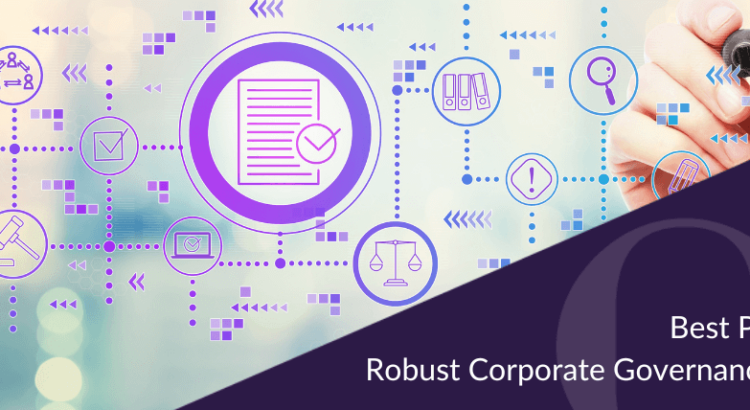
    An effective corporate governance framework is key to the success of any organisation. Besides ensuring compliance with local rules and policies, good corporate governance helps to improve business processes and mitigate risks before they become an issue. These help management build better business strategies to gain a competitive edge. Brand image is also improved, an often overlooked but vital factor in attracting and retaining talent and investors.

    Corporate governance in Asia has taken a centrestage in the recent years. Amongst others, in December 2021, the Singapore Exchange announced mandates on climate, board disclosure and diversity. In November 2022, the Hong Kong Stock Exchange published its “2022 Analysis of ESG Practice Disclosure”, which reviewed significant improvement in the area of board governance of ESG issues. And in January 2022, Bursa Malaysia announced the enhanced requirements in the Main and ACE Market Listing Requirements to further strengthen board independence, quality and diversity.

    As the emphasis on ESG grows, we cannot overlook the importance of corporate governance in Asia, especially when many Asian organisations have concentrated ownership structure such as family participation.

    Download our Best Practices for a Robust Framework to determine if your organisation is adhering to industry best practices in order to reap these long-term benefits.

    Related Business Insights

    Strong corporate governance in Singapore starts with a skilled company secretary

    Strong corporate governance in Singapore starts with a skilled company secretary banner

    Strong corporate governance in Singapore starts with a skilled company secretary

    In recent years, the COVID-19 pandemic has reshaped the corporate landscape of markets the world over. For businesses, survival has meant adapting to a new level of uncertainty and change. As we start to emerge from the pandemic stronger and better, Asia-Pacific businesses are pursuing corporate governance so that they will thrive while being in compliance with all applicable laws, rules and regulations.

    Read on as Samatha Tai, Regional Managing Director, Corporate Secretarial, delves into the significance of corporate governance in Singapore, and explains how business executives can use values-driven governance approaches to ensure positive results. We will also examine the crucial role of the company secretary in guiding and managing contemporary corporate governance initiatives.

    What is corporate governance?

    Within an organisation, the meaning of corporate governance is to enhance performance, maintain operational integrity and maximise value for all stakeholders. Businesses that successfully meet corporate governance standards are better positioned to accomplish their objectives, secure investment and outshine competitors.

    Furthermore, company-wide corporate governance can help mitigate the risk of misconduct, therefore protecting a business from penalisation.

    “Under the Prevention of Corruption Act and related legislation, Singapore’s Corrupt Practices Investigation Bureau has the power to investigate corruption, money laundering and bribery, and take measures to deter and punish offenders,” Samantha says. “So businesses need to ensure they have suitable procedures in place.”

    Samantha goes on to say, “While compliance with the Code of Corporate Governance is not mandatory in Singapore, its alignment with fiduciary duty makes it a vital investment for any leader. Fiduciary duty is taken very seriously. Regulators take swift action against directors – including independent directors – who fail to fulfil their duties.”

    A successful corporate governance framework would include:

    • the creation of customised policies; and
    • company-wide compliance with those policies.

    Stewardship of this function usually resides with the board of directors of a company, with the company secretary playing a critical ancillary role.

    Corporate Governance

    How company secretaries support good governance

    Historically, the company secretary performed a largely administrative role. Today, the company secretary performs a vast range of important responsibilities in their capacity as a statutory officer. This includes serving as the nexus between the board of directors, senior management and stakeholders (including regulatory bodies).

    Broadly, company secretaries support the board of directors and executive management with:

    • Board practices
    • Regulatory and legal compliance
    • Shareholder relations
    • Subsidiary management

    They also assist with the adoption of digital technologies, such as board management and ESG software, to strengthen corporate governance while also improving board and shareholder processes.

    Samantha explains that the current role of the company secretary is detailed in the Code of Corporate Governance.

    “In Singapore, the advice of the company secretary on corporate governance issues is sought because they attend all board meetings, know the applicable policies and understand compliance obligations,” she says. “They are able to recommend corporate governance processes that need to be put in place. This could relate to board structure or the company’s policies and code of ethics, for example.”

    A company secretary’s thorough knowledge of laws, rules and regulations means they can ensure corporate governance standards are complied with.

    It is worth noting that the role of the company secretary in corporate governance has become so significant that the UK’s Institute of Company Secretaries and Australia’s Institute of Chartered Secretaries and Administrators have both rebranded to the ‘Chartered Governance Institute’ to reflect this.

    Company secretary and boss

    Ways to elevate your corporate governance

    Good corporate governance is set to become increasingly important in the coming years. Regulators are highly likely to introduce new recommendations for both public and private entities. Companies that continue to meet best-practice standards as they expand will be in a strong position to seize new opportunities and respond to market demands.

    By taking these four steps, you can lead your organisation towards exceptional corporate governance.

    1. Appoint a skilled company secretary in Singapore

    To begin, make sure your business complies with current regulatory rules and applies best practices, particularly those described in the Code of Corporate Governance (The Code). This also means adapting to meet new standards as they are introduced.

    “The Code aims to promote high levels of corporate governance in Singapore by putting forth Principles of good corporate governance and Provisions with which companies are expected to comply”.

    To satisfy this requirement, a qualified and experienced company secretary would assist with the establishment of a group-wide framework for corporate governance. The framework would include a code of conduct, as well as policies and procedures for corporate governance issues such as whistleblowing, anti-corruption, board diversity and sustainability.

    Company secretaries help uphold corporate governance by:

      • Staying up to date with evolving standards
      • Ensuring compliance
      • Carrying out gap analyses
      • Advising on best practices

      Because of this, outsourcing your Company secretary is a popular choice for business leaders who wish to receive specialist advice that’s tailored for their organisation.

      2. Develop comprehensive, customised policies

      Due to Singapore’s demanding workloads at a senior level, companies can be tempted to resort to cookie-cutter solutions when creating their corporate governance policies.

      “But there is a whole lot more to corporate governance than just policy creation,” Samantha warns. “For corporate governance frameworks to work, you have to have intimate knowledge of the workings of your organisation and the mechanism of the Code of Corporate Governance.”

      Effective corporate governance policies:

      • are detailed and exhaustive;
      • reflect organisational values;
      • suit the organisation’s size and industry; and
      • explain how good governance is applied in practical contexts.

      3. Use integrated reporting

      While it is important that your corporate governance policies and reports are up to standard, good governance cannot be accomplished on paper alone. Samantha suggests that integrated reporting is likely to become mandatory in the years ahead.

      “Integrated reporting is a process founded on integrated thinking which espouses communicating how a company’s governance, strategy, performance and prospects can support value creation,” Samantha says. “It adds significance to your annual report.”

      Adopting integrated reporting allows for better employee and shareholder engagement, as well as enhanced value creation – two major benefits that are difficult to achieve when looking at reporting as a mere compliance exercise.

      All members of an organisation are responsible for pursuing good governance, so it is also important to demonstrate its value to board members and employees. You can do this by explaining how corporate governance practices are vital tools for improving company performance, rather than arbitrary obligations that must be fulfilled.

      “Effective corporate governance is embedded into the daily operations of a company,” Samantha says. “It’s not just a compliance policy.”

      Integrated reporting

      4. Embed and emphasise ESG in your organisational culture

      By aligning your company’s culture with its Environmental, Social and Governance (ESG) initiatives, you can help employees better understand the concept of corporate governance and their role in it.

      An external ESG professional can help you communicate key messages, maintain a timely ESG reporting schedule and ultimately build a constructive company culture.

      Due to the current world economic climate, many business leaders are so focused on navigating a challenging economy that they tend to neglect ESG matters.

      “But remember, the ‘social’ element of ESG is about your staff,” Samantha says. “At the end of the day, taking care of your people will impact your profitability positively.”

      To promote top-down corporate governance, regulators are now encouraging greater board involvement in ESG practices. Standards for these practices also continue to evolve on a country-specific basis.

      Keep in mind that board directors are ultimately responsible for mitigating ESG risks and making decisions that increase shareholder value. For this reason, it is critical that businesses establish an extensive ESG strategy that benefits all members of the organisation – including its shareholders and employees – and the environment.

      ESG Strategy

      Start implementing good governance practices today

      In summary, the effectiveness of your corporate governance practices will determine your business success in the years to come.

      As such, it is important that your board members and executive teams help drive the development and implementation of your governance framework. They should also be supported by a company secretary who shares their organisational values.

      A good company secretary is one that offers diverse knowledge, strong ethical guidance, sound judgement and excellent communication skills.

      Having a reliable company secretary managing your corporate governance also enables your executive staff to focus on other pressing business objectives, such as taking your company digital.

      Contact BoardRoom’s corporate secretarial experts to find out how we can help your business achieve its governance goals.

      Related Business Insights

      The company secretary role is evolving in Singapore: find out how

      The company secretary role is evolving in Singapore

      The company secretary role is evolving in Singapore: find out how

      Company secretaries were traditionally responsible for largely administrative duties, from taking minutes to filing annual returns, among other internal tasks. However, the role is evolving as corporate governance and organisational management becomes more rigorous and important. Thanks to the reimagining of business in the age of digital transformation, today, most of the administrative aspects of the role are undertaken by technology, leaving the Company Secretary to focus on advisory work and business development. 

      In Singapore today, the company secretary has a wide range of vital responsibilities across various business functions. They, therefore, play a key role in helping businesses comply and thrive.

      This article explains the evolving company secretary role and how a knowledgeable company secretary can help your business outperform the competition.

      Why are company secretaries essential?

      The secretary’s role is indispensable in supporting business operations and ensuring compliance with the Companies Act and all relevant laws, rules & regulations.

      Do not underestimate the value of a skilled company secretary if you want your business to prosper – especially in competitive markets. Elevating your governance practices can help improve your business’s performance while maximising benefits.

       The services of company secretaries can include:

      • Company incorporation, setting up and expansion of your business
      • Assessing your group business model and tax structures for efficiency
      • Ensuring corporate regulatory compliance and reporting with relevant laws, rules and regulations
      • Advisory, drafting and reviewing corporate governance practices such as environmental, social and governance ESG and corporate governance framework

      Because they help ensure companies achieve their goals with determination and transparency, company secretaries are commonly regarded as ‘the voice of reason’ in a business.

      CompanySecretary

      The duties of a company secretary in Singapore

      Asia-Pacific (APAC) countries have varying laws, rules, and regulations regarding company secretarial matters. By law, all new companies in Singapore are required to appoint a company secretary.

      The company secretary role encompasses several essential responsibilities, including:

      Planning annual general meetings
      Attending and taking minutes of board and board committee meetings
      Preparing and filing annual returns
      Conversing with directors and shareholders
      Attending to the division, consolidation and transfer of shares
      Updating secretarial records, including statutory registers
      Updating the board on regulatory changes

      Company secretaries can support your business at any stage of its lifecycle, whether you are starting a business in Singapore or navigating the process of liquidation.

      What makes a good secretary?

      A good company secretary demonstrates adaptability, meticulousness, and advanced communication skills. These traits are crucial for handling complex corporate governance tasks effectively.

      Other qualities of an excellent secretary include:

      • Strong Knowledge Base: A good company secretary must be highly knowledgeable about local laws and regulations, ensuring the business operates smoothly and avoids penalties.
      • Proactive Problem-Solving:Anticipating challenges and proposing tailored compliance solutions.
      • Stakeholder Engagement: Collaborating effectively with directors, shareholders, and other stakeholders to promote a culture of strong governance.
      • Tech-Savviness: Leveraging technology to streamline administrative tasks and provide strategic insights.

      What role does the company secretary currently play?

      Traditionally, the secretary role was primarily administrative, with limited decision-making authority. But today, they are highly knowledgeable about local laws, rules and regulations that companies are subject to. Directors and shareholders often seek the company secretary’s opinion on how to address business compliance-related issues, which indicates that the position has evolved into a crucial advisory role for businesses.

      In recent years, guiding the board on ESG matters has been a new focus area for company secretaries. The most reputable company secretaries have had to work hard to achieve the level of knowledge required. This ESG proficiency includes a deep understanding of how ESG relates to company strategy, financial statements, and possible business implications.

      ESG performance support

      Now that investors, regulators and consumers have high expectations for strong ESG, companies in Singapore are under pressure to display good governance. A 2020 KPMG survey found that sustainability reporting throughout APAC grew from 78–84% since 2017.

      Given their extensive engagement with the board and company operations, skilled company secretaries are vital when it comes to making ESG strategies a success.

      Company secretaries often help drive ESG performance by:

      • Working closely with sustainability personnel to mitigate risks and capture opportunities;assisting with the implementation of best-practice ESG measures (e.g. whistleblower protection policies)
      • Establishing routine ESG auditing;
      • Ensuring honest ESG reporting in communications materials; and
      • Complying with ESG regulatory requirements

      Regulatory compliance support

      A key aspect of the secretary’s role is ensuring compliance with relevant laws, rules and regulations. Directors and senior management must be able to rely on the advice of the company secretary.

      Furthermore, company secretaries help organisations plan for potential changes in relevant laws, rules and regulations.

      Your company secretary can help promote regulatory compliance in several ways, including:

      • Ensuring timely submission of transactions to the Accounting and Corporate Regulatory Authority (ACRA)
      • Organising board and shareholder meetings and minuting such meetings
      • Preparing shareholder and board resolutions
      • Notifying ACRA of any changes to statutory information
      • Maintaining compliance with the Listing Rules of Singapore Exchange Securities Trading Limited (“SGX-ST”) or the SGX-ST Listing Manual Section B: Rules of Catalist, as the case may be
      • Producing corporate governance reports for publication in annual reports

      Competent company secretaries can provide practical compliance solutions without requiring the excessive expenditure of resources by harmonising their own experience with leading-edge technology.

      Prominent challenges in the company secretarial function

      Adaptability and advanced communication skills are crucial traits to seek when selecting a company secretary. When it comes to addressing complex company secretarial matters, these qualities are essential.

      The three primary obstacles that company secretaries may encounter today are as follows.

      1. Monitoring shifting regulatory landscapes

      Ensuring organisational compliance in the face of continuously changing regulatory systems is the biggest challenge for company secretaries. As a way to support ongoing compliance, they usually take the initiative to communicate with authorities on a regular basis.

      Company secretaries can be a critical conduit between businesses and regulators. By securing knowledge of legislative changes in advance, they can help your company prepare for changes before the changes are implemented.

      As a result, there is no need to frantically adjust processes or check off requirements once new rules are introduced.

      2. Providing compliance solutions that are tailor-made

      The most effective compliance framework for your company will depend on a range of factors, including its size, location, industry and listing status. It is important that company secretaries are able to deliver custom business solutions that adhere not only to the organisation’s constitution but also to the Companies Act and any other relevant laws, rules and regulations. 

      When properly tailored, a compliance framework can help an organisation function ethically and successfully.

      3. Cultivating buy-in among stakeholders

      On some occasions, businesses fail to understand the benefits of appointing a capable, well-respected company secretary. This is often reflective of a weak compliance culture in which the opportunities that stem from good compliance are not recognised.

      It is the company secretary’s duty to supervise regulatory compliance efforts throughout the business. They need to engage with directors, shareholders and employees to help them understand:

      • The ‘why’ behind relevant statutory, regulatory and corporate requirements;
      • The reasons why compliance with these requirements is necessary; and
      • The advantages that strong compliance can have for a business.

      For peace of mind that your organisation continues to maintain a high level of compliance, appoint a company secretary that has the same values system as your organisation and believes that strict compliance is integral to business success.

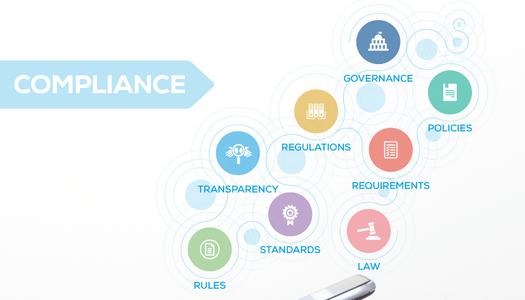
      Compliance

      Seek a corporate secretarial firm that you can depend on

      By working with a reliable corporate services provider, many organisations are finding they can better streamline their operations. In addition to corporate secretarial services, these can include help with share registry and employee stock ownership plans (ESOP), as well as accounting and payroll. Having external support with company compliance also provides high-level personnel with more time to progress expansion goals, and greater opportunity to increase business effectiveness and profitability

      With a corporate secretarial services provider supporting your business, you can:

        Trust that your company incorporation is well managed
        Maintain multi-country compliance through a single contact person
        Increase the efficiency of compliance with cross-border operations
        Benefit from business expansion advice
        Preserve money and time due to a lightened administrative load
        Funnel more resources into your main business goals

        If you have plans to expand your business throughout APAC, it is important to anticipate the differing sets of laws, rules and regulations each region will present, as well as the cultural nuances you will encounter. You must also abide by any legal requirements imposed on any collaborations you enter into in a foreign jurisdiction.

        Businesses whose company secretary lacks the necessary skills, qualifications or attitude to promote strong corporate governance are at risk of being fined for non-compliance of any relevant laws, rules and regulations.

        Know that if you partner with separate corporate advisory services in multiple countries, this may make your operations more complicated. To help simplify your processes, it may be better to engage one provider that runs a number of local offices across APAC.

        GlobalAPAC

        Give your company a competitive edge

        For companies with plans to grow, BoardRoom offers a range of corporate services to support successful expansion. We maintain up-to-date knowledge of local regulatory landscapes and industry best practices, so you can trust us to provide expert advice from start to finish.

        If you are wondering how to appoint a company secretary in Singapore and would like information about BoardRoom’s world-class corporate secretarial services, please contact our specialists today.

        Related Business Insights

        Considering online company incorporation in Singapore?

        1. online company incorporation Singapore

        Considering online company incorporation in Singapore?

        Is it best to use online company incorporation services in Singapore?

        Singapore consistently ranks as one of the best places in the world to do business because of its strategic central location, attractive tax structure, highly competitive economy, and political stability.

        Therefore, it’s unsurprising that the city is also a leading global start-up hub. As the number of new start-ups has grown, online company incorporation services in Singapore have increased.

        While these service providers offer speed and convenience for straightforward setups, businesses with more complex structures will benefit from engaging an expert incorporation services provider.

        What are company incorporation services?

        The process and requirements for company incorporation in Singapore may vary depending on factors such as the type of company, the nationality of the directors and shareholders, and the nature of the business activities.

        After sorting out these factors, new business owners would need to fulfil several requirements, such as preparing the company constitution, filling in the ACRA BizFile, providing a local registered office address and more.

        The complex process can make it challenging for new business owners to embark on their entrepreneurial journey. This is where company incorporation services play a crucial role in simplifying the process and ensuring compliance with legal requirements. By leveraging the expertise of professionals well-versed in company registration procedures, entrepreneurs can establish their companies in Singapore smoothly and seamlessly.

        What do ‘self-serve’ online incorporation services offer?

        Many online incorporation companies have appeared in recent years. They usually offer ‘self-serve’ incorporation model services. Essentially, they take care of the basic company incorporation paperwork and administration for you, including:

        • checking and reserving a company name;
        • preparing registration forms (based on information that you provide through online forms);
        • filing with the Accounting and Corporate Regulatory Authority (ACRA);
        • drafting the company constitution; and
        • preparing the corporate compliance kit (share certificates and registers).

        Incorporating online is a modern trend offering speed and convenience. For example, local businesses can be incorporated within three hours using the ‘self-serve’ method. As a no-frills service, it’s an attractive, affordable option for companies with simple business structures.

        However, there are some pitfalls to be aware of when incorporating your business online. Typically, online incorporation services provider do not provide expert advice and guidance on how to set up an ideal business structure while ensuring your new entity meets its regulatory requirements. Your company may risk increased costs and non-compliance as a result of:

        • selecting the wrong business structure, which has significant long-term implications for tax and personal liability obligations;
        • overlooking important local statutory requirements such as obtaining work permits; and
        • missing out on the valuable corporate tax incentives available in Singapore.
        risk of incorporate business online

        Why engage an expert incorporation service provider?

        There’s a lot more to incorporation than paperwork. While the ‘self-serve’ model takes care of the simple administrative aspects of business registration, it doesn’t optimise your company setup for ongoing growth and profitability.

        Unlike the majority of online incorporation service providers, professional services firms like BoardRoom focus on the bigger picture for your business. In addition to taking care of the business registration paperwork for you, our team of certified professionals can assist you with all aspects of incorporation, including:

        • tailoring the ideal setup and business structure for your company to minimise tax and personal liability obligations;
        • flagging any potential compliance risk oversights;
        • applying for any relevant tax incentives;
        • providing advice on and applying for work permits, residency passes, dependant passes and permanent residency;
        • establishing an efficient, automated payroll process and accounting system for your company; and
        • providing a nominee director, a company secretary or a local registered office, where required, to meet your statutory incorporation requirements.

        Which incorporation service is right for your company?

        Larger companies or those with complex structures are more likely to benefit from working with an expert incorporation service provider such as BoardRoom. Our team of incorporation professionals can guide your company on the most suitable setup and ensure that all compliance requirements are taken care of.

        Using the ‘self-serve’ option may be more appropriate for smaller businesses, particularly those with a limited budget. Additionally, online incorporation can be done relatively quickly when company structures are less complex because the process is more straightforward. For example, you could save a good deal of money if you complete the company incorporation process yourself if you are:

        • a Singaporean citizen wanting to set up your own business; and
        • the only shareholder and do not intend to add more shareholders.

        However, your needs will be very different if you are part of a foreign company looking to enter into the Singaporean market, especially if:

        • you already have several entities in other countries; or
        • you are part of a consortium of businesses looking to incorporate.

        In these cases, your organisation will likely need expert guidance on the best way to set up and structure your new company in Singapore.

        online incorporation services

        Set up your company for long-term success with our incorporation experts

        Online incorporation using the ‘self-serve’ model is a good starting point. However, to set yourself up for success long term, it’s worthwhile investing in a more sustainable and holistic approach that leverages expert knowledge.

        From commencement to completion, BoardRoom’s team of experienced, certified professionals can guide you through incorporation so it’s done correctly for your type of business.

        For over 50 years, we have helped businesses like yours thrive by using our company setup, incorporation, and company secretarial services.

        Speak to one of our incorporation experts today to find out how we could take your business further, faster.

        Related Business Insights

        How to Start a Business in Singapore

        how to start a business in Singapore

        How to Start a Business in Singapore

        How to Start a Business in Singapore

        Looking to start a business in Singapore? You’re not alone.

        Singapore’s thriving business environment attracts companies from around the world, and it’s easy to see why when the country is:

        • consistently rated by the World Bank as the best country in Asia to do business and the second-best nation in the world to do business;
        • ranked first in the world for political and operational stability in the Global Innovation Index 2020; and
        • ranked first in the Asia Pacific (APAC) region and fifth in the world for economic competitiveness by the IMD World Competitiveness Yearbook 2021.

        Expanding into a new international market is exciting for any business, but it also presents its own set of significant challenges. For many executives, the first hurdle is understanding how the company formation regulations and processes work in the new jurisdiction.

         Our guide below gives you an overview of everything you need to know about how to start a business in Singapore.

        Singapore Market Profile

        Office rental pricing: Average monthly rent for grade A office space in Singapore was $SGD 9.90 per square foot for the second quarter of 2021. 

        Average office space density: 10m2 per person 

        Fixed internet download speed: 256.03 megabits per second in July 2021

        Mobile internet download speed: 85.93 megabits per second in July 2021

        Gross Domestic Product US$ bn: 340

        Population (million): 5.70

        Official languages: there are four official languages spoken in Singapore, including:

        • English;
        • Chinese;
        • Malay; and
        • Tamil
          Establish your startup in Singapore

          Benefits of Setting up a Company in Singapore

          As one of the largest business centres in Asia, Singapore offers many benefits to companies looking to establish a presence in the region. Here are seven benefits of why setting up a company in Singapore is a smart choice for businesses:

          Favourable Corporate Tax Structure

          Singapore’s corporate tax is set at a competitive rate of 17% on chargeable income, whether a company is local or foreign. To further support businesses, the government offers several corporate tax relief schemes.

          Tax Exemption Scheme for New Start-up Companies

          Qualifying companies are given the following tax exemptions for the first three consecutive years of assessment (YAs) where the YA falls in:

          YA 2020 onwards
          • 75% exemption on the first $100,000 of normal chargeable income; and
          • A further 50% exemption on the next $100,000 of normal chargeable income.
          YA 2010–2019
          • Full exemption on the first $100,000 of normal chargeable income; and
          • A further 50% exemption on the next $200,000 of normal chargeable income

          Partial Tax Exemption for All Companies

          All companies, including companies limited by guarantee, can enjoy the following tax exemption:

          YA 2020 onwards
          • 75% exemption on the first $10,000 of normal chargeable income; and
          • A further 50% exemption on the next $190,000 of normal chargeable income.
          YA 2010–2019
          • 75% tax exemption on the first $10,000 of normal chargeable income; and
          • A further 50% exemption on the next $290,000 of normal chargeable income.

          Corporate Income Tax Rebate

          Given to all companies:

          YA 2020 onwards
          • 75% exemption on the first $10,000 of normal chargeable income; and
          • A further 50% exemption on the next $190,000 of normal chargeable income.
          YA 2013–2019

          Attractive Corporate Tax Incentives

          Singapore offers a range of tax incentives designed to support business growth and innovation, making it an attractive destination for setting up a business.

          These are some of the key incentive schemes:

          Pioneer Certificate Incentive

          Granted to companies that locate “pioneering” activities that are not carried out in Singapore at the time. It is designed to attract companies in high-tech, innovative, or strategically important industries that can contribute significantly to Singapore’s economic development, helping to establish Singapore as a regional hub for advanced industries.


          Development and Expansion Incentive

          Encourages companies to develop capabilities and/or expand their activities in Singapore. The concessionary tax rate for this incentive is either 5% or 10%, depending on the size of economic investments these companies commit to bringing into Singapore.


          Enterprise Innovation Scheme (EIS)

          Effective from YA 2024 to YA 2028, is designed to help businesses which are focused on research, innovation, and digital transformation. The EIS provides enhanced tax deductions or cash payouts for qualifying expenditures in areas such as R&D, intellectual property registration, and training in innovation.

          Singapore also offers Foreign Income Tax Reliefs and Exemptions, where it does not tax capital gains on the sale of fixed assets or foreign exchange on capital transactions. However, companies (irrespective of tax residency) operating in Singapore are taxed on income sourced in the country and foreign income when remitted to and received in Singapore.

          According to the Inland Revenue Authority of Singapore (IRAS),companies that are Singapore tax residents can enjoy tax breaks on foreign income as follows:

          • Tax Exemption or Reduction: Upfront exemption or reduction in tax imposed on the foreign income when foreign income is derived in a jurisdiction that has an Avoidance of Double Taxation Agreement (DTA) with Singapore;
          • Specified Foreign Income Exemptions: Tax exemption of specified foreign income such as foreign-sourced dividends, branch profits and service income; and
          • Foreign tax credit: Credit for the taxes paid in the foreign jurisdiction against the Singapore tax payable on the same income.

          Generous Grants for Funding

          Supported by the government, the Enterprise Development Grant (EDG) and Productivity Solutions Grant are the initiatives designed to support local businesses:

          Enterprise Development Grant (EDG)

          This provides funding to cover up to 80% of the qualifying project costs, including consultancy fees, budgets for equipment and software and internal manpower costs, for projects that drive innovation, productivity and market success. To apply for the grant, the business must be registered and operate in Singapore with 30% of the local equity owned by Singaporeans or Singapore’s permanent residents. It should also demonstrate its capability to start and finish the project and have a minimum of SGD 400,000 turnover.


          Productivity Solutions Grants (PSG)

          This grant aims to cover the costs of IT solutions, equipment and consultancy services for SMEs, enabling them to adopt technology to improve their productivity. It offers up to 50% of the qualifying costs for each company. Similar to EDG, only registered and operating businesses in Singapore can apply for the grant. However, the project must involve the adoption of technology to be eligible.

          Whether you are setting up a business or have been operating an SME company for more than years, the government in Singapore provides many grant schemes in support of startups and companies across sectors. You can refer to GoBusiness Singapore for the full list of grants available.

          Enterprise Financing Scheme for SMEs and Startups

          Enterprise Financing Scheme (EFS) is offered in Singapore to assist SMEs and startups in securing financing for their business operations. This government-backed scheme provides financing to eligible SMEs for various business purposes, including Green Loans for sustainable projects, SME Working Capital Loans for investments in fixed assets, and Venture Debt Loans in support of innovative projects by enterprises.

          To be eligible for the scheme, the business must meet the following requirements:

          • Registered and physically located in Singapore;
          • 30% of the local equity must be directly or indirectly held by Singaporeans or Singapore’s permanent residents;
          • Group annual sales turnover should not exceed SGD 500,000,000.

          Highly Competitive Economy

          Singapore is one of the most competitive economies in the world, ranking first in the Asia Pacific (APAC) region and fifth in the world for economic competitiveness by the IMD World Competitiveness Yearbook 2021.

          No foreign ownership restrictions

          100% of the shares of incorporated companies in Singapore can be owned by foreigners or foreign companies (except for broadcasting and domestic news media).

          There are no export tariffs and foreign exchange controls in Singapore, but there are import tariffs on:

          • intoxicating liquors;
          • tobacco products;
          • motor vehicles;
          • petroleum products; and
          • biodiesel blends.

          Bilingual Business Communication

          As Singapore’s primary business and administrative language, English is widely used in Singapore, making it easier for foreign investors to establish companies within the region. Additionally, Singapore’s bilingual policy means that many professionals are fluent in both English and Mandarin, which is particularly advantageous for companies looking to tap into the vast Chinese-speaking market in Asia. This bilingual environment ensures that businesses can effectively engage with a diverse range of clients, partners, and stakeholders, bridging cultural and linguistic gaps while enhancing regional business operations.

          A Step-By-Step Guide to Start a Business in Singapore

          Here is our step-by-step guide for how to start and register a business in Singapore:

          Choose a Business Structure Type

          The most common types of business structures operating in Singapore are:

          • Sole Proprietorship: This is the simplest form of business structure, owned and operated by a single individual. It’s easy to set up and manage, with minimal legal formalities. However, the owner is personally liable for all debts and obligations of the business, meaning their personal assets are susceptible to risks.
          • Partnership: A partnership is a business structure formed by two or more individuals who agree to share profits and losses. There are two main partnership types — general and limited. In a general partnership, all partners have equal rights and responsibilities. In a limited partnership, there is at least one general partner with unlimited liability and one or more limited partners with limited liability.
          • Limited Liability Partnership (LLP): An LLP is a hybrid business structure that combines the characteristics of a partnership and a company. Similar to a company, it offers limited liability for all partners. However, unlike a company, an LLP is not a separate legal entity. While this protects partners’ personal assets from business debts, they remain personally liable for their own actions and liabilities, as well as for the actions of fellow partners within the scope of the LLP’s business.
          • Private Limited Company: A private limited company is a separate legal entity from its owners. Shareholders have limited liability, meaning their personal assets are generally protected from business debts. Private companies are typically owned by a small group of individuals, allowing up to 50 shareholders.
          • Public Limited Company: A public limited company is a separate legal entity that the public can own. Shares of the company can be traded on a stock exchange. Shareholders have limited liability, similar to a private limited company. Unlike private limited companies, this type of business structure must have a minimum of 50 shareholders.
          • Foreign Company Office: Established outside of Singapore, foreign companies can register in the country to start either a representative office, which is not for business purposes, or a branch office. Neither option creates a separate legal entity, however, so all liability extends to the parent company.

          Give Your Business a Name

          Your company must avoid choosing a name that is:

          • the same as an existing business name already approved by the Accounting and Corporate Regulatory Authority (ACRA);
          • undesirable names that are vulgar, obscene, or offensive; and
          • prohibited by order of the Minister for Finance.

          You can search the online business and company name register in Singapore, BizFile, to check if your preferred name is available.

          Set up Your Company Structure

          If you are setting up a company, you need to determine the structure of your company per the following requirements:

          • Directors: a minimum of at least one person. One director needs to be a natural person (i. an individual). Directors must be aged 18 years or older and be either:
          • a Singaporean citizen; or
          • permanent resident; or
          • a person with an Employment Pass; or
          • a person with an Entrepreneur Pass (EntrePass).

          BoardRoom offers a nominee director service to help you meet the local director requirements in Singapore.

          • Shareholders: a minimum of at least one shareholder. 100% of shares can be foreign-owned.
          • Company secretary: a sole director must not act as the company secretary. To start and register a company in Singapore, you must appoint a natural person who lives in Singapore as a company secretary. Companies like BoardRoom can provide expert company secretarial services so that your company can meet all of its statutory obligations in Singapore.
          • Share capital: the minimum issued capital must be at least $SGD1.
          • Registered address: must be a physical address in Singapore, not a P.O. Box. If your business does not yet have local office space, professional service firms like BoardRoom can help your company by setting up a registered office location.

          Submit Company Registration Application

          Once you have decided on a company name and the designated company share structure, you can now proceed to the company registration, officially setting up your own business. If you are a Singaporean or a permanent resident of Singapore, you can apply online via the ACRA’s BizFile+ Portal. Simply use your SingPass, which is digital identification designed specifically for the local citizens, to access the platform. Once you log in, please start the registration and provide the following documents and information to complete the application:

          • Approved company name from ACRA
          • Company constitution (Articles of Association)
          • Identification and residential address of shareholders and directors
          • Signed consent from each director
          • Registered office address in Singapore
          • SSIC code for business activities

          It generally takes only a day to approve the application. Please ensure you prepare all the necessary documents in advance.

          Receive the Business Registration Number

          After the application is approved, the ACRA will issue you a Business Registration Number (BRN). This number, also known as the Unique Entity Number (UEN) in Singapore, is an important legal identifier for the business it is assigned to, as it is required for corporate tax return filing, industry-specific permits, licences, and various transactions with the government. Even if the business details of the company are modified, its BRN will remain unchanged.

          Having a BRN streamlines the compliance processes by eliminating the need for multiple IDs or applications to interact with or fulfil regulatory requirements across various government agency platforms.

          Make Other Permit and Business Licence Applications (If Applicable)

          Depending on the type of business you operate, you may need to apply for other permits and business licences. Find more information about permits and licences here.

          Start a Business as a Foreigner in Singapore

          A foreigner looking to start a business in Singapore that is venture-backed or owns innovative technologies can apply for an EntrePass. This will allow them to submit their application online through BizFile and grow across the region. Additionally, they must also meet the following requirements when setting up their company in Singapore:

          • Appoint at least one director who is a local resident
          • Appoint at least one shareholder
          • Provide a physical address in Singapore as the registered office

          Foreigners without an EntrePass should consider engaging with the services of a registered filing agent, such as BoardRoom.

          Additional Considerations When Setting up a business in Singapore

          During the process of setting up a company in Singapore, it’s also imperative that you pay attention to certain business exemptions and taxes that you need to pay.

          Exemptions from Company Registration

          There are certain forms of businesses that are exempt from undergoing ACRA’s company registration, which include:

          • Sole Proprietorships and Partnerships: Businesses operating solely under the full names of individuals or partners can be exempt from registration. However, if any additional descriptive terms are used in the business name, registration is required.
          • Tax-Exempt Entities: Certain entities, such as specific institutions, authorities, and funds, may be exempt from registration if their income is tax-exempt under the Income Tax Act.
          • Registered Societies, Organisations, and Trade Unions: Societies, organisations, and trade unions registered under their respective laws are generally exempt from business registration.
          • Dormant Companies and Exempt Private Companies: While dormant companies and exempt private companies (EPCs) may enjoy certain exemptions, they still need to be registered and comply with specific requirements, such as maintaining accounting records and preparing financial statements.

          Corporate Income Tax Filing

          For businesses registered under the Companies Act, corporate income tax return filing is mandatory. Thus, when you are setting up a business in Singapore, you need to understand such obligations to ensure future compliance with regulations.

          The entire tax filing process is done through the online portal of the Inland Revenue Authority of Singapore (IRAS), involving 2 key steps:

          Estimated Chargeable Income (ECI): Companies must submit an ECI within three months from the end of their financial year. However, certain exemptions apply if a company’s annual revenue is below a specified threshold and if ECI is zero.

          Tax Return Filing: Companies must file the appropriate tax return form (Form C-S, Form C-S (Lite), or Form C) based on their eligibility and complexity of returns. The deadlines for filing these documents are typically within three months of your financial year-end for ECI and November 30th of the Year of Assessment for the tax return.

          As sole proprietors and partnerships are not classified as companies, they have separate tax filing requirements, which can be viewed in detail on the IRAS’s website.

          How Can BoardRoom Ensure You Successfully Start a Business in Singapore?

          While it can be complex, setting up a business in Singapore as a foreigner doesn’t have to be difficult. Our team of company incorporation experts at BoardRoom can guide you through every step of the incorporation journey to make it as smooth and seamless as possible.

          Not only can our team help you incorporate with ease, but we can also take care of your company secretarial needs.

          Speak to one of our specialists today to get started in setting up a business in Singapore.

          Related Business Insights

          Register your Data Protection Officer (DPO) via ACRA’s Bizfile

          Register your Data Protection Officer (DPO) via ACRA’s Bizfile

          PDPA & Data Protection Officer

          Personal Data in Singapore is protected by the Personal Data Protection Act 2012 (“PDPA”) which came into effect in 2014. Essentially, the PDPA governs the collection, use and disclosure of personal data legitimately.

          Most organisations in Singapore handle personal data in one way or another.  In order to ensure that such personal data is appropriately safeguarded and responsibly managed, the PDPA stipulates that it is mandatory for such organisations to appoint a Data Protection Officer (“DPO”). 

          The DPO can be an individual or a team and they can be employees of the organisation or an externally appointed third-party.  The key role of the DPO will be to ascertain that the policies and practises of the organisation in relation to personal data comply with the requirements under the PDPA.

          The Personal Data Protection Commission (“PDPC”) in Singapore administers and enforces the PDPA and serves as Singapore’s main authority in matters relating to personal data protection. PDPC has recently collaborated with the Accounting and Corporate Regulatory Authority (“ACRA”) to allow for organisations registered with ACRA to register and/or update their DPO’s name and contact information via ACRA’s BizFile+ using their CorpPass accounts.  With this in place, ACRA-registered organisations that wish to register their DPO details on the PDPC website will now be automatically directed to ACRA’s BizFile+ to do the registration. Non-ACRA registered organisation can continue to register details of their DPO on the PDPC website.

          Though registering details of the Data Protection Officer is not mandatory, it is highly encouraged as this will help DPOs stay connected and keep abreast of relevant personal data protection developments in Singapore to ensure continued compliance with the PDPA. With the shift towards companies demonstrating Accountability towards PDPA and not just passive compliance a DPO is more important than ever. If you would like to know more about what demonstrating Accountability means for your business head over to our article written with PDPA expert Straits Interactive for more information

          Register your DPO via ACRA's Bizfile Now

          Registration and updating of Data Protection Officers’ (“DPOs”) details is now more convenient for Accounting and Corporate Regulatory Authority (“ACRA”) registered companies.

          The recent collaboration between the Personal Data Protection Commission (“PDPC”) and ACRA enables ACRA-registered companies to enrol their DPO under ACRA’s BizFile+ platform instead of the PDPC’s website.

          If you would like more information on this recent change, reach out to our Corporate Secretarial experts today.

          Related Business Insights

          Planning to close a company in Singapore? Here are the three options you have:

          Closing down a company in Singapore

          Planning to close a company in Singapore? Here are the three options you have:

          Closing a Company / Cessation of Business

          Companies of all shapes and sizes go through constant change throughout their life cycle to ensure they remain competitive. Sometimes, change can lead to the closing down of a company, a subsidiary, or just a local branch. These changes could be driven by a wider clean-up and restructuring exercise or are measures to save on compliance and maintenance costs, or the business is simply no longer commercially viable in the operating county.

          How do you know it is time to close down your company?

          Deciding to close down a company is a difficult and important decision that should not be taken lightly. In Singapore, there are several reasons why a company may need to be closed down, including financial difficulties, strategic changes in the business, or a lack of profitability. Here are some signs that it might be time to close your company:

          1. Financial difficulties: If your company is experiencing persistent financial problems, such as cash flow issues, inability to pay debts, or mounting losses, it may be time to consider shutting down.
          2. Lack of profitability: If your company has been struggling to make a profit for an extended period of time, despite your best efforts, it may be time to cut your losses and close down.
          3. Changes in the market: If your company’s products or services are no longer in demand, or if there have been significant changes in the market that make it difficult for you to compete, it may be time to consider shutting down.
          4. Legal issues: If your company is facing legal issues, such as lawsuits, fines, or regulatory challenges that are difficult to resolve, it may be time to consider closing down.
          5. Strategic changes: If you have decided to pivot your business in a new direction that is fundamentally different from your current operations, it may make more sense to close down your current company and start fresh.

          How to close a company in Singapore

          There are three main options for closing a business entity in Singapore and we have set them out below to assist you with determining which is the most effective course of action for your business.

          01 Striking Off a Company

          Pursuant to Section 344 of the Companies Act (Cap. 50) (the “Companies Act”), a company may apply to the Accounting and Corporate Regulatory Authority (“ACRA”) to strike off in Singapore if it is not carrying on business or is not in operation and is able to satisfy the following conditions:

          • The company has not commenced business since incorporation or has ceased trading.
          • The company has no outstanding debts owed to Inland Revenue Authority of Singapore (“IRAS”), Central Provident Fund (“CPF”) Board and any other government agency including ACRA.
          • There are no outstanding charges in the charge register.
          • The company is not involved in any legal proceedings (within or outside Singapore).
          • The company is not subject to any ongoing or pending regulatory action or disciplinary proceeding.
          • The company has no existing assets and liabilities as at the date of application and no contingent asset and liabilities that may arise in the future.
          • All/majority of the director(s) approve the submission of the online application for striking off on behalf of the company.

          It is also important to ensure that there is no outstanding tax credit owing to the company before applying to strike off as and when the company is dissolved, any tax credit due to the company will be paid over to the Insolvency and Public Trustee’s Office.

          An application to strike off a company in Singapore can be carried out directly by the company director. However, companies will usually engage their appointed company secretary or a registered filing agent to save time and hassle. Here are some for your company. Processing time once the application is submitted to the Accounting and Corporate Regulatory Authority is estimated to be approximately four months.

          Any person aggrieved by the striking off can submit an objection against a striking-off application. If ACRA receives any objection, ACRA will inform the company of the objection, and the company is required by ACRA to resolve the matter within two months. Otherwise, the striking off application will lapse.

          A company can be restored within six years after the company’s name has been struck off by a Court Order.

          Closing down a company by striking it off is a straightforward and expeditious process relative to the procedures of winding-up a Singapore company, or liquidation of a business which is discussed below. However, this option is only viable mainly for local companies that are dormant and do not have any assets or liabilities.

          02 Winding up a Company or Liquidation of a Business

          When a Singapore company is wound up or liquidated, the debtor company’s assets are collected and sold off in order to pay its debts. Any monies remaining after all debts, expenses and costs have been paid off are then distributed amongst the shareholders of the company. Upon completion of the winding up process and all related business tractions, the company will then be formally dissolved and cease to exist.

          A members’ voluntary winding up in Singapore may be carried out if the company directors believe that the company will be able to settle its debts in full within 12 months from the commencement of the winding-up. Where a company is unable to pay its debts and wishes to be wound up, it may do so by way of a creditors’ voluntary winding up. In both instances, a liquidator will need to be appointed to carry out all acts required to wind up the company.

          We will only be addressing a members’ voluntary or self-imposed winding up in this article.

          A solvent entity may consider closing down a company by embarking on a members’ voluntary winding up if the company has ceased its business activities, or if the company is not able to generate enough profit to sustain itself, or its existence is no longer required pursuant to a restructuring of the group which the company belongs.

          In a members’ voluntary winding up, the directors of the Singapore company need to lodge a declaration with the Registrar of Companies that the company cannot by virtue of its liabilities continue its business (the “Declaration of Solvency”). An Extraordinary General Meeting (“EGM”) will then need to be convened to, among others, seek shareholder approval to wind up the company and appoint the liquidator.

          A members’ voluntary winding up may commence upon the passing of a special resolution by the members of the company or on the day of lodgment of the Declaration of Solvency with ACRA (where a provisional liquidator has been appointed before the special resolution for voluntary winding up was passed), whichever is earlier.

          Once the affairs of the company are fully wound up, the liquidator will draw up an account of how the winding up had been conducted, including, how the company’s assets had been disposed of and present this to the shareholders at an EGM. Thereafter, the liquidator will need to lodge with ACRA and the Official Receiver a return stating that the meeting has been held with a copy of the account attached.

          The company will be dissolved three months after the lodgement. However, the court has the power to declare the dissolution of a company to be void at any time within two years after the date of dissolution if an application is made by the liquidator or any other interested person.

          Even though closing down a company is a fairly long process, it will ensure a fair and equitable distribution of the company’s assets amongst its creditors and contributories.

          03 Closing the local branch of a Foreign Company in Singapore

          A foreign company’s local branch has to cease its operations in Singapore if the foreign company has been dissolved or is undergoing liquidation by filing the necessary notification with ACRA.

          If a foreign company’s local branch in Singapore has ceased business, the foreign company may apply to ACRA for winding up a company if it is able to satisfy the following criteria:

          • The sole authorised representative is unable to resign because the company has not appointed a replacement.
          • The authorised representative has received no instructions from the company for at least 12 months after a request has been made regarding whether the foreign company intends to continue operations in Singapore.
          • The foreign company has no authorised representative (can be filed only by registered filing agent).

          If the foreign company’s local branch in Singapore is GST-registered, it has to apply for cancellation of the GST registration with IRAS.

          Conclusion

          Singapore provides a range of options for the closing of business entities and companies, from choosing to strike off or winding up. The option you choose would depend on the state of affairs of the business entity and your business strategy.

          We hope this note is useful to you as a starting point for your discussions on the options to close a business entity in Singapore.

          Looking For A Trusted Corporate Secretarial Firm In Singapore?

          Boardroom has over 50 years of experience guiding companies of all shapes and sizes through the various options available within Singapore. Boardroom’s experienced team can not only advise you on the best course of action on how to close a company in Singapore but also take care of the formalities and ensure all statutory requirements are met. Should you require any further information or professional corporate secretarial services and advice, please do not hesitate to get in touch with your usual contact at BoardRoom or contact [email protected].

          Related Business Insights

          5 Questions To Ask When Choosing Any Corporate Secretarial Services

          5 Questions To Ask When Choosing Any Corporate Secretarial Services

          When you incorporate a company in Singapore, you are required by the Singapore Companies Act to appoint a corporate secretary within six months from the date of incorporation. The office of the corporate secretary shall not be left vacant for more than 6 months at any one time.

          A corporate secretary fulfills a range of compulsory duties including: maintaining company records and statutory registers; arranging board meetings; as well as filing and updating documents with the Accounting and Corporate Regulatory Authority (“ACRA”). As the company grows this role increases in complexity, so while companies may opt to get a director to fulfill this role or to hire an independent corporate secretary, this certainly isn’t the best option.

          It is important to realise that the requirements for the corporate secretary of a private company are much simpler than those of a public company. For a private company your corporate secretary simply needs to be an ordinary resident of Singapore and hold the requisite knowledge and experience to fulfil the duties. However, the requirements for the corporate secretary of a public company are much more stringent and complex, which is why a lot of public companies look to outsource this role to a corporate secretarial company.

          With such an extensive list of corporate secretarial companies in Singapore, it can be rather hard to decide on the right one to suit your needs. We’ve created this article to show you the 5 key questions to ask when determining the best corporate secretarial services company to outsource to and how to determine the specific services you require.

          Question 1: Does The Firm Have Staff That Have The Required Qualifications?

          Whether you are a startup or a company looking to go public, it is always wise to engage a company with the best qualifications possible.

          In Singapore, a corporate secretary of a public company must be suitably qualified, and satisfy one of the following criteria, at the very minimum:

          • Been a secretary of a company for at least 3 of the 5 years immediately before his/her appointment as secretary of the public company
          • Qualified person under the Legal Profession Act
          • Public Accountant registered under the Accountants Act
          • Member of the Institute of Singapore Chartered Accountants
          • Member of the Chartered Institute of Secretaries Singapore
          • Member of the Association of International Accountants (Singapore Branch)
          • Member of the Institute of Company Accountants, Singapore

          If the company you are considering has staff who can meet all these requirements, then you can be assured it is fully capable of handling the corporate secretarial services of both public and private firms.

          Question 2: Do They Understand All The Local Rules And Regulations?

          It is especially important to choose a reputable secretarial services firm that is aware of all the local rules and regulations, including any extensions or modifications.

          They have to be able to handle the arrangement of AGMs, tax filing as well as the maintenance and filing of company records within the time stipulated by the authorities. Further to this, a great secretarial services provider should ensure that your business is well organised and in effect ensuring you save costs in the long run.

          The final piece to consider when asking this question is in relation to international law. If your company operates internationally your company secretary will need to have knowledge of the local laws in different countries which may affect local proceedings, not just your domicile region. International law is vastly complex with rules about taxes, trade, currency conversion, and that contracts vary from region to region so it’s important you ask this question when considering not only the company but also the services you require for your corporate secretary.

          Question 3: Do They Provide A Comprehensive Suite Of Solutions?

          As your business grows, it can be beneficial to outsource the non-core functions to a single provider so your time and resources are free to focus on core functions and strategic opportunities. Non-core functions include: financial accounting (recording and preparing the income statement, the balance sheet and the statement of cash flows); tax filing; and company payroll (processing payment instructions, generating salaries and statutory reports, filing bank payments, and creating electronic pay slips).

          Having all these services under one roof makes it easier for you in the short term as you don’t need to spend time hunting for individual providers, but also in the long term with the efficiencies created through having a single provider manage your non-core business operations.

          Moreover, it is likely that your provider will be able to customise a specific package which encompasses all your business needs, allowing you to also enjoy significant cost savings.

          Question 4: Does Your Firm Provide A Dedicated Corporate Secretary Or Account Manager For Your Company?

          Having a single point of contact allows for excellent communication. Such an individual will be familiar with the history and operations of your company.

          This allows for a long-term partnership and for your corporate secretary to grow with your business, providing personalised customer care.

          There is a specific time-frame during which annual returns should be filed, and an Annual General Meeting should be held. Having a dedicated corporate secretary will ensure that all these details will be attended to promptly as non-compliance of any of these regulations could result in penalties.

          Question 5: Am I About Go Public With My Company Or Am I Evolving My Corporate Structure?

          As with any decision, you need to think about the future of your business and what direction you’re heading. If you’re considering going public or even evolving your corporate structure you will need a firm that goes beyond providing the basic corporate secretarial services. You’ll have to look for a provider that has a track record of handling not only regional but also multinational firms.

          In addition to this, you will need to consider the services you may require pending the direction your company takes. As an example this could include any, or even all, of the following services: compliance; employee care; expansion (expat services and payroll); employee plan services; and shareholder support services like poll-voting and share registry.

          If you are considering taking your company public there are further considerations required for the setup process, enlisting the support of a secretarial firm to manage this can ensure they manage the gruelling administrative work, saving you time and guaranteeing the process runs as smoothly as possible.

          Looking For Corporate Secretarial Services In Singapore?

          At BoardRoom, we are a top corporate services firm in Singapore with a 50 + year track record of success serving over 7,300 clients regionally. We are experts in helping companies, from multinational corporations to fast-growing SMEs, allowing them to focus on what matters – growing their business. From handling tax accounting to managing secretarial duties for companies across Asia-Pacific, our full suite of corporate services allow our clients to stay compliant, maximise savings and stay organised for better decision making.

          Contact us today and empower your organisation with greater freedom through our range of corporate solutions.

          Or you can also learn more about our corporate secretarial solutions here.

          Related Business Insights