AGM Management Services in Singapore: Checklist, Voting Controls, and Post-Meeting Deliverables

AGM Management Services in Singapore: Checklist, Voting Controls, and Post-Meeting Deliverables

AGM Management Services in Singapore: Checklist, Voting Controls, and Post-Meeting Deliverables

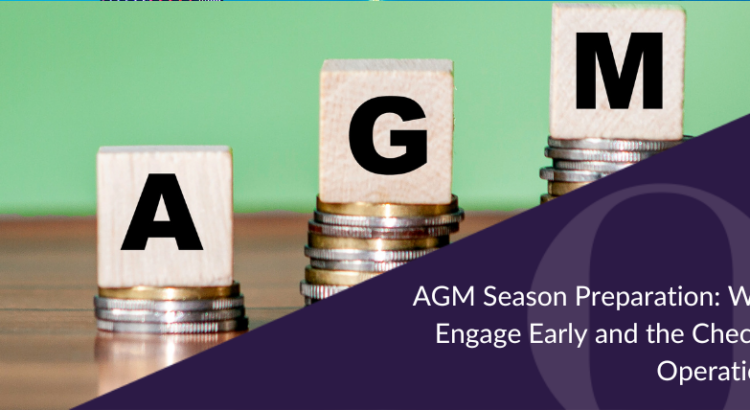
An Annual General Meeting (AGM) is often considered the cornerstone that bridges the gap between shareholders and the issuer. In the current digital landscape, the AGM is an annual opportunity for shareholders to formally engage with the board of directors and management by asking questions and voting on key resolutions.

A positive AGM experience hinges on professional ground staff and smooth meeting conduct. However, robust meeting preparations behind the scenes are equally essential for a successful meeting.

In Singapore, companies increasingly approach AGM delivery as a controlled governance process – not just a one-day event. This involves assigning clear roles, validating inputs early, and ensuring voting integrity, all whilst building an audit-ready evidence trail. The broader governance baseline on what an AGM is and how it fits into the annual compliance cycle is outlined in ACRA’s AGM guidance. For listed issuers, meeting conduct also falls within the wider listed-company framework under SGX Rule 707 and SGX Practice Note 7.5 on General Meetings.

To ensure seamless voting workflow and that shareholder records remain accessible between the relevant parties, companies commonly align their AGM planning and execution with Boardroom – your trusted one-stop corporate services provider for share registry and polling services.

What AGM Management Services Cover

AGM management services comprise a broad scope of end-to-end services, which includes venue booking, proxy processing, attendance registration, on-site polling, and post-meeting reports and audit trails. These services effectively allow your meetings to run seamlessly while maintaining accountability and transparency.

In practice, pulling off successful AGMs often involves flawless coordination between the issuer and key parties, including the share registrar, polling agent, scrutineer, and designated internal decision-makers for exceptions. The roles for each party have to be defined clearly from the outset, including approval responsibilities, escalation points, and record-retention requirements at every stage.

Inputs that Drive a Smooth AGM

Most meeting-day issues rarely occur in isolation. In most cases, they can be traced back to upstream inputs that were incomplete, not properly validated, or finalised too late. Common risk areas include shareholding listings, proxy handling rules and deadlines, resolution texts, quorum assumptions, and internal decision-making framework for managing exceptions.

These issues typically surface downstream as reconciliation challenges, delayed registration, and last-minute changes to voting and results-reporting workflows, increasing both operational pressure and dispute risk.

A strong AGM runbook mitigates these risks by clearly defining process ownership, decision-making authority for exceptions, and escalation paths. This includes identifying decision owners in advance for registration issues, proxy-validation edge cases, technical disruptions, and vote-reconciliation concerns.

Meeting Operations and Polling

The AGM operations and polling portion are deemed the highest-risk area because disputes often arise from mismatches between entitlements, proxy instructions, votes cast, and reconciliation outputs. Dispute prevention, therefore, starts before the meeting day. It depends on clean entitlement data, disciplined proxy validation, documented voting procedures, and a reconciliation method that is repeatable and reviewable.

For hybrid or digitally enabled meetings, operational readiness also depends on the appointed webcaster’s experience and system compatibility. The Singapore Institute of Directors’ Standard for Vendors of Virtual/Hybrid General Meeting Systems provides a useful reference point for what the company should expect around system availability, recovery provisions, and the ability to support voting and shareholder engagement effectively.

Scrutineering, Results Reporting, and the Evidence Pack

Scrutineering strengthens confidence in voting outcomes by adding an independent validation layer. Its effectiveness is maximised when the scrutineer’s workflow is aligned early, clear agreement on the data to be provided for verification, the method of reconciliation, and the documentation to be produced post-meeting.

Results reporting should be timely, internally consistent, and clearly supported by the underlying reconciliation logic. The declared outcome must correspond with the verified voting records, and the supporting documents should be comprehensive to address future internal or external queries without the need for reconstruction.

This is where the evidence pack becomes critical. A complete evidence pack usually includes attendance and registration logs, proxy records and corresponding validation summaries where applicable, entitlement and reconciliation documents, poll voting outputs, scrutineer confirmation, the final results summary, and an exception log detailing any irregularities and how they were resolved.

Companies looking to benchmark current meeting practices may also find the 2025 Singapore AGM Insights Report useful, as it provides operational statistics on meeting trends in the recent year.

Post-Meeting Operational Deliverables and Follow-Through

Post-meeting discipline matters because governance records, follow-up actions, and archiving requirements often sit after meeting day rather than within it.

Companies should require clear post-meeting deliverables, including a formal post-meeting report, a complete evidence pack stored in a controlled repository, and an action list with named owners and follow-through timelines. Where resolutions result in updates to statutory registers, disclosures, or future regulatory filings, the post-meeting handover must be explicit and documented to ensure nothing is overlooked. Strong post-meeting deliverables reduce downstream friction by providing a definitive audit trail – allowing the company to demonstrate what occurred, what was voted on, how results were validated, and where approvals were obtained, should questions arise at a later stage.

Securing AGM Success from Preparation to Execution

Successfully navigating an AGM requires viewing it as a highly controlled, end-to-end governance process. From validating upstream data and establishing clear runbooks to ensuring rigorous polling, independent scrutineering, and a comprehensive post-meeting evidence pack, every stage must align to mitigate dispute risks and satisfy ACRA and SGX standards. Ultimately, robust preparation, seamless meeting-day execution, and disciplined post-meeting archiving are what safeguard your company’s regulatory compliance and preserve shareholder confidence.

Achieving this level of operational precision demands the right expertise. Boardroom provides integrated share registry, poll voting, and comprehensive corporate support services designed to manage your entire AGM lifecycle seamlessly, ensuring your meeting is accurate, transparent, and completely defensible from start to finish. Contact Boardroom today to discuss how we can support your upcoming AGM planning, voting operations, and post-meeting governance requirements.

Corporate Secretarial Services in Singapore: Annual Compliance, Key Filings, and Common Mistakes

Corporate Secretarial Services in Singapore: Annual Compliance, Key Filings, and Common Mistakes

Corporate Secretarial Services in Singapore: Annual Compliance, Key Filings, and Common Mistakes

Annual compliance in Singapore should not be treated as a once-a-year administrative event. It is an ongoing governance system that depends on accurate records, timely filings, disciplined approvals, and reliable documentation throughout the year. When these elements are managed reactively, companies become more exposed to avoidable errors, late submissions, and regulatory scrutiny. When they are managed systematically, compliance becomes more predictable and governance standards become easier to maintain.

This is where corporate secretarial services play a critical role. A professional corporate secretary helps businesses meet the requirements of the Accounting and Corporate Regulatory Authority (ACRA), maintain statutory records properly, and complete required filings on time. Under ACRA’s guidance on appointing key officers, companies in Singapore must appoint a company secretary within six months of incorporation, reflecting how central this role is to the company’s compliance framework.

This article explains what corporate secretarial services in Singapore typically cover, the key annual filings companies must manage, how annual general meeting (AGM), annual return, and financial reporting obligations connect, and the common mistakes that create governance risk.

What Corporate Secretarial Services Cover

In Singapore, corporate secretarial services extend far beyond filing reminders and year-end paperwork. The role of a corporate secretary is to support corporate governance, maintain statutory records, and help ensure that the company meets its obligations under the Companies Act and ACRA filing framework.

Statutory registers, board resolutions, and corporate records

Accurate statutory registers and properly documented resolutions form the core of a company’s governance record. Registers covering directors, shareholders, officers, charges, share movements etc must be updated as changes occur.

Meanwhile, corporate actions such as appointments, resignations, share transactions, or amendments to the company constitution should be supported by formal resolutions and meeting records.

Filings remain aligned with actual corporate activity and the company can demonstrate clear authorisation for its decisions when these essential documents are maintained consistently.

Officer changes and notifications

When directors, shareholders, or key officers change, the related notifications must be handled within the applicable prescribed timelines. Companies that do not monitor these changes closely often encounter problems later when preparing annual filings or responding to queries.

Compliance monitoring and governance support

Professional corporate secretarial services providers typically maintain compliance calendars, monitor filing deadlines, and support governance administration. Their role is not limited to tracking dates. They also help ensure decisions are documented properly and that directors remain informed of their statutory obligations.

Key annual compliance filings and recurring tasks

Singapore companies must manage a range of recurring compliance obligations each year. These filings form the backbone of corporate compliance and should be handled in a structured sequence rather than as isolated tasks.

Annual general meeting

Where applicable, companies must hold an AGM within the relevant timeline. ACRA’s guidance on AGMs explains the purpose of the annual general meeting and the circumstances in which a company may need to hold one or may be exempt.

Annual return filing

After the AGM, or after the relevant financial statements are sent where an AGM is not required, the company must file its annual return with ACRA. According to ACRA’s annual return filing guide, all Singapore-incorporated companies are required to file annual returns so that the company’s information on the public register remains up to date.

Financial reporting and XBRL filing

Many companies must submit financial statements as part of their annual return filing, and where applicable these are filed in XBRL format. ACRA’s XBRL filing guidance explains the filing framework, while specialist support such as BoardRoom's XBRL Conversion & Filing Services can help companies prepare structured financial data correctly.

Ongoing compliance updates

Companies must report corporate changes as they occur beyond the annual deadlines. These continuous updates, which includes the statutory registers, board resolutions, and corporate records, are often where compliance lapses originate. Treating these updates as part of routine governance rather than ad hoc tasks helps prevent gaps from accumulating over the year.

How AGM, annual return, and financial reporting connect

These obligations should not be viewed separately. AGM readiness, annual return filing, and financial reporting are closely linked. The annual return can only be completed accurately if the company’s records, including shareholder and officer details, and financial reporting documents are already complete and internally consistent.

ACRA’s framework on what companies have to file each year and its guidance on annual general meeting and annual return filing breaches make this relationship clear. For most non-listed companies, the AGM and annual return deadlines are tied to the financial year-end, and missing one step can create downstream filing problems.

This is why companies often benefit from managing these obligations as one integrated compliance cycle rather than as separate annual tasks.

Common compliance mistakes and their impact

Even well-managed companies can encounter compliance issues when their corporate secretarial processes are fragmented or under-resourced. Several recurring problems appear more often than others.

Outdated statutory registers

When corporate changes occur but the registers are not updated promptly, inconsistencies arise between internal records and ACRA filings. This can cause rework, delay submissions, and weaken confidence in the company’s compliance controls.

Missing resolutions

Corporate decisions that are not supported by proper resolutions or meeting records create governance gaps. Without supporting documentation, it becomes more difficult to demonstrate how decisions were authorised.

Late ACRA filings

Delays in the filing annual returns or related documents will attract financial penalties and may also lead to regulatory enforcement actions against the company and its officers. ACRA states that company officers may face enforcement action for failing to file annual returns on time, and its breach guidance outlines filing deadlines tied to financial year-end.

Weak evidence trail

Companies should be able to produce the records that support filings, including board resolutions, AGM minutes, shareholder approvals, and filing confirmations. Without a proper evidence trail, the company’s compliance position becomes harder to defend during reviews, audits, or regulatory queries.

Controls and simple governance practices that work

An effective compliance framework does not need to be overly complicated, but it does need to be consistent. Companies with stronger compliance outcomes usually apply a few simple governance controls well.

Clear ownership of compliance

Directors remain legally responsible for compliance obligations even when work is outsourced. Internal ownership should therefore be clear, with one person or function responsible for coordinating changes and maintaining visibility over deadlines.

Compliance calendar

A structured compliance calendar helps track AGM timing, annual return deadlines, financial statement preparation, and all other required updates. It should be maintained actively rather than reviewed only when filing season approaches.

Monthly compliance reviews

Waiting until year-end often creates avoidable errors. A monthly or quarterly review process helps verify whether officer records, registers, resolutions, and filing requirements remain current.

Approval workflows and audit trail

Corporate actions should follow documented approval procedures. Clear sign-off rules help ensure that changes are properly authorised and that supporting records are retained consistently.

Evidence pack discipline

Companies should maintain organised records, including board resolutions, meeting minutes, shareholder approvals, financial statements, and filing confirmations. Businesses setting up operations in Singapore may also benefit from company incorporation services so that the governance framework is structured correctly from the start.

Practical annual compliance checklist

A structured checklist helps finance, legal, and governance teams maintain consistent compliance practices throughout the year.

Monthly

  • Update statutory registers for corporate changes.
  • Record resolutions and approvals.
  • Review compliance calendar deadlines.

Quarterly

  • Verify officer and shareholder records.
  • Confirm supporting documentation for corporate actions.
  • Review whether any filings or approvals remain outstanding.

Before AGM

  • Prepare financial statements.
  • Draft AGM resolutions and notices where required.
  • Review prior meeting minutes and supporting records.

After AGM

  • Finalise AGM minutes.
  • Prepare the annual return filing.
  • Confirm the company particulars and financial information to be submitted.

Annual filing stage

  • Submit the annual return to ACRA.
  • File financial statements and XBRL reports where required.
  • Retain confirmation records of what was filed and when.

Documentation

  • Archive resolutions, meeting minutes, and filing confirmations.
  • Maintain a clear compliance evidence pack.

Companies that follow this systematic approach are generally better positioned to meet ACRA filing expectations and maintain stronger governance standards throughout the year.

Strengthening Compliance with Corporate Secretarial Support

Annual compliance in Singapore is a continuous governance obligation and not just a periodic administrative task. Compliance risks are reduced and internal controls are strengthened when organisations manage their corporate secretarial responsibilities proactively.

By integrating AGM preparation, financial reporting, and annual return submissions into a coordinated cycle, supported where necessary by professional corporate secretarial services, businesses can efficiently meet ACRA’s expectations and uphold stronger governance standards throughout the year.

Expand Your Knowledge on Compliance and Reporting

Your organisation might need a deeper insight on how to maintain a strong corporate governance in Singapore. Our comprehensive guide to XBRL filing requirements outlines the technical and procedural considerations for preparing financial statements in XBRL format.

For a structured overview of the key financial, regulatory, and administrative tasks businesses must accomplish towards year end, you can review our complete checklist for compliance.

These resources offer actionable reference points to help your business maintain clarity, consistency, and regulatory readiness. Contact us if your organisation requires further support in managing corporate secretarial obligations and let us discuss how we can assist.

Corporate Governance Health Check Before Filings: Safeguarding Resolutions, Registers, Controls, and the Evidence Trail

Corporate Governance Health Check Before Filings: Safeguarding Resolutions, Registers, Controls, and the Evidence Trail

Corporate Governance Health Check Before Filings: How to Safeguard Resolutions, Registers, and the Evidence Trail

It is a common misconception that filing pressure begins with the annual return. This is usually not the case for a number of Singapore companies. It starts when underlying records are incomplete, inconsistent, or difficult to verify. Outdated officer details, missing resolutions, incomplete statutory registers, and weak document control create avoidable delays when deadlines approach.

A governance health check mitigates these risks directly. It is a structured review of records, approvals, and filing dependencies before submission deadlines. For companies supported by internal teams and external advisers, it is one of the most effective ways to reduce rework, avoid compliance gaps, and improve filing confidence.

Why Clean Records Matter Before Filing

An annual return is not an isolated task. Filing requires companies to confirm that core corporate and statutory records are up to date. This includes registered office details, business activities, officer information, shareholder data, and any registered charges or loans.

The Accounting and Corporate Regulatory Authority (ACRA) requires that all information is accurate at the point of filing. Incorrect data increases the risk of rejection, penalties, or follow-up queries, each of which delays the process.

Timing also matters. In Singapore, listed companies generally must hold an Annual General Meeting (AGM) within four months after the financial year-end, while non-listed companies have six months. Private companies may be exempt or may dispense with AGMs, however the company must confirm its status before filing.

Financial statement filing adds another layer of complexity. Depending on entity type, companies may file Full XBRL, Simplified XBRL, PDF, or qualify for exemptions. The ACRA XBRL filing requirements show that incomplete records slow submission and increase error risk.

Late or inaccurate filing is a serious issue. It introduces cost, disrupts internal workflows, and signals weak governance controls.

What to Review in a Corporate Secretarial Health Check

Company particulars and officer records

Start with basic company particulars that frequently cause delays. Confirm the registered office address, business activities, directorships, company secretary details, and auditor information.

Where officers have been appointed or withdrawn, internal records must align with what has been lodged with ACRA. Discrepancies are a common reason for error in filing.

Statutory registers

Statutory registers must be reviewed in full. This includes the register of members, register of directors, and where applicable, the register of registrable controllers, nominee directors and nominee shareholders.

Each register must be complete, current, and supported by source documentation. Missing or outdated entries weaken the overall control environment and complicate filing preparation.

Share capital and charges

Shareholding records, issued share capital, and registered charges must match both the annual return and financial statements.

In practice, discrepancies often appear between finance records, board approvals, and secretarial records. These differences must be resolved before filing and not after rejection triggers further review.

Supporting evidence

Every material change must have a clear evidence trail. This includes signed board resolutions, written shareholder resolutions, meeting minutes, Bizfile lodgements, and transaction documents.

The objective is straightforward: if a regulator, auditor, or director requests justification, the company should be able to produce supporting documentation without reconstruction.

Where Filing Readiness Usually Breaks Down

Most filing delays stem from control failures rather than legal complexity. Common breakdowns include:

  • Missing or unsigned approvals
  • Inconsistent dates across registers, resolutions, and financial documents
  • Fragmented document storage across business units
  • Outdated records that were never updated after operational events

These issues create confusion, slow verification, trigger repeated queries, and undermine confidence in the final filing. They also expose the root problem which are weak change-management controls and insufficient document governance across departments.

Build an Evidence Pack Before the Deadline

A well-structured evidence pack improves filing readiness. It should not be created at the deadline, but should be maintained throughout the year.

A clear structure includes four controlled folders:

  • Corporate records: Company profile, statutory registers, constitution
  • Governance documents: Resolutions, AGM minutes, exemption records, meeting notices
  • Finance records: Financial statements, working papers, XBRL files
  • Transaction documents: Share movements, officer changes, financing records

This structure ensures that all records are organised, complete, and accessible. It also improves coordination between accounting and corporate secretarial teams.

A Practical 30-Day Fix Plan

Week 1
Gather and compare

Collect the latest company profile, statutory registers, resolutions, financial statements, and filing calendar. Compare versions to identify gaps, missing approvals, inconsistent dates, and unsupported entries.

The objective at this stage is visibility rather than perfection.

Week 2
Correct missing records

Update incomplete registers, address overdue filings, and prepare missing approvals. Resolve missing signatures and recordkeeping discrepancies. Prioritise statutory compliance gaps before operational refinements.

Week 3
Reconcile the filing set

Align share capital, officer records, AGM status, and financial statements. Confirm the appropriate XBRL filing pathway, if required, and resolve any cross-team inconsistencies.

Week 4
Lock the process

Assign ownership for recurring tasks, standardise document naming conventions, formalise version control, and set review timelines for future cycles.

The health check delivers long-term value when it becomes a recurring governance control.

Stronger Corporate Secretarial Controls Reduce Filing Risk

A governance health check is not an added layer of complexity, but a control mechanism that ensures records, approvals, and filings remain reliable throughout the year. When companies maintain accurate data, the filing process becomes predictable and defensible.

Before submission, companies should ensure that:

  • Particulars are current
  • Officer and shareholder changes are properly recorded
  • Statutory registers are complete
  • AGM status is confirmed
  • Financial statements and XBRL files are aligned.

BoardRoom works with companies to establish these controls. Our corporate secretarial specialists, governance processes, and integrated share registry services and AGM support ensure that shareholder records, resolutions, and filings remain aligned regardless of operational complexity.

For organisations preparing for the next filing cycle, now is the time to assess the stability of your governance environment. A structured health check provides a proven pathway to reduce risk, improve coordination, and strengthen compliance outcomes.

To speak with our team about conducting a governance health check or enhancing your filing readiness, contact us for a tailored corporate secretarial support. We can help you build a more resilient governance framework and ensure every filing is complete, accurate, and on time.

GST Reporting in Singapore: Filing Workflow, Common Mistakes, and a GST Return Checklist

GST Reporting in Singapore: Filing Workflow, Common Mistakes, and a GST Return Checklist

GST Reporting in Singapore: Filing Workflow, Common Mistakes, and a GST Return Checklist

Businesses operating under Singapore’s Goods and Services Tax (GST) regime should treat reporting not simply as a filing obligation, but as part of a sound financial control environment. Every GST-registered business must submit its GST return to the Inland Revenue Authority of Singapore (IRAS) within the prescribed timeline. Yet despite clear rules, finance teams still encounter delays, reconciliation issues, and avoidable reporting errors.

In most cases, the difficulty does not lie in the GST framework itself. Filing challenges typically arise from disorganised accounting records, incomplete supporting documentation, inconsistent transaction treatment, or the absence of a structured review process before submission.

In practice, GST reporting is most effective when it sits within broader finance and tax processes, supported by reliable accounting and corporate tax services, rather than being handled as a stand-alone tax task.

This article outlines how GST reporting in Singapore should be managed, the common operational issues that compromise compliance, and the internal controls finance teams can apply each reporting cycle to improve accuracy and reduce risk.

What is a GST Return in Singapore?

A GST return in Singapore is the formal report submitted by a GST-registered business to IRAS for a specific accounting period, typically using the GST F5 form via the myTax Portal. The return summarises taxable business activity for the period, including standard-rated and zero-rated supplies, exempt supplies (where applicable), output tax collected, taxable purchases and input tax claimed, and the net GST payable to or refundable by IRAS. IRAS requires all figures to be reported in Singapore dollars, and businesses must e-File a ‘nil’ return (i.e., report ‘0’ in all boxes) even where there is no activity in the accounting period.

Accurate GST reporting depends not only on applying the correct tax treatment, but also on complete accounting records, reliable reconciliations, valid tax invoices, and a consistent approach to foreign currency conversion where applicable.

What a GST Return Covers

A Singaporean business’s GST return is driven by two principal components – output tax and input tax.

Output tax

GST charged on taxable supplies made to customers.

Input tax

GST incurred on business purchases and expenses that are claimable under IRAS rules.

If output tax exceeds input tax, the business pays the difference to IRAS. If input tax exceeds output tax, the business may be entitled to a refund, subject to the applicable rules and supporting documents.

As these figures are derived from accounting records, invoices, adjustments, and supporting schedules, the accuracy of a GST return depends directly on the quality of the period-close and reconciliation process.

Operational Bottlenecks That Disrupt GST Reporting

Even experienced finance teams encounter GST compliance challenges when foundational processes are weak. In most cases, the problem is operational rather than technical.

Incomplete transaction data

Sales records, supplier invoices, credit notes, and manual adjustments may sit across different systems or teams. If they are not consolidated before preparation begins, the GST figures become less reliable.

Delayed period close

When month-end or quarter-end close runs late, GST reconciliation is compressed into a shorter window. That reduces review time and increases the risk of omissions, cut-off errors, and inconsistent tax treatment.

Weak review controls

A significant number of GST errors occur simply because there is no independent review step between preparation and submission. A structured review helps identify unusual movements, missing documentation, and mismatches between the return and the underlying ledgers.

A Practical GST Filing Workflow

A sound GST filing workflow should follow a repeatable sequence that prioritises data integrity and review discipline.

Close the accounting period

Ensure that all sales, purchases, credit notes, and period adjustments for the relevant accounting period have been recorded before GST preparation starts.

Reconcile sales and purchases

Match revenue records to tax invoices and confirm that GST treatment has been applied correctly. Review purchases and expenses to determine whether the related input tax is claimable.

Validate supporting documents

Check that tax invoices, simplified tax invoices (where applicable), credit notes, import permits, and adjustment support are complete and accessible. In practice, input tax claims should only be made when the purchase is supported by a valid tax invoice addressed to the business (or a simplified tax invoice) or, for imports, import permits showing the business as the importer. Any missing or incomplete documentation should be resolved before filing to reduce the risk of disallowed claims during an IRAS review. As businesses are improving invoice quality and data readiness, process improvements such as e-invoicing can also support stronger reconciliation over time.

Prepare the GST figures

Compile the figures required for GST F5 filing, including taxable supplies, output tax, input tax, and any required adjustments. Where foreign currency transactions are involved, apply a consistent conversion methodology across business records.

Conduct an internal review

Before submission, perform a second-level review of the return, reconciliations, invoice support, unusual variances, and cut-off treatment. This is often the control point that prevents avoidable errors.

Submit through myTax Portal

Once reviewed, submit the GST F5 return through the IRAS myTax Portal for the relevant accounting period. Ensure the person filing is authorised for the relevant GST e-Service via Corppass (e.g., preparer/approver roles) and save a copy of the acknowledgement page after submission for your records and payment instructions.

Confirm payment and retain records

If GST is payable, ensure payment is made by the due date. Supporting schedules, reconciliations, working papers, and submission records should then be retained in an organised file structure. As a baseline, IRAS expects businesses to keep tax invoices and related GST records for at least 5 years, even though they are not submitted with the GST return.

Common Filing Mistakes and How to Prevent Them

Recurring GST filing issues usually fall into a small number of categories.

Missing tax invoices

Input tax claims may be disallowed if valid supporting invoices are missing. Finance teams should verify document completeness before filing, not after.

Foreign currency errors

All GST return figures must be reported in Singapore dollars. Errors arise when foreign currency transactions are converted inconsistently or without using an IRAS-accepted exchange rate source. For GST purposes, IRAS allows businesses to use exchange rates from approved sources (e.g., local banks or locally circulated newspapers), provided the source is updated at least once every three months, applied consistently for internal reporting and GST, and used consistently for at least one year from the end of the accounting period in which the source was first used.

Timing differences

Sales may be recorded in one period while GST is reported in another, creating mismatches between the accounting records and the GST return. Strong cut-off procedures help reduce this risk.

Weak documentation

Poor recordkeeping complicates reviews, corrections, and audit responses. Clear audit trails and organised reconciliation files materially improve GST compliance Singapore businesses need to maintain.

Deadlines and Compliance Expectations

As a general rule, businesses must file the GST F5 return and make payment within one month after the end of each accounting period. IRAS does not generally grant extensions because the one-month timeline is regarded as reasonable, so internal timelines should be planned on that basis. Where payment is made via GIRO, IRAS deducts payment on the 15th day of the month after the payment due date, which affects cashflow planning even though the filing deadline remains unchanged. Late filing, non-filing, and late payment can trigger penalties and follow-up action from IRAS. For that reason, finance teams should maintain a predictable timetable covering close, reconciliation, review, filing, payment, and document retention.

What happens if you file or pay late?

IRAS treats late filing as an offence and may impose a late submission penalty of $200 immediately when a GST return is not filed by the due date, with an additional $200 for every completed month the return remains outstanding (capped at $10,000 per return). For late payment, IRAS may levy a 5% penalty on the unpaid tax. If payment remains unpaid after 60 days, an additional 2% of the tax unpaid may be added for each completed month, subject to a maximum penalty of 50% of the tax outstanding. These amounts are separate from any IRAS recovery actions (e.g., estimated assessments) where returns remain unfiled.

Registration Issues that Create Later Problems

Some reporting issues begin earlier, at the point of GST registration. Common problems include miscalculating taxable turnover, misunderstanding voluntary registration obligations, and failing to monitor projected revenue closely enough.

If not corrected promptly, upstream registration issues can distort GST data for multiple filing periods, making reconciliations more complex and may weaken audit trails. It can also create ongoing compliance gaps such as inconsistent tax coding, missed input tax restrictions, or incorrect output tax treatment.

Over time, this raises the likelihood of IRAS queries, adjustments, or penalties. This may complicate the business’s ability to maintain accurate and defensible GST reporting.

A GST Return Checklist for Finance Teams

A practical GST return checklist for Singapore finance teams should cover the entire reporting cycle.

Before the period closes

Confirm that all sales and purchase transactions are recorded. Review GST classifications, tax codes, credit notes, and outstanding adjustments.

During reconciliation

Match revenue records to tax invoices, reconcile claimable purchases, review foreign currency conversions, and investigate unusual variances before drafting the return.

Before submission

Prepare the GST F5 figures, conduct an independent review of the calculations and schedules, and confirm that all required supporting documents are complete.

After filing

Complete payment if GST is payable, retain all working papers and submission records, and note any process issues that should be corrected before the next filing cycle.

BoardRoom’s Perspective

A repeatable checklist improves consistency, but it may not always detect deeper weaknesses in tax logic, system setup, or documentary support. One practical step is to conduct an internal review using the IRAS Assisted Self-help Kit (ASK) to assess the accuracy of GST submissions and identify issues early.

Where reporting issues recur across periods, specialist support can help reduce pressure on internal teams, strengthen controls, and improve remediation work.

Strengthen GST Reporting With the Right Support

Consistent GST reporting depends on accurate records, disciplined reviews, and clear documentation. BoardRoom supports Singapore businesses with practical accounting and tax support that helps reduce compliance risk and improve filing accuracy. To discuss your current process or review your reporting workflow, contact us.

Stress-Free Annual Tax Filing in Singapore: Practical Tips for Businesses & Individuals

Stress-Free Annual Tax Filing in Singapore: Practical Tips for Businesses & Individuals

Practical Tips for Stress-Free Annual Tax Filing

Annual tax filing can feel overwhelming for both businesses and individuals, especially when deadlines approach. With proper planning and the right tools, your annual tax filing process becomes simpler and less stressful. This guide shares practical tips on tax filing to help you stay organised, meet IRAS requirements, and file your tax accurately and on time.

Understanding the Tax Filing Process

Understanding how tax filing works helps you avoid errors, stay compliant, and gain a clearer view of your finances for better planning in the year ahead.

What is Annual Tax Filing?

Annual tax filing is the process of submitting your yearly tax return to the Inland Revenue Authority of Singapore (IRAS). Your annual tax return shows your income, expenses, and the amount of tax you owe.

  • For companies, this includes reporting profits and claiming any deductions or exemptions to which they qualify.
  • For individuals, it means declaring income from all sources so that IRAS can calculate the correct tax payable.

Filing correctly keeps you compliant and reduces the risk of penalties or delays.

Key Deadlines to Remember

  • Companies: The corporate tax return (Form C-S or Form C) must be filed by 30 November of the Year of Assessment. Additionally, the Estimated Chargeable Income (ECI) must typically be filed within 3 months of the company’s financial year-end.
  • Individuals: The personal income tax return should be filed by 15 April for paper submissions and by 18 April for e-filing.

Being aware of these deadlines in advance helps you plan ahead and avoid last-minute issues.

Common Challenges in Tax Filing

Many people find tax filing tricky because of:

  • Mistakes in calculating taxable income
  • Missing deadlines due to poor planning
  • Errors when claiming deductions or tax reliefs

Knowing these challenges ahead of time helps you prepare better and reduce stress during annual tax filing.

Practical Tax Filing Tips for Businesses and Individuals

Taking simple steps throughout the year can make your annual tax return much easier to manage.

Organise Your Financial Records Early

Keeping your records organised is one of the best ways to make tax filing easier.

  • Track all income, expenses, and receipts as they happen.
  • Use accounting software or spreadsheets to stay on top of your finances.
  • Keep digital copies of invoices and receipts in case IRAS asks for proof.

Good record-keeping saves time and reduces the likelihood of mistakes when preparing your annual tax filing.

Understand Your Tax Obligations

Different taxpayers have different forms and rules:

  • Companies usually file Form C-S (for small businesses) or Form C.
  • Individuals file Form B or Form B1.

Check which deductions, exemptions, or reliefs apply to you. For example, business expenses, personal reliefs, or approved donations can reduce your taxable income.

Knowing your obligations helps you stay compliant and may reduce the tax you owe.

Stay Updated on Tax Regulations

Tax rules can change, so it is important to stay informed. Keep an eye on updates from IRAS or your tax adviser and review the latest rules before submitting your annual tax return. Staying aware of any changes helps ensure your filing is accurate and can prevent penalties.

Use Technology to Make Filing Easier

Technology can make tax filing faster and more accurate.

  • Use the myTax Portal in Singapore for easy e-filing.
  • Accounting software can handle calculations and generate reports automatically.
  • Digital tools can remind you of upcoming deadlines and missing information.

Using these tools simplifies your annual tax filing and helps reduce human errors.

Avoid the Last-Minute Rush

Leaving your tax filing until the last minute can cause stress and increase the chance of mistakes. Start preparing your annual tax return early and check your data for missing or incorrect details. Preparing ahead gives you enough time to fix any issues before the submission deadline.

Seek Professional Help

Getting expert support from professionals such as BoardRoom's Tax and Accounting Services can make a significant difference when filing your taxes. Tax consultants or accountants can explain the rules, review your figures, and check your filing to ensure everything is correct. They can also suggest ways to save on taxes and ensure you follow IRAS regulations. While hiring professionals may cost extra, it often saves time, reduces stress, and helps avoid costly mistakes.

Common Mistakes to Avoid During Tax Filing

Understanding common mistakes to avoid helps you file your taxes accurately, save time, and stay compliant. By paying attention to these areas, you can reduce the risk of penalties, errors, and delays in processing your annual tax return.

Missing Filing Deadlines

One of the most common and costly mistakes is missing tax filing deadlines. Late submissions can result in fines, interest charges, and increased scrutiny from IRAS. To prevent this, mark all key dates clearly in your calendar and set multiple reminders in advance. Submitting your annual tax return early is always a best practice, as it gives you extra time to correct any errors and helps you avoid last-minute system issues during peak filing periods.

Inaccurate Reporting

Inaccurate reporting is another common issue that can cause delays or even trigger an audit. It is important to review all figures carefully before submitting your annual tax return. Ensure that your reported income, expenses, and deductions match your supporting documents, such as invoices, receipts, and bank statements. Maintaining detailed records for at least five years also ensures that you can provide proof if requested by IRAS. Accurate reporting not only keeps you compliant but also gives you a clear view of your financial position, supporting better planning and decision-making.

Ignoring Tax Reliefs and Incentives

Many taxpayers miss out on available reliefs and incentives that could reduce their tax payable. For businesses, this may include schemes such as the Start-Up Tax Exemption or Partial Tax Exemption, which can significantly lower taxable income. For individuals, reliefs can include contributions to CPF, support for dependents, and donations to approved charities. Taking the time to identify and claim all eligible reliefs and exemptions helps you save money, ensures compliance, and maximises the benefits available to you.

How to Make Tax Filing Stress-Free

Annual tax filing does not need to be stressful. With early planning, organised records, and the right tools, the process can be quick and straightforward.

Keep track of key deadlines, understand your tax obligations, and use online platforms to stay organised. If the process feels complex, engaging professional tax services can simplify the experience and ensure your annual tax return is filed accurately and on time.

Contact BoardRoom Singapore today to make your tax filing smooth, compliant, and stress-free.

Contact BoardRoom for more information:

Ng Hui Xian

Head of Accounting and Tax

E: [email protected]

Related Business Insights

Preparing for Financial Year End in Singapore: Complete Checklist for Compliance

Preparing for Financial Year End in Singapore: Complete Checklist for Compliance

Preparing for Financial Year End: A Checklist for Singapore Companies

The financial year-end is a critical period for businesses in Singapore. It’s when companies review financial records, close accounts, and ensure compliance with ACRA and IRAS regulations. A clear and well-structured checklist for the financial year-end streamlines the process, supports compliance, and ensures accurate financial reporting.

Proper execution provides a clear view of your business finances and helps prevent errors that could lead to fines or delays.

Why Financial Year-End Preparation Matters

The Importance of Financial Year-End Closing

Financial year-end is more than closing your accounts, it ensures compliance and strategic planning, helping your business stay on track, meet all requirements, and plan for future budget forecasts.

Key benefits include:

  • Staying compliant with ACRA and IRAS requirements
  • Accurate financial reporting for better decision-making
  • Identifying growth opportunities and cost management

Good preparation keeps your company organised, confident, and ready to start the new financial year smoothly.

Common Challenges in Financial Year-End Processes

Many companies face problems during their financial year-end. Common issues include:

  • Mistakes in year-end accounting procedures caused by incomplete or missing records
  • Rushed submissions to meet deadlines for financial statements and tax reporting
  • Confusion over adjustments, accruals, and reconciliations

Early planning reduces stress and avoids last-minute mistakes.

Outsourcing accounting business

Financial Year-End Checklist for Singapore Companies

A detailed financial year-end checklist helps you stay organised and meet all reporting and tax submission deadlines. Below are the key steps for Singapore businesses.

Organise and Reconcile Financial Records

  • Record all transactions accurately in your accounting system
  • Reconcile accounts payable, accounts receivable, and bank statements
  • Verify outstanding balances with supporting documents

Good record-keeping, supported by reliable accounting and bookkeeping services, ensures everything is in order before the year ends.

Review Year-End Accounting Procedures

  • Record all accruals, prepayments, and adjustments
  • Verify stock counts and inventory valuation
  • Update depreciation and review fixed assets

Completing these year-end accounting procedures ensures your books are correct and up to date.

Prepare Financial Statements

  • Prepare the Profit and Loss, Balance Sheet, and Cash Flow Statements
  • Ensure compliance with Singapore Financial Reporting Standards (SFRS)
  • Review notes and disclosures for accuracy

Strong financial reporting gives a clear picture of your company’s performance and supports better decision-making. Working with an experienced accounting team can help ensure your year-end procedures comply with Singapore Financial Reporting Standards (SFRS).

Tax Compliance Tasks

  • Submit Estimated Chargeable Income (ECI) within three months of your financial year end
  • File your corporate tax returns (Form C-S or C) with IRAS
  • Utilise tax benefits like Partial Tax Exemption (PTE) and Start-Up Tax Exemption (SUTE)

Early preparation and the support of experienced corporate tax advisors can help you meet all tax requirements without rushing at the last minute.

Fulfil Statutory and Regulatory Requirements

  • File your Annual Returns with ACRA after finalising your financial statements
  • Prepare for audits if required
  • Complete directors’ resolutions and Annual General Meeting (AGM) requirements

Staying compliant with these regulations helps your business maintain a good reputation and avoid penalties.

Employee and Payroll Compliance

  • Verify CPF contributions, salaries, and benefits are recorded correctly
  • Submit Form IR8A and related reports to IRAS
  • Account for bonuses, claims, and leave balances

Accurate payroll processing supported by compliant payroll management services ensures that both HR and finance records remain aligned at year-end.

Streamlining Financial Year-End Closing

The financial year-end closing checklist can seem like a lot of work, but it becomes much easier with early planning and good systems in place.

Start the Process Early

Start reviewing accounts, reconciling transactions, and checking records before your financial year-end date. Doing things early helps prevent errors and gives you time to fix any issues.

Leverage Technology for Efficiency

Use accounting software to save time and reduce mistakes.

  • Choose tools that connect with payroll and tax systems.
  • Automate parts of financial reporting to avoid manual data entry.

Technology makes your financial year-end closing process faster and smoother.

Engage Professional Services

Working with a professional accountant or corporate services provider can make the process easier.

  • Experts can handle year-end accounting procedures and make sure your business follows ACRA and IRAS rules.
  • They can also help prepare financial statements, manage audits, and file returns.

Engaging expert support allows your team to focus on daily operations while professionals manage compliance and ensure accuracy.

Conduct Regular Reviews

Don’t wait until the end of the year to review your books. Conduct monthly or quarterly checks to stay on top of your accounts. Regular reviews help identify issues early and reduce last-minute pressure during the financial year-end closing period.

Investing in talent

How Professional Services Simplify Financial Year-End Reporting

Professional corporate service providers can help companies handle the financial year-end more efficiently.

Here is how:

  • Expertise in Financial Reporting and Compliance: Professionals understand local accounting and tax requirements, helping you stay compliant and meet all deadlines.
  • Time and Cost Efficiency: Outsourcing your financial year-end checklist saves time and helps prevent costly mistakes.
  • Error Reduction: Trained accountants carefully review your records to ensure everything is accurate.

By working with professionals, your company can handle the year-end process confidently and avoid unnecessary stress.

Closing Your Books the Right Way

Financial year-end is vital for compliance and planning. A clear, structured financial year-end checklist makes the process easier and more organised, while also ensuring accurate financial reporting.

Leveraging technology, maintaining proper records, and engaging professional support can make your financial year-end closing process simple, accurate, and stress-free.

Get expert help from BoardRoom Singapore today to ensure your financial year-end closing is accurate, compliant, and hassle-free.

Contact BoardRoom for more information:

Ng Hui Xian

Head of Accounting and Tax

E: [email protected]

Related Business Insights

Why Digital Finance Transformation Is a Leadership Imperative

Why Digital Finance Transformation Is a Leadership Imperative

Finance leaders today are navigating an era of heightened expectations. Beyond delivering accurate financial reports, they are under pressure to drive business performance, manage organisational risk and contribute to long-term strategic direction. This evolution reflects a broader shift in the finance function – from operational stewardship to strategic leadership.

At the heart of this shift is digital finance transformation. More than automating transactions or upgrading legacy systems, it is a fundamental reimagining of how finance teams operate, collaborate and create value.

By integrating cloud-based platforms, connected data, and intelligent technologies, digital transformation enables finance leaders to unlock real-time insights, enhance compliance, and build operational resilience. It empowers them to move beyond the back office and take their seat at the leadership table – informing business decisions with speed, accuracy and foresight.

For CFOs ready to lead this change, the opportunity is clear: transforming the finance function not just to keep up but to get ahead is driving the future of business.

Finance Transformation

The finance function is undergoing a fundamental transformation. Digital disruption, new regulatory mandates, and rising expectations from stakeholders are reshaping the role of finance across industries. No longer confined to reporting past performance, finance teams – and particularly CFOs – are expected to be drivers of value creation, guiding strategy, enabling growth and ensuring long-term resilience.

“A CFO is not there to handle day-to-day reporting,” says Yang Shuzhen, Director of Regional Accounting Services at BoardRoom Group. “They play a more strategic role – translating the company’s goals into financial terms and advising the board on how to deliver them.”

Today’s CFO is expected to look beyond numbers, drawing on years of experience to connect financial insight with broader business planning.

Yet, many finance teams are still operating in silos – reliant on spreadsheets, fragmented systems, and manual processes that limit agility and visibility. In this model, accessing accurate and timely data for decision-making is often challenging. As compliance requirements grow and real-time reporting becomes the norm, these legacy approaches are no longer sustainable.

Finance transformation offers a path forward. It is not about technology alone – it is an enterprise-level shift that reimagines how finance operates, collaborates and creates impact. At its core, transformation enables finance leaders to align people, processes and platforms in a way that accelerates decision-making, improves compliance and supports scalability.

By embracing an integrated, insight-led, and technology-enabled operating model, CFOs can shift the finance function from a cost centre to a strategic partner. In doing so, they position finance as a key contributor to business performance and agility in a fast-changing world.

The Strategic Role of Technology in the Finance Function

Technology is no longer just a support tool for modern finance teams – it is the foundation for transformation. As business conditions shift and compliance standards evolve, finance leaders must build future-ready functions that are agile, accurate and insight-led. Achieving this means moving beyond standalone systems and spreadsheets and investing in integrated platforms that streamline processes and unlock real-time decision-making.

“The technology you choose needs to support more than just operational tasks,” says Shuzhen. “It should provide one source of truth – eliminating the need for manual reconciliation and giving leaders accurate, timely data to plan ahead.”

System integration is central to this shift. With the right infrastructure, finance teams can reduce errors, eliminate delays and support collaboration across departments.

Key Finance Automation Tools

The following finance automation tools help teams work smarter, faster, and with greater confidence:

  • Cloud-based accounting software and ERP platforms enable real-time visibility and scalability across multiple entities.
  • E-invoicing in finance accelerates workflows, improves compliance and eliminates reliance on paper-based processes.
  • XBRL reporting compliance ensures financial reporting and disclosures are automated, standardised and accurate.
  • Finance dashboard software brings data to life – delivering on-demand insights to guide forecasting, scenario planning and performance tracking.

These represent a small fraction of the ever-growing suite of finance automation tools that are reshaping the future of the finance function. Others include financial process automation systems that reduce manual workloads and improve reporting efficiency, and RPA in finance, which enables bots to handle repetitive tasks such as reconciliations, invoice matching, and data entry.

As Hui Xian Ng, Head of Accounting & Tax, BoardRoom Group, shares, “Technology helps organisations stay ahead rather than play catch-up. When leaders get the insights they need, when they need them, it becomes a strategic investment that benefits both growth and profitability.”

When deployed with the right governance and vision, these systems become critical assets – building transparency, enabling smarter decisions and preparing finance functions to support growth at speed. Rather than treating digital tools as bolt-ons, future-ready finance teams embed them as core capabilities that drive long-term value.

This mindset marks a broader shift – what many call digital transformation and the finance function. It is no longer about isolated upgrades but embedding digital intelligence throughout the financial ecosystem.

The Leadership Playbook for Transformation

Successful finance transformation starts at the top. While technology and systems are critical enablers, leadership defines the vision, sets the tone and drives momentum. For CFOs and senior finance leaders, transformation is not just a project – it is a strategic shift that demands clarity of purpose and cross-functional alignment.

“A lot of businesses start transformation with the right intentions, but without a clear directive, it can become fragmented,” says Shuzhen. “One client described it as building a monster – too many disconnected systems that no one understood. That’s why transformation must be led with intent and focus.”

To begin or accelerate the journey, finance leaders should first assess the purpose behind their transformation and ask the following key questions:

  1. Are our systems designed to enable forward-looking insights or just historical reporting?
  2. Do we have real-time access to the data we need for strategic planning?
  3. Are we investing in tools that scale and adapt or fixing problems in silos?


With these questions as a foundation, CFOs can develop a finance digital transformation roadmap – prioritising quick wins, identifying resource needs and establishing ownership across departments. Crucially, transformation cannot live within finance alone. It requires collaboration between finance, IT, operations, and executive leadership to ensure that new tools and processes are aligned with broader business goals.

According to Hui Xian, transformation efforts fall short when they’re seen as just a finance initiative. Sustainable change depends on organisation-wide buy-in and the alignment of people, systems, and processes.

This is where BoardRoom plays a vital role. BoardRoom provides integrated outsourced accounting and tax services and advisory, helping clients scale both vertically across capabilities and horizontally across markets. This cohesive model ensures that finance leaders never navigate change alone but are supported by experienced partners every step of the way.

Transform Finance, Lead with Vision

Finance transformation is no longer optional – it is essential for organisations that want to stay compliant, resilient and strategically competitive. By rethinking how finance operates, investing in integrated technology, and leading with clarity, CFOs can elevate their teams from transactional processors to trusted business advisors.

Choosing the right accounting firm and corporate service provider that helps leaders navigate all aspects of business plays a pivotal role in achieving this outcome. For leaders ready to modernise their finance function, BoardRoom offers the expertise, tools and regional reach to guide them through every step of the journey.

Learn more about our accounting, finance and tax services and how we can help you build a future-ready finance function.

Contact BoardRoom for more information:

Ng Hui Xian

Head of Accounting and Tax

E: [email protected]

Malaysia’s NSRF: A Game-Changer for Corporate Sustainability

Malaysia’s NSRF: A Game-Changer for Corporate Sustainability

{{subject}}
NSRF 2025: Your Keynotes
 

Malaysia’s NSRF: A Game-Changer for Corporate Sustainability


Sustainability reporting in Malaysia is entering a new era. The National Sustainability Reporting Framework (NSRF) launched on 24 September 2024 by the Securities Commission Malaysia, represents a pivotal step in elevating corporate sustainability reporting. 

Designed to provide consistent, comparable and reliable disclosures, the NSRF adopts the IFRS Sustainability Disclosure Standards issued by the International Sustainability Standards Board (ISSB), specifically IFRS S1 General Requirements for Disclosure of Sustainability-related Financial Information and IFRS S2 Climate-related Disclosures (collectively referred to as the "ISSB Standards"), as the baseline sustainability disclosure standards for the following companies and timelines in Malaysia.


Key Dates & Timeline:


2025

Large Main Market issuers (market cap ≥ RM2B)

2026

Other Main Market issuers

2027

ACE Market issuers and large non-listed companies (annual revenue ≥ RM2B for two consecutive years) 


Your NSRF Roadmap: Focus Areas & Tools for Success 


Why Climate Focus Matters

The NSRF prioritises climate-related disclosures to support Malaysia’s net-zero goals. Transparent, high-quality data on climate risks and opportunities will help businesses build resilience and investor confidence.


Your Compliance Toolkit: PACE

To simplify compliance, the NSRF has introduced PACE — Policy, Assumptions, Calculators, Education. This toolkit empowers businesses to report accurately and confidently. BoardRoom’s Sustainability Services & Advisory team can help you integrate these tools seamlessly into your ESG reporting framework and sustainability management system. 


Streamline Reporting with Bursa’s CSI Platform

Bursa Malaysia’s Centralised Sustainability Intelligence (CSI) platform aligns with IFRS S1 & S2, making reporting easier and more impactful. As a Bursa partner, BoardRoom provides expert guidance to help you leverage this platform for compliance and strategic advantage.


As sustainability disclosure becomes mandatory, companies must adapt to this new regulatory landscape and understand how sustainability intersects with financial performance to create more impact. Effective sustainability reporting reveals material risks and opportunities that drive long-term value creation and investor confidence.

Compliance doesn’t have to be complicated. With BoardRoom’s Sustainability experts, you can transform sustainability reporting from a regulatory obligation into a strategic advantage.

 
SPEAK TO OUR SUSTAINABILITY TEAM TODAY


Copyright © 2025 Boardroom Pte Ltd.
All rights reserved.

Our mailing address is: [email protected]


Malaysia Budget 2026 and Smart Tax Strategy with BoardRoom

Malaysia Budget 2026 and Smart Tax Strategy with BoardRoom

{{subject}}
Stay Informed with the Latest News in Tax
 

Insights to Help You Navigate Malaysia Budget 2026 and Tax Strategy with Confidence

In this issue, we break down Malaysia Budget 2026 from accelerated capital allowances for digitalisation to new tax measures for households. This budget introduces targeted tax measures that will impact businesses and individuals alike.

You’ll also see how BoardRoom’s proactive tax filing approach helps businesses uncover tax opportunities, enhance tax compliance, and turn statutory obligations into strategic opportunities.


Malaysia Budget 2026 – Impact on Individuals & Businesses

Unlock Malaysia’s next wave of growth with the Fourth MADANI Budget: A Budget for the People, a record RM470 billion plan driving inclusive progress, competitiveness, and sustainability. 

✅ Key business tax reforms and incentives: Budget 2026 introduces targeted tax measures to drive reinvestment, digitalisation and competitiveness. 

✅ Individual tax measures and tax reliefs: whilst new reliefs are introduced to ease cost of living, profit distributions from LLPs to individual partners will now be taxed, ensuring greater equity across business structures.

✅ Revenue enhancement measures: To strengthen fiscal sustainability, the Malaysian Government is enhancing the tax base through selective indirect tax and stamp duty adjustments.

Download BoardRoom’s full Malaysia Budget Report, where our Tax experts share their in-depth commentary to help you gain your next growth advantage.

DOWNLOAD MALAYSIA BUDGET REPORT


Transforming Tax Filing into a Strategic Advantage

Corporate tax filing is no longer just compliance; it is a strategic advantage. With timely submissions, integrated tax planning, and harmonised management across borders, businesses can unlock efficiency, savings, and growth. 

Read BoardRoom’s latest article to see how our Tax experts turn compliance into opportunity.

READ THE ARTICLE
 

Partner with BoardRoom to Confidently Manage Singapore’s Tax Filing Complexity


As Singapore’s regulatory environment becomes more complex, tax filing is no longer just about staying compliant. It’s about making smarter decisions that support your business goals. That’s where the right partner makes all the difference.

At BoardRoom, we understand that every business has unique challenges, which is why we take a practical, hands-on approach to helping you manage your tax responsibilities with confidence. Our experienced tax team combines technical know-how with real-world business insight to make the process more strategic and less stressful.


Here’s how we support you:


Tax Return Preparation and Filing

From Form C to Form C-S, we make sure your returns are accurate, submitted on time, and aligned with statutory requirements.


Strategic Tax Planning

We help you identify tax incentives, reliefs, and deductions that can improve cash flow, reduce your tax bill, and support your financial goals.


Tax Health-Check

We take a closer look at your current tax position, highlight any risks, and flag opportunities you may have missed to keep you a step ahead of IRAS scrutiny.


Transfer Pricing and Cross-Border Compliance

If your business operates across borders, we ensure related-party transactions are properly documented and meet local and international requirements.


Representation with IRAS

When audits or enquiries arise, we are right there with you, offering expert support and helping you respond with clarity and confidence.


At BoardRoom, we are here to help you turn what is often seen as a routine tax obligation into a meaningful opportunity. We support statutory compliance while also building resilience, efficiency, and long-term value.

Contact our BoardRoom Tax Team today to learn how you can enhance your tax strategy.

 
CONTACT US


Copyright © 2025 Boardroom Pte Ltd.
All rights reserved.

Our mailing address is: [email protected]


How to Manage Financial Reporting and Month-End Close Across Regions

Business professional analysing financial data and graphs on a computer during the month-end close process

How to Manage Financial Reporting and Month-End Close Across Regions

Accurate financial reporting and a smooth month-end close are always a priority for finance teams. This process becomes more complicated for companies working across multiple regions. Differences in accounting standards, compliance requirements and financial reporting frameworks create complexities that can slow down the process and increase the risk of errors.

Each region has its own unique approach to financial reporting, shaped by local priorities and regulations. For example, Singapore’s Financial Reporting Standards (SFRS) outline that transfer pricing documentation applies to companies with revenue exceeding SGD 10 million. By comparison, Malaysia’s regulations require all businesses with related-party transactions to file transfer pricing documentation, regardless of size.

These differences require companies to follow local financial reporting standards while also consolidating financial data across multiple regions. Additionally, factors such as local tax laws, currency fluctuations and varying reporting deadlines further complicate the finance month-end closing process.

Despite the complexities, it is possible to achieve a smooth month-end close. This article will cover best practices and strategies for handling month-end close and financial reporting across regions.

Navigating Compliance in Financial Reporting Across Regions

Regulatory and compliance differences across multiple regions can create reporting challenges, particularly if you’re not outsourcing accounting services. Without a clear understanding of local requirements, businesses may face hurdles in areas such as revenue recognition, risk accounting and financial statement presentation.

Understanding Regional Financial Reporting Variations

“For Singapore, financial reporting and tax requirements are clear,” says Yang Shuzhen, Director of Regional Accounting Services at BoardRoom Group. “The Inland Revenue Authority of Singapore (IRAS) provides guidelines and illustrative examples, making compliance quite straightforward. However, in countries like Thailand and Indonesia, things are more open to interpretation.”

Understanding differing financial reporting frameworks will support a more robust month-end close procedure, as long as businesses know how to adjust their reporting processes to meet local compliance standards.

ERP Systems and Compliance Challenges

ERP (Enterprise Resource Planning) systems often present another significant challenge for month-end financial reporting. As Shuzhen points out, many companies use robust ERP platforms like SAP but fail to localise them for region-specific tax and reporting requirements.

“Clients roll out a system regionally without asking if the system is localised. For example, GST in Singapore and SST in Malaysia require different setups,” Shuzhen says. “We’ve seen situations where clients manually manage GST offline instead of using the system, leading to delays and complications during month-end reporting.”

Currency Fluctuations and their Impact on Financial Reporting

Managing transactions in multiple currencies introduces complexity in month-end closing. Companies operating across different regions need to ensure consistency when applying exchange rates.

Eunice Hooi, Managing Director Asia, Tax and Accounting, BoardRoom Group, explains why: “We often see clients dealing with different functional currencies that differ from their reporting currency,” says Eunice. “This adds complexity when working across multiple regions, as managing transactions in multiple currencies simultaneously – along with fluctuations in exchange rates – can lead to inconsistencies in financial reporting.”

These inconsistencies can have far-reaching consequences. “Inaccurate financial statements fail to reflect the company’s true financial position,” says Eunice. “This can mislead stakeholders, including investors, creditors and analysts, leading to poor decision-making and potential reputational damage.”

Payment Cycles and Regional Reporting Deadlines

Payment cycles also vary significantly across markets. When companies lack standardised reporting structures, financial teams may struggle to meet month-end deadlines. Regional holidays compound these challenges.

“For instance, during Chinese New Year, countries like Singapore, Malaysia, and Hong Kong have reduced working days, which impacts regional reporting schedules,” explains Shuzhen. “Yet global headquarters still expect reports to be delivered on the second working day.”

Best Practices for Month-End Close

Despite the challenges, there are practical strategies and month-end close best practices your business can implement:

  • Localise ERP systems: Ensure ERP platforms are adapted to meet local compliance needs.
  • Harmonise the chart of accounts: Establish a standardised account structure to facilitate smoother data consolidation and reporting across regions.
  • Monitor regulatory changes: Continuous monitoring and adaptation are essential to handle frequent updates to local regulations.
  • Develop a regional reporting calendar: Align reporting timelines with regional holidays and payment cycles to prevent conflicts and reduce pressure on finance teams.
  • Integrate data processes: Address data silos by improving system integration. Reporting delays can stem from manual data manipulation due to poor system harmonisation.
  • Invest in staff training and development: Equip finance teams with ongoing training on the latest accounting standards, regulatory updates, and financial reporting best practices.

With the right processes in place, finance teams can streamline month-end close activities and maintain confidence in their financial operations.

Finance professional reviewing month-end close best practices on a tablet in a modern office environment

How to Standardise Month-End Close Process Across Regions

One of the most effective ways to manage accounting month-end close efficiently across regions is through standardisation. However, standardisation does not mean a one-size-fits-all approach – it requires careful alignment between global financial goals and local reporting requirements.

The Role of Shared Service Centres

Many multinational companies opt to establish shared service centres (SSC) to centralise finance operations. While this can improve efficiency and reduce costs, it is not without challenges.

Shuzhen cautions against the risks of centralisation without localised knowledge: “Companies often set up shared service centres to streamline processes and save costs,” she says. “However, they sometimes forget that regulatory knowledge is essential. For example, if the accounts payable team in a central location isn’t aware of local withholding tax requirements, they might process vendor payments incorrectly, leading to compliance issues.”

To ensure SSC functions effectively, companies should either retain some level of local expertise within the finance team or partner with professional service providers with in-depth regional knowledge.

Automation and Technology Integration

Another key factor in achieving a seamless month-end close process is leveraging technology.

Eunice highlights the increasing need for e-invoicing compliance: “With e-invoicing mandates becoming more common in jurisdictions like Malaysia and Singapore, finance teams must integrate API-driven solutions,” she says, highlighting the increasing need for e-invoicing compliance. “Without automation, compliance is difficult, and errors in reporting become more likely.”

In addition to e-invoicing, investing in multi-currency, multi-region accounting software can significantly improve the closing process.

“These tools can automate report generation, align with different accounting standards and reduce errors when converting reports between frameworks,” adds Eunice.

By combining centralised operations with localised expertise and automation tools, finance teams can create a month-end close best practice framework that enhances efficiency and accuracy.

Team collaborating on financial reports during the finance month-end closing process in a modern office setting

Ensuring Accuracy in Data Consolidation and Reporting

Even with a standardised month-end close process, consolidating financial data from multiple entities remains a challenge. Differences in chart of accounts, exchange rate inconsistencies and legacy system limitations can lead to errors and inefficiencies.

To start with, accurate data mapping can help avoid reporting distortions.

“When mapping accounts across different jurisdictions, inconsistencies can emerge,” explains Shuzhen. “For example, in one country, office supplies might be categorised separately, while in another, they’re combined with maintenance expenses. Without proper mapping, financial reports won’t accurately reflect the company’s financial position.”

A key challenge is that many companies operate outdated financial systems that have been modified repeatedly over the years. While these systems may still function, their complexity can create significant issues. Shuzhen recalls one client who used BoardRoom Group’s accounting services, describing their own legacy system as overly complex and difficult to manage.

“Over the years, they kept adding customisations and third-party integrations without streamlining the architecture,” Shuzhen explains. “Eventually, they reached a point where they no longer understood how the integrations worked. One day, a critical error caused missed payments, and it took them a long time to trace the issue.”

Strategies to prevent these risks include:

  • regularly reviewing system integrations to remove unnecessary complexities;
  • standardise exchange rate sources to ensure all subsidiaries use consistent conversion rates;
  • implementing financial data validation checks to detect discrepancies before the closing period.


By maintaining high data integrity, finance teams can produce more accurate financial reports and avoid errors that could impact business decision-making.

Key Takeaways for Effective Regional Month-End Close

Achieving an efficient regional month-end close and accurate financial reporting is essential for maintaining compliance and supporting business growth. By localising ERP systems, harmonising the chart of accounts and implementing regular reviews, you can overcome the challenges posed by varying regulations and legacy system limitations.

No matter the regions you operate in, choosing an accounting firm with specialised local knowledge and expertise is invaluable. At BoardRoom Group, we have the relevant experience to help businesses stay compliant, reduce administrative burdens and gain expert support for financial operations. We offer a number of integrated services for international tax and accounting, particularly for companies looking to expand into and across Asia.

Contact us to discuss how BoardRoom can help streamline your month-end close accounting and financial reporting processes.

Contact BoardRoom for more information:

Eunice Hooi Profile Pic

Eunice Hooi

Managing Director Asia, Tax & Accounting

E: [email protected]

T: +65 6536 5355

Related Business Insights