How to Start a Business in Singapore

how to start a business in Singapore

How to Start a Business in Singapore

How to Start a Business in Singapore

Looking to start a business in Singapore? You’re not alone.

Singapore’s thriving business environment attracts companies from around the world, and it’s easy to see why when the country is:

  • consistently rated by the World Bank as the best country in Asia to do business and the second-best nation in the world to do business;
  • ranked first in the world for political and operational stability in the Global Innovation Index 2020; and
  • ranked first in the Asia Pacific (APAC) region and fifth in the world for economic competitiveness by the IMD World Competitiveness Yearbook 2021.

Expanding into a new international market is exciting for any business, but it also presents its own set of significant challenges. For many executives, the first hurdle is understanding how the company formation regulations and processes work in the new jurisdiction.

 Our guide below gives you an overview of everything you need to know about how to start a business in Singapore.

Singapore Market Profile

Office rental pricing: Average monthly rent for grade A office space in Singapore was $SGD 9.90 per square foot for the second quarter of 2021. 

Average office space density: 10m2 per person 

Fixed internet download speed: 256.03 megabits per second in July 2021

Mobile internet download speed: 85.93 megabits per second in July 2021

Gross Domestic Product US$ bn: 340

Population (million): 5.70

Official languages: there are four official languages spoken in Singapore, including:

  • English;
  • Chinese;
  • Malay; and
  • Tamil
    Establish your startup in Singapore

    Benefits of Setting up a Company in Singapore

    As one of the largest business centres in Asia, Singapore offers many benefits to companies looking to establish a presence in the region. Here are seven benefits of why setting up a company in Singapore is a smart choice for businesses:

    Favourable Corporate Tax Structure

    Singapore’s corporate tax is set at a competitive rate of 17% on chargeable income, whether a company is local or foreign. To further support businesses, the government offers several corporate tax relief schemes.

    Tax Exemption Scheme for New Start-up Companies

    Qualifying companies are given the following tax exemptions for the first three consecutive years of assessment (YAs) where the YA falls in:

    YA 2020 onwards
    • 75% exemption on the first $100,000 of normal chargeable income; and
    • A further 50% exemption on the next $100,000 of normal chargeable income.
    YA 2010–2019
    • Full exemption on the first $100,000 of normal chargeable income; and
    • A further 50% exemption on the next $200,000 of normal chargeable income

    Partial Tax Exemption for All Companies

    All companies, including companies limited by guarantee, can enjoy the following tax exemption:

    YA 2020 onwards
    • 75% exemption on the first $10,000 of normal chargeable income; and
    • A further 50% exemption on the next $190,000 of normal chargeable income.
    YA 2010–2019
    • 75% tax exemption on the first $10,000 of normal chargeable income; and
    • A further 50% exemption on the next $290,000 of normal chargeable income.

    Corporate Income Tax Rebate

    Given to all companies:

    YA 2020 onwards
    • 75% exemption on the first $10,000 of normal chargeable income; and
    • A further 50% exemption on the next $190,000 of normal chargeable income.
    YA 2013–2019

    Attractive Corporate Tax Incentives

    Singapore offers a range of tax incentives designed to support business growth and innovation, making it an attractive destination for setting up a business.

    These are some of the key incentive schemes:

    Pioneer Certificate Incentive

    Granted to companies that locate “pioneering” activities that are not carried out in Singapore at the time. It is designed to attract companies in high-tech, innovative, or strategically important industries that can contribute significantly to Singapore’s economic development, helping to establish Singapore as a regional hub for advanced industries.


    Development and Expansion Incentive

    Encourages companies to develop capabilities and/or expand their activities in Singapore. The concessionary tax rate for this incentive is either 5% or 10%, depending on the size of economic investments these companies commit to bringing into Singapore.


    Enterprise Innovation Scheme (EIS)

    Effective from YA 2024 to YA 2028, is designed to help businesses which are focused on research, innovation, and digital transformation. The EIS provides enhanced tax deductions or cash payouts for qualifying expenditures in areas such as R&D, intellectual property registration, and training in innovation.

    Singapore also offers Foreign Income Tax Reliefs and Exemptions, where it does not tax capital gains on the sale of fixed assets or foreign exchange on capital transactions. However, companies (irrespective of tax residency) operating in Singapore are taxed on income sourced in the country and foreign income when remitted to and received in Singapore.

    According to the Inland Revenue Authority of Singapore (IRAS),companies that are Singapore tax residents can enjoy tax breaks on foreign income as follows:

    • Tax Exemption or Reduction: Upfront exemption or reduction in tax imposed on the foreign income when foreign income is derived in a jurisdiction that has an Avoidance of Double Taxation Agreement (DTA) with Singapore;
    • Specified Foreign Income Exemptions: Tax exemption of specified foreign income such as foreign-sourced dividends, branch profits and service income; and
    • Foreign tax credit: Credit for the taxes paid in the foreign jurisdiction against the Singapore tax payable on the same income.

    Generous Grants for Funding

    Supported by the government, the Enterprise Development Grant (EDG) and Productivity Solutions Grant are the initiatives designed to support local businesses:

    Enterprise Development Grant (EDG)

    This provides funding to cover up to 80% of the qualifying project costs, including consultancy fees, budgets for equipment and software and internal manpower costs, for projects that drive innovation, productivity and market success. To apply for the grant, the business must be registered and operate in Singapore with 30% of the local equity owned by Singaporeans or Singapore’s permanent residents. It should also demonstrate its capability to start and finish the project and have a minimum of SGD 400,000 turnover.


    Productivity Solutions Grants (PSG)

    This grant aims to cover the costs of IT solutions, equipment and consultancy services for SMEs, enabling them to adopt technology to improve their productivity. It offers up to 50% of the qualifying costs for each company. Similar to EDG, only registered and operating businesses in Singapore can apply for the grant. However, the project must involve the adoption of technology to be eligible.

    Whether you are setting up a business or have been operating an SME company for more than years, the government in Singapore provides many grant schemes in support of startups and companies across sectors. You can refer to GoBusiness Singapore for the full list of grants available.

    Enterprise Financing Scheme for SMEs and Startups

    Enterprise Financing Scheme (EFS) is offered in Singapore to assist SMEs and startups in securing financing for their business operations. This government-backed scheme provides financing to eligible SMEs for various business purposes, including Green Loans for sustainable projects, SME Working Capital Loans for investments in fixed assets, and Venture Debt Loans in support of innovative projects by enterprises.

    To be eligible for the scheme, the business must meet the following requirements:

    • Registered and physically located in Singapore;
    • 30% of the local equity must be directly or indirectly held by Singaporeans or Singapore’s permanent residents;
    • Group annual sales turnover should not exceed SGD 500,000,000.

    Highly Competitive Economy

    Singapore is one of the most competitive economies in the world, ranking first in the Asia Pacific (APAC) region and fifth in the world for economic competitiveness by the IMD World Competitiveness Yearbook 2021.

    No foreign ownership restrictions

    100% of the shares of incorporated companies in Singapore can be owned by foreigners or foreign companies (except for broadcasting and domestic news media).

    There are no export tariffs and foreign exchange controls in Singapore, but there are import tariffs on:

    • intoxicating liquors;
    • tobacco products;
    • motor vehicles;
    • petroleum products; and
    • biodiesel blends.

    Bilingual Business Communication

    As Singapore’s primary business and administrative language, English is widely used in Singapore, making it easier for foreign investors to establish companies within the region. Additionally, Singapore’s bilingual policy means that many professionals are fluent in both English and Mandarin, which is particularly advantageous for companies looking to tap into the vast Chinese-speaking market in Asia. This bilingual environment ensures that businesses can effectively engage with a diverse range of clients, partners, and stakeholders, bridging cultural and linguistic gaps while enhancing regional business operations.

    A Step-By-Step Guide to Start a Business in Singapore

    Here is our step-by-step guide for how to start and register a business in Singapore:

    Choose a Business Structure Type

    The most common types of business structures operating in Singapore are:

    • Sole Proprietorship: This is the simplest form of business structure, owned and operated by a single individual. It’s easy to set up and manage, with minimal legal formalities. However, the owner is personally liable for all debts and obligations of the business, meaning their personal assets are susceptible to risks.
    • Partnership: A partnership is a business structure formed by two or more individuals who agree to share profits and losses. There are two main partnership types — general and limited. In a general partnership, all partners have equal rights and responsibilities. In a limited partnership, there is at least one general partner with unlimited liability and one or more limited partners with limited liability.
    • Limited Liability Partnership (LLP): An LLP is a hybrid business structure that combines the characteristics of a partnership and a company. Similar to a company, it offers limited liability for all partners. However, unlike a company, an LLP is not a separate legal entity. While this protects partners’ personal assets from business debts, they remain personally liable for their own actions and liabilities, as well as for the actions of fellow partners within the scope of the LLP’s business.
    • Private Limited Company: A private limited company is a separate legal entity from its owners. Shareholders have limited liability, meaning their personal assets are generally protected from business debts. Private companies are typically owned by a small group of individuals, allowing up to 50 shareholders.
    • Public Limited Company: A public limited company is a separate legal entity that the public can own. Shares of the company can be traded on a stock exchange. Shareholders have limited liability, similar to a private limited company. Unlike private limited companies, this type of business structure must have a minimum of 50 shareholders.
    • Foreign Company Office: Established outside of Singapore, foreign companies can register in the country to start either a representative office, which is not for business purposes, or a branch office. Neither option creates a separate legal entity, however, so all liability extends to the parent company.

    Give Your Business a Name

    Your company must avoid choosing a name that is:

    • the same as an existing business name already approved by the Accounting and Corporate Regulatory Authority (ACRA);
    • undesirable names that are vulgar, obscene, or offensive; and
    • prohibited by order of the Minister for Finance.

    You can search the online business and company name register in Singapore, BizFile, to check if your preferred name is available.

    Set up Your Company Structure

    If you are setting up a company, you need to determine the structure of your company per the following requirements:

    • Directors: a minimum of at least one person. One director needs to be a natural person (i. an individual). Directors must be aged 18 years or older and be either:
    • a Singaporean citizen; or
    • permanent resident; or
    • a person with an Employment Pass; or
    • a person with an Entrepreneur Pass (EntrePass).

    BoardRoom offers a nominee director service to help you meet the local director requirements in Singapore.

    • Shareholders: a minimum of at least one shareholder. 100% of shares can be foreign-owned.
    • Company secretary: a sole director must not act as the company secretary. To start and register a company in Singapore, you must appoint a natural person who lives in Singapore as a company secretary. Companies like BoardRoom can provide expert company secretarial services so that your company can meet all of its statutory obligations in Singapore.
    • Share capital: the minimum issued capital must be at least $SGD1.
    • Registered address: must be a physical address in Singapore, not a P.O. Box. If your business does not yet have local office space, professional service firms like BoardRoom can help your company by setting up a registered office location.

    Submit Company Registration Application

    Once you have decided on a company name and the designated company share structure, you can now proceed to the company registration, officially setting up your own business. If you are a Singaporean or a permanent resident of Singapore, you can apply online via the ACRA’s BizFile+ Portal. Simply use your SingPass, which is digital identification designed specifically for the local citizens, to access the platform. Once you log in, please start the registration and provide the following documents and information to complete the application:

    • Approved company name from ACRA
    • Company constitution (Articles of Association)
    • Identification and residential address of shareholders and directors
    • Signed consent from each director
    • Registered office address in Singapore
    • SSIC code for business activities

    It generally takes only a day to approve the application. Please ensure you prepare all the necessary documents in advance.

    Receive the Business Registration Number

    After the application is approved, the ACRA will issue you a Business Registration Number (BRN). This number, also known as the Unique Entity Number (UEN) in Singapore, is an important legal identifier for the business it is assigned to, as it is required for corporate tax return filing, industry-specific permits, licences, and various transactions with the government. Even if the business details of the company are modified, its BRN will remain unchanged.

    Having a BRN streamlines the compliance processes by eliminating the need for multiple IDs or applications to interact with or fulfil regulatory requirements across various government agency platforms.

    Make Other Permit and Business Licence Applications (If Applicable)

    Depending on the type of business you operate, you may need to apply for other permits and business licences. Find more information about permits and licences here.

    Start a Business as a Foreigner in Singapore

    A foreigner looking to start a business in Singapore that is venture-backed or owns innovative technologies can apply for an EntrePass. This will allow them to submit their application online through BizFile. Additionally, they must also meet the following requirements when setting up their company in Singapore:

    • Appoint at least one director who is a local resident
    • Appoint at least one shareholder
    • Provide a physical address in Singapore as the registered office

    Foreigners without an EntrePass should consider engaging with the services of a registered filing agent, such as BoardRoom.

    Additional Considerations When Setting up a business in Singapore

    During the process of setting up a company in Singapore, it’s also imperative that you pay attention to certain business exemptions and taxes that you need to pay.

    Exemptions from Company Registration

    There are certain forms of businesses that are exempt from undergoing ACRA’s company registration, which include:

    • Sole Proprietorships and Partnerships: Businesses operating solely under the full names of individuals or partners can be exempt from registration. However, if any additional descriptive terms are used in the business name, registration is required.
    • Tax-Exempt Entities: Certain entities, such as specific institutions, authorities, and funds, may be exempt from registration if their income is tax-exempt under the Income Tax Act.
    • Registered Societies, Organisations, and Trade Unions: Societies, organisations, and trade unions registered under their respective laws are generally exempt from business registration.
    • Dormant Companies and Exempt Private Companies: While dormant companies and exempt private companies (EPCs) may enjoy certain exemptions, they still need to be registered and comply with specific requirements, such as maintaining accounting records and preparing financial statements.

    Corporate Income Tax Filing

    For businesses registered under the Companies Act, corporate income tax return filing is mandatory. Thus, when you are setting up a business in Singapore, you need to understand such obligations to ensure future compliance with regulations.

    The entire tax filing process is done through the online portal of the Inland Revenue Authority of Singapore (IRAS), involving 2 key steps:

    Estimated Chargeable Income (ECI): Companies must submit an ECI within three months from the end of their financial year. However, certain exemptions apply if a company’s annual revenue is below a specified threshold and if ECI is zero.

    Tax Return Filing: Companies must file the appropriate tax return form (Form C-S, Form C-S (Lite), or Form C) based on their eligibility and complexity of returns. The deadlines for filing these documents are typically within three months of your financial year-end for ECI and November 30th of the Year of Assessment for the tax return.

    As sole proprietors and partnerships are not classified as companies, they have separate tax filing requirements, which can be viewed in detail on the IRAS’s website.

    How Can BoardRoom Ensure You Successfully Start a Business in Singapore?

    While it can be complex, setting up a business in Singapore as a foreigner doesn’t have to be difficult. Our team of company incorporation experts at BoardRoom can guide you through every step of the incorporation journey to make it as smooth and seamless as possible.

    Not only can our team help you incorporate with ease, but we can also take care of your company secretarial needs.

    Speak to one of our specialists today to get started in setting up a business in Singapore.

    Related Business Insights

    Payroll Compliance: Keeping Abreast of the Evolving APAC Landscape for Global Organisations

    Payroll Compliance APAC

    Payroll Compliance: Keeping Abreast of the Evolving APAC Landscape for Global Organisations

    Payroll Compliance: Keeping Abreast of the Evolving APAC Landscape for Global Organisations

    Compliance is more than just a box-ticking exercise – it is the building block of credibility and reliability for organisations, particularly companies with a multinational presence who are subject to greater scrutiny.

    Our Payroll Associate Director, Prem, deep dives into the various strategies you can implement today that mitigate your risk of non-compliance when processing payroll across multiple jurisdictions.

    Key takeaways from the video includes:

    • What questions organisations should ask when assessing payroll outsourcing vendors to determine they are keeping up with changing regulatory landscapes.
    • How global organisations can stay up to date with evolving payroll needs.
    • Which countries in APAC have the most complicated employment requirements.

    Click here to play the video

    More about Prem

    Prem V. Kumar has over a decade of experience in payroll management across APAC.

    His expertise lies in organisation and he has a gift for breaking down the specific talents and roles needed to optimise the efficiency of payroll processing. As the Regional Payroll Associate Director, he is responsible for ensuring a seamless regional payroll processing experience for clients who operate across several jurisdictions.

    Some of the key projects that Prem was responsible for includes the end to end overseeing of a regional payroll project of over 12,000 headcounts. Today, he has cultivated a well-rounded regional payroll team who are responsible for some of our bigger clients.

    Are you interested in learning more about navigating through the complex payroll requirements in the APAC region? Reach out to our experts today to learn more about our payroll services.

    Related Business Insights

    Payroll Process: Setting your HR Team Up for Success

    Payroll processing

    Payroll Process: Setting your HR Team Up for Success

    Payroll Process: Setting your HR Team Up for Success

    Numerous studies have proven that a continuous delay in employee’s salary distribution can impact their job satisfaction. That’s why timely payments are vital in maintaining good workforce morale and can decrease turnover rates in many organisations.

    However, it’s no easy feat to keep payroll running efficiently whilst ensuring that precision is not sacrificed for prompt salary disbursements. While achieving a zero margin of error is not possible, there are still some ways that payroll processes can be enhanced to reduce the likelihood of miscalculations.

    Watch the video below where our payroll expert, Prem, Regional Payroll Associate Director, shares with us tips on how organisations can process their payroll with a low margin of error.

    Click here to play video

    More about Prem

    Prem V. Kumar has over a decade of experience in payroll management across APAC.

    His expertise lies in organisation and he has a gift for breaking down the specific talents and roles needed to optimise the efficiency of payroll processing. As the Regional Payroll Associate Director, he is responsible for ensuring a seamless regional payroll processing experience for clients who operate across several jurisdictions.

    Some of the key projects that Prem was responsible for includes the end to end overseeing of a regional payroll project of over 12,000 headcounts. Today, he has cultivated a well-rounded regional payroll team who are responsible for some of our bigger clients.

    Speak to our payroll experts today to find out how BoardRoom can enhance your payroll processing.

    Related Business Insights

    Payroll process steps in Singapore: your questions answered

    payroll process steps

    Payroll process steps in Singapore: your questions answered

    The payroll process steps in Singapore: your questions answered

    Small payroll errors can have massive repercussions in Singapore, including expensive fines, reputational damage and employee dissatisfaction. That’s why knowing the payroll process steps and understanding payroll compliance obligations is critical to operating successfully in the country.

    To help your company stay compliant, our team of payroll experts have answered your most pressing payroll process questions.

    1. What information do I need for payroll in Singapore?

    To set up employees on your company’s payroll in Singapore, you need their:

    • full name;
    • date of birth;
    • date hired;
    • immigration status;
    • identification number;
    • current job start date;
    • pay frequency;
    • pay currency;
    • pay amount;
    • self-help group contribution status;
    • payment method; and
    • bank account details.

    2. What are the working conditions and wage requirements in Singapore?

    • Working hours: employees in Singapore work either:
      • a nine-hour workday with an average working week of no longer than 44 hours, and (most commonly) two days off per week; or
      • an eight-hour workday, working six days a week.
    • Pay cycles: salaries in Singapore are typically paid monthly.
    • Minimum wages: there is no minimum wage in Singapore. Salaries are negotiated and mutually agreed upon by employees and employers.
    • Overtime, rest day and holiday pay rates: overtime is paid at 1.5 times the employee’s hourly basic rate of pay. This rate is capped at the salary level of $2,600 or an hourly rate of $13.60 (excluding manual labourers).

    Employees can work up to 72 hours of overtime per month. Rest days and public holiday pay rates vary depending on several factors outlined here.


    wage requirement in Singapore

    3. What are the holiday and leave requirements for payroll?

    • Paid holidays: there are 11 gazetted public holidays per year.
    • Annual leave entitlements: employees are entitled to between 7-14 days of paid annual leave, depending on their length of service with the company.
    • Sick leave entitlements: employees are entitled to between 5-14 days of paid outpatient sick leave and 15-60 days of paid hospitalisation sick leave, depending on their length of service with the company.
    • Maternity leave entitlements: new mothers are entitled to 16 weeks of paid maternity leave if:
      • their child is a Singaporean citizen;
      • they have previously worked for the employer for three continuous months before the birth; and
      • they have given their employer at least one week’s notice before going on maternity leave.

    Employers can submit reimbursement claims to the government under the Government-Paid Maternity Leave Scheme.

    • Paternity leave: government-paid paternity leave of two weeks is available for employees if:
      • their child is a Singaporean citizen;
      • they have previously worked for the employer for three continuous months before the birth; and
      • they are or had been lawfully married to the child’s mother between conception and birth.
    • Childcare leave entitlements: parents of Singaporean citizens are entitled to six days of paid childcare leave per year. Parents of non-Singaporean citizens are entitled to up to two days of paid childcare leave per year. However, to be eligible:
      • their youngest child must be under seven years of age; and
      • the parents must have been working with their employer for at least three continuous months.

    Employers will pay the first three days, and the government pays for the remaining three days.

    • Unpaid infant care leave entitlements: parents of Singaporean citizens are entitled to six days of unpaid infant care leave per year. However, to be eligible:
      • their child must be under two years of age; and
      • the parents must have been working with their employer for at least three continuous months.
    • Other non-compulsory leave types: Employees can also apply for the following optional leave types. They are not statutory requirements but subject to employer approval:
      • marriage leave: typically three days paid leave per year
      • compassionate leave: typically two to three days of paid leave per year
      • birthday leave: one day of paid leave per year
      • exam leave: typically two days of leave per subject
      • eldercare leave: at the discretion of employers. Public service agencies currently offer two days of paid parental care leave per year.

    4. What social security and statutory contributions must employers make?

    • Central Provident Fund (CPF): employers and most employees (Singaporean citizens or permanent residents only) must contribute to the CPF retirement benefits scheme.

    The CPF contribution rate for employees varies depending on their monthly salary, whereas the employer contribution rate for employees aged up to 55 years is 17%.

    • Self-Help Group (SHG) Funds: these are voluntary employee contributions to less privileged and low-income households of the communities that each employee is a part of. There are four SHG funds:
      • Chinese Development Assistance Council Fund (CDAC);
      • Eurasian Community Fund (ECF);
      • Mosque Building and Mendaki Fund (MBMF); and
      • Singapore Indian Development Association Fund (SINDA).

    Employers deduct the SHG contributions from employee wages. The contribution rates vary per fund but range from $0.50–$30 per month.

    • Skills Development Levy (SDL): employers are required to contribute SDL for all their employees (irrespective of their immigration status) up to the first $4,500 of each employee’s total monthly wages.

    The levy rate for SDL is 0.25% or a minimum of $2 (for total wages of $800 or less). This supports training and workforce upgrade programs.

    • Foreign Worker Levy (FWL): this levy applies to foreign workers with a Work Permit or S Pass Holders. It does not apply to employees under Employment Pass (EP).

    The FWL rate varies depending on:

      • industry type;
      • whether the employee has a Work Permit or an S Pass;
      • employee skill level; and
      • the number of foreign workers employed within the company.

    More information on the FWL is available here.


    Social Security Payroll

    5. Are payslips mandatory in Singapore?

    Yes. According to the Ministry of Manpower in Singapore, “employers must issue itemised payslips to all employees covered by the Employment Act.”

    6. Is ‘13th month pay’ mandatory in Singapore?

    No. 13th month pay is not mandatory in Singapore, but it is the cultural business norm.

    7. Do all employees have to be on payroll?

    All employees covered by the Employment Act must have payslips; therefore, they must all be on payroll.

    8. Can I do payroll myself?

    Of course. However, the process is a lot easier, simpler and more accurate when you outsource payroll to a specialist provider like BoardRoom.

    9. Do employers pay taxes on payroll?

    Employers in Singapore are not required to withhold taxes from an employee’s salary. However, employers must withhold tax for foreign workers for at least one month if they cease working in Singapore, or if they leave Singapore for longer than three months.As discussed above, employers must also make social security and statutory contributions for their employees.

    In addition, many employers also offer some form of private health insurance for their employees. While this is not mandatory it is a cultural business norm in Singapore.

    Singapore Payroll

    Want expert help in processing your company’s payroll in Singapore?

    As you can see from the information above, many complexities surround the payroll process steps in Singapore. This makes it extremely challenging for companies with offices in the country to remain compliant.

    Moreover, payroll compliance regulations change frequently, so staying up to date can be complicated and time-consuming, especially if your company has a high-volume payroll.

    We can help you to create an efficient, accurate and compliant payroll process.

    Speak to our specialist team today to organise a free payroll health check and find out how to reduce payroll costs and compliance risks for your company.

    Related Business Insights

    Boost employee satisfaction with an HRMS payroll solution

    Boost employee satisfaction with an HRMS payroll solution

    How the right HRMS payroll solution can increase employee satisfaction and boost HR efficiency

    Time is a finite resource. As a busy Human Resources (HR) manager, you know this better than most. It may well be the reason you’re reading this article right now. You’re looking for solutions to reduce your team’s administrative burden so they can focus on improving employee satisfaction.

    Adopting a payroll solution with an integrated Human Resources Management Software (HRMS) platform is one way to make this happen. Although, given how busy you and your team are, you may think that you simply don’t have the time to upgrade or change your HRMS.

    The good news is that engaging an outsourced payroll partner can make the process seamless.

    How? Let’s break it down.

    The payroll challenges you are facing

    At the moment, you might be working with a legacy payroll system that’s not flexible enough to do what you need it to do quickly and effectively. This makes it challenging to:

    • generate reports from data across payroll and HR;
    • easily sync your current system with other platforms and apps;
    • meet the current demands of employees if your system doesn’t have mobile capabilities;
    • access and store data from a system that is not fully integrated across key HR and payroll modules such as time and attendance, leave and claims; and
    • process multi-country pay runs.

    As a result, your HR team could be:

    • taking longer to process payroll because of having to do manual calculations or reconciliation;
    • overwhelmed by servicing employee requests while trying to juggle payroll support and processing; and
    • spending too much time generating individual reports specific to each non-integrated system. The information in delayed reports may become irrelevant which reduces reporting accuracy.
    Outsource payroll in Singapore

    How an overall payroll solution with the right people, systems and processes can help

    Payroll difficulties can be easily overcome by adopting an overall payroll solution that combines the right people, systems and processes. What do we mean by this?

    By outsourcing payroll to the right people, you’ll have a team of experts by your side, like our specialists here at BoardRoom, who can take care of all aspects of payroll for you. But, you also need to have the right systems and processes in place to manage payroll efficiently and effectively. That’s why outsourcing to a professional payroll outsourcing provider with an integrated HRMS payroll platform, such as BoardRoom, offers a fundamental solution to any payroll problems you might be encountering.

    More specifically the right payroll solution can help you and your team to:

    01 Save time with employee self-service functions

    Imagine how much time your HR team would save if employees could check their own leave balances, access payslips and update their own personal information on a mobile app using employee self-service (ESS) functions.

    Not only can ESS functions increase HR efficiency, but they can also improve employee satisfaction. Managers can easily sign-off on their team members’ timesheets and leave requests. Staff can avoid the inconvenience of having to contact HR team members to perform simple actions like submitting timesheets, claims and leave requests or accessing payslips and rosters. It also means that staff can receive timely, detailed advice from HR teams when they have more complicated and complex requests.

    02 Make reporting quicker and easier for better decision-making

    Without the right payroll solution, generating reports that combine payroll and HR data is time-consuming. For example, to create a report on employee salary and rewards, you might have to hunt down the information you need from:

    • different systems;
    • Microsoft Excel spreadsheets;
    • databases; or even
    • individual emails.

    In contrast, a good payroll solution means all of your regular reporting is taken care of by a team of payroll experts. Plus, any ad-hoc reports you need can be generated at the click of a button.

    Beyond this, securely storing all of your HR and payroll data in one platform with the same outsourcing provider makes it quicker and easier for your team to generate reports based on the most up-to-date information, enabling them to make more effective decisions, faster.

    Better yet, your team can use the time they once spent generating reports to now focus their efforts on what really matters, such as increasing employee satisfaction.

    03 Process multi-country pay runs accurately and efficiently

    In the APAC Region, payroll regulations are complex and frequently change. It’s hard enough for even the most experienced HR teams to stay up-to-date with the payroll regulations of one country, let alone those of multiple countries. Combine that with a legacy payroll system that makes adjusting payroll formulas and data inputs for each nation’s unique regulations difficult, it’s easy to see the benefits of a good payroll solution.

    An overall payroll solution with the right people, systems and processes minimises your exposure to these compliance and regulatory risks. It means that an experienced and knowledgeable team takes care of payroll compliance for you. This includes updating payroll formulas correctly into an advanced HRMS software solution that has the capability to easily process multi-country pay runs.

    Looking for an outsourced payroll partner with an all-in-one, integrated HRMS payroll solution?

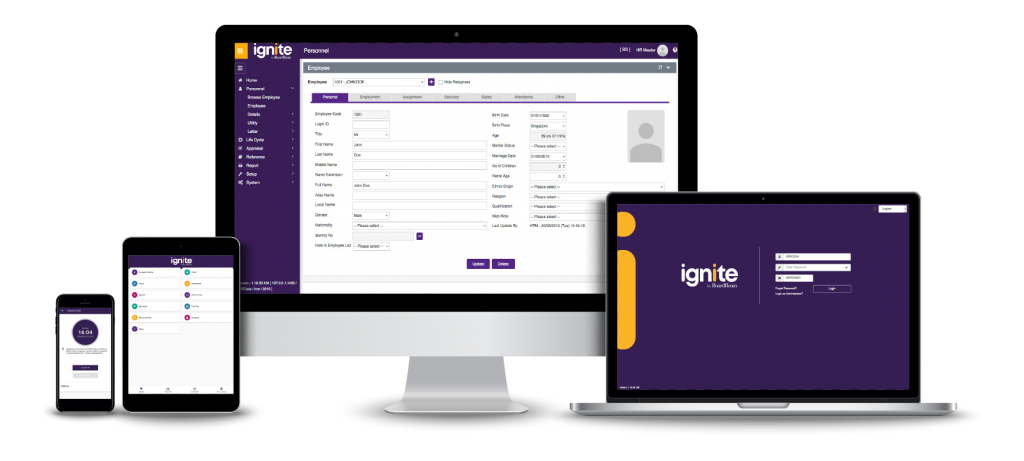
    When coupled with an expert outsourced payroll provider like BoardRoom, our integrated, cloud-based HRMS payroll solution, Ignite becomes even more powerful.

    Our superior payroll solution combines the right people, systems and processes to empower your employees, reduce your administrative burden and ultimately increase HR team efficiency by:

    • eliminating the need for multiple payroll systems;
    • providing unparalleled reporting for better decision making; and
    • processing accurate multi-country pay runs for you to maintain compliance.
    All-in-one HRMS System Ignite
    All-in-one HRMS Solution, Ignite

    Speak to our team of payroll experts today about how we can meet your company’s specific payroll needs.

    Related Business Insights

    Outsourcing payroll improves HR efficiency and reduces costs

    Payroll efficiency

    Outsourcing payroll improves HR efficiency and reduces costs

    How outsourcing payroll can improve HR efficiency and reduce costs

    As a Human Resources (HR) manager, you want your team to focus on strategic HR imperatives, not back-office administrative tasks. But all too often, your team has to spend precious hours on time-consuming jobs like processing payroll instead of focusing on strategic priorities like employee engagement or talent management.

    If your HR team is already stretched to the limit, managing payroll can be even more of a challenge. You know that a late pay run can result in unhappy employees. You also know that a rushed pay run may have errors. The last thing you want is to generate costly fines or lawsuits for your company because of a simple payroll mistake.

    The solution for many companies in Singapore and the APAC Region has been to outsource their payroll.

    Let’s look at how outsourcing payroll could improve HR efficiency while also reducing costs.

    Save valuable time while preventing costly compliance errors

    HR team responsibilities have grown significantly in recent years from day-to-day personnel management and administrative tasks to now delivering key company objectives. In between scheduling interviews, running performance appraisals, and processing payroll, HR professionals can struggle to find the time for core strategic imperatives.

    This means essential but non-urgent goals like strengthening company culture and employee experience often suffer. It’s no wonder that many HR teams are feeling stressed and overwhelmed. And when HR teams are overstretched, payroll errors may happen.

    Small payroll mistakes can have big consequences for your company, including:

    • Costly non-compliance fines and even employer jail time: as just one example, employers in Singapore who fail to pay Central Provident Fund (CPF) contributions for their employees correctly and promptly can be taken to court. If they’re convicted of late CPF payment offences, employers face up to $5,000 in fines per offence and up to six months’ imprisonment for a first offence.
    • Reputational damage: payroll errors can generate negative publicity for your company, resulting in distrust from both clients and investors. In turn, this can reduce profits and lower the value of your company.
    • Employee dissatisfaction: getting paid correctly and on time is a basic expectation for every employee. Repeated payroll errors can lead to employee dissatisfaction, which can ultimately reduce productivity and increase staff turnover.

    Payroll outsourcing vendor

    In the APAC Region, payroll regulations are complex and change frequently, making it more difficult for HR teams to stay up-to-date. If your company also operates within multiple countries, payroll compliance becomes more difficult as your team needs to stay abreast of each nation’s unique regulations.

    Outsourcing payroll frees up the time your HR team previously spent attempting to keep up with changing compliance regulations and doing tedious, repetitive payroll processing tasks. It gives them the capacity to properly concentrate on core strategic activities that add more value to the business.

    Enhance productivity by streamlining processes and making data analysis easier

    Expert payroll outsourcing vendors use advanced, all-in-one Human Resource Management System (HRMS) solutions to automate and streamline payroll processing. This eliminates the need for manual calculations or data input, which can significantly increase the speed and accuracy of your pay runs.

    More streamlined payroll processes also enhance productivity by enabling your HR team to spend their time and energy on core strategic business activities. Beyond this, your company would no longer need to purchase the latest HRMS software upgrade or maintain the cloud security to support it – generating yet more savings.

    Additionally, outsourcing payroll can improve HR efficiency by making data easier to analyse. Different types of advanced HRMS software used by payroll outsourcing vendors can provide unparalleled reporting capabilities and workforce visibility. Detailed reports can be generated at the click of a button, providing business insights faster and more easily. Armed with these insights, your team can make better strategic decisions for your company.

    All-in-one HRMS System Ignite
    All-in-one HRMS Platform, Ignite

    Access to a team of experts without the salary costs

    Finally, outsourcing to an expert payroll service provider gives your company access to a pool of HR knowledge specialists without the expense of retaining them in-house. Our team of payroll experts here at BoardRoom have worked across multiple industries, and in multiple countries and situations, which means they can:

    • guide you on best practices;
    • identify key risks and potential problems, and provide practical solutions that save your team time and resources;
    • ensure your company remains up-to-date and fully compliant with all relevant payroll regulations; and
    • provide regular reports and valuable insights for your business.

    Not only that, but you can also take advantage of the wealth of knowledge that our team of professionals at BoardRoom have across a range of business disciplines, including:

    Our centralised services enable you to receive assistance in multiple fields while streamlining your outsourcing processes.

    "Outsourcing payroll makes sense"

    If your HR team is feeling the pressure to do more with less, now is the time to consider outsourcing payroll.

    Our team of payroll experts at BoardRoom can take care of payroll for you, freeing up your team to refocus on delivering strategic HR imperatives like strengthening company culture and increasing employee engagement. Essentially, this means increasing your HR team’s efficiency, while reducing costs as outlined above.

    That’s why outsourcing payroll makes sense for so many companies in Singapore and the APAC Region. Speak to our payroll specialists today about how to outsource payroll services for your company.

    Related Business Insights

    BoardRoom + Xero | Making your life easier

    BoardRoom + Xero | Making your life easier

    How cloud accounting with Xero and BoardRoom is about to make your life easier

    The benefits of cloud accounting platform, Xero, are well recognised. Implementing Xero will save your company time, money and effort. It improves your team’s productivity and can even help your company to get paid faster.

    However, for most companies, these benefits may take time to achieve. Setting up Xero correctly and migrating your existing financial data into it can be difficult, especially for companies with complex structures. Plus, to truly realise the full benefits of Xero, it’s important to optimise your Xero file to its fullest potential.

    It doesn’t have to be hard though. With a partner, such as BoardRoom, your journey with Xero can be a simple and rewarding experience that delivers the power of Xero to your company faster.

    Cloud accounting vs traditional accounting

    Cloud accounting uses online software and stores the data from your accounts in the cloud. ‘The Cloud’ is a network of remote servers storing vast amounts of data. In contrast, traditional software is installed locally on your computer with data stored on a hard drive or a server on-site.

    Traditional accounting has the benefits of not requiring an internet connection and lets you retain individual company control of your security levels and access – providing you continually update everything. However, the advantages of cloud accounting far outweigh these benefits.

    Cloud accounting makes it easier for your team to access and collaborate while reducing hardware costs and software expenses. It also offers your company a real-time snapshot of business performance while providing data security and protection. But, maybe most importantly, cloud accounting helps you save time and improve accuracy, which assists your company run more efficiently. This is why many companies use cloud accounting, like Xero.

    Xero implementation can be simple with the right partner

    Switching to any new accounting system involves effort commensurate with the nature, size and complexity of your company. Unless you have a team who are confident in navigating the set-up and implementation of a new accounting system such as Xero, you run the risk of misplacing data or accidentally limiting essential user access. Additionally, and perhaps most importantly, there may be negative regulatory or financial consequences if these errors occur.

    Working with a Xero Platinum Partner, such as our team here at BoardRoom, will ensure your Xero implementation is seamless. We’re experienced in transferring your company’s data from your existing accounting system to Xero. We also know how to correctly set it up based on your company structure. Additionally, this process doesn’t require hours of input from yourself and your team. We request the data from you, and then work in the background to perfect your Xero file setup. This means your team can continue with business as usual.

    In addition, BoardRoom offers training and support services to facilitate the change management process for your team. We work hard to help your team learn how to take advantage of all the features Xero has to offer so they can use Xero more efficiently. And if they do have any questions, they can contact BoardRoom’s Xero support services via phone, email or video conference call.

    Risks during Xero set-up and migration for complex company structures

    Companies with complex structures are most at risk of errors, issues and potentially expensive faults when moving to Xero. Strategic planning is often needed to ensure your company structure is reflected correctly in Xero and that it meets any regulatory reporting requirements.

    Attempting a migration of existing data without an implementation partner can be treacherous. Having the support of a partner, such as our team, means you’ll have experts responsible for ensuring a seamless and certified implementation.

    accounting software for small business

    Our Xero data migration services ensure a complete data migration, comparative balances migration and porting over of last closing balances. Additionally, our online training modules will guide your team through purchase, sales, bank and reconciliation, inventory, reports and other advanced features.

    Customising and optimising Xero to suit your company

    In addition to ensuring your Xero file is set up correctly, and existing financial data migrated seamlessly, working with a partner like BoardRoom will ensure your company gets the most out of Xero. We’ll identify the apps and integrations, from the thousands available, which best suit your company’s needs and provide training to ensure a smooth transition for your team.

    We also customise your chart of accounts or report templates, incorporate your logo into financial documents, or set-up tracking categories and contacts – plus more.

    Remove geographical limitations through BoardRoom’s expertise

    When you partner with BoardRoom, you’re not working with a regular accountancy firm. As professional services experts, we operate across multiple jurisdictions and offer a wealth of knowledge on all aspects of company administration. This means that no matter where your offices are located, whether Singapore, Hong Kong, Malaysia, China or Australia, we can assist you seamlessly integrate all of your accounts functions through your Xero.

    xero implementation partners

    In addition to Xero set-up and migration, we also provide incorporation, share registry, company secretarial, payroll, plus many other administrative services. Therefore, by partnering with BoardRoom, your company gains access to our wide range of skills and expertise to assist your administration and accounts teams operate more efficiently.

    Save time, money and stress with Xero and BoardRoom

    Minimise the risk when migrating your accounting data and ensure your team can easily operate your new Xero system from day one.

    Consultations are available for full scale migration, set-up or integration of systems – such as payroll or point of sale. Regardless of the accounting system you are switching from or how complex your company structures are, our team of experts are available to provide support throughout each step of the process.

    Partnering with BoardRoom to implement Xero for your company will save you time, money and stress.

    Find out more about our cloud accounting software today.

    Related Business Insights

    How to test a payroll system vendor’s compliance-readiness

    Payroll system

    How to test a payroll system vendor’s compliance-readiness

    2 Essential Questions to Test your Payroll Outsourcing Vendor’s Compliance-Readiness

    Most HR professionals know not to overlook the quiet achievers in their company. These are the industrious individuals who consistently deliver quality work on time without demanding your attention. So often, it’s not until they’ve left the company that you realise their value.

    The same is true when it comes to smooth, seamless payroll processing. Usually, payroll is the quiet achiever of HR and finance departments, but when things go wrong, the whole company suffers. Payroll errors can result in hefty non-compliance fines, reputational damage or employee dissatisfaction.

    That’s why it’s vital to evaluate payroll outsourcing vendors on all of the qualities needed to efficiently process a compliant pay run. It’s especially important to assess how well they stay up to date with the ever-changing payroll compliance requirements in the Asia-Pacific (APAC) region.

    To help you decide on the best payroll outsourcing vendor for your company, we’ve outlined some of the key considerations relevant to payroll in the APAC region. We’ve also introduced two must-ask questions to test vendors on how compliance-ready their payroll management really is.

    Payroll compliance challenges in the APAC region

    The APAC region is a dynamic, fast-paced environment to do business in. Labour and tax laws are constantly evolving which makes staying compliant more difficult.

    Adding to the challenge is that many APAC countries have at least four regulatory bodies that influence payroll processing rules.

    So you might think that you’ve updated your payroll system to factor in all of the recent tax, insurance, wage and pension legislation changes. Then you discover that an extra governing body (perhaps one you weren’t even aware of) just changed its employee record-keeping requirements. It’s enough to give anyone a headache.

    Finally, add to this the APAC region’s extra layer of payroll complexity in the form of cultural business norms. While these customary norms aren’t legal requirements, you might find it difficult to source and retain talent if your HR department fails to meet them. For example, it’s common in Singapore payroll processing to include ‘13th-month pay’ – a single annual payment on top of an employee’s total annual wage. Again, this payment isn’t mandatory, but it is the cultural norm.

    Payroll Singapore

    Another cultural norm is to bring pay run dates forward for significant holiday periods. For example, a company might have a regular pay date on the 25th of every month. In one year, however, Chinese New Year (also known as Lunar New Year) might fall on the 20th. In this case, a company will typically bring forward their pay run to an earlier date – for example, the 18th of that month.

    Without the right processes, it can be easy to miss both important cultural and regulatory payroll requirements. It can also be easy to make mistakes in translating written legislative changes into a formula that your payroll system understands.

    That’s why it’s crucial to ask two questions as you evaluate the compliance-readiness of any payroll outsourcing vendor.

    01 What’s the vendor’s relationship with local authorities, and how do they maintain it?

    When it comes to evaluating payroll outsourcing vendors, understanding the vendor’s familiarity with existing local payroll compliance rules is fundamental.

    Every country has its own quirks and nuances. For example, part of payroll tax compliance in Australia involves withholding personal income tax from employees at source via payroll throughout the year. In contrast, employees in Singapore are responsible for filing and paying their personal income tax directly to tax authorities at the end of the year.

    While it’s obviously essential for an outsourcing vendor to understand current compliance requirements, vendor evaluations all too often stop there without questioning compliance abilities any further.

    Given the state of flux and complexity surrounding payroll regulations across the region, evaluators need a more accurate view of a vendor’s competency. They need to know how vendors stay up to date with changing payroll compliance requirements.

    As you evaluate a vendor, ask them how they connect with local authorities to get updates on statutory changes that impact payroll. You want to understand their exact process for getting accurate, timely updates from all relevant authorities. You also want to understand how they communicate these changes to their staff.

    A working knowledge of present compliance is one thing. A thorough process to stay on top of payroll updates and then translate them into accurate formulas for payroll systems is something else. And the latter can be the difference between a mediocre vendor and an excellent one. You want to work with a vendor who not only ensures that your company is compliant, but that it stays that way too.

    02 How has the vendor dealt with previous non-compliance matters?

    Everybody makes mistakes. It’s part of life. The best payroll outsourcing vendors are the ones who are happy to talk about any mistakes they’ve made and the lessons they’ve learned. You want transparency and honesty, because you’ll need both qualities if either they or your company makes a mistake.

    Ask vendors how they’ve handled any statutory non-compliance in the past, and what the implications were for their client’s company. Experienced vendors will be willing to talk openly about this with you.

    For example, there may have been a situation where tax was underpaid or overpaid. Let the vendor explain their process for addressing non-compliance issues, including:

    • when they first discovered the problem;
    • who they spoke to;
    • what remedies they applied; and
    • what measures they put in place to ensure that it wouldn’t happen again.
    Payroll Tax Compliance
    Choosing a compliance-ready payroll outsourcing vendor

    Payroll compliance can be challenging for inexperienced outsourcing vendors in the APAC region for several reasons:

    1. Regulatory changes that affect payroll happen at break-neck speed.
    2. At least four different authorities per country make these changes.
    3. You need to factor in cultural business norms, not only to create successful, compliant pay runs but to attract and retain future talent.

    This means it’s critical to quiz vendors on more than just their working knowledge of payroll compliance requirements. You also need to ask them about how well they understand local, cultural business norms, and how they stay up to date with, and then implement, any regulatory changes.

    Learn more in our video on the evolving payroll compliance landscape in the APAC region.

    Finally, when outsourcing something as sensitive as payroll, you want to work with sincere, transparent, open vendors who will tell you if something is wrong. Ask them about any mistakes they’ve made and the lessons they’ve learned.

    If you’re looking to change vendors or are worried about payroll compliance in the APAC region, get in touch with our payroll solutions experts today.

    They can help you to ensure your payroll management complies with all relevant legislation and customs in the areas in which you do business.

    Related Business Insights

    Singapore Budget 2021 – What Businesses Can Capitalise on to Accelerate Growth in the Post-Pandemic Economic Landscape

    Singapore_Budget_2021

    Singapore Budget 2021 – What Businesses Can Capitalise on to Accelerate Growth in the Post-Pandemic Economic Landscape

    On 16th February 2021, Finance Minister Heng Swee Keat announced the Singapore 2021 Budget.

    The budget this year, while focused on COVID-19 support measures, also showcases the government’s foresight as they unveiled several long-term plans such as boosting the global expansion of businesses and scaling of local organisations.

    If you have any questions relating to any of the information contained in this report, please contact our tax advisors via email or call us at +65 6230 9788.

    Boosting Global Expansion of Business

    Boosting global expansion of business

    Business Scaling

    Business scaling

    Tax Support & Changes

    Tax support & changes

    Related Business Insights

    Use of Electronic Signatures in Singapore

    Use of electronic signatures in Singapore

    Use of Electronic Signatures in Singapore

    The latest roll out of the Singapore government’s new digital identity platform is yet another move that showcases the tech nation’s commitment to digitalising the country. One of the main features will empower citizens to digitally sign legal documents such as contracts securely. At BoardRoom, where possible, we’ve adopted electronic signatures for years, not only as part of our aim to go paperless but also to optimise our business processes.

    What exactly are electronic signatures and when can you use them? Are there any situations in which they may not be legally binding? In this article written by our partner, Virtus Law LLP (a member of the Stephenson Harwood (Singapore) Alliance), they dive deep into the usage of electronic signatures in the highly digitalised society of Singapore.

    Use of electronic signatures in Singapore

    The global technological landscape is evolving rapidly and various advancements in digital technologies have transformed the way we transact. In the context of the ongoing digital revolution, the Singapore government has announced Singapore’s goal to become a leading Digital Economy. On 5 November 2020, the Singapore government launched a new digital signing service, the “Sign with SingPass“, that allows SingPass users to electronically sign contracts and other legal documentation. This supports efforts to digitise Singapore government services as it allows users to complete transactions with the Singapore government without the need to be physically present to sign documents.  

    In light of the accelerated pace of digitalisation precipitated by COVID-19, the use of electronic signatures has become increasingly relevant to businesses. In this article, we will discuss the key issues relating to the use of electronic signatures in Singapore.

    Electronic signatures

    At the outset, the Electronic Transactions Act, Chapter 88 of Singapore (the “ETA“), which came into force on 1 July 2010, provides for the legal recognition and use of electronic signatures. Under section 8 of the ETA, electronic signatures may be recognised as the functional equivalent of “wet-ink” signatures if the method used (a) can identify the signatory and indicates the signatory’s intention in respect of the contents of the document; and (b) is appropriately reliable considering the purpose of the document or is proven to have fulfilled the requirements in paragraph (a).

    Electronic Signatures

    While the ETA does not expressly define the term “electronic signature”, it is generally understood as an acknowledgement provided by way of technology having electrical, digital, magnetic, wireless, optical, electromagnetic or similar capabilities.

    This, however, is differentiated from a “digital signature” under the ETA, which is subject to further requirements under the ETA.

    In determining whether something amounts to an electronic signature, the Singapore courts will generally look at whether the method of signature used satisfies the authenticating function of a signature, instead of whether the form of signature used is one which is frequently recognised.

    Without a specific definition of “electronic signatures”, they can possibly take different forms, subject to the legal requirements in the ETA being satisfied. Some examples of electronic signatures may include:

    1. A person typing his/her name into a contract or email containing the terms of the contract;
    2. A person electronically pasting his/her signature (e.g. in the form of an image) into an electronic version of the contract within his/her signature block;
    3. A person accessing a contract through a web-based signature platform such as DocuSign and Adobe, and clicking to have his/her name inserted into the contract in the appropriate place; and
    4. A person using a finger, light pen or touchscreen to sign his/her signature in the appropriate place in a contract.
    Excluded Matters
    Excluded Matters

    There are a number of matters that are excluded (the “Excluded Matters“) from the application of the ETA. This includes, amongst others, the execution of a will, bills of exchange, bills of lading, the creation of a declaration of trust, power of attorney and any contract for the sale of immovable property.

    These exclusions mean that, among other things, parties cannot rely on the ETA to satisfy the legal requirements of writing or signatures in relation to the Excluded Matters. It is therefore recommended that any document or transaction that falls within the scope of Excluded Matters should be signed using a “wet-ink” signature.

    That being said, the Infocomm Media Development Authority Singapore (“IMDA“) is in the process of reviewing the ETA, to ensure that the ETA continues to be progressive and to strengthen Singapore’s position as a hub for electronic transactions.

    One of the proposed amendments is to remove most business-related transactions while retaining personal or familial transactions in the list of Excluded Matters.

    On 4 January 2021, the Electronic Transactions (Amendment) Bill (“Amendment Bill”) was introduced to Parliament. The Amendment Bill seeks to adopt (with modifications) the UNCITRAL Model Law on Electronic Transferable Records (2017), which enables the use of electronic transferable records both domestically and across borders, such as bills of exchange, bills of lading, promissory notes and warehouse receipts etc. Consequently, the Amendment Bill seeks to, among other changes, remove such documents from the list of Excluded Matters.

    It is noted that the Amendment Bill is part of a wider and ongoing initiative by the Singapore Government to review and support the electronisation of various types of instruments or transactions. We can expect further amendments to the ETA when the legislative and administrative frameworks supporting the electronisation of such instruments or transactions are ready to be enacted or implemented.

    Practical issues arising from the use of electronic signatures
    Practical Issues Arising From Electronic Signatures

    Examples of documents where electronic signatures are recognised pursuant to the ETA include the constitution, minutes of board/shareholders’ meetings, written resolutions, proxy forms, service agreements, resignation letters and solvency statements. This list is not exhaustive. Companies may consult their lawyers or corporate secretarial agents for advice on whether a document may be signed using an electronic signature.

    It should be noted that deeds and powers of attorney, which are commonly entered into by businesses, run the risk of unenforceability if executed by way of electronic signatures. We would thus strongly recommend that businesses avoid the use of electronic signatures in this context.

    It is not necessary for companies to amend their constitution to expressly provide for the use of electronic signatures to execute documents, as the ETA may be relied upon for this purpose. Nevertheless, to address electronic risks, companies may consider

    adopting internal guidelines relating to the use of electronic signatures, such as the method of electronic signatures approved for use by the company and security measures that may be implemented by the company. Companies may consult their lawyers or corporate secretarial agents for assistance in this regard.

    To satisfy the requirements for an electronic signature under the ETA, the method of the electronic signature must be appropriately reliable, taking into account all relevant circumstances such as the purpose of the document. Appropriate safeguards should therefore be implemented to address the electronic risks that arise from the use of electronic signatures. We elaborate on this in the next section below.

    Electronic risks

    Technological advancement can be a double-edged sword. While electronic signatures and records can facilitate transactions for businesses, they are more susceptible to being tampered, modified or forged due to its very nature. For instance, an electronically scanned signature used legitimately in a transaction can be easily copied and used by a fraudster for a different document.

    The pertinent challenges that businesses generally face include, without limitation:

    1. whether an electronic record/contract has been altered, modified or tampered with;
    2. whether there are adequate security measures put in place to protect the electronic signatures and electronic records;
    3. whether the identities of the parties involved can be ascertained;
    4. whether the parties involved in the transaction can trust each other due to the lack of a face-to-face meeting;
    5. if applicable, whether both parties have access to the third-party e-signature platforms, whether such platforms are secure, and whether such platforms are willing or able to provide evidence should a dispute arise; and
    6. if applicable, whether the corporate representatives of the parties involved have the relevant authorities to transact on behalf of their principals.
      Electronic Risks

      With these potential challenges looming, the use of electronic signatures should be evaluated with caution, especially with high-value transactions, transactions that require large payments to be advanced or transactions that are concluded entirely online without sufficient verification and authentication.

      Ultimately, one should perform a cost-benefit analysis to determine whether the use of electronic signatures should be adopted in specific transactions.

      There are practical measures, though not fool-proof, that may alleviate the risks of using electronic signatures, including:

      1. performing extensive “know-your-client” checks to assess the risk profiles of the counterparty;
      2. maintaining a list of authorised personnel who are authorised to forward documents signed using electronic signatures;
      3. performing call-back verification with the signatory;
      4. adopting technical security measures such as encrypted passwords and two-factor authentication, including the use of “digital signatures” as expounded under the ETA;
      5. adopting the use of “secure electronic records” and “secure electronic signatures” as expounded under the ETA; and
      6. engaging a Certification Authority who acts like trusted electronic notaries, certifying the electronic identities of users and organisations by verifying and vouching for the identity of the subscribers and providing certificate management services to support trusted and secure transactions.
      A flourishing digital economy?

      The use of electronic signatures in Singapore is no longer in its infancy and should be welcomed especially given Singapore’s vision to become a Smart Nation powered by digital innovation. However, caution ought to be exercised and appropriate safeguards should be implemented to ensure that electronic signatures are securely used.

      Due to the emergence of new technologies such as the Distributed Ledger Technology, Smart Contracts and biometrics, the nature of electronic transactions is also rapidly evolving. New legislative and regulatory developments will therefore arise from time to time, resulting in further implications for businesses, and businesses should keep abreast of these developments so that they can stay ahead.

      Author

      This article was written by Virtus Law LLP (a member of the Stephenson Harwood (Singapore) Alliance).

      Empower your Digitalisation Journey

      Looking for the right partner that understands the need for digitalisation and empowers organisations with innovative technological solutions? Contact our resident experts for more information on how we can assist in facilitating this.

      Related Business Insights