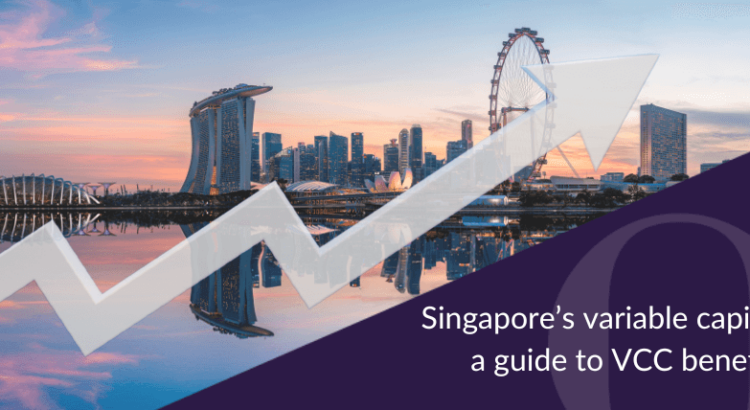
Singapore’s variable capital company: a guide to VCC benefits and setup

Singapore’s variable capital company a guide to VCC benefits and setup

Singapore’s variable capital company: a guide to VCC benefits and setup

In the evolving landscape of Singapore’s financial sector, variable capital companies (VCCs) have emerged as a prominent and flexible solution for diverse investment needs.

Thanks to its innovative structure, the VCC has led an increase in investment flows into the city-state, and has helped to propel Singapore firmly onto the global stage as a destination of choice for fund managers and family offices. This has also led to opportunities for professionals through the creation of local jobs. In response to the high demand, the Singaporean government recently extended the Variable Capital Companies Grant Scheme to 15 January 2025.

This article provides an overview of the VCC to help you decide if it is the right investment vehicle for you. In consultation with multiple business experts, we explain what a variable capital company is and the benefits it offers. We will also explain the setup process and provide advice for giving your entity the best chance of success in the region.

The VCC structure and its unique benefits

The VCC is an innovative structure offering many benefits for investment managers in Singapore – particularly high-net-worth individuals and families.

“The introduction of the VCC Framework at the start of 2020 further strengthened Singapore’s value proposition as a leading full-service asset management hub,” explains Eunice Hooi, Head of Corporate Secretarial for BoardRoom Singapore.

Like private limited companies, VCCs are governed by a board of directors and have shareholders who own shares in the fund. They also offer limited liability for shareholders and directors, as they are considered a separate legal personality (this means that shareholders and directors are protected in cases of litigation against the company).

However, VCCs have unique benefits that may make them a preferred structure for investment managers. In contrast to other investment structures, VCCs offer:

  • operational flexibility;
  • tax efficiency, and
  • privacy.
The VCC structure and its unique benefits
Operational flexibility
VCCs offer investors and fund managers a high level of flexibility across different fund strategies, investor and asset classes.

Importantly, fund managers can use VCCs for both open- and close-ended funds. Open-ended funds allow investors to freely invest, redeem or withdraw shares without shareholder approval, empowering them to respond swiftly to market changes. “VCCs can also pay dividends out of capital, giving fund managers the flexibility to meet their dividend payment obligations,” says Zhan Aijuan, Senior Manager of Corporate Secretarial for BoardRoom Singapore.

In addition, VCCs can incorporate new funds and re-domicile existing funds to a new location.
Tax efficiency
VCCs can access a variety of beneficial tax treatments. Even VCCs with sub-funds are recognised as a single entity at tax time. Distributions from VCCs in Singapore are usually tax-exempt, and the VCC itself may qualify for tax-exemption schemes such as the Singapore Resident Fund Scheme and Enhanced-Tier Fund Scheme.

“VCCs can also enjoy the extensive tax treaty network that the Singapore government has with over 85 countries,” Eunice adds.
Privacy
While VCCs must submit financial statements to regulatory authorities, they do not need to make these documents publicly available. They can also keep their list of shareholders confidential. This means they offer extra privacy and confidentiality for shareholders.

VCCs can be set up as:

  • a standalone fund or
  • an umbrella VCC with two or more sub-funds, each holding a portfolio of separate assets and liabilities.

Josephine Toh, Associate Director of Corporate Secretarial for BoardRoom Singapore, adds that umbrella VCCs can offer valuable economies of scale.

“VCCs need to appoint a variety of professionals, such as fund managers, company secretaries and auditors,” she says. “Umbrella VCCs enable investors to achieve economies of scale by splitting the cost of using the same professionals across all sub-funds.”

Further, the fund managers can claim a 30% reduction on qualifying VCC set-up costs paid to Singapore-based service providers through the Variable Capital Companies Grant Scheme.

Regulatory requirements for VCCs

Compliance requirements for VCCs encompass stringent reporting standards and governance mechanisms to promote transparency and accountability.

The Variable Capital Companies Act governing VCCs in Singapore is relatively new, and therefore will continue to develop. Fund managers must ensure their VCC complies with this legislation as it evolves.

VCCs also have obligations to the Monetary Authority of Singapore (MAS), such as the implementation of processes for anti-money laundering and countering the financing of terrorism.

Key requirements for the setting up of VCCs include:

  • at least one ordinarily resident director in Singapore;
  • one qualified MAS licensee as a fund manager (this can be the same person as the local resident director);
  • a registered office in Singapore;
  • a Singapore-based company secretary; and
  • an auditor and annual audits.

Setting up a Singapore VCC

A prominent feature of the VCC framework is the option for fund managers to either set up a new VCC or re-domicile their existing investment funds with comparable structures to Singapore. This flexibility offers a range of advantages and can significantly enhance the fund manager’s operations. Below are the steps in incorporating a new VCC or re-domiciling existing investment funds.

Incorporating a new VCC

Companies seeking to expand their presence in Singapore or tap into the benefits of the VCC structure can set up a new VCC. Here are the key steps involved:

INCORPORATING A NEW VCC

Register a name

Register a VCC name via the VCC Portal. Once approved, the VCC must be incorporated within 120 days and adhere to any potential reviews by Referral Authorities.

Determine the VCC type

Decide between establishing a non-umbrella VCC or an umbrella VCC that contains multiple sub-funds with segregated assets and liabilities.

Appoint key personnel

Appoint VCC officers, including director, company secretary, auditor and fund manager. At this point, you will also need to decide on the VCC's first financial year end (FYE) and determine the accounting period length.

Register the office address and constitution

Provide a publicly accessible registered office address for the VCC and submit a constitution detailing the VCC's governance, operations and key stakeholder rights and responsibilities.

Incorporate the new VCC

This can be done directly through the VCC Portal or via a registered filing agent or corporate service provider. The processing time can range from 14 to 60 days, depending on any additional governmental reviews.

Register any sub-funds for an umbrella VCC

Register individual sub-funds under an umbrella structure of a VCC.

Re-domiciling existing investment funds

Re-domiciling existing investment funds

For fund managers with existing overseas investment funds that align with the VCC framework’s criteria, the option to re-domicile these funds to Singapore can be an efficient and cost-effective strategy. This process involves transferring the registration and legal domicile of an existing fund to Singapore while retaining its existing structure. Here are the key requirements needed for re-domiciling existing investment funds:

Eligibility assessment: Fund managers must first determine whether their existing investment funds meet the criteria for re-domiciliation to a Singapore VCC. The existing fund should have a similar structure and characteristics to that of a VCC, making it a suitable candidate for re-domiciliation.

Approval from shareholders: In most cases, the existing fund’s shareholders must approve the re-domiciliation. This process may require a special resolution or a majority vote, per the fund’s existing legal structure.

Regulatory compliance: Fund managers should ensure that the re-domiciliation process aligns with the regulatory requirements of both the fund’s current jurisdiction and Singapore.

Transfer of assets and liabilities: As part of the re-domiciliation process, assets and liabilities of the existing fund must be appropriately transferred to the newly incorporated Singapore VCC. If applicable, this transfer process should ensure the segregation of assets and liabilities for each sub-fund.

Appointment of local service providers: Engage local service providers, including a permissible fund manager, company secretary, and auditor, to ensure compliance with the VCC Act’s requirements. The engagement of these professionals is crucial for ongoing compliance.

Re-domiciliation application: Submit the necessary documentation to the Monetary Authority of Singapore (MAS) for approval of the re-domiciliation. The application should include details of the existing fund, the proposed Singapore VCC structure, and other relevant information.

Tax implications: Consider the tax implications of re-domiciling the fund to Singapore. Collaborate with tax advisors to maximise the benefits available under Singapore’s tax incentive schemes, such as the Singapore Resident Fund Scheme or the Enhanced-Tier Fund Scheme.

A trusted partner in Singapore VCC incorporation

A trusted partner in Singapore VCC incorporation

The VCC in Singapore is transforming the investment landscape, offering flexibility, tax benefits and privacy. It attracts wealth, creates jobs and solidifies Singapore’s position as a global financial hub. Setting up a VCC in Singapore involves navigating a complex landscape of legal, financial, and regulatory requirements.

BoardRoom, as a trusted partner with more than 50 years of experience in corporate services, can guide you through each step of the process, from registering your company to corporate secretarial services and setting up an efficient tax structure. BoardRoom can also ensure your accounting and tax compliance meet local and APAC-wide standards for your VCC in Singapore.

Contact us today to discuss how we can help set up your VCC and optimise the tax incentives.

Contact BoardRoom for more information:

Eunice

Eunice Hooi

Managing Director Asia, Tax

E: [email protected]

T: +65 6536 5355

Related Business Insights

Startup companies in Singapore: where are the opportunities?

Startup companies in Singapore where are the opportunities

Startup companies in Singapore: where are the opportunities?

In an increasingly unpredictable global business landscape, Singapore stands out thanks to its economic resilience and stability. Renowned for its robust economy, Singapore has strategically cultivated a welcoming environment for startups and businesses alike, offering a unique blend of security, consistent growth and government initiatives that foster innovation.

A straightforward regulatory framework, low corporate tax rate and a strong rule of law underscore the country’s business-friendly atmosphere. For startup companies, Singapore’s appeal extends beyond its economic prowess, as it has positioned itself as a dynamic hub for new ventures ready to capitalise on opportunities and join a vibrant business community.

In this article, we delve into the landscape created for startups and new businesses, the reasons entrepreneurs should consider establishing their startups in Singapore, and the factors business owners need to consider when registering a startup in Singapore.

Why choose to establish your startup in Singapore?

The Singapore Government actively promotes a business-friendly environment through open policies and initiatives, a relatively uncomplicated regulatory framework, a resilient free market economy, low taxes and tax incentives. It also provides a range of attractive grants for startups.

The government’s strong focus on economic development has created an environment where startups in Singapore can thrive and where foreign investors are welcome. Startups and entrepreneurs will find a supportive and innovation-led business community. As a result, Singapore has built a global reputation as a top location for international expansion. Here are just a few other reasons why it is a great place to do business:

  • Singapore has a stable economy with world-class transportation, communication and technology networks and other infrastructure.
  • Thanks to its diversified economy, it offers opportunities in a range of industries.
  • Singapore is a global financial hub with a well-regulated and stable financial system.
  • The Singapore Government has implemented incentives and policies to streamline administration and create a pro-business environment.
  • Its efficient regulatory framework makes establishing a business in Singapore easy. For example, an application to incorporate a private limited company in Singapore can be approved within a day through the Accounting and Corporate Regulatory Authority (ACRA).
  • Singapore has low corporate tax rates and a transparent legal system. The tax system is straightforward to navigate, with tax incentives offered to many businesses.
  • Situated at the crossroads of major shipping routes, Singapore serves as a gateway to the Asia-Pacific region.
  • Its multicultural environment has created diverse markets for businesses to tap into.
Establish your startup in Singapore

What is the startup scene in Singapore?

The government has proactively encouraged an environment of innovation and supports this in a range of ways. For example, the Economic Development Board provides resources and assistance to support overseas companies and individuals starting businesses in Singapore. The government has also invested in the Startup SG program, providing various services and grants to Singapore’s startups. Some sectors offering an array of opportunities that startups could consider include:

Technology
Substantial investment in the tech sector has created a rich ecosystem for innovation in areas such as robotics, blockchain and AI.
Supply chain management
Singapore’s logistics sector provides vital support to other industries, with a range of opportunities open to entrepreneurs in the areas of trade and ecommerce.
Healthcare
The Singapore Government has invested heavily in the healthcare sector, and healthcare tech entrepreneurs will find plenty of opportunities to improve health outcomes for people in Singapore and around the globe.
Fintech
Singapore’s fintech sector presents significant opportunities for startups, with strong venture capital support and a favourable and supportive climate for innovation and collaboration.
Tourism
Startups and entrepreneurs with innovative offerings will find the tourism sector also rich with growth opportunities.
Startup scene in Singapore

A supportive community is a hallmark of the startup scene in Singapore

Along with a variety of government-led assistance programs to support entrepreneurs and innovators, Singapore’s thriving business community has also created initiatives to foster growth. The Action Community for Entrepreneurship (ACE) helps to promote entrepreneurship, catalyse new growth opportunities, scale startups and build champion enterprises. For example, ACE’s Start-up Mentorship Program connects entrepreneurs with experienced business leaders who offer their expertise and guidance without charge.

The Singapore Women Entrepreneurs Network (SG-WEN) provides an important platform for women in business to unite, network and share experiences and insights.

The Youth Co:Lab is an example of an initiative designed for young people in business. It offers a collaborative and creative workspace for entrepreneurs to cultivate their ideas and support their business growth.

Best practices when registering your startup in Singapore

While Singapore has created a welcoming environment for new businesses, there are many compliance factors that startups and entrepreneurs must consider when incorporating a business in Singapore.

Eunice Hooi, Head of Corporate Secretarial, BoardRoom Singapore, says it is important to seek advice from an experienced, professional advisor when launching a business. “They will guide business owners through every stage of the incorporation process. They will also provide specialty advice on the different types of business structures available, and which one is best suited to the business needs. They will also take into consideration the legal and the tax implications of business ownership.”

Eunice says business owners need to consider the answers to several questions. What is the nature of your business? Are you establishing a branch i.e. an extension of your head office in another country? Or do you want to test the market by registering a representative office before you set up a permanent structure in the foreign country? A professional advisor can help you answer these questions and provide advice on the types of company structures in Singapore. They will also help you fulfil your obligations and avoid the pitfalls of inadequate planning.

Three critical aspects when establishing a business in Singapore are tax, corporate secretarial and payroll.

Tax
The type of business structure you choose will dictate how much tax you pay. Eunice explains. “A sole proprietorship and partnership are not taxable at the business level, but rather each business owner is taxed separately on his share of income at the owner’s level. An individual owner who is a sole proprietor or a partner would be taxed based on the progressive tax rates ranging from 0% to 24%, depending on the income level. On the other hand, a corporate partner of a partnership is subject to tax at corporate tax rate at 17% on its share of income from the partnership.”

A professional can help you understand the tax implications of your business and decide on a structure that takes advantage of tax incentives.
Corporate secretarial
Corporate secretarial is another consideration for entrepreneurs looking to start a business in Singapore, as corporate governance and company compliance can be complex and time-consuming. A service provider such as BoardRoom can support businesses in a range of ways, including ensuring a company complies with local Singapore requirements, ensuring accurate and timely submission of annual returns and providing expert advice on corporate governance matters.
Payroll
It’s vital that businesses meet their payroll obligations. While Singapore has streamlined and simplified payroll requirements for businesses compared to other countries, staying up to date with payroll needs can be a challenge for new and established businesses. This includes ensuring compliance with salary disbursements and mandatory contributions, maintaining salary records, providing itemised payslips and adhering to leave entitlements, meaning there is no room for error.

Singapore also has cultural nuances and sensitivities that those unfamiliar with the business landscape might find challenging. It is important to understand and respect the cultural norms of your workforce. Ken Wong, Managing Director Asia, Payroll at BoardRoom, highlights some of these nuances: “Singapore is so diverse and there are times when you actually will need to make salary payments earlier so employees can enjoy festive holidays with salaries being paid to them in advance,” says Ken. “Singapore also has a prevalent ‘bonus culture’, with employees often expecting to receive some form of bonus at the end of the year, this is often not written in an employment contract.”
A supportive community

How BoardRoom supports your startup

Singapore is a politically safe, business-friendly country. Businesses and startup companies in Singapore enjoy an array of incentives and support to help them thrive. For entrepreneurs and business owners venturing into the Singapore market, understanding and respecting the local business landscape is crucial. This includes being well-versed in areas such as tax regulations, business structures, corporate regulatory requirements and payroll compliance.

Offering a range of corporate services, BoardRoom has proven itself to be a trusted partner of established and startup businesses in Singapore. We guide your business at every step and offer a range of corporate services, including corporate secretarial, payroll, tax compliance, company incorporation, accounting and bookkeeping and ESG advisory services.

Contact us to discuss how we can help you establish your startup today.

Related Business Insights

Setting up a business in Singapore: From Sole Proprietorship to Company – what you need to know

Setting up a business in Singapore From Sole Proprietorship to Company – what you need to know

Setting up a business in Singapore: From Sole Proprietorship to Company – what you need to know

In the heart of Southeast Asia’s thriving markets, Singapore’s growing economy and political stability continue to attract multinational corporations and startups. Eager to build on the country’s reputation as an economic powerhouse, the Singapore Government’s policies and regulations have created a favourable environment for businesses to thrive in.

If you are a business owner or investor considering setting up a company in Singapore, you are not alone. Every month, thousands of businesses are registered in Singapore.

In this article, we explore the various benefits of establishing a business in Singapore, the different types of business structures and important considerations when embarking on the process of company registration.

Seven benefits of setting up a business in Singapore

There are many reasons investors, entrepreneurs and company directors choose to start their business in Singapore. Here are some salient factors:

  • There is no minimum shareholder requirement.
  • There is no minimum requirement for paid-up capital when incorporating a private limited company.
  • There is no foreign exchange control.
  • Singapore is close to Asia’s thriving markets.
  • Singapore offers favourable tax incentives and low corporate tax rates.
  • Singapore’s workforce is highly educated and skilled.
  • Singapore is politically stable.
  • Singapore has a sound legal system and a mature financial infrastructure.
Benefits of setting up a company in Singapore
There is no minimum shareholder requirement for certain entities

While Singapore maintains a business-friendly and open investment environment, the requirements for ownership differ based on the business structure. Sole proprietorships have no minimum shareholder requirement, as they are owned and operated by a single individual or entity. For companies, at least one shareholder, either an individual or a corporate entity, is required as part of the incorporation process. “Because there are no restrictions on foreign ownership, a foreign entity can own the Singapore subsidiary or fully own a Singaporean company, either as a corporate or individual investor,” says Eunice Hooi, Head of Corporate Secretarial, BoardRoom Singapore.

There is no minimum requirement for paid-up capital when incorporating a private limited company

Singapore has a robust free-market economy and generous investment policies. It also has no minimum requirement for paid-up capital when incorporating a private limited company (PLC). Because of this, a PLC, which is one of the most common business types in Singapore, can be incorporated with just SGD 1.

There is no foreign exchange control

Generally, Singapore has no restriction on foreign exchange transactions and capital movements.

“From an investment perspective, this means that it is easy to remit or repatriate capital and/or profits in and out of Singapore,” says Eunice.

Singapore is close to Asia's thriving markets

Singapore’s location is also very attractive to investors. It is in a strategic location close to the massive economies of both China and India.

With well-established infrastructure, including one of the busiest airports in the world and one of the largest ports in Asia, the country is well-placed to do business with other thriving economies.

Singapore offers favourable tax incentives and low corporate tax rates

Singapore has a range of tax incentives that are attractive to investors and boasts one of Asia’s lowest corporate tax rates of just 17%.

Singapore has also implemented the one-tier tax system, which means businesses pay corporate tax at the corporate level just once. Therefore, no additional taxes are imposed on the income, and shareholders are exempt from taxation on any dividends distributed by the company.

There is a highly skilled workforce in Singapore

Singapore boasts numerous corporate service providers, offering entrepreneurs a wide array of options when setting up a business.

The country is also home to a highly educated and literate workforce. That is reassuring for foreign investors who are setting up a company in Singapore and are looking for local talent to hire.

Singapore is politically stable

For business owners looking to establish a business in a country they have never operated in before, stability and security are paramount. Singapore is politically stable, with nations around the world recognising Singapore’s business-friendly regulations, reliable policies and high governance. This makes it an attractive and low-risk location for businesses.

Types of business registration in Singapore

There are several ways to structure a business in Singapore. These include:

Sole proprietorships
This structure consists of one business owner who is personally responsible for any of the business’s debts and losses as the business owner is subject to unlimited liability.
Partnerships
Consisting of two to 20 owners, in a partnership, the owners also take on unlimited liability. They are, therefore, personally responsible for any of the business’s debts and losses.
Private limited companies (PLC)
In this structure, the business is established with its own legal identity. As it is separate from shareholders and directors, their liability is limited to the sum of what they have funded as capital.

This gives entrepreneurs peace of mind when setting up a company. It also means they can raise capital relatively easily. They can do this by increasing the number of shareholders or by issuing more shares to current shareholders.
Limited liability partnerships (LLP)
This structure is similar to that of a PLC. While a privately limited company can have one to 50 shareholders, in a limited liability partnership, there must be a minimum of partners with up to 20 partners.

In a business with this type of structure, the partners will not be held personally liable for any business debts incurred by the LLP. However, an individual partner may be held personally liable for claims from losses resulting from their own wrongful act or omission.
Variable capital companies (VCC)
A variable capital company is another type of corporate structure in Singapore. This structure allows a company to be established as a single, standalone fund for a single entity or as an umbrella fund for multiple funds.

The flexibility of this structure allows the investors to either incorporate a new VCC in Singapore or redomicile their existing offshore investment fund to Singapore as a VCC.

The structure also offers flexibility in how shares are issued and redeemed.
Choosing a company structure

How to choose a business structure

Entrepreneurs and investors are advised to have a carefully considered business plan and decide whether the business will be a short-term or long-term venture when starting a company. Those factors will influence the choice of business structure during the establishment phase, which is crucial for both the operation and eventual closure of the business.

When it comes to ending the business, Eunice says there are several options. “It can be done through liquidation. Another way is through a simple process called striking off, when the company has a clean balance sheet. A third option would be to sell the business through an asset divestment or a share divestment.”

Kevin Cho, Director of Corporate Secretarial, BoardRoom Singapore, highlights the importance of considering the benefits specific to Singapore when choosing a business entity. “For example, Singapore offers tax benefits to startups established as private limited companies. These businesses are entitled to a new startup tax exemption for its first three consecutive tax years I.e. 75% exemption on the first SGD 100,000 of normal chargeable income* and a further 50% exemption on the next SGD 100,000 of normal chargeable income*.”

*Normal chargeable income refers to taxable income that is subject to tax at the prevailing Corporate Income Tax rate of 17%.

Steps to setting up a business in Singapore

Business owners and investors exploring business registration in Singapore should engage with a professional corporate service provider who can guide them on the processes of setting up a business. When incorporating a company, this includes making sure the company name is available and suitable for registration, deciding on the entity structure, and ensuring compliance with local and regional regulatory requirements at all times.

Once the business is formally registered with the local authority, namely the Accounting and Corporate Regulatory Authority (ACRA), it may purchase its certificate of registration and business profile which contains the necessary corporate information from ACRA. The business will also be assigned a unique entity number then.

The business also has to determine its share capital and be sure to abide by the rules governing shareholders and directors. For example, a minimum of one local resident director must be appointed. It is noteworthy that foreign individuals can serve as directors if they meet specific criteria. Additionally, the company should consider engaging a qualified company secretary.

It can also be helpful to engage a professional corporate service provider as the tax treatment of companies set up in Singapore varies and depends on the type of business being set up.

“PLCs are taxed as separate entities at the corporate tax rate of 17% on the business profits,” explains Eunice. “On the other hand, LLPs are given a tax-transparency treatment, meaning they are not taxed at the LLP level. So the owners or the partners will be taxed on their share of income from LLP based on the relevant tax rates that are applicable to corporate partner and individual partner.”

Steps to setting up a company in Singapore

The right advice for your move into Singapore

Singapore offers attractive incentives for foreign investment and is a politically stable, easily accessible and talent-rich country in which to set up business. If you’re considering a move into Singapore as a business owner, director or investor, BoardRoom can help with all aspects of the business lifecycle.

BoardRoom offers a range of services including corporate secretarial, accounting, tax, payroll and ESG advisory services.

For help establishing your business in Singapore, please contact us today.

Related Business Insights

How To Set Up a Family Office in Singapore Successfully

How to set up a family office in Singapore successfully

How To Set Up a Family Office in Singapore Successfully

The family office is an increasingly popular business entity in Singapore. It provides affluent families with the opportunity to formally safeguard and optimise their wealth for the benefit of future generations.

Family offices are most often used for asset management. However, they are also useful for conducting additional activities such as wealth and succession planning, lifestyle management, and philanthropy.

This article explores the process of setting up a family office in Singapore and outlines reasons you might set up a family office, including the latest tax incentives you may be eligible for.

Types of Family Offices in Singapore

 Family offices in Singapore are generally classified into two main types:

Type Structure Costs Control Privacy
Single Family Office (SFO) Manages wealth for one family Higher setup and operational costs Full control by the family Highly private with no external investors
Multi-Family Office (MFO) Serves multiple families Lower individual costs due to shared resources Shared control Less privacy due to multiple stakeholders

Which type suits your family?

  • SFOs are ideal for ultra-high-net-worth families who seek full control and privacy.
  • MFOs are suitable for HNW families looking for cost efficiency and professional management without establishing their own infrastructure.

Why set up a family office in Singapore?

As an established financial hub, Singapore holds immense appeal for local and overseas high-net-worth (HNW) individuals looking to establish a family office. In 2021, it ranked as the second most competitive location for international wealth management globally. Furthermore, in 2022, it had the world’s third fastest-growing population of HNW individuals.

Singapore’s allure can be attributed to its:

  • open, well-regulated economy;
  • strategic and convenient geographic location – a gateway to Asia with ready access to global and regional financial markets;
  • diverse ecosystem of wealth management talent (e.g., bankers, law firms, and advisors);
  • companies and service providers;
  • economic and political stability;
  • pro-business regulatory system;
  • extensive double tax treaties with more than 80 countries;
  • low corporate tax rate of 17% (and no capital gains tax);
  • abundant tax incentives and exemptions, and
  • quality medical and education systems.
Setting up family office in singapore

What are the family office tax exemptions in Singapore?

The Singapore Government is actively nurturing the growth of private banking locally due to the fast-growing pool of capital it generates, which can be utilised for urgent climate change mitigation efforts. In July 2023, it announced several enhancements to Singapore’s tax incentive schemes for SFOs.

Eligible family offices can now take advantage of these schemes and exemptions:

This scheme grants permanent residency to individuals who possess at least 5 years of entrepreneurial, investment or management track record, and they establish a Singapore-based Single-Family Office with Assets-Under-Management (AUM) of at least SGD 200 million, where a minimum SGD 50 million must be deployed in the 4 stipulated investment categories. Read more about the qualifying criteria for the Global Investor Programme.
Under Section 13O of the Income Tax Act, family offices with an annual local business spending of SGD 200,000 can claim a 100% tax exemption on Singapore-based funds, provided that certain conditions are met.
Section 13U of the Income Tax Act provides a tax exemption for income and gains on certain investments, including those in local and offshore funds, with a minimum investment of SGD 50 million.
From 1 January 2024, eligible donors can claim a 100% tax deduction (capped at 40% of the donor’s Singapore statutory income) for overseas donations made through qualifying local intermediaries.

Each entails a set of conditions that family offices must meet to qualify.

Understanding Section 13O and Section 13U

Both schemes offer tax exemptions for qualifying funds managed by single-family offices (SFOs) in Singapore, but they have different eligibility criteria: 

Tax Incentive Section 13O Section 13U
Minimum AUM S$10M at inception, growing to S$20M within two years S$50M at inception
Fund Structure Singapore-incorporated company Any legal entity (e.g., trust, LLP)
Local Business Spend S$200K annually S$200K annually
Investment Professionals At least 2 in Singapore At least 3 in Singapore, with one being a non-family member.

Both schemes also require annual reporting to the Monetary Authority of Singapore (MAS) and adherence to economic substance requirements.

    GST Exemptions for Family Offices

    Family offices managing funds structured under 13O and 13U may also benefit from Goods and Services Tax (GST) exemptions on financial services like fund management and fund advisory. This lowers costs when engaging local asset managers or financial service providers.

      Compliance Considerations

      To maintain tax-exempt status under Sections 130 and 13U, family offices must ensure:

      • Proper governance structures, including independent directors if necessary.
      • Ongoing compliance to economic substance, including local staffing requirements and minimum AUM.
      • Submission of annual Declarations of Continued Eligibility to MAS.

        Example of How a High-Net-Worth Family Can Secure 0% Tax in Singapore

        Background: A high-net-worth family looking to consolidate global investments sought to establish a family office in Singapore for tax efficiency and asset protection.

        Challenges:

        • Selecting an optimal fund structure to maximise tax benefits.
        • Meeting MAS compliance and staffing requirements.
        • Ensuring investments qualify for Singapore’s tax incentive schemes.

        Solution: The family established a Section 13U fund, hiring qualified investment professionals, and incorporating ESG-focused investments to align with Singapore’s tax-exempt designated inventments.

        Outcome: The family successfully secured 0% tax on investment income, enhanced wealth preservation, and leveraged Singapore’s stable regulatory environment for long-term financial security.

          How do I set up a family office in Singapore?

           The company incorporation process for family offices in Singapore can be complex, but the outcome can provide considerable benefits for HNW families.

          “First of all, you need to consider your objective for setting up this family office – whether it is for investment or philanthropy purposes,” says Kevin Cho, Director of Corporate Secretarial for BoardRoom Singapore. “You need to consider what funds will be set aside for philanthropy or charitable purposes.”

          Defining the goal you want to achieve will help guide the structure and operations of your family office and indicate the legal and tax implications you will need to navigate. Potentially, you may realise that a different investment vehicle (e.g., a company limited by guarantee, trust, or VCC) or even a different location will be more suitable.

            5 Steps to Establish a Family Office in Singapore

            1. Define Your Objectives – Determine whether your focus is investment, philanthropy, succession planning, or wealth preservation.
            2. Choose Between SFO or MFO – Select based on your family’s needs, level of control, and costs.
            3. Establish the Legal Structure – Register your entity (e.g., company, trust, or VCC) and ensure compliance with regulatory requirements.
            4. Apply for Tax Incentives – Secure eligibility for tax schemes like 13O and 13U to optimise financial benefits.
            5. Build Your Team & Infrastructure – Hire key personnel (e.g., investment managers, tax advisors) and set up operational processes.

            Family office formation is a significant undertaking. To ensure a smooth process, it is important to partner with an experienced corporate services provider to assist you in navigating Singapore’s complex legal, tax, and regulatory requirements. Working with such a partner will give you access to a team of business specialists, plus a network of trusted advisors and consultants who can guide you through the beginning stages of your family office and beyond.

              Benefits of setting up a family office

              The benefits of setting up a family office in Singapore

              According to Eunice Hooi, Head of Corporate Secretarial for BoardRoom Singapore, the top uses of a family office include asset protection and succession planning.

              “One possible arrangement is to put the assets under a trust structure instead of a standard company structure,” she says. “Having a trust arrangement protects the assets under law, assuming the parents are acquiring the assets for the benefit of the minor child under the trust arrangement.” 

              The trust agreement can set the terms on when and how the child will legally own the assets – this might be when they turn 21 or get married.

              “So the family office structure allows you to plan ahead of time,” Eunice explains. 

              The family office Singapore structure allows for strategic long-term planning, ensuring that wealth is transferred in a controlled manner. Additional uses for a family office can include:

              • consolidated wealth management;
              • customised financial solutions and investment strategies;
              • diversification of assets and risk mitigation; and
              • the preservation of family values and legacies.

              As a centralised hub, the family office provides an efficient, streamlined solution for managing family affairs.

              What are the regulatory requirements for setting up a family office in Singapore?

              Understanding and complying with local regulatory requirements is paramount when establishing any new company in Singapore.

              If you are considering starting an SFO, it will likely be exempt from regulations and won’t need to apply for a fund management licence.

              “As SFOs only manage assets belonging to one family, SFOs in Singapore are not subject to licensing or regulation under the Securities and Futures Act (SFA),” Eunice says. “However, MFOs are. This is to safeguard the interests of the different families that the MFO is serving.”

              Before commencing operation, MFOs need to obtain a Capital Market Services (CMS) licence from the MAS. They then need to conduct their activities in line with regulations. A skilled corporate services provider with extensive knowledge of the local rules can help ensure your company remains compliant from the start.

              While SFOs may not be subject to MAS regulation, they still need to meet certain requirements to qualify for the available tax exemptions under the Income Tax Act 1947.

              When is MAS licensing required?

              A family office may need a Capital Markets Services (CMS) license if it:

              • Manages funds for multiple unrelated families (MFOs), unless exempt.
              • Manages or distributes third-party funds for external clients.
              • Includes external investors in its wealth management activities.

              For full regulatory details, refer to the MAS guidelines.

              Expert guidance for your new venture

              5 Mistakes to Avoid When Setting Up a Family Office

              1. Underestimating Compliance Costs – Failure to meet MAS regulations can result in penalties.
              2. Lack of Succession Planning – Unclear wealth transfer strategies can lead to legal disputes.
              3. Poor Investment Diversification – Over-exposure to one asset class increases financial risk.
              4. OverlookingTax Optimisation – Not leveraging 13O/13U schemes can lead to higher tax burdens.
              5. Choosing the Wrong Legal Structure – Misalignment with goals can create unnecessary complexities.

              Expert guidance for your new venture

              Establishing a family office in Singapore can be an effective way to secure your family’s financial future. At BoardRoom, our experts guide you through every step—ensuring compliance with local regulations while maximizing Singapore’s opportunities. Beyond incorporation and corporate secretarial services, we offer end-to-end support for your business’s entire lifecycle.

              “BoardRoom provides a one-stop shop for family office Singapore clients, offering corporate services like accounting and tax advisory,” says Eunice, Managing Director Asia, Tax & Accounting. “We collaborate with key stakeholders, such as lawyers and fund managers, to deliver holistic solutions.”

              “When clients approach us, we first understand their goals, needs, and investor profile,” Eunice adds. “This ensures their investment location and vehicle align with their objectives.”

              For help establishing your family office in Singapore, contact BoardRoom today.

              Frequently Asked Questions (FAQs)

              1. Can foreigners set up a family office in Singapore?

              Yes, Singapore allows foreign high-net-worth individuals to establish family offices, often under the Global Investor Programme.

              2. Do all family offices qualify for tax incentives?

              No, eligibility depends on meeting MAS guidelines and financial thresholds under 13O/13U.

              3. How long does the setup process take?

              On average, it takes 3–6 months, depending on regulatory approvals, AML/KYC checks and tax incentive applications.

              Contact BoardRoom for more information:

              Eunice

              Eunice Hooi

              Managing Director Asia, Tax

              E: [email protected]

              T: +65 6536 5355

              Related Business Insights

              Maximising performance: the potential benefits and drawbacks of employee share options plans

              Maximising performance_ the potential benefits and drawbacks of employee share options plans

              Maximising performance: the potential benefits and drawbacks of employee share options plans

              Employee share plans are becoming an increasingly popular strategic tool, with over 80% of companies in Asia using them to bolster their competitive edge in the current talent market and align their workforce with their organisational growth trajectory. Equity based remuneration such as employee share option plans (ESOPs) or employee stock option schemes (ESOSs), not only incentivise employees to work towards company’s goals but also increase staff retention rates.

              In this article, we investigate the benefits and potential drawbacks of ESOPs for companies in Singapore and provide advice for ensuring successful share scheme implementation.

              How ESOPs work

              ESOPs grant employees the option to purchase company shares at a predetermined price (also known as the exercise price), often lower than the prevailing market price. After a moratorium or ‘vesting’ period, the employee may exercise their options by buying the shares at the exercise price and become a part owner of the company. The plan rules or an internal remuneration committee generally sets the exercise price and timeframes of ESOPs.

              You may also hear ESOPs referred to as employee share option schemes or stock option plans.

              ESOP vs. shares: how they differ

              ESOPs offer employees the unique opportunity to secure a stake in their company’s future success without the immediate financial commitment required when purchasing shares in a publicly listed company. ESOPs also differ from share schemes like restricted share plans and performance share plans, which grant employee shares as part of their remuneration after a set vesting period once agreed-upon targets are met.

              ESOP vs. shares_ how they differ

              Top ESOP benefits explained

              ESOPs can influence employee attitudes and behaviours in multiple ways, providing benefits to companies and their workers.

              The main benefits of ESOPs are:

              • improved employee engagement;
              • increased innovation and productivity; and
              • reduced employee turnover.
              Employee engagement
              ESOPs can be an effective employee engagement strategy due to the sense of company ownership and an alignment of worker and employer objectives, goals and values. In a recent study of employee equity plan usage in Asia, about 60% of participating workers either agreed or strongly agreed that their personal success and their company’s success were one and the same.

              As share value depends on the company’s success, employees are encouraged to put in more effort to improve the company’s market performance and also make decisions that promote long-term value creation rather than short-term gains.
              Increased innovation and productivity
              When employees feel they play a fundamental role in the company’s growth and can see the tangible effects of share price rises in their share plan, they are incentivised to expand their focus beyond day-to-day responsibilities. ESOPs provide channels for them to ideate, innovate and engage in activities that drive the company forward.

              When well-managed and communicated, ESOPs also provide employees with clarity on common goals, which further aids engagement and productivity.
              Reduced employee turnover
              Research shows that the likelihood of an employee resigning decreases as the value of employee shares rises.

              “ESOP participants tend to stay in their job for longer than expected because they know they will be able to reap the rewards i.e. the number of options exercisable after the vesting period. This is even more so, when the share price increases over the years.” explains Nora Jasmine Lai, Operations Manager of Employee Plan Services for BoardRoom.

              Alongside the prospect of financial gains, the partial ownership offered by ESOPs also promotes job satisfaction and a sense of belonging.

              “When employees are rewarded through their ESOP, it strengthens their sense of recognition within the company and they are part of its growth and success,” Nora explains. “In the long run, this motivates them to grow with the company.”

              ESOP-led talent retention has a variety of benefits, including reduced recruitment and training costs, improved business continuity, knowledge retention and the progression of long-term organisational goals.

              Potential drawbacks of ESOPs

              Depending on a range of factors – such as your organisation type and performance, the quality of plan execution and market fluctuations – ESOP implementation may be challenging or even unsuitable.

              Some potential drawbacks of ESOPs include:

              Employees must pay for the shares upfront with their own money before receiving shares into their account and realising them as monetary gains. One way companies can alleviate this challenge and exhibit dedication to ESOP goals, is to partner with local banks, who may offer bridging loans to employees, contingent on the immediate repayment of the loan upon share sale.
              Employees cannot realise their gains if the share price drops below the exercise price in an economic downturn. They may leave the company before the share price improves, thus losing the opportunity to reap their rewards.
              Employees who are not Singaporean residents may be subject to withholding tax when they exercise their options and realise a gain.
              ESOP management can become increasingly complicated and time-consuming as time passes, your company grows across borders, and there are more plans to design and keep track of – each with their own vesting periods and exercise price. Compliant administration and reporting must be ensured across all relevant jurisdictions.

              Companies can ensure smooth ESOP implementation by engaging a premium ESOP services provider – ideally, one that specialises in a range of complementary corporate services such as tax. Firms that offer customisable ESOP platforms such as EmployeeServe can help to simplify and streamline your scheme management by allowing employees to view and transact on holdings in real time.

              Factors to consider before implementing ESOPs

              Factors to consider before implementing ESOPs

              If you are implementing ESOPs in your organisation for the first time, meticulous planning is essential.

              Management staff should consider the following ahead of the design phase:

              • What are your organisational needs and objectives, and how can ESOPs help you achieve them?
              • What percentage of the total number of shares will be set aside?
              • How will the vested options of departing employees be treated?
              • How will employees manage or assess their ESOPs?
              • Will you implement a digital ESOP management system? If so, is it user-friendly enough?
              • Is a share custody account required for overseas participants?

              An experienced ESOP services provider can explain how ESOPs work, answer your questions about ESOP implementation, and guide you through the design process to help tailor the plan to your specific needs.

              If you already have a share scheme in place and want to review it, the best way to do this is to partner with a leading ESOP services provider. ESOP specialists have the knowledge, skills and technological know-how to update your scheme to align with your business goals.

              Tips for successful share scheme execution

              Tips for successful share scheme execution

              According to Nora, effective ESOP implementation requires two things: a quality platform and strong communication from HR and management.

              “Often, employees don’t understand their role in a huge scheme,” she says. “There is often too much jargon and complexity tied to the scheme, which stops people from understanding the benefits they can reap.

              “But as a part owner of the company, they want to do more and understand their role in the entire cycle.”

              A purpose-built platform helps employees understand how the scheme works, especially if it is easy to use and supported by regular communication from HR and the broader company.

              “The system can release regular communications, such as newsletters, to allow employees to keep track of the goals set via the scheme,” Nora says. As a result, employees stay more focused on progressing long-term organisational goals.

              Personalised employee share options services

              When executed thoughtfully and managed effectively, employee share options can catalyse sustainable growth, benefiting both employees and the business as a whole.

              For businesses in Singapore seeking to implement or refine their share scheme, BoardRoom’s premium ESOP services offer a reliable end-to-end solution. With over 60 years of experience and a deep understanding of the local business landscape, we can assist in creating, implementing and managing ESOPs that align with your organisation’s goals and values.

              Our highly sought-after ESOP services give you access to:

              • a dedicated ESOP platform, EmployeeServe, empowering you to navigate the complexities of ESOPs with confidence so that employee satisfaction is achieved and regulatory compliance is assured;
              • in-house experts in multiple aspects of ESOPs, plus a strong network of trusted vendors, including ESOP designers and lawyers, for a seamless, comprehensive service via one point of contact; and
              • share custody accounts for overseas participants, making share trading and the realisation of cash proceeds easy.

              Contact us to learn more about our expert ESOP services today.

              Related Business Insights

              Liquidation of company in Singapore: Guide to Compliance and Tax

              Liquidation of company in Singapore Guide to Compliance and Tax Banner

              Liquidation of company in Singapore: Guide to Compliance and Tax

              The cessation of a Singapore company can occur for a range of reasons, such as changes in strategic direction, lack of profitability, or legal issues. Factors like your company’s state of affairs, debt level, business goals, and tax status can determine the method of closure.

              Especially in the case of voluntary liquidation, having a good understanding of the tax implications of company closure can help business leaders streamline the process, optimise the tax position of stakeholders, and minimise compliance risk.

              This article sheds light on the compliance and tax issues surrounding the liquidation of a company and provides valuable insights on how to close a company in Singapore efficiently while safeguarding stakeholders’ interests.

              What to know about closing a company in Singapore

              The two main methods of closing a company in Singapore are striking off and liquidation (also referred to as winding-up):

              • Striking off – Private companies that are not actively in business and do not have any assets or liabilities may apply to the Accounting and Corporate Regulatory Authority (ACRA) to be struck off the register. Striking off is a relatively easy, fast, and inexpensive process.
              • Liquidation – This formal closure process involves an appointed liquidator who takes control of the company’s assets, business operations, and financial affairs. All bank accounts and assets are under the liquidator’s custody, and the liquidator has the power to sell off (realise) the company’s assets, with the net proceeds used to pay off debts and liabilities. Any surplus cash is distributed to shareholders according to their rights and interests under the company’s constitution and Companies Act 1967.

              The winding of a company may be either by Order of the Court or voluntary.

              There are two types of voluntary winding up which are:

              • a member’s voluntary winding up; or
              • a creditors’ voluntary winding up.

              A company’s solvency (its ability to pay its debts and liabilities within 12 months from winding up) will qualify for a member’s voluntary winding up.

              Below is a breakdown of the types of company closure in Singapore:

              Closure Method Eligibility  Duration Key Considerations
              Striking Off No debts, no assets, no ongoing business activities, No pending legal proceedings or tax liabilities At least 4 months Suitable for dormant or inactive companies
              Members’ Voluntary Liquidation (MVL) Solvent company, able to pay off debts within 12 months Approximately 12 months Requires a liquidator to distribute assets, a Declaration of Solvency must be filed by directors to initiate MVL
              Compulsory Liquidation Insolvent company, initiated by creditors or court order Varies Typically initiated by creditors or via legal proceedings


              Winding of a company

              Which Method Should You Choose?

              • Strike-off: Best for companies with no outstanding liabilities or business operations.
              • MVL: Suitable for solvent companies with assets to distribute among shareholders.
              • Compulsory Liquidation: Necessary for insolvent companies with unpaid debts.

              Companies should consult a licensed liquidator or accountant to determine the suitable closure method, as eligibility varies based on the company’s financial, legal and operational circumstances.

              Step-by-Step Guide to Closing a Company in Singapore

              Striking Off a Company

              1. Confirm eligibility – Ensure that the company has ceased business activities, settled all debts, has no outstanding liabilities, no pending litigation, and no unresolved tax matters.
              2. Prepare documentation – Submit the Application for Striking Off to ACRA via BizFile+.
              3. Obtain Tax clearance – File final tax returns, settle outstanding taxes, and obtain a notice of Tax Clearance from the Inland Revenue Authority of Singapore (IRAS).
              4. Await ACRA processing – ACRA will assess the application and publish a notice in the Government Gazette.
              5. Final closure – If no objections arise within 60 days, ACRA will publish a final notice and remove the company from the register.

                The process of voluntary liquidation in Singapore

                To comply with local regulations, Singapore businesses entering members’ voluntary liquidation will generally need to:

                1. Prepare a Declaration of SolvencyA majority of the directors must make a statutory Declaration of Solvency.
                2. Hold an extraordinary general meeting (EGM) – Shareholders need to pass a special resolution to wind up the company and approve a liquidator.
                3. Realise assets and distribute cash – The liquidator will take over the windingup process, using proceeds from the sale of assets to repay creditors in order of priority. Any excess money may be paid to shareholders and employees.
                4. Hold a final EGM – The EGM must be called by giving at least 30 days’ notice, and the notice of the EGM published in one English local newspaper and in the eGazette.

                For businesses looking at how to close a company in Singapore through members’ voluntary liquidation, please refer to the infographic “The process of voluntary liquidation in Singapore” below for more details.

                A majority of the directors must make a statutory Declaration of Solvency.
                Hold an extraordinary general meeting (EGM)
                Shareholders need to pass a special resolution to wind up the company and approve a liquidator.
                Realise assets and distribute cash
                The liquidator will take over the winding up process, using proceeds from the sale of assets to repay creditors in order of priority. Any excess money may be paid to shareholders and employees.
                Hold a final EGM
                The EGM must be called by giving at least 30 days’ notice and the notice of EGM published in one English local newspaper and in the eGazette.

                THE PROCESS OF VOLUNTARY LIQUIDATION IN SINGAPORE

                Prepare a Declaration of Solvency

                A majority of the directors must make a statutory Declaration of Solvency, which annexes a statement of the estimated assets and liabilities of the company. The declaration must also show that as at the latest practicable date, at a meeting of the directors, in their opinion, the company shall be able to pay its debts in full within 12 months from the commencement of the winding up. The declaration has to be made within 5 weeks preceding the resolution to wind up and the declaration is filed with ACRA before the notice of the meeting to pass the winding up resolution is sent out.

                Hold an extraordinary general meeting (EGM)

                Shareholders must pass a special resolution to wind up the company and approve a liquidator. A copy of the resolution to wind up must be filed with ACRA within 7 days after it is passed and advertised in a local English newspaper within 10 days. Within 14 days after his appointment, the liquidator must file a notice of appointment with ACRA and the Official Receiver. The fact that the company is being wound up must be stated on every invoice, business letter, or other correspondence of the Company. Then, the directors’ powers will cease upon the appointment of a liquidator, and the liquidator will take charge.

                Realise assets and distribute cash

                The liquidator will take over the winding up process, using proceeds from the sale of assets to repay creditors in order of priority. Any excess money may be paid to shareholders and employees.

                Hold a final EGM

                The EGM must be called by giving at least 30 days’ notice, and the notice of the EGM must be published in one local English newspaper and in the eGazette. The liquidator will present to shareholders its final account of how the liquidation was conducted and how payments were made. It must also lodge the account of the liquidator’s receipts and payments, as well as a statement of the position in the winding up with the Official Receiver. Within 7 days after filing the account and statement with the Official Receiver, the liquidator must file the account and statement with ACRA.
                On the expiration of 3 months from lodgement of the accounts and the final return, the company is deemed dissolved. The books and documents of the company and the liquidator shall be retained for a period of 5 years after the date of dissolution and may be destroyed at the expiration of the period.

                On the expiration of 3 months from lodgement of the accounts and the final return, the company is deemed dissolved. The books and documents of the company and of the liquidator shall be retained for a period of 5 years after the date of dissolution and may be destroyed at the expiration of the period.

                The tax implications of the liquidation of a company

                Understanding the tax issues involved in company liquidation can help ensure a smooth winding up process that optimises financial outcomes and reduces compliance risk.

                Tax Obligations Before Closing a Company

                • Final corporate tax filing: Companies must file all outstanding corporate tax returns (Form C-S/C) with IRAS before closure.
                • GST deregistration: Companies registered for GST must cancel their registration within 30 days of ceasing business operations. Then file a final GST return to settle any liabilities or claim refunds.
                • Tax clearance certificate: Required from IRAS to confirm no outstanding taxes before liquidation.
                • Shareholder distributions: Distributions made during liquidation are generally treated as capital repayments and not subject to tax if properly classified. However, distributions of retained earnings or profits may be considered taxable dividends depending on the nature of the funds.

                In the case of voluntary liquidation, key tax considerations include:

                • Goods and services tax (GST) – Companies must fulfil all GST obligations, including settling any outstanding liabilities, claiming refunds, filing a final return, and cancelling their GST registration.
                • Corporate income tax – Companies must ensure all outstanding tax obligations are filed up to the date of liquidation and there are no outstanding tax liabilities. Any outstanding tax matters must be settled before the liquidation process is completed.
                • Tax losses and carry-forward – To utilise any unabsorbed tax losses brought forward, the company’s ultimate shareholders must remain substantially (50% or more) the same as at the relevant dates. Any remaining unabsorbed tax losses carried forward in the year of liquidation will be disregarded.

                To avoid unnecessary tax liabilities during closure, businesses should work with tax professionals who understand how to close a company in Singapore efficiently.

                Updated rules for financial reporting during liquidation

                The Inland Revenue Authority of Singapore (IRAS) has recently updated its guidelines for financial reporting during the winding up of a company.

                The Insolvency, Restructuring and Dissolution Act 2018 requires liquidators to prepare a declaration detailing the company’s receipts and payments for a period of 12 months after the date of the liquidator’s appointment and every subsequent period of 12 months.

                With effect from 1 May 2021, liquidators can use the same 12-month period as their reporting period when preparing this declaration of receipts and payments. This means liquidators no longer need to split receipts and payments based on the calendar year when filing declarations with the IRAS, making for easier reporting.

                For businesses exploring how to close a company in Singapore, staying informed about such regulatory changes can ensure a more seamless liquidation process.

                Common tax pitfalls during liquidation

                Some of the common tax pitfalls include:

                • Failure to clear outstanding corporate tax before striking off
                • Late filing penalties from IRAS
                • Overlooking GST deregistration 

                According to Ade Teo, Senior Manager of Regional Tax Services for BoardRoom Singapore, another common tax pitfall seen in company liquidation is inaccurate record keeping.

                “Some companies do not maintain proper records,” she says.

                “Companies without these documents may face challenges in substantiating deduction claims and revenue reporting during liquidation.”

                This is why good record-keeping is important in every phase of the business lifecycle, from company incorporation to the end.

                Companies with a history of non-compliance with tax filing obligations may face scrutiny from IRAS during liquidation. For companies that have failed to meet tax filing requirements, IRAS may issue chaser letters or impose late filing penalties.

                Taking proactive steps to settle outstanding tax obligations will help ensure a seamless liquidation process.

                Common tax pitfalls during liquidation

                Costs Involved in Closing a Company

                The costs of closing a company in Singapore vary depending on the method and complexity of the process. 

                Key expenses typically include:

                • Government Fees – These may include regulatory filing fees, such as those required by the Accounting and Corporate Regulatory Authority (ACRA) for company strike-offs and liquidations.
                • Professional Fees – Engaging corporate service providers, such as liquidators or corporate secretarial firms, incur professional fees for handling the administrative and compliance aspects of the liquidation.
                • Legal and Tax Advisory Fees – Businesses may need to engage legal and tax professionals to navigate compliance requirements and ensure proper tax clearance.

                Businesses should consult experienced professionals to get a clear understanding of the costs associated with their specific situation.

                Why Applications Fail & Common Pitfalls

                Many companies face rejection when applying for closure due to the following reasons:

                • Unpaid taxes or outstanding debts: Companies must settle all financial obligations before closure.
                • Pending legal matters: If a company is involved in lawsuits, it is not eligible for striking off.
                • Failure to deregister licenses – Any business licenses, permits or registrations must be cancelled before applying for closure.
                • Incomplete or inaccurate documentation – Applications with missing, incorrect or inconsistent information will be rejected.

                After Closing Your Company

                Even after closure, there are post-closure responsibilities to keep in mind:

                • Document Retention: Companies must keep business records for at least five years fromt eh date of closure, in accordance with the Companies Act and IRAS guidelines.
                • Reinstating a Struck-Off Company: If there is a valid reason to do so, a previously struck-off company can be restored within six years via a court application.
                • Managing Dormant Companies: If a business is not fully closed but inactive, it must still fulfil statutory obligations such as annual return filing and corporate tax submissions, unless it has been granted a waiver or exemption by ACRA and IRAS.

                How to optimise company liquidation in Singapore

                Given the complex, time-consuming nature of members’ voluntary liquidation in Singapore, engaging a qualified corporate services team to act as your liquidator can be immensely beneficial. If you are unsure how to close a company in Singapore, a reputable firm specialising in corporate secretarial and tax services can help ensure a smooth, compliant process.

                “At BoardRoom, our company secretarial and tax teams work closely together to ensure we obtain tax clearance in the shortest time frame,” says Eunice Hooi, Head of Corporate Secretarial for BoardRoom Singapore.

                The company secretary’s role in Singapore liquidation includes supporting you with the following activities:

                Navigating the entire process of liquidation
                Preparing for liquidation by ensuring your documents are in order and debts are paid
                Filing necessary returns to local authorities (e.g. ACRA, Official Receiver)
                Sending letters to directors regarding cessation of their power
                Correspondences with the statutory boards (e.g. IRAS, CPF Board) and banks on the commencement of the company’s liquidation and appointment of liquidator
                Informing stakeholders of the liquidation by placing notices in a local English newspaper and on the eGazette

                Meanwhile, tax professionals can help you navigate financial complexities and obtain any tax benefits you’re entitled to.

                “It is very important to engage a liquidator who has a wealth of knowledge and knows what steps need to be taken at what point in time,” adds Eunice, who has been appointed as liquidator to support the clients’ members voluntary liquidations.

                The support of a skilled, experienced corporate services team is especially important for liquidating a parent company where multiple entities are involved.

                Streamline the liquidation of your company with BoardRoom

                In the event that your business needs to close down, understanding how to close a company in Singapore and navigating tax issues, as well as the liquidation process of a company, is of utmost importance.

                For more than 50 years, BoardRoom has been providing expert liquidation guidance for Asia-Pacific companies of all sizes and industries. We can advise you on the members’ voluntary winding up and help ensure a tax-efficient closure that fully complies with local regulations.

                To find out how our local business experts can assist with the liquidation of your company, please contact us.

                Frequently Asked Questions (FAQs)

                1. Can I reopen a struck-off company?

                Yes, a struck-off company can be restored within six years by submitting a court application and settling any outstanding obligations.

                2. How long does company liquidation take?

                • Striking off takes around 5 months, depending on ACRA approval.
                • Members’ Voluntary Liquidation (MVL) typically takes approximately 12 months, depending on asset distribution.

                3. What happens if I don’t clear my taxes before liquidation?

                IRAS will reject the closure application, and the company will remain liable for outstanding taxes. Late filing penalties may also apply.

                Related Business Insights

                2023 Singapore AGM Insights Report

                2023 Singapore AGM Insights Report

                2023 Singapore AGM Insights Report

                An in-depth report of the future of Singapore AGMs

                In post-pandemic 2023 where shareholder meetings have veered from virtual AGMs to physical AGMs, find out the shifts behind these AGM trends and how hybrid meetings utilising webcasts can be a bridge to enhance efficiency and inclusivity.

                As Singapore’s leading Meeting Services provider, BoardRoom has conducted 173 shareholder meetings in April 2023, and we share our key findings and takeaways on the future of meetings. In this comprehensive report, we delve deep into the current landscape of AGMs to understand the trend and shift in the various formats. Explore the reasons behind this shift and pick up practical tips in organising a successful AGM, so you can identify opportunities and risks while planning for future meetings.

                Download the report to make an informed decision for your next AGM.

                2023 Singapore AGM Insights Report Cover Image
                Download 2023 Singapore AGM Insights Report

                Related Business Insights

                SG-MY-Lumi Meeting Services : Optimising Hybrid AGMs

                Hybrid Meetings – Tackling the Venue Challenge Banner

                SG-MY-Lumi Meeting Services : Optimising Hybrid AGMs

                In our recent webinar, ‘2023 AGMs and EGMS – What Have We Learned’, more than 50% of respondents identified cost as a major concern when considering hybrid meetings. Many believe that hosting hybrid meetings costs twice as much due to the need for physical venues and remote setup. While rising costs and logistical expenses pose challenges, they also create opportunities for creative solutions.

                One strategy is downsizing venues, prioritising quality over quantity. The key is to strike a balance between limited physical attendance and remote participation.

                Here are our tips on how you can maximise cost efficiency and engagement in your hybrid meetings.

                Connect with our Meeting Services team today to discuss on how you can promote a dynamic and inclusive meeting environment that serves all stakeholders.

                Contact BoardRoom for more information:

                Charlyne Pak

                Share Registry Services Manager, BoardRoom Singapore

                E: [email protected]

                T: +65 6536 5355

                Related Business Insights

                How cash flow forecasts and reporting can help your business through turbulent times

                How cash flow forecasts and reporting can help your business through turbulent times Banner

                How cash flow forecasts and reporting can help your business through turbulent times

                Amid economic uncertainty and volatility, businesses face unique challenges that can significantly impact their financial stability and long-term viability. Chief among these is ensuring sufficient levels of available cash, which is why understanding your business’s current and projected cash flow is crucial.

                Ahead, Yang Shuzhen, Director of Regional Accounting for BoardRoom Singapore, explores the cash flow forecast and reporting strategies and key finance metrics that can help strengthen your business’s resilience in demanding times.

                Why cash flow reporting is vital for business success

                The preparation of cash flow reports promotes good financial management in several ways. Importantly, they gauge your business’s ability to generate cash and use available cash to meet its obligations – both of which are necessary for surviving and thriving amid an economic downturn.

                “Put simply, if you don’t have enough money available, you cannot pay for expenses,” says Shuzhen.

                The proper tracking of cash inflows and outflows is critical, as it enables businesses to:

                • gain real-time insights into their financial position;
                • create data-driven cash flow forecasts for nimble, informed decision-making and forward planning;
                • identify potential cash shortfalls and take proactive measures to address them;
                • capture opportunities for investment, expansion or increased remuneration where excess cash reserves are identified; and
                • have transparent, trust-building discussions with lenders, investors and suppliers.
                Cash flow vital for business success

                The requirements for cash flow forecasts and reporting in Singapore

                According to the Singapore Financial Reporting Standards, understanding an entity’s cash flows helps users of financial statements evaluate its cash generation capability, needs, and timing. The objective of this Standard is to require the provision of information about the historical changes in cash through a categorised cash flow statement encompassing operating, investing, and financing activities.

                Businesses can assess their cash flow situation via the direct method of reporting, which records actual cash receipts and payments, or the indirect method, which adjusts the net profit or loss for non-cash items.

                “They can also monitor cash inflows and outflows in their day-to-day operations to understand their net cash flow and forecast future cash availability,” Shuzhen says.

                Companies must report their cash flows under three main categories: operating activities, financing activities and investing activities.

                “This allows your finance team and stakeholders to understand cash inflows and outflows for each category and make decisions from there,” Shuzhen explains. “For example, investors can decide whether they want to continue investing, depending on their risk appetite.”

                Cash flow forecasting and reporting

                The difference between unlevered free cash flow and levered cash flow

                Free cash flow refers to the amount of cash your business has after accounting for its capital expenditures.

                It can appear on your balance sheet as either:

                • Unlevered free cash flow (UFCF) – This is the amount of money your business has available before meeting its financial obligations (eg. debts, expenses, taxes and interest payments). UFCF shows your gross free cash flow and is an important figure for investment bankers, potential buyers and executive staff.
                • Levered free cash flow (LFCF) – This is the amount of money your business retains after meeting recurring short- and long-term financial obligations. LFCF shows what cash can be put towards investments and building equity and is of interest to bankers, buyers, internal staff and board members.

                Using these two metrics in your cash flow reporting can help you manage your finances effectively and tailor your cash flow statements for particular stakeholders. However, many Singaporean businesses prefer to assess their cash flow based on the liquidity of their assets.

                Best practice for elevating your cash flow management

                To support financial stability and growth in times of economic growth or downturn, consider implementing the following cash flow management practices within your organisation.

                Reduce expenses and optimise credit terms
                Assessing your credit terms can be useful for addressing predicted cash shortfalls. Many businesses stretch payment timelines with vendors while softening credit terms with customers. Other potential strategies for increasing available cash include securing additional funding sources, diversifying revenue streams and exploring alternative vendors.
                Optimise excess fund
                Explore various market instruments to make the most of your liquid cash. These may be investment opportunities that offer lower interest rates, shorter maturity periods and easy cash access while also generating additional incidental revenue.
                Employ robust accounting practices
                Employing comprehensive accounting practices that encompass meticulous cash flow tracking, transparent reporting, and forward- looking projectional forecasting is indispensable for navigating financial complexities and enables data-driven decision making.
                Use proper accounting software
                In contrast to non-specialised software like Excel, advanced accounting programs like BoardRoom’s partner platform Xero leverage automation and AI technology to streamline financial processes (eg. manual checking), reduce human error and provide precise, real-time visibility of cash flow.
                Regularly analyse cash flow data and projections
                Historical cash flow statements and cash flow forecasts can provide valuable insights into your financial performance. They can empower you to develop realistic budgets, set achievable financial goals, pinpoint areas for improvement, and make informed decisions about new investments, risk mitigation and resource allocation – resulting in greater control over your financial outcomes.

                Partner with a professional accounting team

                Engaging outsourced accounting services can help you improve your cash flow management while ensuring compliance with Singapore’s financial reporting standards.

                For example, many businesses perform their bank reconciliation monthly. This can create difficulties for your finance team, who may need to manually check thousands of transactions and investigate missing or incorrect deposits at the end of the month (particularly if your business receives daily deposits).

                According to Shuzhen, BoardRoom’s Accounting Services team often recommends that clients do their bank reconciliation weekly instead.

                “For businesses who we’re helping to manage vendor payments and track funds coming in from customers, doing bank reconciliation weekly, or even daily, gives them a more regular picture of cash inflow and outflow,” she says. “This is especially the case if they use a POS system, which often results in a timing difference between transactions recorded in the POS system and the bank statements.”

                Enhancing your cash flow tracking with strategies like this is just one way that external accounting support can help make your cash flow management easier, faster and more accurate.

                If your organisation operates across borders, an international accounting and tax firm can also assist with complex processes such as foreign currency cash flow management.

                Partner with a professional accounting team

                Enhance your cash flow reporting with professional support

                During turbulent times, businesses that prioritise robust cash flow management gain a competitive advantage, enabling them to weather economic storms and emerge stronger in the face of adversity.

                As one of the Asia-Pacific region’s most trusted accounting services providers, BoardRoom has the skills, expertise and experience to boost the accuracy and efficiency of your cash flow management – bolstering the operational resilience of your business.

                Our professional team possesses deep, up-to-date knowledge of regional accounting regulations and standards to help satisfy your cash flow management and reporting obligations.

                Contact us today to discuss how we can help position your company for long-term success.

                Contact BoardRoom for more information:

                ShuZhen

                Yang Shuzhen

                Director of Regional Accounting

                E: [email protected]

                T: +65 6536 5355

                Related Business Insights

                The critical role of a company secretary at each stage of the business lifecycle

                The critical role of a company secretary at each stage of the business lifecycle Banner

                The critical role of a company secretary at each stage of the business lifecycle

                In today’s dynamic and highly competitive business landscape, companies operating in the Asia-Pacific region face an array of challenges at every stage of their lifecycle. From the early stages of incorporation through to periods of growth and even cessation, the need for effective business management is paramount.

                For business leaders who are tasked with steering their organisation through difficult times, the support of a skilled and experienced company secretary can prove invaluable.

                In this article, we speak to BoardRoom Singapore’s Head of Corporate Secretarial, Eunice Hooi and Director of Corporate Secretarial Services, Kevin Cho, about the critical role of the company secretary and how outsourced company secretarial services can benefit your business at each stage of its journey.

                The importance of a company secretary in Singapore

                For businesses registered in Singapore, the appointment of a local resident company secretary is mandatory to comply with business regulations.

                “Under the Singapore Companies Act, every company must appoint a company secretary within six months of incorporation,” Kevin explains. “Furthermore, the office of a company secretary must not be vacant for more than six months.”

                Company secretaries undertake a wide range of corporate advisory duties across multiple business functions. As an officer of the company, they play a key role in ensuring that the company complies and thrives. Therefore, the professional qualifications and track history of a company secretary are vital.

                Two key focus areas for company secretaries in Singapore are as follows:

                1. Corporate governance

                A good company secretary will help champion corporate governance in all aspects of a business, with the view to promote operational integrity, enhance performance and maximise value for stakeholders. This involves ensuring all relevant corporate governance standards are met (including, for public companies, the listing rules of the Singapore Stock Exchange).

                “At BoardRoom, we maintain a high standard of corporate governance because we advise our clients on what the best practices in the market are,” Kevin says.

                In practice, your company secretary will start by recommending the baseline corporate governance processes that need to be implemented. They will then work with the board of directors and management to enhance the governance framework by considering subsequent policies and procedures adopted by the organisation

                As corporate governance is not a one-time exercise, but rather an ongoing process, your company secretary will continually assess your organisation’s corporate governance and suggest improvements to meet evolving standards.

                Corporate governance with a Corporate Secretary

                2. Regulatory compliance

                As part of their duties, company secretaries help to ensure compliance with local and regional regulatory requirements as they evolve. They provide support with meeting regulatory requirements within the prescribed deadlines, whether this be holding your annual general meeting, filing your annual return or updating your statutory registers.

                Effective company secretaries also take the initiative to engage with regulatory authorities on a regular basis and participate in public consultations on regulatory changes.

                “This ensures that we know what is going on in the regulatory landscape and for some public consultation papers, we obtain the views and feedback from our clients on these proposed regulatory changes,” Eunice says. “We gain a solid understanding of the changes and then help our clients to achieve compliance and get prepared.”

                Failure to comply with regulations may result in legal, reputational, and financial repercussions for a business. To safeguard your organisation, it is important to engage a company secretary who takes compliance seriously and has the knowledge and experience to ensure your organisation observes it.

                Challenges during incorporation

                Establishing a solid foundation is crucial during company incorporation. This means creating an appropriate corporate structure and business model that allows for sustainable cash flow and consistent growth.

                Common challenges to expect at the start include:

                Ensuring regulatory compliance
                Navigating the local regulatory requirements of a new region can be daunting. A company secretary with extensive regulatory knowledge can ensure your new entity satisfies all requirements to minimise the risk of non-compliance.
                Choosing an appropriate set-up
                Your company secretary can explain the different business structures available in Singapore and advise you on the best set-up for your entity, depending on your objectives (e.g. limited liability company, holding company or trading company). If your company secretary is part of a larger organisation with tax expertise, they will be able to provide guidance on potential tax implications and ensure your company is optimally structured for tax efficiency and manage any potential tax risks.
                Maximising the benefits of foreign investment
                If you are expanding into Singapore, your company secretary will ensure your operating model allows for tax-efficient profit extraction.

                Challenges during growth

                As companies expand, they face increased complexity. Larger organisations have multiple shareholders and stakeholders to manage, while smaller businesses may have less experience and knowledge to draw on.

                Common challenges in this phase include:

                • Fostering a shared vision – Various stakeholders may have conflicting ideas about the growth plans for the company. Company secretaries can facilitate communication between stakeholders to pave a harmonious path forward.
                • Disagreements between shareholders – The company secretary can document issues tabled for discussion at board meetings. In his or her capacity as an impartial party, the company can then rely on the minutes of the meetings when taking steps to resolve the issues.
                • Acquiring new business – In the acquisition of a new business, a company secretary can advise and assist on the corporate exercise to effect the transfer.
                • Expanding into new regions – If you are setting up a company in another country, a company secretary with regional presence can advise you on how to achieve your business objectives while complying with the local legislations.

                Challenges during the end stages

                Reaching the end stages of a business entity can be both an exciting and daunting time as you prepare to transition to new endeavours or capitalise on your achievements.

                Common challenges in this time of change include:

                • Choosing the best path forward – A company secretary, together with a corporate finance advisor, can assist with determining the optimal route for your business’s end stages. They can help weigh the pros and cons of selling or liquidating the business versus pursuing an IPO and other avenues and then collectively guide you through the transition process.
                • Ensuring compliance – Your company secretary can help ensure all necessary documentation is filed correctly and that no regulatory obligations or duties are outstanding.
                • Contract management – You may need to terminate or amend contracts with different stakeholder groups, from suppliers to employees. Your company secretary, together with a lawyer, can assist to review existing contracts, advise on termination procedures and help negotiate with parties to ensure a smooth process.

                The benefits of outsourced corporate secretarial services

                Working closely with the CEO and/or CFO of a company, the company secretary can provide immense value to your business not only when times are tough, but also when business is booming. With a capable company secretary by your side, your company is able to navigate obstacles and capture opportunities in all economic climates.

                The question is, will you hire a company secretary internally or engage an external team?

                Outsourced corporate secretarial services are becoming an increasingly popular option, with many businesses seeking a company secretarial solution that provides:

                Time savings
                With an external team handling your company secretarial duties, your executive team are freed up to focus on core operations and growth initiatives.
                Access to a wealth of knowledge and resources
                With access to an entire team of company secretarial experts, your company is supported to achieve outstanding regulatory compliance and address future challenges before they become an issue.
                Compliance support during expansion
                Service providers with a global presence are familiar with international regulatory obligations, so they can ensure a smooth and compliant expansion process.
                A full suite of complementary services
                Growth affects all areas of a business, not just the company secretarial function. Engaging a provider which offers complementary services means you can easily access support across business functions.
                Business continuity
                The departure of an internal company secretary can cause undue stress and financial outlay in the hurry to find a replacement, especially given that the Singapore Companies Act stipulates that the seat cannot be empty for more than 6 months. As such, outsourcing the role ensures you are never without company secretarial support and do not risk falling foul of the requirement under the Companies Act.
                Impartiality
                External company secretaries can provide unbiased advice and support because they are not influenced by internal company politics or personal interests, and hence are independent parties.
                A strong referral network
                A top-tier provider will be able to direct you to trusted third-party experts as needed so that potential issues are avoided.

                Engage world-class corporate secretarial services

                BoardRoom has been providing high-quality company secretarial services since 1968. Since then, we have developed a strong track record of helping businesses across all industries achieve their goals.

                “We have a formidable pool of talented, experienced staff who provide support to small- and medium-sized local businesses as well as large multinational corporations,” Kevin says.

                As a full-service provider, BoardRoom can assist you with all aspects of running a business, from accounting, tax and payroll, to share registry and environmental, social and governance.

                “Our company secretarial team has strong technical expertise, industry knowledge and commercial experience, which ensures clients receive specific, high-quality advice for the situation,” Eunice adds.

                “What sets us apart is our dedication to seeing our clients thrive as we genuinely want our clients to do well. We take the time to gain an in-depth understanding of your business and goals, then work as an extension of your team to make your vision a reality,” Eunice sums up.

                For more information, please contact us today.

                Engage world-class corporate secretarial services

                Contact BoardRoom for more information:

                Eunice

                Eunice Hooi

                Head of Corporate Secretarial

                E: [email protected]

                T: +65 6536 5355

                Related Business Insights