A Guidebook for Businesses to Excel in a Remote Working Environment

Remote working guide

A Guidebook for Businesses to Excel in a Remote Working Environment

Remote working is one of the most significant changes brought about by the pandemic. Research have shown that more than 70% of workers across Asia want flexible remote work options to continue as part of the ‘new normal’.

As a people-focused organisation, BoardRoom proactively embraced this new preference and took on the challenges in transitioning to a hybrid working arrangement for our employees.

Through our experience, we’ve gained new perspective and tips in ways to navigate the remote working arrangement and even multiply our productivity.

To encourage more companies to join us on our journey and share our experience with our clients and others, we have compiled a comprehensive remote working guidebook which details the important considerations from both employee and management’s opinion.

Some of the areas covered, together with key take-aways and tips, include:

  • Navigating hybrid work
  • Organising time
  • Managing distractions
  • Juggling work and family
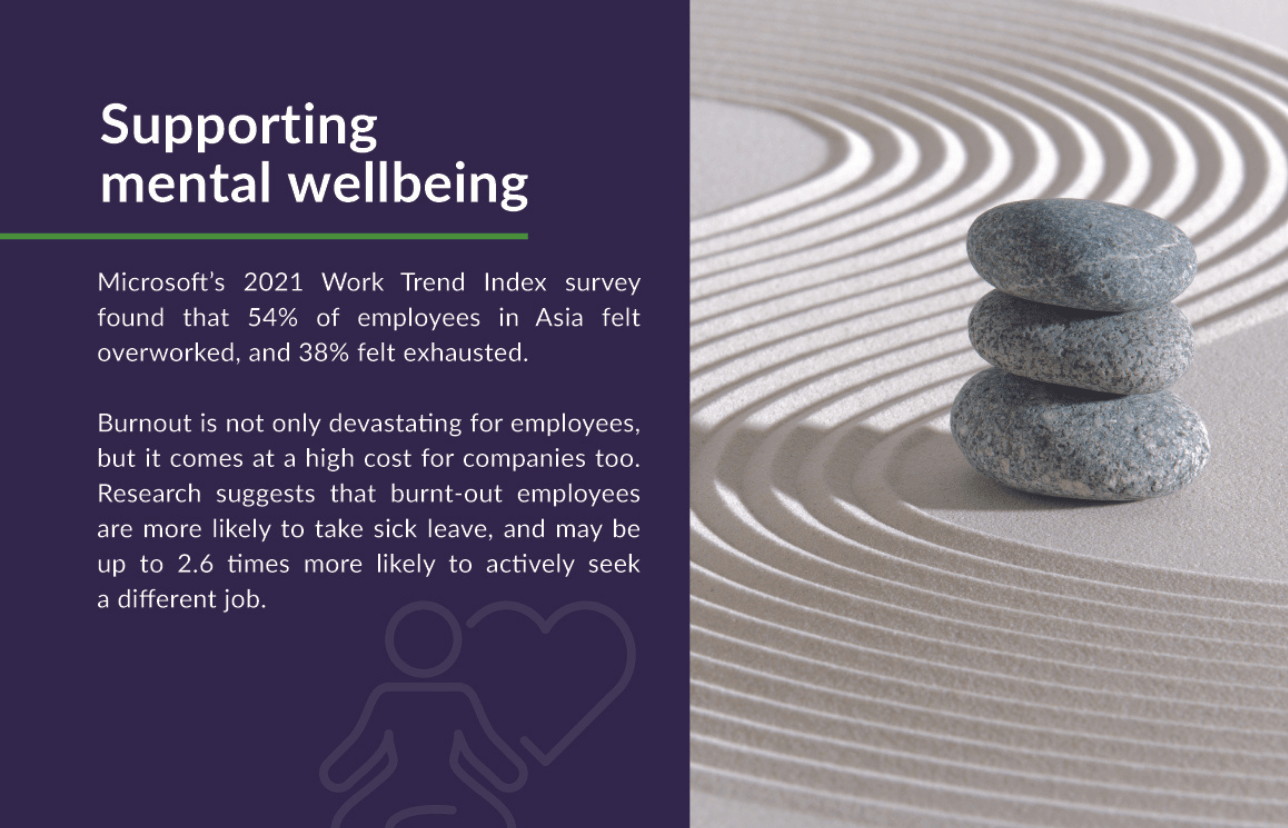
  • Supporting mental wellbeing
  • Maintaining physical health

Do take a read and download our Remote Working Guidebook today to capitalise on our experience and lessons learned.

We hope that your journey into hybrid working will be a pleasant and favourable one like ours

Juggling with family and work
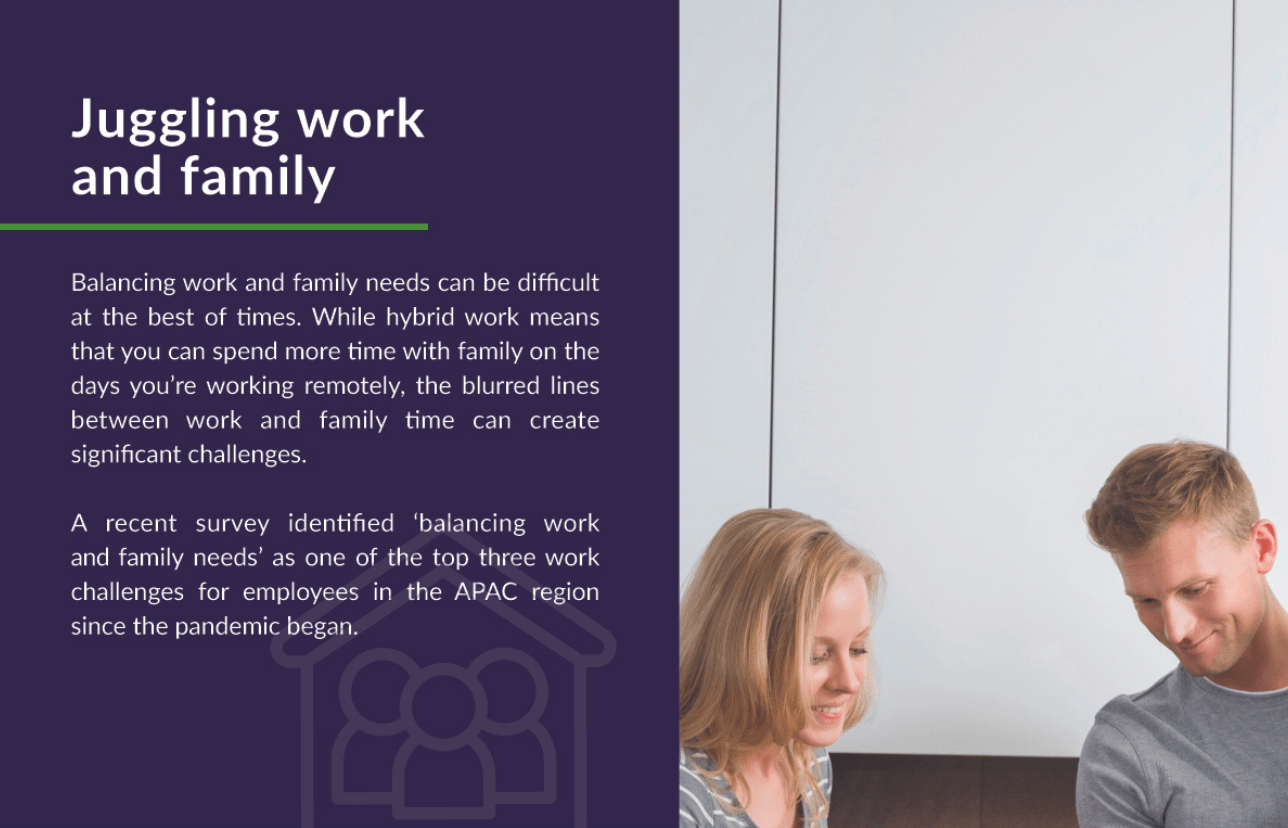
Juggling with family and work

Maintaining physical health
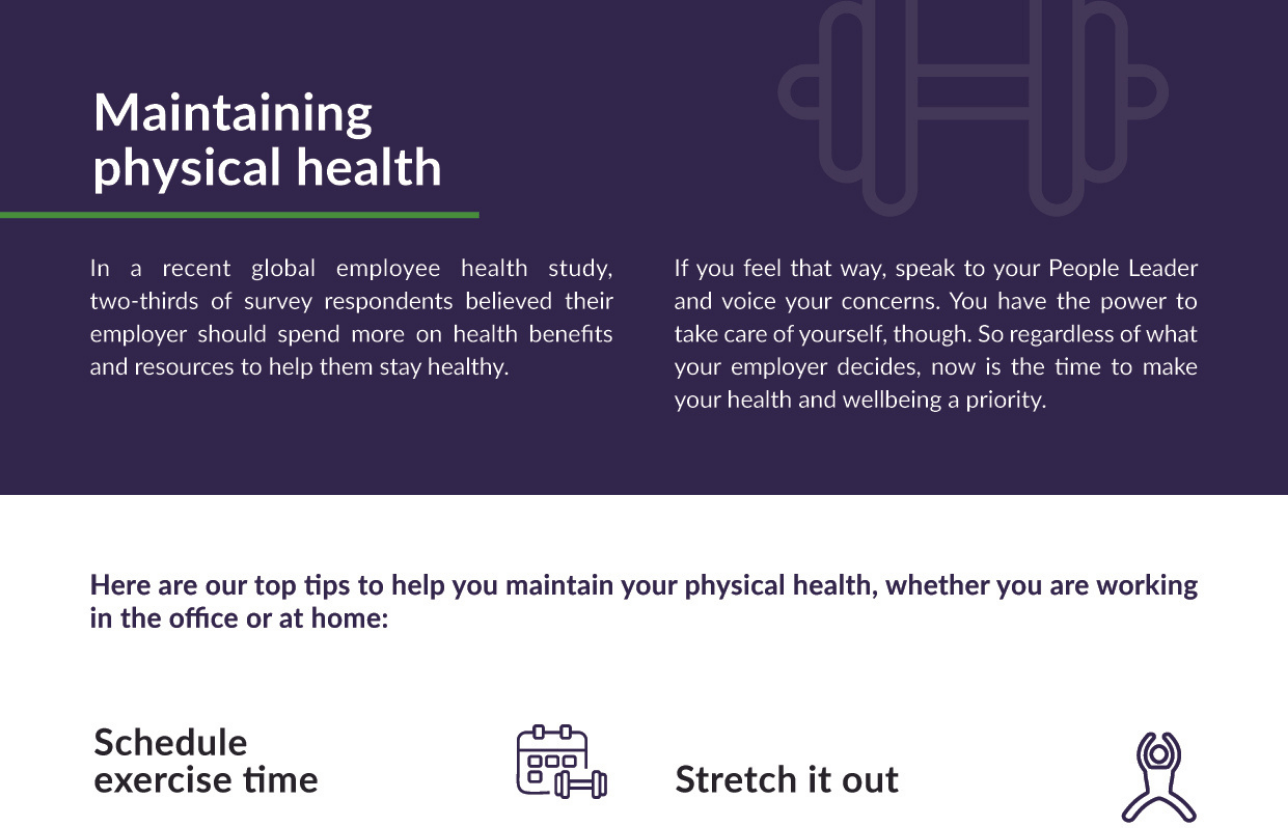
Maintaining physical health

Navigating hybrid workforce
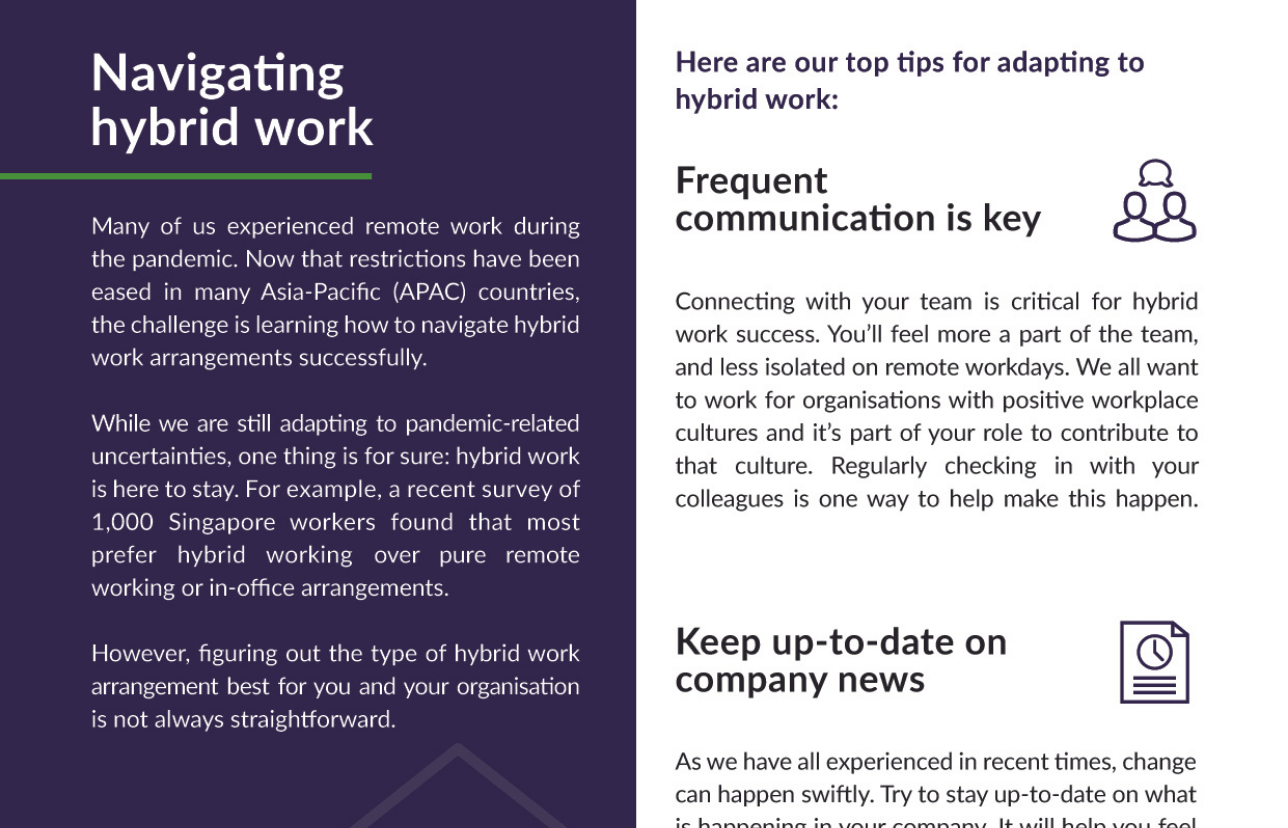
Navigating hybrid workforce

Organising time
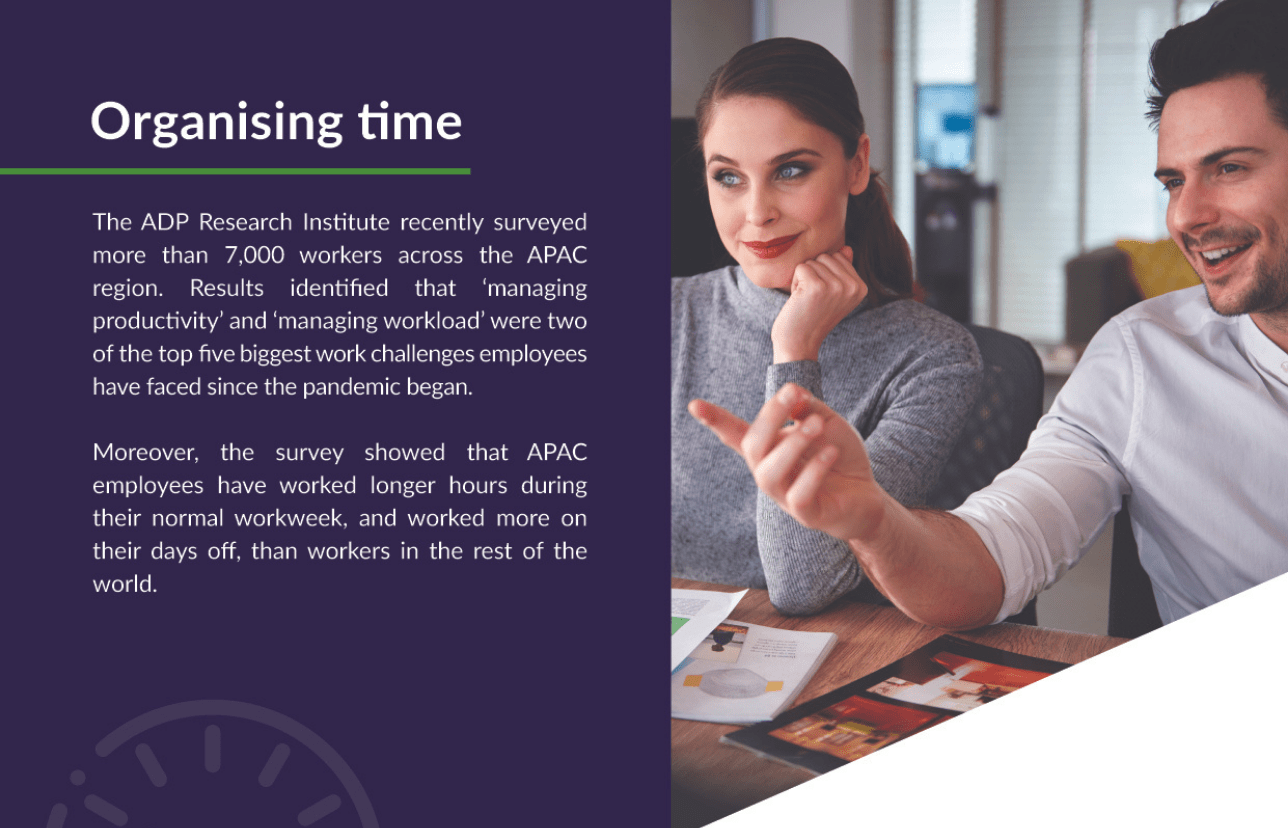
Organising time

Supporting mental wellbeing
Maintaining physical health

Related Business Insights

Singapore 2022 Budget

Singapore 2022 Budget

Singapore 2022 Budget

The 2022 Singapore Budget revealed a number of key initiatives that revolved around investing in new capabilities, renewing & strengthening social compact, advancing green transition, and building a fairer and more resilient tax system. As always, there will be tax planning implications for your business. We’ve distilled down the main changes that you’ll need to be aware of in order to maximise the benefits for your company.

You can download the full Singapore Budget 2022 Report below to understand the implications on your corporate tax planning.

If you have any questions relating to any of the information contained in this report, please contact our tax advisors via email or call us at +65 6230 9788.

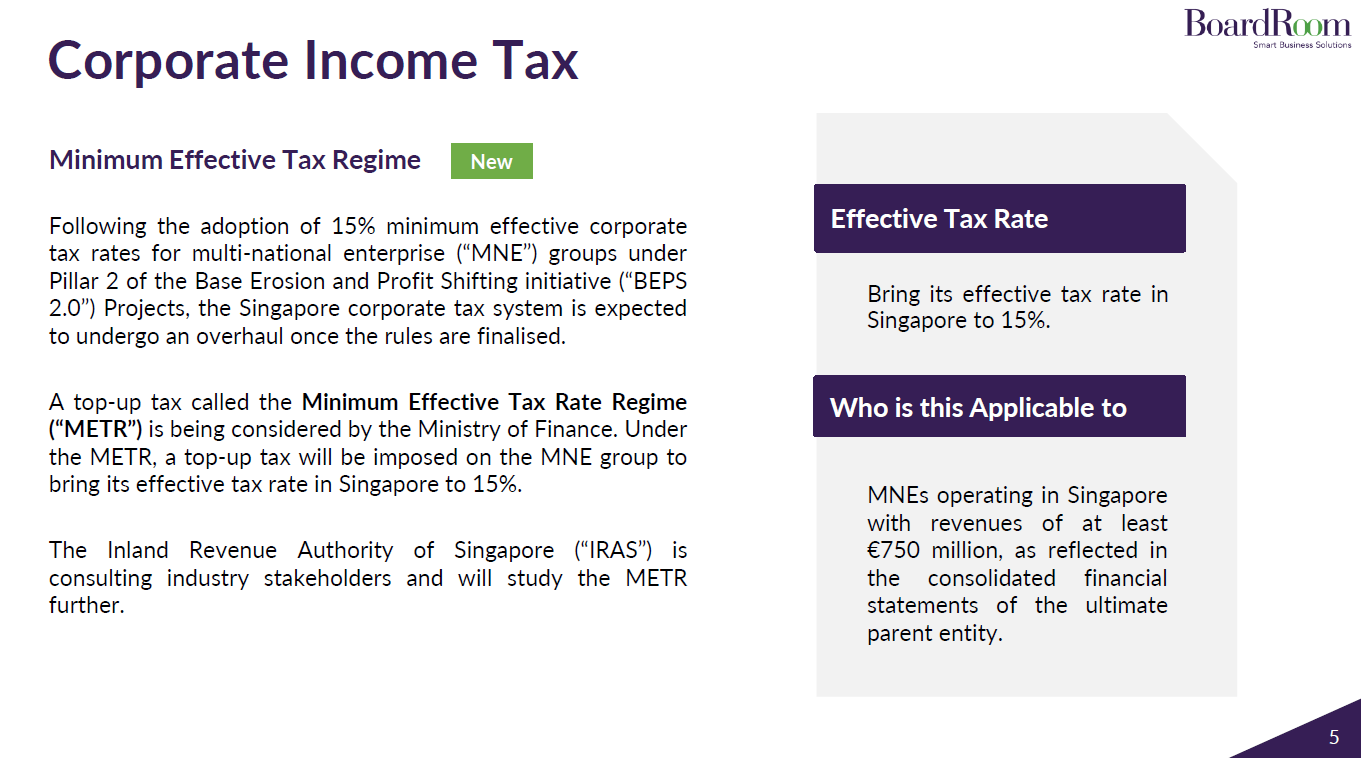
Corporate Income Tax

Corporate Income Tax

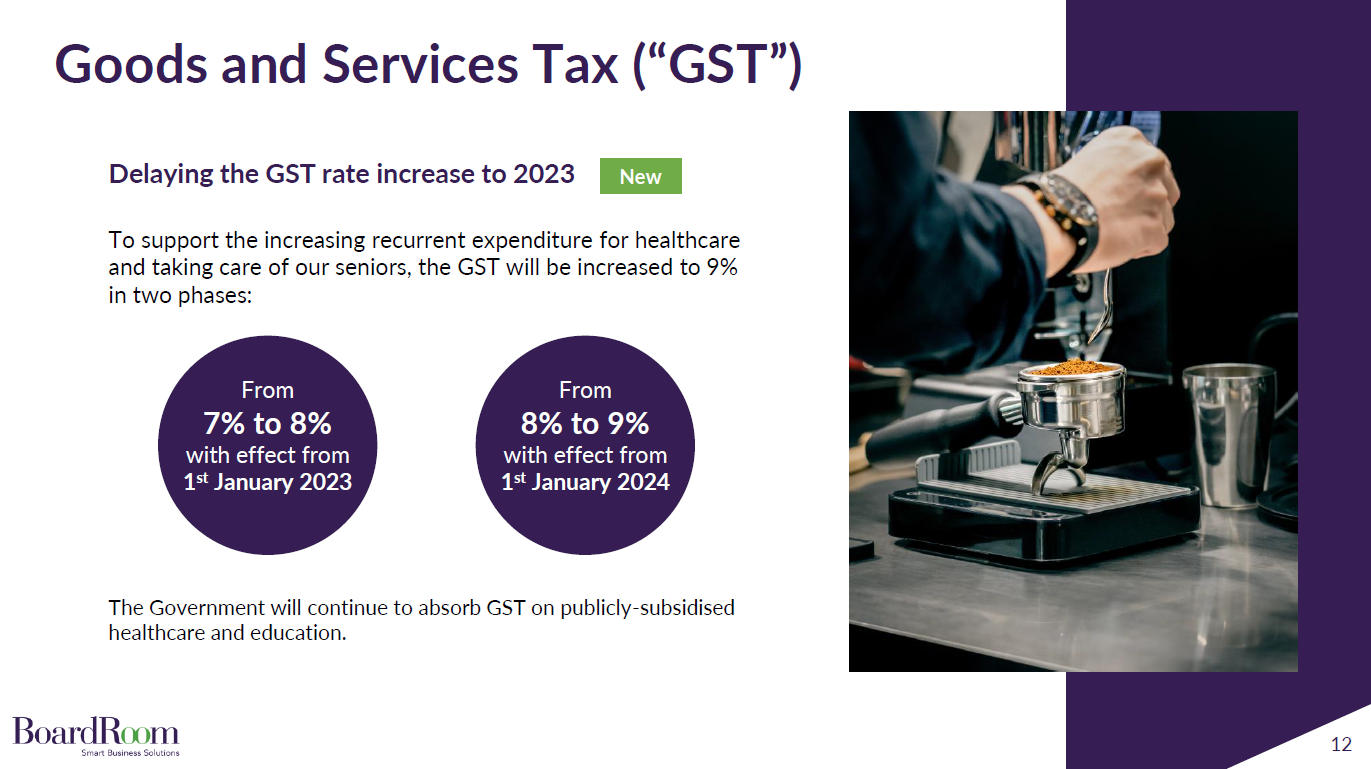
GST rate increase delay

GST rate increase delay

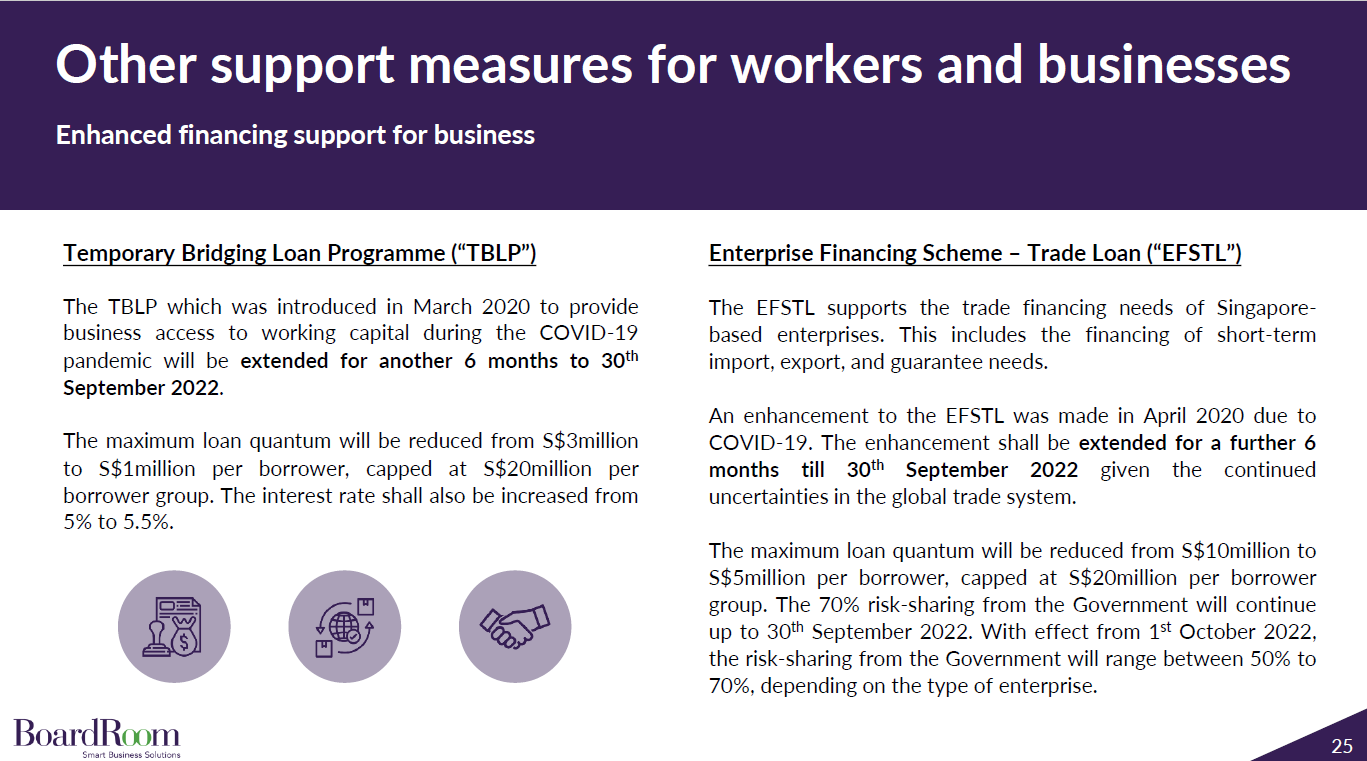
Enhanced financing support for business

Financial support for business

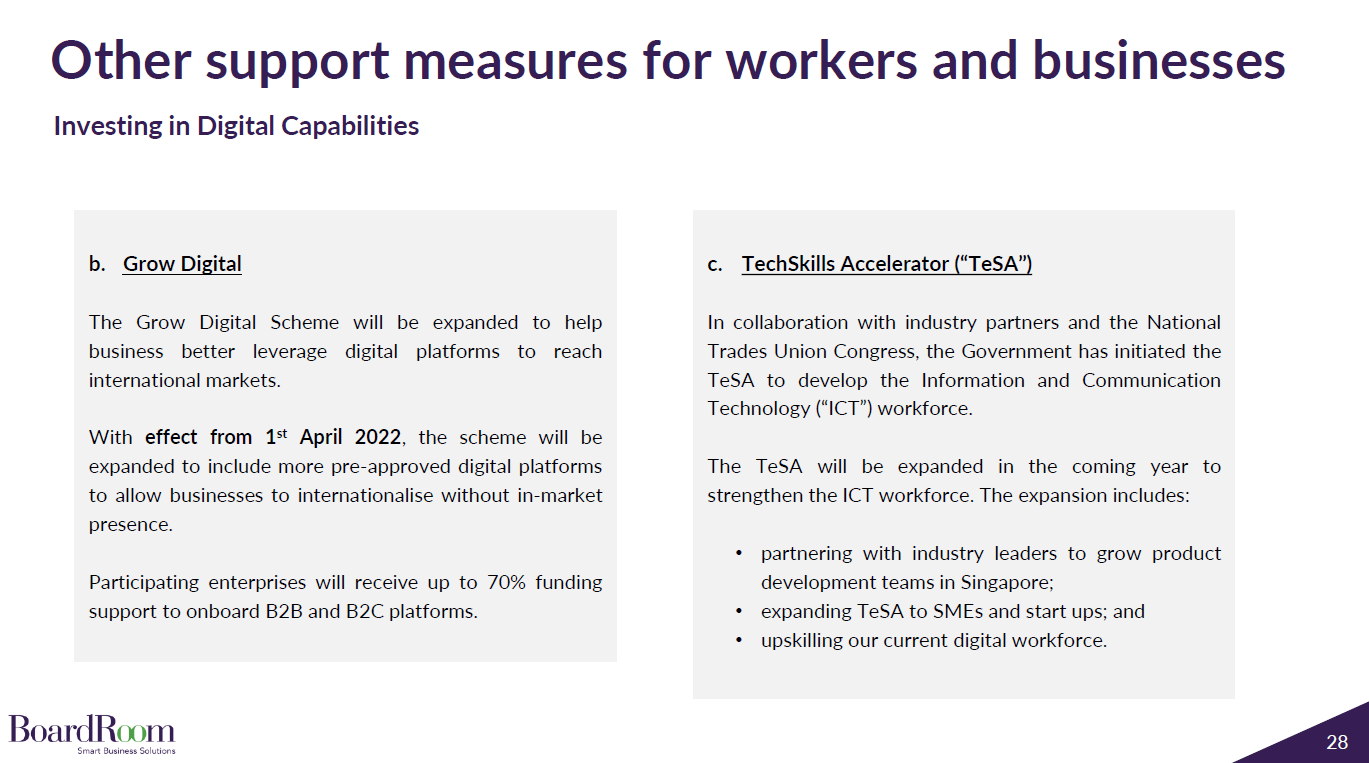
Investing in Digital Capabilities

Investing in digital capabilities

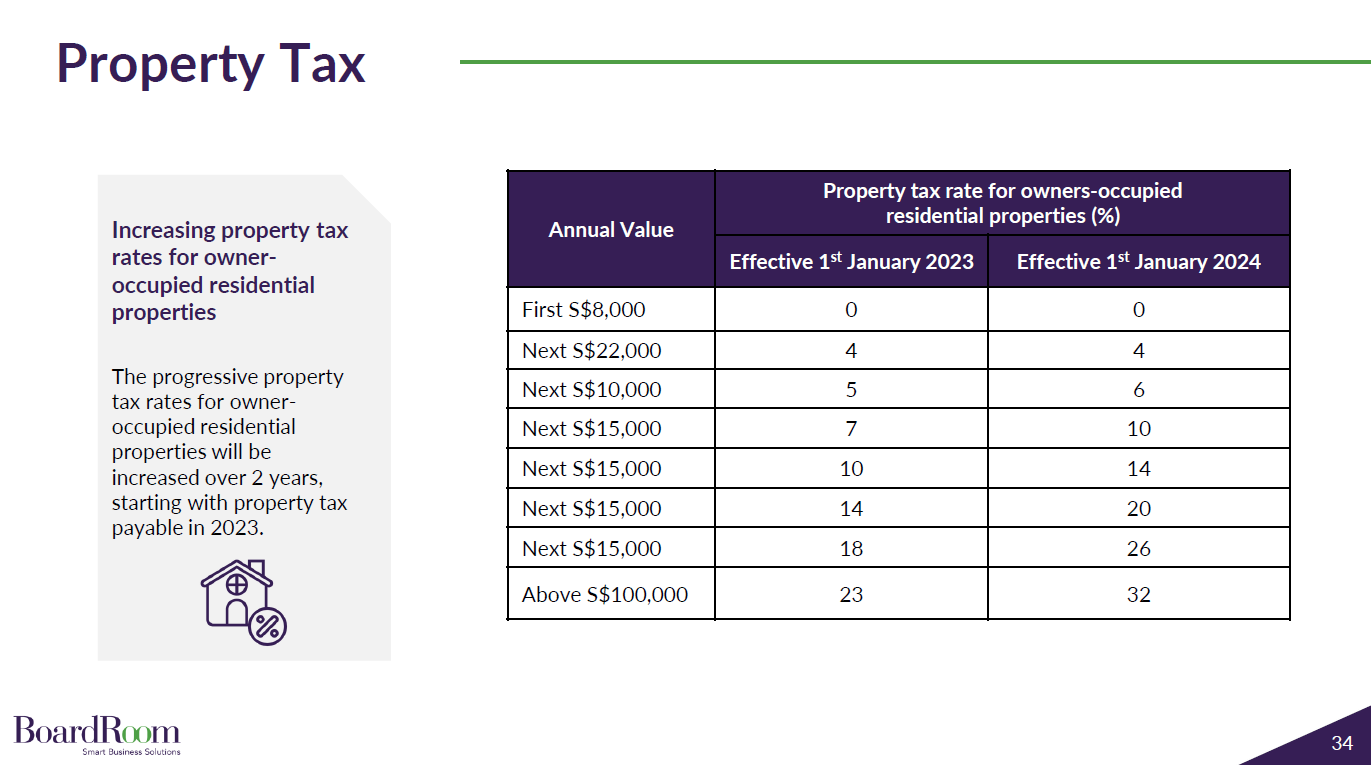
Property Tax

Property Tax

Related Business Insights

Considering online company incorporation in Singapore?

1. online company incorporation Singapore

Considering online company incorporation in Singapore?

Is it best to use online company incorporation services in Singapore?

Singapore consistently ranks as one of the best places in the world to do business because of its strategic central location, attractive tax structure, highly competitive economy, and political stability.

Therefore, it’s unsurprising that the city is also a leading global start-up hub. As the number of new start-ups has grown, online company incorporation services in Singapore have increased.

While these service providers offer speed and convenience for straightforward setups, businesses with more complex structures will benefit from engaging an expert incorporation services provider.

What are company incorporation services?

The process and requirements for company incorporation in Singapore may vary depending on factors such as the type of company, the nationality of the directors and shareholders, and the nature of the business activities.

After sorting out these factors, new business owners would need to fulfil several requirements, such as preparing the company constitution, filling in the ACRA BizFile, providing a local registered office address and more.

The complex process can make it challenging for new business owners to embark on their entrepreneurial journey. This is where company incorporation services play a crucial role in simplifying the process and ensuring compliance with legal requirements. By leveraging the expertise of professionals well-versed in company registration procedures, entrepreneurs can establish their companies in Singapore smoothly and seamlessly.

What do ‘self-serve’ online incorporation services offer?

Many online incorporation companies have appeared in recent years. They usually offer ‘self-serve’ incorporation model services. Essentially, they take care of the basic company incorporation paperwork and administration for you, including:

  • checking and reserving a company name;
  • preparing registration forms (based on information that you provide through online forms);
  • filing with the Accounting and Corporate Regulatory Authority (ACRA);
  • drafting the company constitution; and
  • preparing the corporate compliance kit (share certificates and registers).

Incorporating online is a modern trend offering speed and convenience. For example, local businesses can be incorporated within three hours using the ‘self-serve’ method. As a no-frills service, it’s an attractive, affordable option for companies with simple business structures.

However, there are some pitfalls to be aware of when incorporating your business online. Typically, online incorporation services provider do not provide expert advice and guidance on how to set up an ideal business structure while ensuring your new entity meets its regulatory requirements. Your company may risk increased costs and non-compliance as a result of:

  • selecting the wrong business structure, which has significant long-term implications for tax and personal liability obligations;
  • overlooking important local statutory requirements such as obtaining work permits; and
  • missing out on the valuable corporate tax incentives available in Singapore.
risk of incorporate business online

Why engage an expert incorporation service provider?

There’s a lot more to incorporation than paperwork. While the ‘self-serve’ model takes care of the simple administrative aspects of business registration, it doesn’t optimise your company setup for ongoing growth and profitability.

Unlike the majority of online incorporation service providers, professional services firms like BoardRoom focus on the bigger picture for your business. In addition to taking care of the business registration paperwork for you, our team of certified professionals can assist you with all aspects of incorporation, including:

  • tailoring the ideal setup and business structure for your company to minimise tax and personal liability obligations;
  • flagging any potential compliance risk oversights;
  • applying for any relevant tax incentives;
  • providing advice on and applying for work permits, residency passes, dependant passes and permanent residency;
  • establishing an efficient, automated payroll process and accounting system for your company; and
  • providing a nominee director, a company secretary or a local registered office, where required, to meet your statutory incorporation requirements.

Which incorporation service is right for your company?

Larger companies or those with complex structures are more likely to benefit from working with an expert incorporation service provider such as BoardRoom. Our team of incorporation professionals can guide your company on the most suitable setup and ensure that all compliance requirements are taken care of.

Using the ‘self-serve’ option may be more appropriate for smaller businesses, particularly those with a limited budget. Additionally, online incorporation can be done relatively quickly when company structures are less complex because the process is more straightforward. For example, you could save a good deal of money if you complete the company incorporation process yourself if you are:

  • a Singaporean citizen wanting to set up your own business; and
  • the only shareholder and do not intend to add more shareholders.

However, your needs will be very different if you are part of a foreign company looking to enter into the Singaporean market, especially if:

  • you already have several entities in other countries; or
  • you are part of a consortium of businesses looking to incorporate.

In these cases, your organisation will likely need expert guidance on the best way to set up and structure your new company in Singapore.

online incorporation services

Set up your company for long-term success with our incorporation experts

Online incorporation using the ‘self-serve’ model is a good starting point. However, to set yourself up for success long term, it’s worthwhile investing in a more sustainable and holistic approach that leverages expert knowledge.

From commencement to completion, BoardRoom’s team of experienced, certified professionals can guide you through incorporation so it’s done correctly for your type of business.

For over 50 years, we have helped businesses like yours thrive by using our company setup, incorporation, and company secretarial services.

Speak to one of our incorporation experts today to find out how we could take your business further, faster.

Related Business Insights

How to Start a Business in Singapore

how to start a business in Singapore

How to Start a Business in Singapore

How to Start a Business in Singapore

Looking to start a business in Singapore? You’re not alone.

Singapore’s thriving business environment attracts companies from around the world, and it’s easy to see why when the country is:

  • consistently rated by the World Bank as the best country in Asia to do business and the second-best nation in the world to do business;
  • ranked first in the world for political and operational stability in the Global Innovation Index 2020; and
  • ranked first in the Asia Pacific (APAC) region and fifth in the world for economic competitiveness by the IMD World Competitiveness Yearbook 2021.

Expanding into a new international market is exciting for any business, but it also presents its own set of significant challenges. For many executives, the first hurdle is understanding how the company formation regulations and processes work in the new jurisdiction.

 Our guide below gives you an overview of everything you need to know about how to start a business in Singapore.

Singapore Market Profile

Office rental pricing: Average monthly rent for grade A office space in Singapore was $SGD 9.90 per square foot for the second quarter of 2021. 

Average office space density: 10m2 per person 

Fixed internet download speed: 256.03 megabits per second in July 2021

Mobile internet download speed: 85.93 megabits per second in July 2021

Gross Domestic Product US$ bn: 340

Population (million): 5.70

Official languages: there are four official languages spoken in Singapore, including:

  • English;
  • Chinese;
  • Malay; and
  • Tamil
    Establish your startup in Singapore

    Benefits of Setting up a Company in Singapore

    As one of the largest business centres in Asia, Singapore offers many benefits to companies looking to establish a presence in the region. Here are seven benefits of why setting up a company in Singapore is a smart choice for businesses:

    Favourable Corporate Tax Structure

    Singapore’s corporate tax is set at a competitive rate of 17% on chargeable income, whether a company is local or foreign. To further support businesses, the government offers several corporate tax relief schemes.

    Tax Exemption Scheme for New Start-up Companies

    Qualifying companies are given the following tax exemptions for the first three consecutive years of assessment (YAs) where the YA falls in:

    YA 2020 onwards
    • 75% exemption on the first $100,000 of normal chargeable income; and
    • A further 50% exemption on the next $100,000 of normal chargeable income.
    YA 2010–2019
    • Full exemption on the first $100,000 of normal chargeable income; and
    • A further 50% exemption on the next $200,000 of normal chargeable income

    Partial Tax Exemption for All Companies

    All companies, including companies limited by guarantee, can enjoy the following tax exemption:

    YA 2020 onwards
    • 75% exemption on the first $10,000 of normal chargeable income; and
    • A further 50% exemption on the next $190,000 of normal chargeable income.
    YA 2010–2019
    • 75% tax exemption on the first $10,000 of normal chargeable income; and
    • A further 50% exemption on the next $290,000 of normal chargeable income.

    Corporate Income Tax Rebate

    Given to all companies:

    YA 2020 onwards
    • 75% exemption on the first $10,000 of normal chargeable income; and
    • A further 50% exemption on the next $190,000 of normal chargeable income.
    YA 2013–2019

    Attractive Corporate Tax Incentives

    Singapore offers a range of tax incentives designed to support business growth and innovation, making it an attractive destination for setting up a business.

    These are some of the key incentive schemes:

    Pioneer Certificate Incentive

    Granted to companies that locate “pioneering” activities that are not carried out in Singapore at the time. It is designed to attract companies in high-tech, innovative, or strategically important industries that can contribute significantly to Singapore’s economic development, helping to establish Singapore as a regional hub for advanced industries.


    Development and Expansion Incentive

    Encourages companies to develop capabilities and/or expand their activities in Singapore. The concessionary tax rate for this incentive is either 5% or 10%, depending on the size of economic investments these companies commit to bringing into Singapore.


    Enterprise Innovation Scheme (EIS)

    Effective from YA 2024 to YA 2028, is designed to help businesses which are focused on research, innovation, and digital transformation. The EIS provides enhanced tax deductions or cash payouts for qualifying expenditures in areas such as R&D, intellectual property registration, and training in innovation.

    Singapore also offers Foreign Income Tax Reliefs and Exemptions, where it does not tax capital gains on the sale of fixed assets or foreign exchange on capital transactions. However, companies (irrespective of tax residency) operating in Singapore are taxed on income sourced in the country and foreign income when remitted to and received in Singapore.

    According to the Inland Revenue Authority of Singapore (IRAS),companies that are Singapore tax residents can enjoy tax breaks on foreign income as follows:

    • Tax Exemption or Reduction: Upfront exemption or reduction in tax imposed on the foreign income when foreign income is derived in a jurisdiction that has an Avoidance of Double Taxation Agreement (DTA) with Singapore;
    • Specified Foreign Income Exemptions: Tax exemption of specified foreign income such as foreign-sourced dividends, branch profits and service income; and
    • Foreign tax credit: Credit for the taxes paid in the foreign jurisdiction against the Singapore tax payable on the same income.

    Generous Grants for Funding

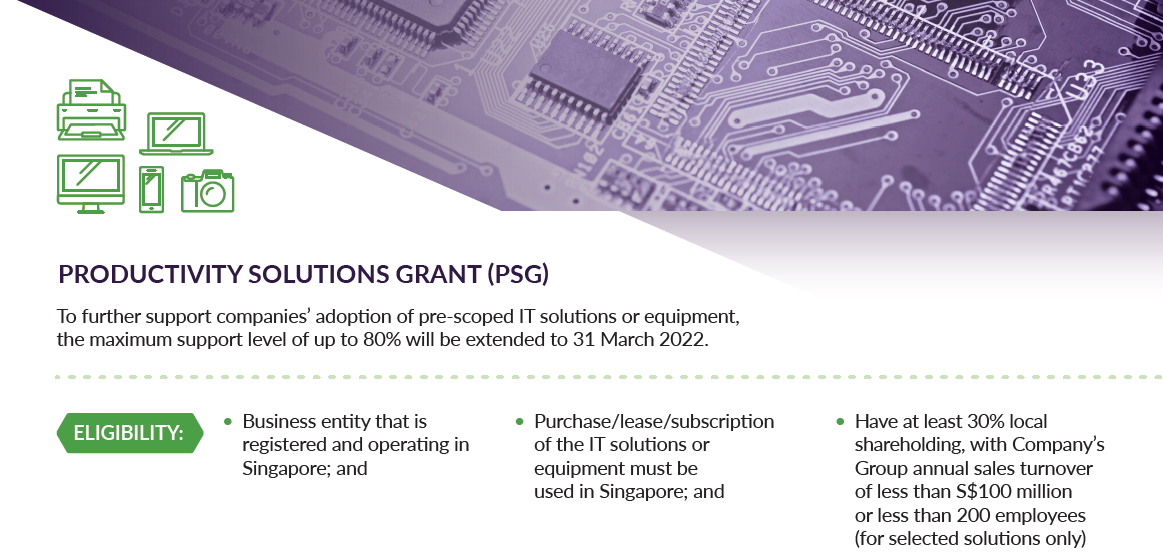
    Supported by the government, the Enterprise Development Grant (EDG) and Productivity Solutions Grant are the initiatives designed to support local businesses:

    Enterprise Development Grant (EDG)

    This provides funding to cover up to 80% of the qualifying project costs, including consultancy fees, budgets for equipment and software and internal manpower costs, for projects that drive innovation, productivity and market success. To apply for the grant, the business must be registered and operate in Singapore with 30% of the local equity owned by Singaporeans or Singapore’s permanent residents. It should also demonstrate its capability to start and finish the project and have a minimum of SGD 400,000 turnover.


    Productivity Solutions Grants (PSG)

    This grant aims to cover the costs of IT solutions, equipment and consultancy services for SMEs, enabling them to adopt technology to improve their productivity. It offers up to 50% of the qualifying costs for each company. Similar to EDG, only registered and operating businesses in Singapore can apply for the grant. However, the project must involve the adoption of technology to be eligible.

    Whether you are setting up a business or have been operating an SME company for more than years, the government in Singapore provides many grant schemes in support of startups and companies across sectors. You can refer to GoBusiness Singapore for the full list of grants available.

    Enterprise Financing Scheme for SMEs and Startups

    Enterprise Financing Scheme (EFS) is offered in Singapore to assist SMEs and startups in securing financing for their business operations. This government-backed scheme provides financing to eligible SMEs for various business purposes, including Green Loans for sustainable projects, SME Working Capital Loans for investments in fixed assets, and Venture Debt Loans in support of innovative projects by enterprises.

    To be eligible for the scheme, the business must meet the following requirements:

    • Registered and physically located in Singapore;
    • 30% of the local equity must be directly or indirectly held by Singaporeans or Singapore’s permanent residents;
    • Group annual sales turnover should not exceed SGD 500,000,000.

    Highly Competitive Economy

    Singapore is one of the most competitive economies in the world, ranking first in the Asia Pacific (APAC) region and fifth in the world for economic competitiveness by the IMD World Competitiveness Yearbook 2021.

    No foreign ownership restrictions

    100% of the shares of incorporated companies in Singapore can be owned by foreigners or foreign companies (except for broadcasting and domestic news media).

    There are no export tariffs and foreign exchange controls in Singapore, but there are import tariffs on:

    • intoxicating liquors;
    • tobacco products;
    • motor vehicles;
    • petroleum products; and
    • biodiesel blends.

    Bilingual Business Communication

    As Singapore’s primary business and administrative language, English is widely used in Singapore, making it easier for foreign investors to establish companies within the region. Additionally, Singapore’s bilingual policy means that many professionals are fluent in both English and Mandarin, which is particularly advantageous for companies looking to tap into the vast Chinese-speaking market in Asia. This bilingual environment ensures that businesses can effectively engage with a diverse range of clients, partners, and stakeholders, bridging cultural and linguistic gaps while enhancing regional business operations.

    A Step-By-Step Guide to Start a Business in Singapore

    Here is our step-by-step guide for how to start and register a business in Singapore:

    Choose a Business Structure Type

    The most common types of business structures operating in Singapore are:

    • Sole Proprietorship: This is the simplest form of business structure, owned and operated by a single individual. It’s easy to set up and manage, with minimal legal formalities. However, the owner is personally liable for all debts and obligations of the business, meaning their personal assets are susceptible to risks.
    • Partnership: A partnership is a business structure formed by two or more individuals who agree to share profits and losses. There are two main partnership types — general and limited. In a general partnership, all partners have equal rights and responsibilities. In a limited partnership, there is at least one general partner with unlimited liability and one or more limited partners with limited liability.
    • Limited Liability Partnership (LLP): An LLP is a hybrid business structure that combines the characteristics of a partnership and a company. Similar to a company, it offers limited liability for all partners. However, unlike a company, an LLP is not a separate legal entity. While this protects partners’ personal assets from business debts, they remain personally liable for their own actions and liabilities, as well as for the actions of fellow partners within the scope of the LLP’s business.
    • Private Limited Company: A private limited company is a separate legal entity from its owners. Shareholders have limited liability, meaning their personal assets are generally protected from business debts. Private companies are typically owned by a small group of individuals, allowing up to 50 shareholders.
    • Public Limited Company: A public limited company is a separate legal entity that the public can own. Shares of the company can be traded on a stock exchange. Shareholders have limited liability, similar to a private limited company. Unlike private limited companies, this type of business structure must have a minimum of 50 shareholders.
    • Foreign Company Office: Established outside of Singapore, foreign companies can register in the country to start either a representative office, which is not for business purposes, or a branch office. Neither option creates a separate legal entity, however, so all liability extends to the parent company.

    Give Your Business a Name

    Your company must avoid choosing a name that is:

    • the same as an existing business name already approved by the Accounting and Corporate Regulatory Authority (ACRA);
    • undesirable names that are vulgar, obscene, or offensive; and
    • prohibited by order of the Minister for Finance.

    You can search the online business and company name register in Singapore, BizFile, to check if your preferred name is available.

    Set up Your Company Structure

    If you are setting up a company, you need to determine the structure of your company per the following requirements:

    • Directors: a minimum of at least one person. One director needs to be a natural person (i. an individual). Directors must be aged 18 years or older and be either:
    • a Singaporean citizen; or
    • permanent resident; or
    • a person with an Employment Pass; or
    • a person with an Entrepreneur Pass (EntrePass).

    BoardRoom offers a nominee director service to help you meet the local director requirements in Singapore.

    • Shareholders: a minimum of at least one shareholder. 100% of shares can be foreign-owned.
    • Company secretary: a sole director must not act as the company secretary. To start and register a company in Singapore, you must appoint a natural person who lives in Singapore as a company secretary. Companies like BoardRoom can provide expert company secretarial services so that your company can meet all of its statutory obligations in Singapore.
    • Share capital: the minimum issued capital must be at least $SGD1.
    • Registered address: must be a physical address in Singapore, not a P.O. Box. If your business does not yet have local office space, professional service firms like BoardRoom can help your company by setting up a registered office location.

    Submit Company Registration Application

    Once you have decided on a company name and the designated company share structure, you can now proceed to the company registration, officially setting up your own business. If you are a Singaporean or a permanent resident of Singapore, you can apply online via the ACRA’s BizFile+ Portal. Simply use your SingPass, which is digital identification designed specifically for the local citizens, to access the platform. Once you log in, please start the registration and provide the following documents and information to complete the application:

    • Approved company name from ACRA
    • Company constitution (Articles of Association)
    • Identification and residential address of shareholders and directors
    • Signed consent from each director
    • Registered office address in Singapore
    • SSIC code for business activities

    It generally takes only a day to approve the application. Please ensure you prepare all the necessary documents in advance.

    Receive the Business Registration Number

    After the application is approved, the ACRA will issue you a Business Registration Number (BRN). This number, also known as the Unique Entity Number (UEN) in Singapore, is an important legal identifier for the business it is assigned to, as it is required for corporate tax return filing, industry-specific permits, licences, and various transactions with the government. Even if the business details of the company are modified, its BRN will remain unchanged.

    Having a BRN streamlines the compliance processes by eliminating the need for multiple IDs or applications to interact with or fulfil regulatory requirements across various government agency platforms.

    Make Other Permit and Business Licence Applications (If Applicable)

    Depending on the type of business you operate, you may need to apply for other permits and business licences. Find more information about permits and licences here.

    Start a Business as a Foreigner in Singapore

    A foreigner looking to start a business in Singapore that is venture-backed or owns innovative technologies can apply for an EntrePass. This will allow them to submit their application online through BizFile and grow across the region. Additionally, they must also meet the following requirements when setting up their company in Singapore:

    • Appoint at least one director who is a local resident
    • Appoint at least one shareholder
    • Provide a physical address in Singapore as the registered office

    Foreigners without an EntrePass should consider engaging with the services of a registered filing agent, such as BoardRoom.

    Additional Considerations When Setting up a business in Singapore

    During the process of setting up a company in Singapore, it’s also imperative that you pay attention to certain business exemptions and taxes that you need to pay.

    Exemptions from Company Registration

    There are certain forms of businesses that are exempt from undergoing ACRA’s company registration, which include:

    • Sole Proprietorships and Partnerships: Businesses operating solely under the full names of individuals or partners can be exempt from registration. However, if any additional descriptive terms are used in the business name, registration is required.
    • Tax-Exempt Entities: Certain entities, such as specific institutions, authorities, and funds, may be exempt from registration if their income is tax-exempt under the Income Tax Act.
    • Registered Societies, Organisations, and Trade Unions: Societies, organisations, and trade unions registered under their respective laws are generally exempt from business registration.
    • Dormant Companies and Exempt Private Companies: While dormant companies and exempt private companies (EPCs) may enjoy certain exemptions, they still need to be registered and comply with specific requirements, such as maintaining accounting records and preparing financial statements.

    Corporate Income Tax Filing

    For businesses registered under the Companies Act, corporate income tax return filing is mandatory. Thus, when you are setting up a business in Singapore, you need to understand such obligations to ensure future compliance with regulations.

    The entire tax filing process is done through the online portal of the Inland Revenue Authority of Singapore (IRAS), involving 2 key steps:

    Estimated Chargeable Income (ECI): Companies must submit an ECI within three months from the end of their financial year. However, certain exemptions apply if a company’s annual revenue is below a specified threshold and if ECI is zero.

    Tax Return Filing: Companies must file the appropriate tax return form (Form C-S, Form C-S (Lite), or Form C) based on their eligibility and complexity of returns. The deadlines for filing these documents are typically within three months of your financial year-end for ECI and November 30th of the Year of Assessment for the tax return.

    As sole proprietors and partnerships are not classified as companies, they have separate tax filing requirements, which can be viewed in detail on the IRAS’s website.

    How Can BoardRoom Ensure You Successfully Start a Business in Singapore?

    While it can be complex, setting up a business in Singapore as a foreigner doesn’t have to be difficult. Our team of company incorporation experts at BoardRoom can guide you through every step of the incorporation journey to make it as smooth and seamless as possible.

    Not only can our team help you incorporate with ease, but we can also take care of your company secretarial needs.

    Speak to one of our specialists today to get started in setting up a business in Singapore.

    Related Business Insights

    Singapore Budget 2021 – What Businesses Can Capitalise on to Accelerate Growth in the Post-Pandemic Economic Landscape

    Singapore_Budget_2021

    Singapore Budget 2021 – What Businesses Can Capitalise on to Accelerate Growth in the Post-Pandemic Economic Landscape

    On 16th February 2021, Finance Minister Heng Swee Keat announced the Singapore 2021 Budget.

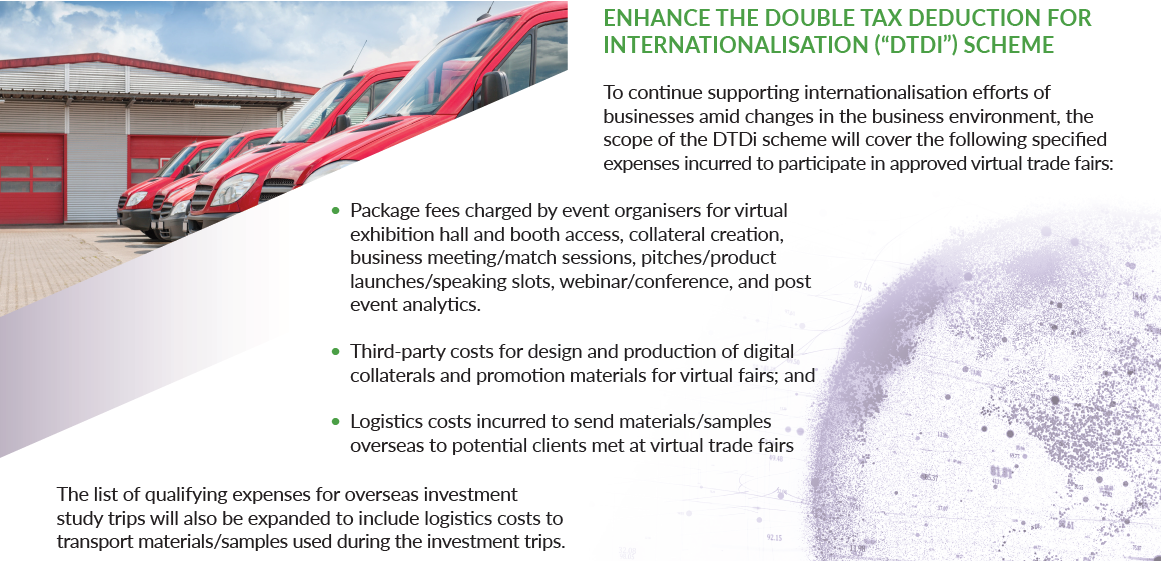
    The budget this year, while focused on COVID-19 support measures, also showcases the government’s foresight as they unveiled several long-term plans such as boosting the global expansion of businesses and scaling of local organisations.

    If you have any questions relating to any of the information contained in this report, please contact our tax advisors via email or call us at +65 6230 9788.

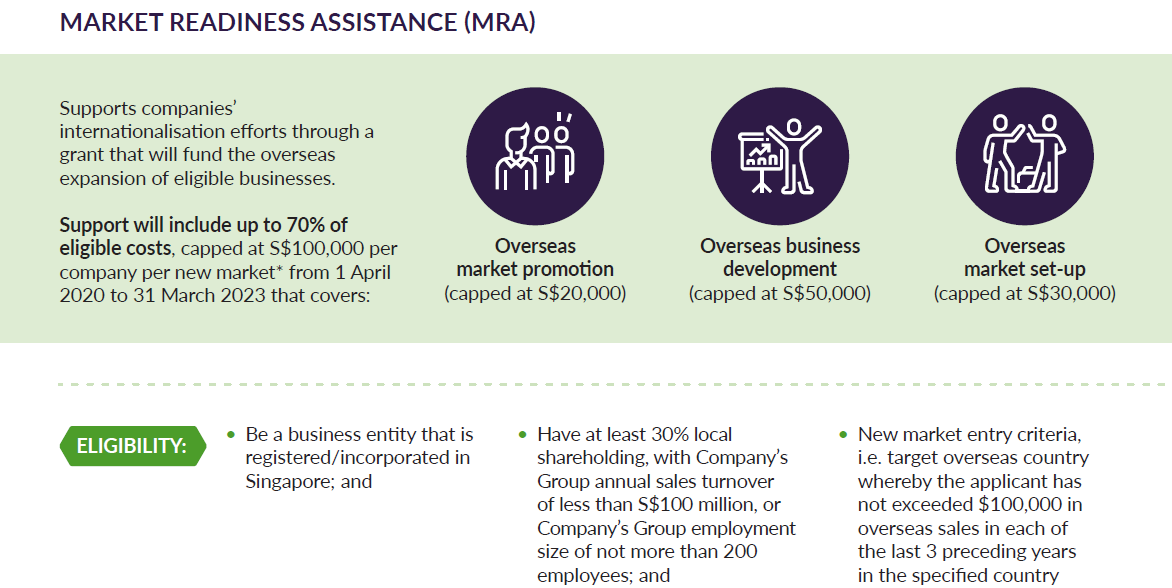
    Boosting Global Expansion of Business

    Boosting global expansion of business

    Business Scaling

    Business scaling

    Tax Support & Changes

    Tax support & changes

    Related Business Insights

    Use of Electronic Signatures in Singapore

    Use of electronic signatures in Singapore

    Use of Electronic Signatures in Singapore

    The latest roll out of the Singapore government’s new digital identity platform is yet another move that showcases the tech nation’s commitment to digitalising the country. One of the main features will empower citizens to digitally sign legal documents such as contracts securely. At BoardRoom, where possible, we’ve adopted electronic signatures for years, not only as part of our aim to go paperless but also to optimise our business processes.

    What exactly are electronic signatures and when can you use them? Are there any situations in which they may not be legally binding? In this article written by our partner, Virtus Law LLP (a member of the Stephenson Harwood (Singapore) Alliance), they dive deep into the usage of electronic signatures in the highly digitalised society of Singapore.

    Use of electronic signatures in Singapore

    The global technological landscape is evolving rapidly and various advancements in digital technologies have transformed the way we transact. In the context of the ongoing digital revolution, the Singapore government has announced Singapore’s goal to become a leading Digital Economy. On 5 November 2020, the Singapore government launched a new digital signing service, the “Sign with SingPass“, that allows SingPass users to electronically sign contracts and other legal documentation. This supports efforts to digitise Singapore government services as it allows users to complete transactions with the Singapore government without the need to be physically present to sign documents.  

    In light of the accelerated pace of digitalisation precipitated by COVID-19, the use of electronic signatures has become increasingly relevant to businesses. In this article, we will discuss the key issues relating to the use of electronic signatures in Singapore.

    Electronic signatures

    At the outset, the Electronic Transactions Act, Chapter 88 of Singapore (the “ETA“), which came into force on 1 July 2010, provides for the legal recognition and use of electronic signatures. Under section 8 of the ETA, electronic signatures may be recognised as the functional equivalent of “wet-ink” signatures if the method used (a) can identify the signatory and indicates the signatory’s intention in respect of the contents of the document; and (b) is appropriately reliable considering the purpose of the document or is proven to have fulfilled the requirements in paragraph (a).

    Electronic Signatures

    While the ETA does not expressly define the term “electronic signature”, it is generally understood as an acknowledgement provided by way of technology having electrical, digital, magnetic, wireless, optical, electromagnetic or similar capabilities.

    This, however, is differentiated from a “digital signature” under the ETA, which is subject to further requirements under the ETA.

    In determining whether something amounts to an electronic signature, the Singapore courts will generally look at whether the method of signature used satisfies the authenticating function of a signature, instead of whether the form of signature used is one which is frequently recognised.

    Without a specific definition of “electronic signatures”, they can possibly take different forms, subject to the legal requirements in the ETA being satisfied. Some examples of electronic signatures may include:

    1. A person typing his/her name into a contract or email containing the terms of the contract;
    2. A person electronically pasting his/her signature (e.g. in the form of an image) into an electronic version of the contract within his/her signature block;
    3. A person accessing a contract through a web-based signature platform such as DocuSign and Adobe, and clicking to have his/her name inserted into the contract in the appropriate place; and
    4. A person using a finger, light pen or touchscreen to sign his/her signature in the appropriate place in a contract.
    Excluded Matters
    Excluded Matters

    There are a number of matters that are excluded (the “Excluded Matters“) from the application of the ETA. This includes, amongst others, the execution of a will, bills of exchange, bills of lading, the creation of a declaration of trust, power of attorney and any contract for the sale of immovable property.

    These exclusions mean that, among other things, parties cannot rely on the ETA to satisfy the legal requirements of writing or signatures in relation to the Excluded Matters. It is therefore recommended that any document or transaction that falls within the scope of Excluded Matters should be signed using a “wet-ink” signature.

    That being said, the Infocomm Media Development Authority Singapore (“IMDA“) is in the process of reviewing the ETA, to ensure that the ETA continues to be progressive and to strengthen Singapore’s position as a hub for electronic transactions.

    One of the proposed amendments is to remove most business-related transactions while retaining personal or familial transactions in the list of Excluded Matters.

    On 4 January 2021, the Electronic Transactions (Amendment) Bill (“Amendment Bill”) was introduced to Parliament. The Amendment Bill seeks to adopt (with modifications) the UNCITRAL Model Law on Electronic Transferable Records (2017), which enables the use of electronic transferable records both domestically and across borders, such as bills of exchange, bills of lading, promissory notes and warehouse receipts etc. Consequently, the Amendment Bill seeks to, among other changes, remove such documents from the list of Excluded Matters.

    It is noted that the Amendment Bill is part of a wider and ongoing initiative by the Singapore Government to review and support the electronisation of various types of instruments or transactions. We can expect further amendments to the ETA when the legislative and administrative frameworks supporting the electronisation of such instruments or transactions are ready to be enacted or implemented.

    Practical issues arising from the use of electronic signatures
    Practical Issues Arising From Electronic Signatures

    Examples of documents where electronic signatures are recognised pursuant to the ETA include the constitution, minutes of board/shareholders’ meetings, written resolutions, proxy forms, service agreements, resignation letters and solvency statements. This list is not exhaustive. Companies may consult their lawyers or corporate secretarial agents for advice on whether a document may be signed using an electronic signature.

    It should be noted that deeds and powers of attorney, which are commonly entered into by businesses, run the risk of unenforceability if executed by way of electronic signatures. We would thus strongly recommend that businesses avoid the use of electronic signatures in this context.

    It is not necessary for companies to amend their constitution to expressly provide for the use of electronic signatures to execute documents, as the ETA may be relied upon for this purpose. Nevertheless, to address electronic risks, companies may consider

    adopting internal guidelines relating to the use of electronic signatures, such as the method of electronic signatures approved for use by the company and security measures that may be implemented by the company. Companies may consult their lawyers or corporate secretarial agents for assistance in this regard.

    To satisfy the requirements for an electronic signature under the ETA, the method of the electronic signature must be appropriately reliable, taking into account all relevant circumstances such as the purpose of the document. Appropriate safeguards should therefore be implemented to address the electronic risks that arise from the use of electronic signatures. We elaborate on this in the next section below.

    Electronic risks

    Technological advancement can be a double-edged sword. While electronic signatures and records can facilitate transactions for businesses, they are more susceptible to being tampered, modified or forged due to its very nature. For instance, an electronically scanned signature used legitimately in a transaction can be easily copied and used by a fraudster for a different document.

    The pertinent challenges that businesses generally face include, without limitation:

    1. whether an electronic record/contract has been altered, modified or tampered with;
    2. whether there are adequate security measures put in place to protect the electronic signatures and electronic records;
    3. whether the identities of the parties involved can be ascertained;
    4. whether the parties involved in the transaction can trust each other due to the lack of a face-to-face meeting;
    5. if applicable, whether both parties have access to the third-party e-signature platforms, whether such platforms are secure, and whether such platforms are willing or able to provide evidence should a dispute arise; and
    6. if applicable, whether the corporate representatives of the parties involved have the relevant authorities to transact on behalf of their principals.
      Electronic Risks

      With these potential challenges looming, the use of electronic signatures should be evaluated with caution, especially with high-value transactions, transactions that require large payments to be advanced or transactions that are concluded entirely online without sufficient verification and authentication.

      Ultimately, one should perform a cost-benefit analysis to determine whether the use of electronic signatures should be adopted in specific transactions.

      There are practical measures, though not fool-proof, that may alleviate the risks of using electronic signatures, including:

      1. performing extensive “know-your-client” checks to assess the risk profiles of the counterparty;
      2. maintaining a list of authorised personnel who are authorised to forward documents signed using electronic signatures;
      3. performing call-back verification with the signatory;
      4. adopting technical security measures such as encrypted passwords and two-factor authentication, including the use of “digital signatures” as expounded under the ETA;
      5. adopting the use of “secure electronic records” and “secure electronic signatures” as expounded under the ETA; and
      6. engaging a Certification Authority who acts like trusted electronic notaries, certifying the electronic identities of users and organisations by verifying and vouching for the identity of the subscribers and providing certificate management services to support trusted and secure transactions.
      A flourishing digital economy?

      The use of electronic signatures in Singapore is no longer in its infancy and should be welcomed especially given Singapore’s vision to become a Smart Nation powered by digital innovation. However, caution ought to be exercised and appropriate safeguards should be implemented to ensure that electronic signatures are securely used.

      Due to the emergence of new technologies such as the Distributed Ledger Technology, Smart Contracts and biometrics, the nature of electronic transactions is also rapidly evolving. New legislative and regulatory developments will therefore arise from time to time, resulting in further implications for businesses, and businesses should keep abreast of these developments so that they can stay ahead.

      Author

      This article was written by Virtus Law LLP (a member of the Stephenson Harwood (Singapore) Alliance).

      Empower your Digitalisation Journey

      Looking for the right partner that understands the need for digitalisation and empowers organisations with innovative technological solutions? Contact our resident experts for more information on how we can assist in facilitating this.

      Related Business Insights

      The New Approach: 6 Fresh Ways To Mitigate The Employee Impact Of Cost-Cutting Measures During A Recession

      Outsourcing can be an effective cost-cutting measure during economic downturns

      The New Approach: 6 Fresh Ways To Mitigate The Employee Impact Of Cost-Cutting Measures During A Recession

      The New Approach: 6 Fresh Ways To Mitigate The Employee Impact Of Cost-Cutting Measures During A Recession

      We’ve been through recessions and economic downturns before, but this time is different.

      It’s more personal in many ways – yet also more universal. Almost all businesses across the globe have been affected, and the crisis will probably have far-reaching consequences for many years to come.

      Most forward-thinking organisations understand that people ARE their business, and have recently increased their investments in employee wellbeing and welfare accordingly. The recession hasn’t changed the need to attract and retain top talent. If anything, the importance of your people has only multiplied.

      So while cost-cutting measures are essential to weather this storm, mitigating the effects of those measures on your most important resource – your people – is also vital.

      Getting it right is critical. This will require some innovative thinking, because the tried and tested paths are no longer the answer.

      Now is the time for new perspectives on old solutions. It’s time to balance short-term cost-cutting survival with organisational stability and long-term change.

      Below are our top six recommendations for fresh ways to approach traditional measures.

      01 Cost restructuring and reduction

      Cost-cutting measures are as old as downturns themselves. In this new climate, though, these measures need to look considerably different to the redundancy programs of the past.

      They need to strike a balance between the numbers on the spreadsheet and the people-dynamics of your business. There needs to be a recognition that some savings and gains can’t be measured in absolute terms, and that the future of your business can’t just focus on one quarter’s balance sheet.

      The modern approach to retrenchment must be to decide which team members to keep based on who’s most invested in your company’s future. You need to look for business allies and those who create cohesion within the team to reduce future liabilities for poor performance or disputes. While this may not result in the fastest cost-savings, it does provide a much more solid path to business recovery.

      02 Employee share plans

      Cost-cutting measures are incongruous with bonuses and pay rises.

      However, it’s likely that your team has never worked harder and, especially in such a challenging climate, you are keen to show your appreciation for all that they’ve done.

      Employee share plans are an effective solution that have positive long-term consequences for both you and your team.

      This is for two crucial reasons:

      1. You can reward your key staff for their hard work, fostering team loyalty, without incurring extra costs.
      2. You can balance the need to cut short-term costs with incentivising continued employee performance through longer-term reward options.

      In other words, rather than creating a disgruntled team that feels unrewarded, you create a motivated team that’s committed to your organisation’s success. In doing so, you position your business for future long-term growth.

      Plus, when your business succeeds, your employees know they’ll also reap the benefits. It’s a win/win solution.

      03 Government financial support

      Staying afloat during a downturn isn’t always about pulling internal levers to reduce costs. In the current crisis, there’s a wealth of support available from government sources.

      However, navigating this support can be complex. The last thing you want to do is accept government stimulus support that provides short-term help while impinging on the viability of your long-term plans.

      This is an area where an outsourced service provider may be able to offer extra value. Their existing relationships and compliance knowledge can help you to understand your eligibility, along with any implications and complications of each type of support.

      This means you can get the assistance you need now, alleviating your immediate challenges, while also knowing an expert is there to help guide you on the longer-term perspective.

      04 Working capital management

      In an economic downturn, particularly the prolonged one we’re currently experiencing, making the most of what you have is just good business sense.

      Managing your working capital helps you to maintain sufficient cash flow to meet your short-term obligations by using your business assets and liabilities to their best effect.

      Again, this isn’t a new idea. What’s new is taking an approach of layering long-term business continuity with short-term asset analysis and pressing challenges. This enables you to not only plan for now, but also to establish solid groundwork from which you can continue to build.

      This means maintaining a healthy working capital ratio as well as a healthy supply chain.

      05 Effective tax planning

      As the old saying goes, there are only two certainties in life: death and taxes. Effectively planning for one of those certainties (tax) through an economic downturn can help you to avoid the other (death for your business).

      The difference between traditional and modern tax planning is in the balance you strike between cost and minimising tax, and future forecasting and planning.

      While the end of this recession is still not in sight, the end will come. Effective tax planning now will help you to avoid reactivity and steer you towards being strategic. In particular, avoid tax planning outcomes that lock you into untenable situations and bode poorly for your future business viability. Instead, bring together your brightest strategic and financial minds, both internally and externally, to identify opportunities for tax planning that meets both your short- and long-term goals.

      06 Outsourcing back-end services

      Outsourcing isn’t a new concept. There are, however, different ways to approach it. Some of the modern approaches to outsourcing can be the difference between success and failure for your business.

      Yes, there’s always an up-front cost to outsourcing. That said, there’s also an opportunity cost to keeping work in-house: it means losing out on all the value you’d get from outsourcing back-end services.

      For example, rather than having a single payroll employee struggling under the demands of the role, outsourcing gives you access to a dedicated team of skilled professionals. This team will not only be experts in everything relating to your compliance and regulatory framework, but also in broad industry trends. This wider experience and remit can reveal potential cost savings you may not have thought of before. It can also give your business access to wider industry data that you are able to strategically tap into.

      In other words, you’re investing in expertise, efficiency and a streamlined service that you just can’t achieve in-house.

      In the context of a recession, where you might be considering redundancies and layoffs, outsourcing can also reduce the pressure on your remaining employees. Rather than leaving your smaller in-house team to struggle with the same workload, outsourcing to an external team can help them manage the balance.

      Now isn’t the time to let your employee welfare fall by the wayside. Pairing outsourcing with a focus on team wellbeing will create a by-product of business continuity. Your remaining team will feel supported while, at the same time, you’ll be building external relationships to keep core business functions running.

      It’s not just about surviving a downturn

      Surviving and then thriving after an economic downturn requires big-picture thinking. The here and now is important, but so too is long-term business viability. Many businesses who focus on the short-term may make it through the downturn. However, without adapting to a long-term vision, they then find themselves in new, uncharted industry landscapes once the downturn has passed. This makes surviving into the future a significant challenge.

      Where traditional cost-cutting measures focus heavily on keeping the business above water, that’s not enough for long-term, post-COVID survival.

      Now is not the time to focus on costs above all else. The hard work you’ve done to foster a positive employee culture and plan strategically for the future will be key drivers of your company’s success.

      In fact, in the new world order, they’ll be your competitive advantage. Balance isn’t easy, but when you achieve it, it will pay dividends for years to come.

      Want to learn more?

      For more expert advice to help your organisation survive and thrive after the current recession:

      Related Business Insights

      Digital Disruption & BoardRoom

      Digital Disruption

      Digital Disruption & BoardRoom

      Digital Disruption

      We inhabit a world that is being upended by digital innovation. Organisations that have embraced digital technology are insinuating themselves into established industries and have caused sleepless nights for leaders of pioneering firms who are confounded about the response to the emerging developments.

      Many view the phrase ‘digital disruption’ as a negative one and mistake it as an attack on their business and current way of life.

      Really, it is only negative for those who choose to ignore or try to fight it. Those who accept it often find that it can benefit their business in various ways and enhance their growth.

      What is Digital Disruption?

      Digital disruption is a transformation that is caused by emerging digital technologies and business models. These innovative new technologies and models can impact the value of existing products and services offered in the industry. Hence the term ‘disruption’ is used, as the emergence of these new digital products, services and businesses revolutionised the current market and resulted in the need for re-evaluation of traditional market practices. Below are some examples of some technologies or services that have drastically changed the way we work.

      Video streaming took the entertainment industry completely by surprise. Rapidly rising as a low-cost alternative for a select few internet-savvy audiences to watch shows, to eventually driving the cable industry and video rental stores into the ground. Netflix has become the largest subscription video provider in the US, outstripping cable and satellite.

      Ride sharing companies like Uber and Grab have transformed and all but replaced the taxi industry as the preferred commuting choice in a significant number of countries, leaving traditional cab companies trailing in the dust as they try to match the convenience & affordability of ride sharing.

      How has Digital Disruption Impacted BoardRoom?

      The corporate services industry has been slow to ride the wave of digital disruption, but this does not mean it’s not happening. At BoardRoom we have been shaping the industry for years from the introduction of technology solutions like Employee Share Plans and Virtual AGMs to internal initiatives like eradicating the use of paper in our offices. By closely watching the signs as we have been, has allowed us to get ahead of the game and work with the flow rather than against it. Not only does this prevent the wave of digital disruption from driving our successes out of relevancy, it can also lead to further growth and new opportunities.

      Digital disruption typically marks changes in consumer needs and therefore working with the tide allows BoardRoom to fulfil these emerging needs, keeping existing customers happy and most importantly, opening opportunities for new customers to discover what they need from our brand.

      BoardRoom Embraces Digital Disruption

      With the future in mind, BoardRoom has consistently been investing in the adoption of new ideas and technology to ensure that our clients and staff are well-equipped with the optimal tools for success. The nature of the Professional Services industry is the expectation of efficiency and security, both of which centre our decisions on what services we intend to roll out, and what enhances we can make to existing service offerings.

      We have successfully launched several popular services as listed below in anticipation of increased demand:

      Flowchart Digital Disruption

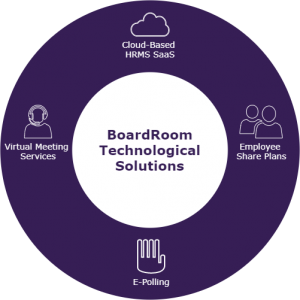
      Virtual Meeting Services: This service ensured that clients can continue to host shareholder meetings with little to no disruption should there be an inability to host meetings physically.

      Electronic-polling: To reduce human error and time spent on manually counting votes, we partnered with Lumi to offer electronic-polling services for optimising meetings.

      Employee Share Plans: Customisation was the keyword when considering how best to assist our clients in their employee equity plans, leading to our customisable Employee Share Plan services with an intuitive branded employee portal.

      Cloud-Based HRMS SaaS: Ignite was launched with the goal of empowering clients through enhanced security and customisation options to curate the ideal payroll solution for their workforce.

      We have come a long way to build BoardRoom as a brand that is ahead of the game and I intend to continue to uphold our value of driving innovation through technology. Through our steadfast dedication to predicting and preparation for the future, the fruits of our labour can be observed in the results produced and through satisfaction of our clients.


      Insights by Group Chief Technology Officer, Kelvin Wong

      Related Business Insights

      Personal Data Protection Part 1 – What it Means to be ‘Accountable’

      Personal Data Protection - What is Accountability?

      Personal Data Protection Part 1 – What it Means to be ‘Accountable’

      Accountability in Personal Data Protection

      2019 was the year that the Personal Data Protection Commission (PDPC) shifted its focus from a compliance-based approach to that of accountability.  The reason for this shift is stated in the opening paragraphs from the PDPC website:

      Organisations today operate in an increasingly connected and competitive digital economy where individuals’ online and real-world activities generate a burgeoning amount of data. In such a competitive and evolving business environment, a “checkbox” compliance approach towards the handling of personal data is increasingly impractical and insufficient to keep pace with the developments in data processing activities. Organisations that focus on compliance through such an approach may find themselves disadvantaged and unable to use data for innovation. 

      Over time, with greater awareness of the risks surrounding the unauthorised collection, use and disclosure of personal data, consumers are increasingly cautious about how organisations are using and managing personal data, and place greater value on trust and accountability. It is thus important for organisations to shift from a compliance-based approach to an accountability-based approach in managing personal data.

      But what is the meaning of “accountability”? This two-part blog by our partner, Straits Interactive, provides a clear explanation of the term and what companies need to do.

      What it Means to be ‘Accountable’

      The word ‘reasonable’ and other words based on it – for example, ‘reasonably’ – appears in the Personal Data Protection Act (PDPA) … a lot of times. The word ‘accountable’ and other words based on it, such as accountability, appears in the PDPA exactly zero times.

      But we are hearing a lot about accountability in connection with data protection. Before we get to ‘Why?’ let’s look at a couple of examples of compliance versus accountability.

      Compliance versus accountability

      Traditionally, businesses are required to comply with a wide range of regulatory requirements. If they were caught not complying, they had to fix the shortfall; it they were not caught, then they did nothing much at all. So, compliance is a rather passive approach.

      Accountability is different. The Cambridge Dictionary says that ‘someone who is accountable is completely responsible for what they do and must be able to give a satisfactory reason for it.’ Accountability is an active approach.


      Vignette #1

      It’s dinner time on Friday evening. Mum and Dad are chatting about their plans for the weekend.

      ‘Oh, tomorrow morning I have an appointment with the doctor so I can’t pick the kids up from their enrichment class that finishes at 11 o’clock. Can you do it?’

      ‘Yes, of course,’ says the responsible spouse.

      ‘Are you sure? You won’t forget, will you? You won’t be late? They’re too young to be wandering around by themselves,’ says the worried spouse.

      ‘Stop worrying. It will be OK.’

      If the responsible spouse forgets – say they get distracted by reading the newspaper and, suddenly realise that it’s past 11 o’clock already – what happens? Yup, probably the worried spouse will scold them a lot and tell them not to let it happen again. That’s a compliance approach. The worried spouse isn’t going to think that ‘I got distracted and forgot the time’ is a satisfactory reason for the kids being left to wander around alone after their class.

      But by contrast, if the responsible spouse takes an accountability approach, they will take proactive steps to make sure that they don’t forget. For example, they might set a timer on their phone that will alert them when it’s 10:30 and they have to get ready to be there before the kids come out of their class at 11 o’clock.


      Vignette #2

      It’s performance appraisal time at work. A manager and a staff are having a discussion about why the staff didn’t meet their sales targets. (Spoiler alert: this might not end well.)

      Staff says, ‘It’s not my fault. A few things didn’t turn out as I expected, and these things were outside of my control.’

      Manager says, ‘So, what did you do to plan for unexpected events and other things outside of your control?’

      Staff says, ‘Er, well … I …’

      I’m rather sure that if the staff’s answer is that they didn’t do anything, but just sat back and waited to see what would happen, they aren’t going to get a good performance appraisal.

      But if the staff is able to demonstrate that they did various things to achieve their sales goals even in the face of unexpected events and other things outside of their control, they could get a good performance appraisal despite not meeting their sales goals.

      We can see from both examples, that accountability is about being able to demonstrate actively taking steps with the aim of making sure that something happens. Compliance is about passively waiting to see how things turn out.

      Data protection and accountability

      We are hearing a lot about accountability in connection with personal data protection simply because regulators do not think that a passive compliance approach is good enough.

      The concept of accountability in the context of data protection is a few years old now, but we’ve been hearing a lot more about it in the last two or three years. Part of the reason is that the General Data Protection Regulation (GDPR) specifically requires accountability.

      Mr Yeong Zee Kin, Deputy Commissioner of the Personal Data Protection Commission (PDPC) of Singapore gave the Keynote Speech at the 39th International Conference of Data Protection and Privacy Commissioners in September 2017 in Hong Kong. Amongst other things, Mr Yeong spoke about ‘the pivot from compliance to accountability’. He said that:

      ‘Accountability is an organisation’s promise to customers that their personal data will be handled respectfully and carefully. It is about being able to demonstrate to customers that measures which pre-emptively identify and address risks to personal data have been put in place.’

      This is especially applicable for companies like BoardRoom that deal with a significant amount of sensitive personal data. With a service offering focused on outsourcing critical back-end business operations like Share Registry, Payroll & Accounting, BoardRoom handles more personal data than most organisations. As a result, they cannot rely on processes tailored towards compliance, BoardRoom is expected to prove accountability around personal data protection. For any businesses interested in outsourcing, a critical evaluation factor when selecting their partner should be ensuring the organisation can demonstrate accountability surrounding personal data protection.

      In practice, organisations have to do the equivalent of the responsible spouse setting a phone alert to make sure that that picking up the kids on time isn’t forgotten, or the equivalent of a staff planning to make sure sales goals are achieved in spite of unexpected events. And being able to demonstrate that they have done these things.

      Author

      Lyn Boxall (CIPM, CIPP/A, CIPP/E, FIP, GRCP, GRCA) is an Advocate and Solicitor in Singapore and co-author of the book “99 Privacy Breaches to Beware of: Practical Data Protection Tips from Real-Life Experiences”.

      She practices law in Singapore as Lyn Boxall LLC and is a consultant with Straits Interactive Pte Ltd, a leading specialist in personal data protection and Do-Not-Call (DNC) solutions.

      Looking For an Accountable Outsourcing Provider In Singapore?

      With the wealth of our experience as outsourcing experts in areas such as payroll outsourcing, corporate secretarial and accounting services, BoardRoom handles a significant amount of our clients personal data. We do not take this responsibility lightly and have been working closely with Straits Interactive for years to ensure that BoardRoom is able to prove accountability.

      A key piece towards demonstrating Accountability is the appointment of a Data Protection Officer (DPO) within your organisation. It’s now easier than ever to appoint a DPO with the Personal Data Protection Commission (PDPC) collaborating with the Accounting and Corporate Regulatory Authority (ACRA) to allow for organisations registered with ACRA to register and/or update their DPO’s name and contact information via ACRA’s BizFile+ using their CorpPass accounts. Head to our article on this to find out more.

      Interested in learning more about our accountability measures regarding personal data? Get in touch with one of our outsourcing experts who will explore in detail how BoardRoom ensures more than just compliance when it comes to personal data protection.

      Related Business Insights

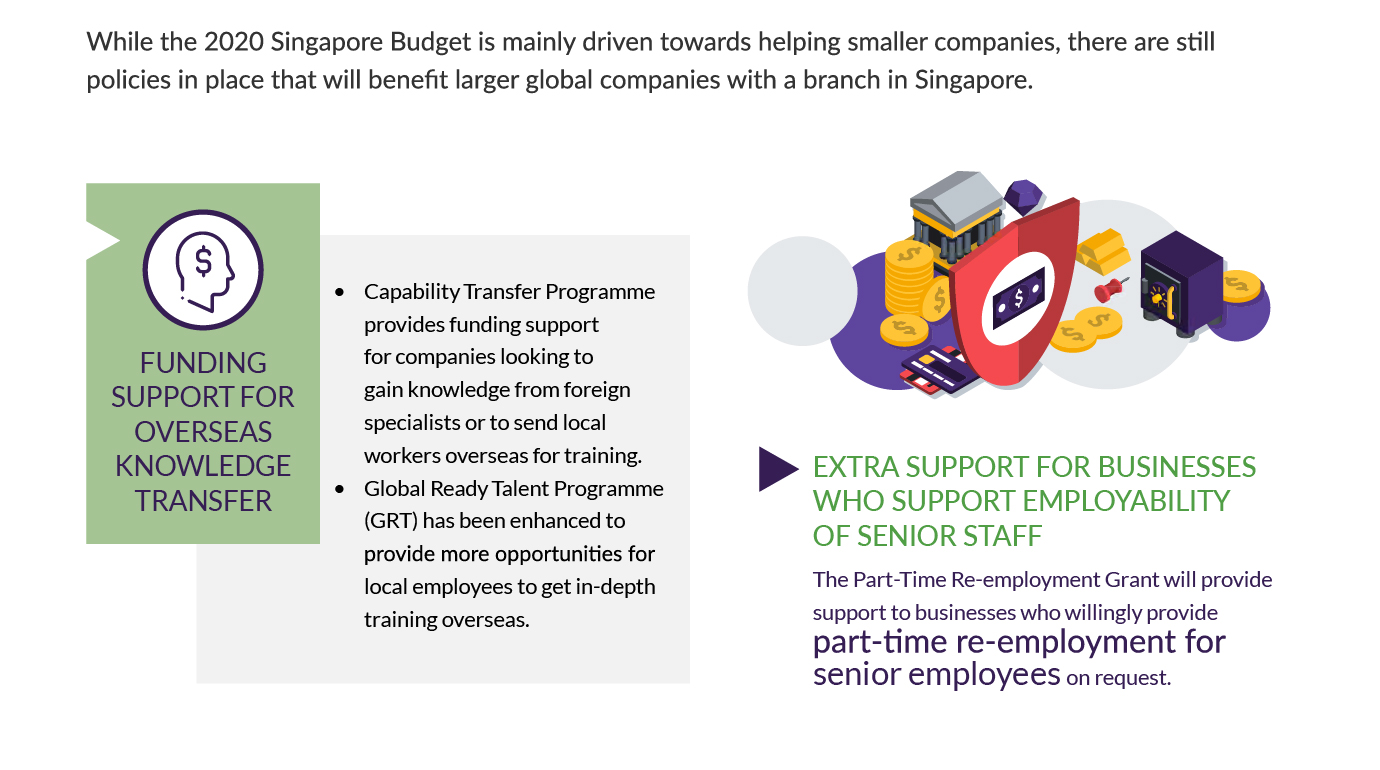
      Singapore Budget 2020 – What different enterprises need to take note of for easier long-term planning

      Singapore Budget 2020 – What different enterprises need to take note of for easier long-term planning

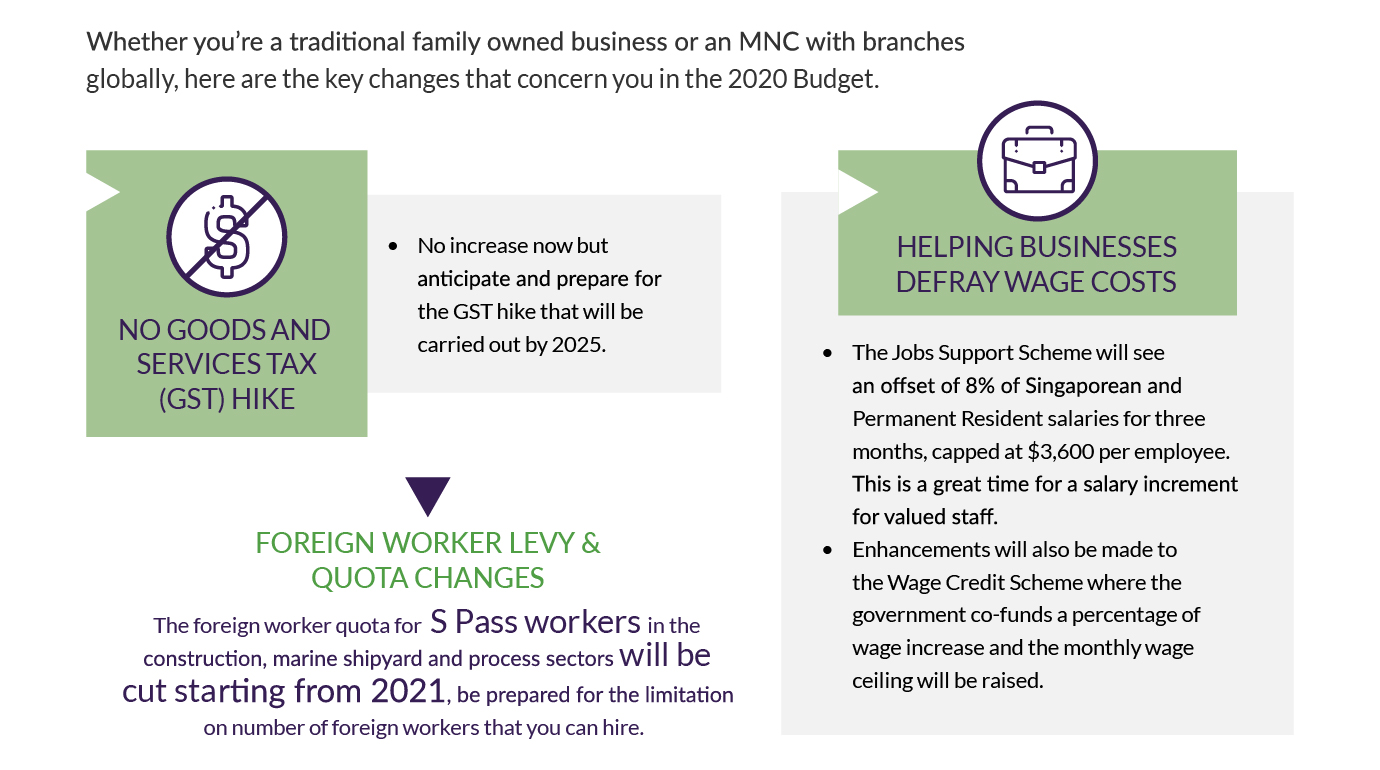
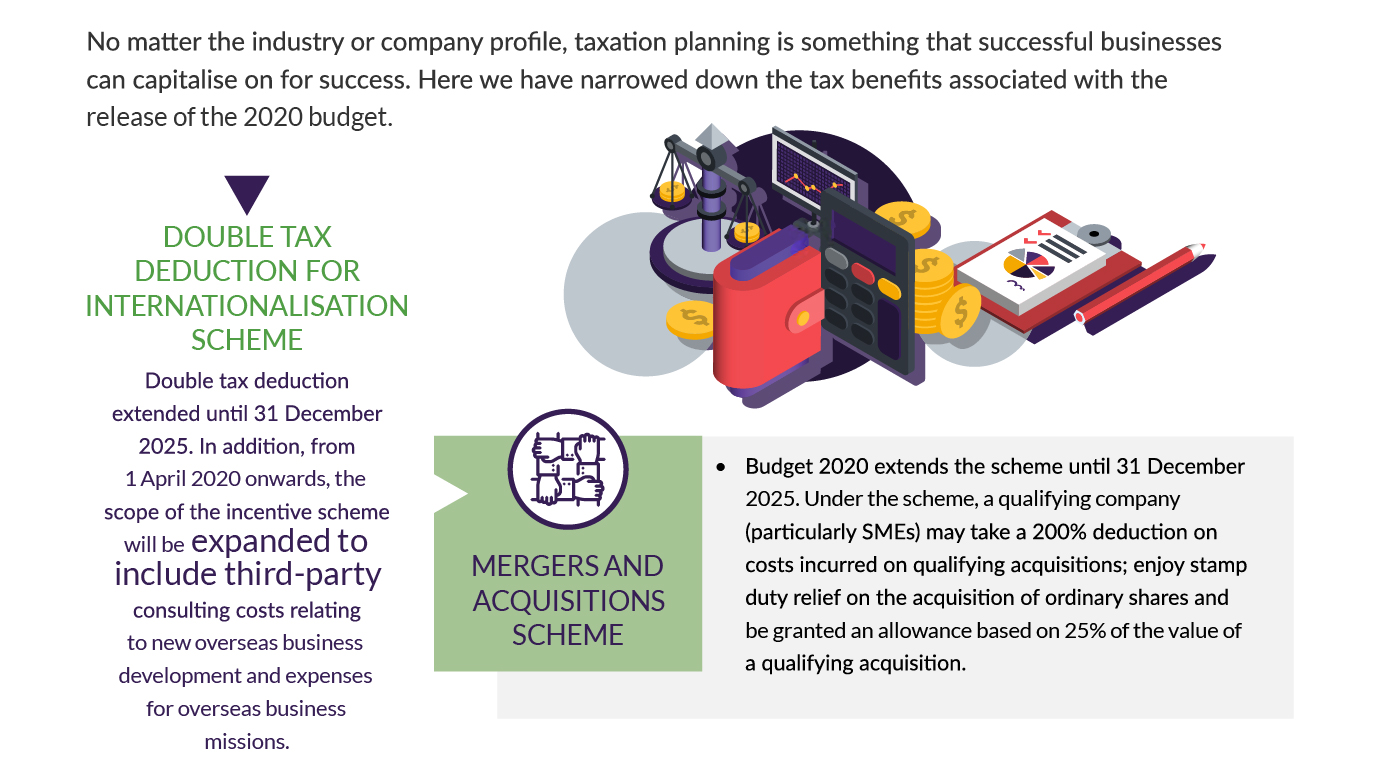
      On 18th February 2020, Finance Minister Mr Heng Swee Keat delivered the Singapore 2020 Budget Statement.

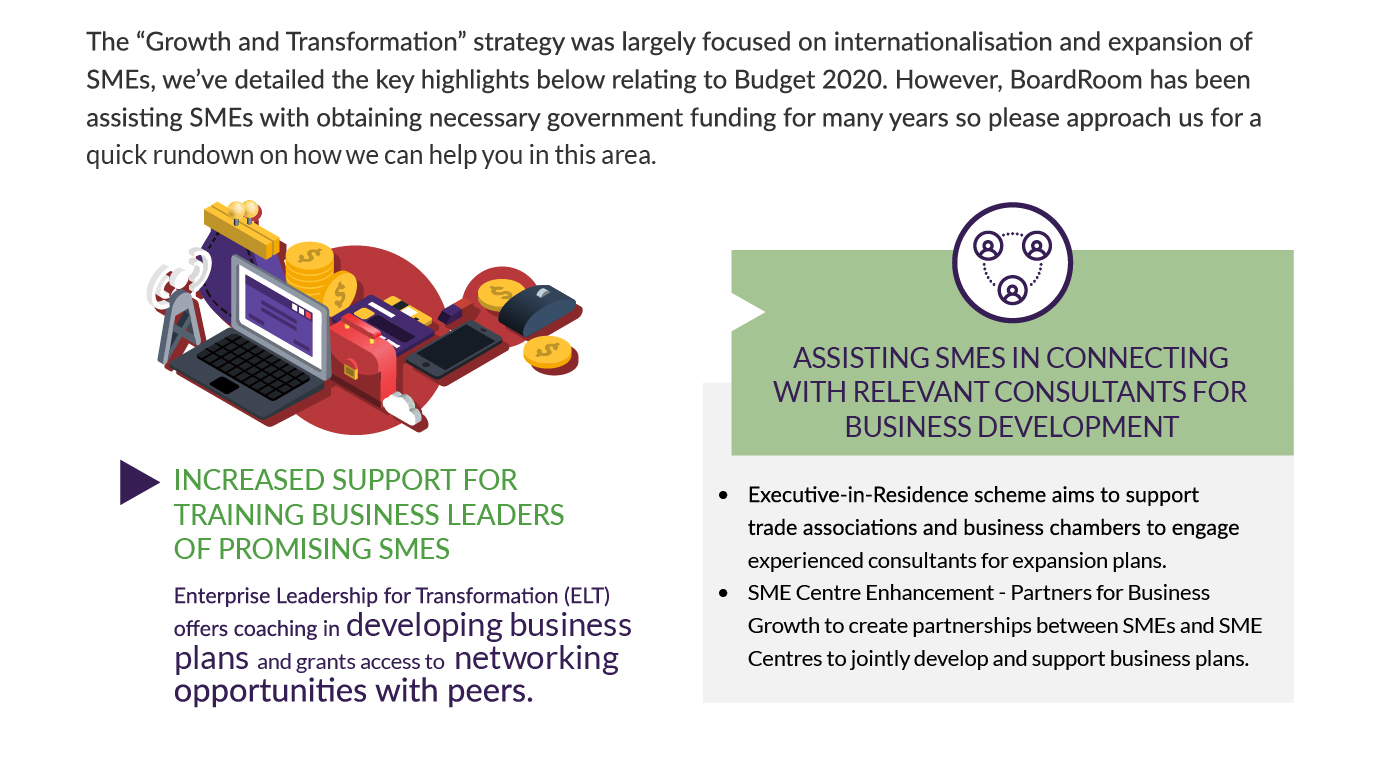
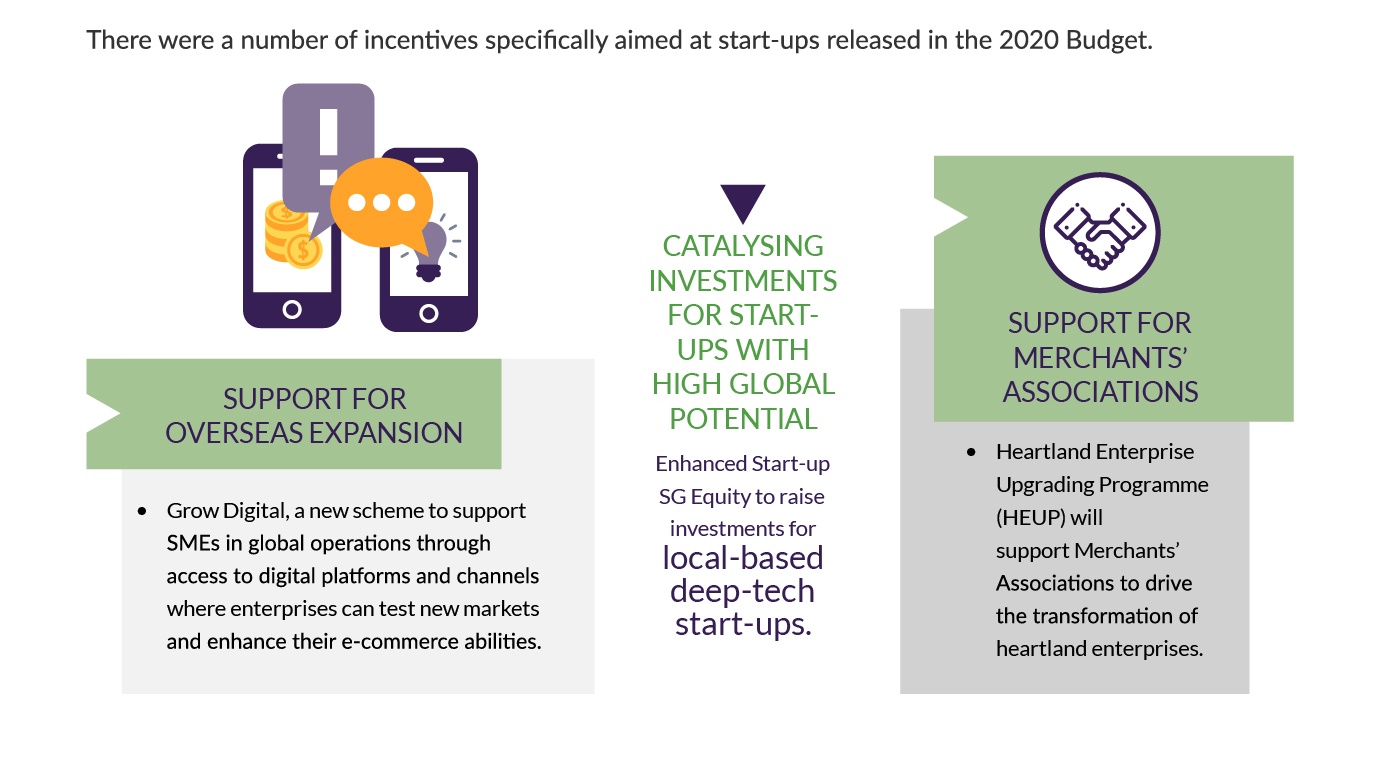
      One of the main goals of the strategic financial plan is to grow the economy and transform Singapore’s enterprises through various packages and increased support for businesses, especially those significantly impacted by the COVID-19 virus outbreak. Overall, the Singapore Budget for 2020 aims at long term economic growth through extensive support of SMEs & start-ups. Detailed in this article are some of the changes to take note of and key government initiatives that impact SMEs to listed companies.

      If you have any questions relating to any of the information contained in this 16-page infographic report, please contact our tax advisors via email or call us at +65 6230 9788.

      What All Enterprises Should Know

      Tax Benefits All Enterprises Should Be Aware Of

      What MNCs & Listed Companies Should Know

      What SMEs Should Know

      Useful information for Start-ups

      Download the Full 16-page Singapore Budget 2020 Infographic Report

      Related Business Insights