Hybrid AGM Meetings: A Strategic Guide for Board Members

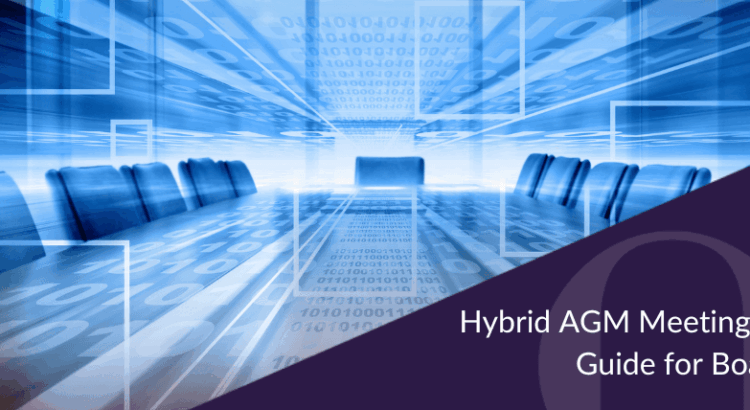
Digitally enhanced boardroom with binary code overlays, symbolising technology integration in a modern AGM meeting.

Hybrid AGM Meetings: A Strategic Guide for Board Members

Once limited to physical venues, AGM meetings have evolved alongside advancements in governance and technology. The shift began during the COVID-19 pandemic and has since been reinforced by regulatory updates from Accounting and Corporate Regulatory Authority (ACRA) and the Singapore Exchange (SGX), which now provide greater flexibility in how meetings are conducted.

Today, hybrid AGMs, combining in-person and virtual participation, are becoming increasingly common, promoting accessibility, transparency, and broader shareholder engagement.

Nonetheless, physical AGMs continue to hold significance, especially for shareholders who prefer direct, in-person interaction. Charlyne Pak, Manager, Share Registry Services, BoardRoom Singapore, notes that hybrid formats support broader engagement without the loss of human touch. This guide provides advice for board members navigating hybrid AGM meetings to ensure compliance and shareholder accessibility.

What is a Hybrid AGM Meeting?

An AGM meeting (Annual General Meeting) is a vital event where shareholders review company performance, vote on key matters and engage with the board. Among the various types of shareholders’ meetings, AGMs are legally required and central to corporate transparency.

A hybrid AGM integrates in-person and virtual participation, allowing shareholders to attend, vote and ask questions from any location. This format supports greater inclusivity and flexibility, especially for overseas shareholders, individuals with accessibility needs, or shareholders with scheduling conflicts.

“Hybrid AGM allows more shareholders to participate meaningfully, regardless of their location,” says Charlyne. “It promotes inclusivity without compromising governance”.

Key features of a hybrid digital meeting include secure online voting, live Q&A, and access to documents and presentations. Proxy appointments can be made via physical forms and/or electronically, with systems in place to verify identity and ensure voting integrity.

While digital engagement is rising, physical AGMs remain important, as many shareholders still value in-person interaction. The hybrid digital meeting format offers the best of both worlds, making it a strategic choice for boards aiming to balance accessibility, compliance and shareholder trust built on transparency and inclusive participation.

Navigating Compliance and Regulatory Considerations

Navigating Compliance and Regulatory Considerations

As hybrid AGM meetings become more prevalent, it is crucial to ensure that meeting formats adhere strictly to regulatory requirements. The legal framework for AGM meetings is set out in the Companies Act for private limited and non-listed public companies and Listing Rules for listed entities. These rules provide clear mandates for maintaining corporate transparency and safeguarding shareholder rights, regardless of whether a meeting is conducted in person or in a hybrid format.

Singapore’s Regulatory Landscape for AGM Meetings

Companies are required to provide shareholders with clear and timely AGM notices, detailing the meeting date, time, agenda, venue, and procedures for both physical and virtual participation. Instructions must also cover real-time electronic voting, how to access meeting documents, and how to submit questions in advance or during the meeting. These notices must be distributed within statutory timelines, made easily accessible, often via company websites or digital platforms.

For listed companies, the SGX Listing Rules and Practice Note 7.5 provide further guidance, emphasising fairness, transparency, and inclusivity. Shareholders should be given at least seven days after the meeting notice is published to submit written questions, and issuers are encouraged to respond promptly, ideally before proxy forms are lodged. Crucially, hybrid meeting arrangements must not disadvantage virtual attendees: they must be able to vote, raise questions, and receive real-time responses with the same ease as those attending in person.

“Advance submission of questions is especially helpful for those who are less comfortable speaking in public,” says Charlyne. “It enhances board accessibility and builds trust by ensuring everyone has a chance to be heard”.

Best Practices for Governance-Compliant Hybrid Digital Meetings

To support full compliance and uphold good governance, BoardRoom recommends the following best practices:

Clear, Inclusive Meeting Notices
  • Clearly outline how to access the physical venue and online platform.
  • Provide detailed instructions for proxy submission, voting procedures and accessing documents.
Equal Participation and Voting Rights
  • Ensure virtual and physical attendees can vote with equal rights and convenience.
  • Use secure, auditable e-voting systems that support real-time voting.
Robust Technology Infrastructure
  • Deploy secure platforms with proven uptime and data protection standards.
  • Include redundancy systems and real-time tech support to manage unexpected disruptions.
Real-Time Shareholder Engagement
  • Allow shareholders to submit questions live.
  • Provide equal Q&A time for virtual participants, and moderate responses transparently.
Transparent Proxy Management
  • Provide options for both physical and electronic proxy submissions.
  • Communicate proxy deadlines clearly and accurately.

“Companies must ensure that hybrid arrangements do not create inequalities in participation,” explains Charlyne. “Shareholders attending virtually must enjoy the same rights as those present physically. This includes voting, asking questions and receiving real-time responses from the board”.

Shareholder Engagement and Hybrid AGMs

Shareholder engagement is a cornerstone of effective corporate governance. Hybrid AGMs have become a tool to enhance this engagement. When done well, hybrid AGMs remove traditional access barriers and foster a more inclusive, transparent dialogue with shareholders.

Enhancing Participation with Digital Tools

Hybrid AGMs use integrated technologies that ensure both virtual and physical attendees can participate equally. These include:

  • Secure electronic voting systems that are auditable, easy to use and enable real-time vote casting.
  • Live Q&A sessions that allow shareholders to pose questions during the meeting, whether present physically or virtually.
  • Live polling features that capture sentiment in real time accurately, reinforcing the value of shareholder input during key decisions.

Managing Concerns: Security, Privacy and Integrity

With the growing use of digital tools, boards must also address concerns around data security, fraud prevention and system reliability. A hybrid AGM introduces new potential risks, such as unauthorised access, data leaks or system failures. If not managed properly, these risks can undermine trust and regulatory compliance.

Digital security best practices include:

  • user authentication protocols to verify shareholder and proxyholder identities before granting access to meeting platforms;
  • end-to-end encryption of voting and participation data;
  • redundant systems and real-time tech support, ensuring continuity even in the event of a technical issue.

“We work closely with our technology partners to deliver fully tested, secure platforms,” says Charlyne. “Our systems are designed to support the end-to-end meeting process, from pre-meeting communication to post-meeting reports, safely and seamlessly”.

Agm Board Meeting

Risk Management and Future Proofing AGMs

Running a hybrid AGM meeting means managing two formats concurrently, increasing the complexity around system reliability, data privacy and operational continuity. It is incumbent on boards to proactively address risks tied to technology, compliance and stakeholder trust.

“Hybrid AGMs require meticulous planning,” says Charlyne. “Platform security, user authentication and contingencies must all be in place to mitigate disruptions and reinforce trust”.

Ultimately, the conversation about hybrid AGMs is not about replacing physical meetings but enhancing them. Each format serves unique needs, and by integrating both, organisations can strengthen governance, expand access, and manage risk more effectively.

BoardRoom’s digital solutions support features like e-proxies, real-time online voting and self-registration tools, all backed by secure, PDPA-compliant platforms with end-to-end encryption. Real-time tech support and rigorous dry runs ensure resilience against system failures and cyber threats. Beyond compliance, BoardRoom offers a suite of integrated services managing everything from meeting documents distribution, proxy validation, user authentication, registration, voting to provision of post-meeting reports.

Charlyne adds that conducting full-scale dry runs to test the voting systems is key, as well as ensuring stakeholders are familiar with the platform. “It’s about making sure the experience is seamless and inclusive for every participant, regardless of format”, adds Charlyne.

Partnering with BoardRoom for Hybrid AGMs

Hybrid AGMs represent more than a technological upgrade – they can be a strategic step forward. As companies adapt to evolving expectations, hybrid AGMs allow boards to remain accessible, transparent and inclusive, without sacrificing the integrity of the AGM meeting.

BoardRoom’s hybrid AGM solutions are built to scale, fully compliant with Singapore’s legal framework and supported by trusted technology partners.

“At BoardRoom, we offer more than just technology — we deliver complete meeting experiences,” says Charlyne. “We support our clients through the entire lifecycle, from regulatory compliance, proxy handling to real-time voting and post-meeting reporting, ensuring every aspect of the meeting is seamless and secure”.

Get in touch today to learn how we can help you deliver a compliant, engaging and future-ready AGM.

Contact BoardRoom for more information:

Charlyne Pak

Manager, Share Registry Services, BoardRoom Singapore

E: [email protected]

T: +65 6536 5355

Related Business Insights

Case Study: How BoardRoom Malaysia Enabled a Successful ACE Market Transfer Listing for Lim Seong Hai Capital Berhad listed on LEAP Market

Case Study How BoardRoom Malaysia Enabled a Successful ACE Market Transfer Listing for Lim Seong Hai Capital Berhad listed on LEAP Market

Case Study: How BoardRoom Malaysia Enabled a Successful ACE Market Transfer Listing for Lim Seong Hai Capital Berhad listed on LEAP Market

Client Profile

Our client, Lim Seong Hai Capital Berhad, is a full-fledged construction company offering a comprehensive range of construction and engineering works, construction related services and solutions, property development and facilities management. Underpinned by their BEST Collaboration Framework and through strategic acquisitions, our client has strengthened its position and presence in the construction sector. It was listed on the LEAP Market in July 2021. To accelerate its growth and to prepare the Group to embark on large scale nation building projects, our client sought to transfer their listing from the LEAP Market to the ACE Market of Bursa Malaysia. This move aimed to enhance their brand reputation, access a broader investor base, access to equity and debt market and to unlock greater shareholder value.

Background on LEAP Market

Bursa Malaysia’s LEAP Market is limited to Sophisticated Investors who are deemed to have better knowledge on the potential risk and return of companies listed in this market. Sophisticated Investors include high-net-worth individuals with personal assets exceeding RM3 million or an annual income above RM300,000 (or RM400,000 jointly with a spouse), as well as corporations, partnerships, and trust companies with net assets or managed assets exceeding RM10 million.

To maximise the company’s growth potential and market liquidity of its stock, our client would need to expand its investor base beyond the LEAP Market into the ACE Market.

Challenges and Solutions

To facilitate the listing transfer, our client needed to meet the following requirements:

Regulatory Compliance & IPO Listing Requirements
Transitioning from the LEAP Market to the ACE Market required strict adherence to Bursa Malaysia’s Listing Requirements and the Companies Act 2016. Ensuring corporate governance compliance and regulatory approvals was critical to a seamless listing process. Although our client’s management team possessed the capabilities and expertise to manage the transition with the support from their Investment Bank, a successful IPO demands meticulous documentation and deep regulatory insight.

BoardRoom played a central role in this process by supporting the client’s compliance with the Listing Requirements and Companies Act 2016. This included facilitating orderly board approval processes, conducting meetings, drafting minutes, and ensuring statutory compliance with Bursa Malaysia and the Companies Commission of Malaysia (CCM). In addition, BoardRoom provided ongoing updates on relevant regulatory changes and best practices, along with a full suite of corporate secretarial solutions.

Corporate Governance & ESG Alignment for IPO Listing
Our client had integrated many of the best practices from the Malaysian Code on Corporate Governance into their business operations and company culture. For example, half of the Board comprise of independent directors, and they also maintain 40% female board representation.

Post-IPO, ongoing enhancements remain important. As their company secretary, BoardRoom continues to review and strengthen their corporate governance practices during the preparation of Annual Reports and Corporate Governance Reports.

Investor Engagement and Shareholder Transition for IPO
Shifting from a market limited to Sophisticated Investors to a broader pool of investors on the ACE Market required careful stakeholder coordination. Our client needed to ensure smooth shareholder transitions and maintain investor confidence throughout the process.

BoardRoom has been their share registrar since their listing on the LEAP Market. All their meetings, corporate exercises and share registry matters were handled by the BoardRoom team. With deep familiarity of the company’s shareholder base and end-to-end involvement in their corporate lifecycle, BoardRoom was in the best position to manage their listing transfer to the ACE Market seamlessly. Our Share Registry team facilitated the suspension of existing shares on the LEAP Market and managed the issuance of new share certificates to represent both the existing shareholders’ holdings and the new IPO shares listed on the ACE Market. Throughout the process, we ensured clear, timely and transparent communication with shareholders, providing guidance on the listing transfer, responding to enquiries, and issuing formal notices and updates to maintain investor confidence and minimise disruptions.

BoardRoom Malaysia’s Strategic Support for IPO

With both corporate secretarial and share registry services under one roof, BoardRoom Malaysia delivers an integrated solution for companies preparing to go public. This seamless coordination between the teams helped our client manage critical IPO milestones efficiently, minimising friction, ensuring compliance, and streamlining communication across stakeholders.

Key areas of support included:

Regulatory Compliance & Corporate Secretarial Support

  • Ensured compliance with Bursa Malaysia’s requirements.
  • Oversaw board approvals, governance frameworks, and regulatory filings.
  • Provided guidance on corporate governance best practices.

Seamless Shareholder Transition & IPO Subscription Management

  • Managed suspension and transfer of shares in coordination with Bursa Malaysia.
  • Facilitated IPO subscription via BoardRoom’s proprietary BoardRoom Smart Investors Portal (BSIP).
  • Enabled investor applications through multiple channels to maximise investor reach and participation:
    • Public investors: They subscribed via Electronic Share Application (ESA) and Internet Share Application (ISA) platforms.
    • Pink Form & MITI category investors: They used BSIP for seamless application processing.
    • Issuing House services: BoardRoom handled the basis of allotment and balloting process to determine on the successful application by using our Issuing House system, prior to the allotment of IPO shares.

Key Outcomes

BoardRoom’s integrated approach delivered measurable results across regulatory compliance, shareholder transition, and investor engagement, culminating in a successful and seamless IPO journey for our client:

Strong Market Response
The IPO public share category received an 11.88x oversubscription rate.

Efficient Shareholder Transition
The transfer listing process, initiated in June 2023, was on track and completed by March 2025.

Seamless Regulatory Compliance
BoardRoom ensured our client’s full adherence to Bursa Malaysia’s regulations, avoiding delays and compliance risks.

Enhanced Investor Confidence
The smooth IPO subscription management strengthened trust among investors, and in turn, their brand reputation.

About BoardRoom

850
Dedicated Team Members

BoardRoom offers leading business solutions, including corporate and advisory services, in the Asia-Pacific region. We provide accurate, prompt and reliable corporate solutions for every element of your business.

Over 50
Years of Proven Track Record

BoardRoom takes your business further, faster, at all stages, with an integrated suite of corporate solutions driven by innovation and technology.

7,300+
Clients Globally

Our team of experienced professionals has the comprehensive local knowledge and commercial experience you need to grow your business in the Asia-Pacific region.

Driving IPO Success with BoardRoom

By leveraging BoardRoom Malaysia’s expertise in IPO, corporate secretarial and share registry services, our client, Lim Seong Hai Capital Berhad successfully navigated the complexities of transferring its listing to the ACE Market. With enhanced visibility and access to a wider investor base, they are well-positioned for future growth in the construction sector.

Find out what other companies we’ve supported through their IPO journey.

Looking to IPO or transfer your listing? As an integrated corporate services provider, BoardRoom offer end-to-end solutions to streamline your listing and post-listing compliance.

Contact us to find out how we can support your listing journey.

Related Case Studies

Case Study How BoardRoom Malaysia Enabled a Successful ACE Market Transfer Listing for Lim Seong Hai Capital Berhad listed on LEAP Market

Case Study: How BoardRoom Malaysia Enabled a Successful ACE Market Transfer Listing for Lim Seong Hai Capital Berhad listed on LEAP Market

How BoardRoom Malaysia facilitated a successful IPO transfer listing from the LEAP Market to the ACE Market, ensuring regulatory compliance ... Read More
Case Study –Streamlining and Standardising Accounting Processes Across Multiple Entities for a Leading Infrastructure Development Firm

Case Study –Streamlining and Standardising Accounting Processes Across Multiple Entities for a Leading Infrastructure Development Firm

Learn how to streamline processes, improve financial reporting and group-level consolidation for better strategic decisions across Multiple Entities ... Read More
Case Study Navigating Payroll Complexities in the Retail Sector

Case Study: Navigating Payroll Complexities in the Retail Sector

Explore how a leading Hong Kong retailer reduced payroll processing time and improved payroll accuracy ... Read More
Loading...

A Guide to the IPO Landscape and Incentives in Singapore

A Guide to the IPO Landscape and Incentives in Singapore

A Guide to the IPO Landscape and Incentives in Singapore

Singapore’s capital markets offer a strategic gateway to growth for companies seeking to broaden their investor base and raise additional capital. Regulated by the Monetary Authority of Singapore (MAS) and the Singapore Exchange (SGX), the IPO (Initial Public Offering) framework provides a balanced approach that promotes accessibility while safeguarding market integrity in the country. In this guide, we will walk you through the current IPO landscape in Singapore, explore key incentives and introduce the concept of chain listings.

The IPO Landscape in Singapore

Singapore offers a well-structured, transparent environment for companies seeking to go public, anchored by its dual-board system on the SGX:

  • Mainboard: Designed for well-established companies, the Mainboard has higher entry thresholds, including minimum profitability, market capitalisation, and operating track record requirements.
  • Catalist: Tailored for high-growth enterprises, Catalist does not impose fixed quantitative criteria. Instead, companies must engage a sponsor – an authorised corporate finance advisor – who assesses the company’s suitability for listing.

The MAS provides regulatory oversight and enforces a disclosure-based regime. Rather than pre-approving every business decision, MAS focuses on ensuring that companies disclose sufficient, accurate, and timely information to empower investor decision-making. This approach fosters both transparency and strong investor protection, making Singapore one of Asia’s most reputable markets for IPOs.

IPO Landscape in Singapore

Current Trends in the IPO Market

Following a subdued period of IPO activity in recent years, Singapore’s IPO market is showing signs of recovery. Analysts forecast 4 to 10 new listings in 2025, with sectors like real estate investment trusts (REITs), healthcare, and new economy companies expected to lead the rebound.

While challenges such as lower market liquidity and compressed valuations persist, sentiment in the IPO market is improving. Recent reforms introduced by MAS aim to enhance market competitiveness by lowering listing costs and improving post-listing valuations. These regulatory improvements, alongside the expected stabilisation of global interest rates, are likely to boost investor appetite — especially for income-generating sectors like REITs.

2025 could mark the beginning of a new chapter for Singapore’s capital markets.

Key Incentives for IPOs in Singapore

Several incentives have been introduced to encourage more companies to list for an IPO and support the growth of Singapore’s equities market.

Tax Rebates for IPO Listings

Companies going public can now benefit from significant cost savings:

  • 20% corporate tax rebate for new primary listings.
  • 10% corporate tax rebate for secondary listings.

Additionally, newly listed companies can qualify for a Corporate Income Tax (CIT) rebate of up to SGD 6 million per year for the first five years after listing, depending on their market capitalisation.

These incentives substantially reduce the financial burden associated with listing, making Singapore an even more attractive venue for IPOs.

Concessionary Tax Rates for Fund Managers

Fund managers who conduct IPOs in Singapore can benefit from an enhanced concessionary tax rate of 5% under the Financial Sector Incentive-Fund Managers (FSI-FM) scheme. This incentive not only encourages greater participation from the asset management industry, but also reinforces Singapore’s standing as a regional hub for financial services.

Tax Exemptions for Fund Investments

Under specific conditions, income derived from qualifying funds that invest significantly in Singapore-listed equities is exempt from corporate tax. This promotes greater fund investment activity in locally listed companies and helps deepen market liquidity.

Support for REITs

Recognising the importance of REITs to the IPO market, the government has extended key incentives until 2030:

  • Tax transparency treatment for REITs.
  • GST remission benefits.
  • Enhancements to qualifying foreign-sourced income and operational expense deductions.

These measures ensure that Singapore remains a favoured destination for REIT listings globally.

The Equity Market Development Programme (EMDP)

The SGD 5 billion Equity Market Development Programme (EMDP) aims to drive investments in Singapore-listed stocks beyond the traditional index constituents. By boosting liquidity and broadening investor participation, this initiative further enhances the appeal of listing on the SGX.

Enhanced Corporate Structure

Exploring Chain Listings in Singapore

Another trend gaining traction is chain listings, where a parent company already listed on the SGX seeks to list one of its subsidiaries separately. Although not specifically defined under SGX rules, chain listings are recognised as a viable strategic move for companies seeking to unlock subsidiary value or raise targeted growth capital.

Benefits of Chain Listings

Some benefits of chain listings are:

Increased Corporate Visibility

A subsidiary listing on the SGX alongside its parent company enhances visibility and credibility, both for the parent and the subsidiary. This strengthens the group’s profile in global markets.

Simplified Capital Raising

For subsidiaries, listing on the SGX allows for easier access to capital and greater flexibility in financing. It also enables them to raise funds more efficiently from local and international investors.

Enhanced Corporate Structure

Chain listings streamline the corporate structure, providing a clear link between the parent and subsidiary, which can enhance strategic alignment and operational efficiency.

In Singapore, chain listings would typically follow the standard IPO process for either the Mainboard or Catalist, depending on the size and nature of the subsidiary. Here are some key considerations:

Several important factors come into play when considering a chain listing in Singapore:

  • Regulatory Framework: The subsidiary must comply fully with SGX listing rules, including financial criteria and public float requirements.
  • Financial Performance: Meeting profitability or revenue thresholds is crucial, depending on whether the subsidiary aims for the Mainboard or Catalist.
  • Market Capitalisation and Public Float: To satisfy SGX listing requirements, sufficient market capitalisation and public shareholding must be achieved.
  • Disclosure Requirements: A full prospectus must be prepared in line with the Securities and Futures Act (SFA), offering transparency into financials, operations, and risks.
  • Sponsorship: Catalist listings require an appointed sponsor to guide and oversee the process.

How Boardroom Supports Your IPO Journey

The IPO process can be complex, especially when you are balancing growth ambitions with regulatory obligations. BoardRoom is here to support you every step of the way.

As your expert share registry service provider in Singapore, BoardRoom offers comprehensive IPO advisory and support services, including scrutineering services, application support, liaison with regulators, legal advisors and sponsors, and ongoing corporate governance and corporate secretarial support post listing. Our end-to-end support and expertise helps you leverage available incentives and navigate the complexities of the IPO process with confidence.

Talk to BoardRoom today to learn how we can support your successful IPO journey – from the first steps of preparation to achieving your listing goals.

Related Business Insights

Chequeless Singapore by 2025: What Businesses Need to Know

Chequeless Singapore by 2025: What Businesses Need to Know

The way businesses handle corporate payments is set for a major shift. With Singapore phasing out cheque usage by the end of 2025, organisations that still rely on this method, particularly for shareholder dividends, will need to adopt digital alternatives to stay compliant and efficient.

For businesses still issuing physical cheques to shareholders holding physical scrips, this signals a timely opportunity to modernise internal processes and move away from outdated manual systems. Now is the time to explore what transitioning toward a chequeless Singapore will require from your organisation.

Transitioning to a Chequeless Payment System in Singapore

Singapore’s plan to eliminate corporate cheques by 2025 marks a significant step towards greater digitalisation across sectors. Spearheaded by the Monetary Authority of Singapore (MAS) and supported by initiatives such as PayNow and FAST, this shift aims to reduce inefficiencies, reduce costs and enhance security in financial transactions.

The move will impact a wide range of payment processes, including dividend distributions for companies with physical scrip holders, an area often overlooked in modern digital transformation initiatives. These companies typically continue issuing cheques to shareholders, many of whom may reside outside of Singapore or have limited access to local banking services.

Transitioning to a Chequeless Payment System in Singapore

Who does this impact the most?

While scripless shareholders already receive electronic dividend payments via the Central Depository (CDP), physical scrip holders are often excluded in the digital transitions. These shareholders typically receive their dividends by cheque, making them a key stakeholder group in Singapore’s move towards a chequeless future. This countdown to the 2025 deadline creates an urgency for companies still managing manual, cheque-based processes.

Challenges of Cheque-Based Dividend Payments

Despite being a long-standing method, cheque issuance introduces complexities and risks that hinder progress. As Singapore accelerates its efforts to eliminate cheque usage, businesses must assess how such legacy practices may be holding them back from more secure, digital-first operations.

Manual workload and inefficiencies
Issuing dividends by cheque requires multiple administrative touchpoints, from coordinating print runs to managing mail distribution and verifying clearances. These inefficiencies inflate operational costs, and increases the administrative workload of the finance teams.
Inconvenience for global shareholders
Shareholders residing abroad often have to deal with significant delays, additional clearing charges imposed by banks and even failed cheque deliveries. This impacts their experience and also adds pressure on companies to troubleshoot payment issues. Digital payout platforms eliminate these inconveniences by offering real-time confirmation and removing geographic barriers, advantages that cheques simply cannot provide.
Compliance and security concerns
Cheque-based systems offer limited transparency and make it harder to track payment activity in real time. Transitioning to secure electronic payments reduces the likelihood of data exposure while supporting better governance standards.
How Businesses Can Prepare for a Chequeless Future

How Businesses Can Prepare for a Chequeless Future

More than replacing one payment method with another, adapting to a chequeless Singapore is about rethinking processes to drive long-term efficiency. Businesses should take practical steps now to avoid disruptions and ensure continuity for both their internal teams and shareholders.

Identify shareholders still paid by cheque

Review your shareholder records in detail to identify individuals who still hold physical scrips and receive cheque payments. This clarity will help you estimate the lead times and resources needed for a smooth transition and outreach.

Educate and communicate with stakeholders

To avoid confusion, shareholders should be informed early and clearly about the upcoming changes. Consider using multiple touchpoints — emails, mailers, or even webinars — to guide them through the new e-payment process.

Review and upgrade internal systems

Assess whether your finance and registry tools can support secure, automated payments. If not, explore solutions with integrated compliance checks and multi-currency capabilities.

Partner with an experienced share registry provider

Engaging a trusted partner like BoardRoom gives your company access to industry expertise and operational support. Our end-to-end share registry services streamline dividend distribution, ensure data accuracy, and enhance stakeholder communications.

Choose a platform designed for scrip holders

Not all digital payment platforms are built for the complexities of physical scrip holdings. BoardRoom’s Smart Investor Portal (BSIP) is tailored to support scrip-based payouts, helping your company adapt to a chequeless Singapore with minimal disruption.

How BSIP Supports the Shift to Chequeless Payments

BSIP is designed to help companies simplify shareholder payments without overhauling existing systems. For businesses with physical scrip holders, our portal offers a secure, purpose-built platform to help you confidently navigate the transition to a chequeless Singapore while improving the dividend payment experience for both issuers and shareholders.

Seamless global e-payments
Shareholders receive their payments anytime, anywhere, through fast, automated transfers. Payouts are converted into local currencies and credited directly to banks across the globe, eliminating clearance delays and currency-related issues that come with cheques.
24/7 Shareholder Portal access
BSIP offers round-the-clock access to payment records, contact information updates and personalised notifications. This readily-accessible portal enhances transparency and empowers shareholders to manage their information easily.
Faster reconciliation, lower admin burden
Automated tracking and validation allow finance teams to reconcile payments more quickly and accurately. This reduces manual effort, improves reporting accuracy, and frees up the finance teams to focus on other strategic activities.
Built-in security and compliance
With Two-Factor Authentication (2FA) and enterprise-grade encryption, BSIP safeguards sensitive shareholder data while meeting stringent compliance expectations. Companies benefit from consistent, secure processes across all digital transactions.

Getting Ready for a Chequeless Singapore

Singapore’s move to phase out cheques paves the way for smarter, more secure business operations. For companies that still handle physical scrip holders and rely on manual cheque distribution, now is the time to act, not only to comply with upcoming changes but also to strengthen internal efficiency and improve shareholder satisfaction.

By preparing early, businesses can avoid operational bottlenecks, reduce administrative risks, and ensure a smooth transition to fully digital dividend distribution. A proactive approach today will pay off in time saved and trust earned.

BoardRoom is here to support you through every step of this journey. With decades of experience and a trusted track record serving over 80% of large-cap companies listed on the Singapore Exchange (SGX), our BSIP platform is purpose-built to help your business thrive in a chequeless Singapore. If you’re ready to modernise your dividend payments, get in touch with us today.

Related Business Insights

2024 Singapore AGM Insights Report

2024 Singapore AGM Insights Report

2024 Singapore AGM Insights Report

Unlock Exclusive Insights into Singapore’s Annual General Meetings (AGMs)

The 2024 AGM season marks a shift back to face-to-face engagement, with companies actively reconnecting with shareholders in person. Hybrid meeting formats are also gaining traction, providing flexibility for both in-person and virtual attendance, while digital tools continue to enhance shareholder participation. Regulatory bodies like Singapore Exchange Regulation (SGX RegCo) remain focused on making AGMs more accessible and engaging.

Our in-depth report, based on data from 179 AGM proceedings during the peak April season, offers critical insights supported by statistics. Discover the latest developments in meeting formats, attendance, voting trends, and the methods companies are using to boost shareholder communication.

2024 Singapore AGM Insights Report

Key Takeaways:

  • Avoid Peak Dates: With many AGMs scheduled in the last week of April, companies can improve attendance by choosing less popular dates or adopting hybrid formats to accommodate more shareholders.
  • Consider Shareholder Demographics: When distributing meeting materials, tailor the methods to suit the preferences of different age groups – physical copies for older shareholders and electronic versions for younger, tech-savvy ones.
  • Enhance Q&A Efficiency: To keep meetings efficient, companies could address pre-submitted questions in advance, reserve additional Q&A time, and address off-topic questions post-meeting.
  • Adopt Electronic Polling: Using electronic polling, ideally with handsets, can reduce time spent on voting and avoid issues with BYOD polling like poor connectivity or low battery.
  • Plan for Increased Attendance and Questions: With growing shareholder participation, plan meeting durations that accommodate higher turnout and a greater volume of questions. Companies can also consider utilising the Question Deposition Service and addressing some of the questions prior to the meeting.
  • Inform on Refreshment Arrangements: If no refreshments are provided, companies are encouraged to notify shareholders in advance, possibly within the Notice of Meeting.

Download the full report to gain actionable insights on these trends, empowering your company to optimise your AGM practices and enhance shareholder engagement.

Related Business Insights

2023 Singapore AGM Insights Report

2023 Singapore AGM Insights Report

2023 Singapore AGM Insights Report

An in-depth report of the future of Singapore AGMs

In post-pandemic 2023 where shareholder meetings have veered from virtual AGMs to physical AGMs, find out the shifts behind these AGM trends and how hybrid meetings utilising webcasts can be a bridge to enhance efficiency and inclusivity.

As Singapore’s leading Meeting Services provider, BoardRoom has conducted 173 shareholder meetings in April 2023, and we share our key findings and takeaways on the future of meetings. In this comprehensive report, we delve deep into the current landscape of AGMs to understand the trend and shift in the various formats. Explore the reasons behind this shift and pick up practical tips in organising a successful AGM, so you can identify opportunities and risks while planning for future meetings.

Download the report to make an informed decision for your next AGM.

2023 Singapore AGM Insights Report Cover Image
Download 2023 Singapore AGM Insights Report

Related Business Insights

SG-MY-Lumi Meeting Services : Optimising Hybrid AGMs

Hybrid Meetings – Tackling the Venue Challenge Banner

SG-MY-Lumi Meeting Services : Optimising Hybrid AGMs

In our recent webinar, ‘2023 AGMs and EGMS – What Have We Learned’, more than 50% of respondents identified cost as a major concern when considering hybrid meetings. Many believe that hosting hybrid meetings costs twice as much due to the need for physical venues and remote setup. While rising costs and logistical expenses pose challenges, they also create opportunities for creative solutions.

One strategy is downsizing venues, prioritising quality over quantity. The key is to strike a balance between limited physical attendance and remote participation.

Here are our tips on how you can maximise cost efficiency and engagement in your hybrid meetings.

Connect with our Meeting Services team today to discuss on how you can promote a dynamic and inclusive meeting environment that serves all stakeholders.

Contact BoardRoom for more information:

Charlyne Pak

Share Registry Services Manager, BoardRoom Singapore

E: [email protected]

T: +65 6536 5355

Related Business Insights

Tips for running hybrid AGM webcasts in Singapore

Tips for running hybrid AGM webcasts in Singapore Banner

Tips for running hybrid AGM webcasts in Singapore

The arrival of COVID-19 accelerated the adoption of digital technologies for the seamless execution of general meetings in Singapore. Supported by legislative changes, the pandemic ushered in an era where virtual platforms became the backbone of these meetings, revolutionising the way businesses and organisations convened and interacted.

The COVID-19 (Temporary Measures) (Alternative Arrangements for Meetings) Orders allowing businesses to hold virtual general meetings in Singapore ceased from 1 July 2023. However, in recognition of the many benefits afforded by virtual and hybrid meeting technologies, Singapore introduced a new Bill on 9 May 2023, allowing businesses to continue holding their general meetings electronically if desired. However, for public companies listed on Singapore Exchange (SGX), general meetings would have to be held either in physical or hybrid format.

With legislation supporting businesses to provide stakeholders the option to attend meetings virtually or in person, it appears that hybrid meetings are set to be an ongoing Annual General Meetings (AGMs) trend.

Charlyne Pak, Manager Share Registry Services for BoardRoom Singapore, explores the reasons behind the surge in hybrid AGMs and offers expert tips to help you run hybrid meetings successfully.

The benefits of hybrid AGMs

Hybrid AGMs are becoming commonplace in Singapore and around the world due to the raft of benefits they can provide to businesses and shareholders alike.

The benefits of hybrid AGMs

Three key advantages of hybrid AGMs are:

Greater engagement
Positive ESG factors
Cost and time savings

Greater engagement

By allowing attendees to join from anywhere in the world, hybrid AGMs, or any type of general meeting, can help to improve accessibility and stakeholder engagement.

“One of the main reasons companies adopt hybrid meetings is because they want more interaction with shareholders who want to attend in person while at the same time giving shareholders the flexibility to choose which mode they want to participate in,” Charlyne explains. “Hybrid formats allow for a wider reach of stakeholders, as attendance is not limited by location.”

The convenience of hybrid meetings also means that shareholders are less likely to skip them due to conflicting schedules.

“Shareholders who hold stakes in multiple companies can now attend multiple AGMs in one day, as there’s little to no travelling time in between,” says Charlyne.

Positive ESG factors

By leveraging technology to bridge distances, businesses can enhance their response to environmental, social and governance (ESG) issues in several ways.

“Hybrid AGMs can help reduce the environmental impact of meetings because attendees who would normally travel can instead participate remotely,” she says.

A reduced need for travel leads to less carbon emissions, thus promoting sustainable business practices.

Hybrid AGMs can also help foster good corporate governance, with higher attendance levels across stakeholder groups helping to promote transparency, accountability and relationship building – three critical components of responsible business management.

Cost and time savings

Hybrid meetings can provide businesses with valuable time and cost savings, which can then be redirected into progressing primary business goals. A reduced number of in-person attendees can help businesses to save on costs by downsizing their catering and event space.

By leveraging digital technology, hybrid meetings are also likely to proceed more efficiently than fully physical meetings; since COVID-19, average meeting times in Singapore have seen a remarkable 62.5% drop.

How to prepare for a hybrid AGM in Singapore

Businesses can help ensure a successful hybrid AGM by taking the following steps in the preparation stage.

Start preparing early
Commence preparations at least three months in advance to block out attendees’ calendars, allow time for testing and avoid costly last-minute changes or rescheduling.
Review local regulations and standards
Singapore regulations are continually updated to enhance the AGM experience for all businesses and their shareholders. To ensure compliance, familiarise yourself with the latest regulatory requirements and service standards. A trusted corporate secretarial services provider and share registrar can ensure your company remains compliant.
Arrange for site visit and equipment testing
For a seamless experience, select a venue that easily accommodates in-person and virtual attendees, and invest in high-quality audiovisual equipment. Test all equipment beforehand to minimise the risk of technical glitches.
Test internet connectivity
Test your network to ensure it is stable and secure and prepare a backup network in case of connectivity issues on the day.
Work with a reliable meeting solutions provider
BoardRoom, partnering with Lumi Global, provides a meetings solution that is secure, user-friendly, and also able to meet the regulatory requirements for live voting and Q&A (a vital diversity and inclusion factor). Familiarise yourself with the platform and arrange on-the-day technical support to ensure quick, professional handling of any unexpected issues.
Hold a dress rehearsal early
Unexpected technical issues can cost money and time and harm your reputation. Dress rehearsals allow time for your board, chairman and relevant stakeholders to familiarise themselves with meeting procedures and provide the opportunity to iron out potential issues and create a contingency plan.
Provide clear instructions to attendees
Provide clear meeting instructions to all attendees, detailing the process for joining the hybrid meeting, accessing relevant documents and participating in Q&As and polls.

As a matter of best practice, a reputable meeting services provider will adopt these steps during the preparation stages of an AGM, seamlessly reducing the burden on companies. By leveraging their expertise, they will ensure a streamlined hassle-free experience.

Tips for conducting a successful hybrid AGM

When it comes to ensuring the smooth and effective running of a hybrid AGM webcast in Singapore, Charlyne has the following three straightforward tips for business leaders:

  • designate a moderator;
  • request attendees turn phones off or on silent; and
  • foster engagement with both virtual and in-person attendees.

“Firstly, as there are two different channels for receiving questions – in person and via the real-time messaging platform – always designate a moderator from your company,” she says.

A sharp moderator can help guide the flow of discussion and manage questions raised during Q&A, encouraging valuable engagement across stakeholder groups, and also helps the Chairman to control the meeting time.

“Secondly, request all attendees to turn off their mobile devices or switch them to silent mode,” Charlyne continues. This will minimise distractions and interruptions during the meeting and help attendees stay focused on matters at hand.

“Thirdly, it is important to foster a sense of fairness among in-person and virtual attendees,” Charlyne says. “This involves making sure all attendees are equally engaged throughout the meeting instead of defaulting to those present in the room.”

Business leaders can foster engagement and satisfaction among all shareholders by:

  • dedicating equal airtime to in-person and remote attendees during the live Q&A; and
  • providing remote attendees with tokens of equal value to any perks provided to physical attendees (such as refreshments or vouchers).

What to do after your hybrid AGM

The period following an AGM presents a golden opportunity to evaluate the event’s success and make improvements to your conduct of hybrid general meetings.

After your AGM, it is time to:

  • Analyse attendee feedback – Gathering feedback from all attendees will assist in refining future meetings. Consider including a QR code at the end of the final presentation directing shareholders to a feedback form.
  • Evaluate the success of the hybrid format – Assess the effectiveness of the hybrid format in achieving your desired outcomes (such as increased engagement and inclusivity) and compare attendance rates with other formats to gauge overall success.
  • Start planning for future AGMs – Use the insights gained from the evaluation process to refine and enhance future AGMs. Opportunities for improvement may lie in adopting new technologies, enhancing your engagement strategies and addressing any shortcomings identified.
What to do after your hybrid AGM

Engage a reputable meeting services provider for the best results

From 1 October 2022, in order for shareholders to make decisions on an informed basis, all SGX-listed companies must include live polling and Q&A at their general meetings. A professional meeting services provider can support with these practices and all aspects of the meeting process from start to finish to ensure a compliant and successful general meeting.

Top general meeting service providers in Singapore tend to have the following:

  • strong knowledge of local regulations and standards and the ability to help you achieve strict compliance;
  • a wealth of experience in running General Meetings in different formats and implementing contingency plans for dealing with unfortunate situations like power outages; and
  • an end-to-end service that includes a post-meeting debrief to explore what was done well and what can be done better next time.
Tailored support for hybrid meetings in Singapore

Tailored support for hybrid meetings in Singapore

Hybrid meetings have emerged as the future of general meetings, with many Singaporean businesses embracing digital technologies to deliver inclusive and productive meeting experiences for their shareholders.

BoardRoom has a long history of helping businesses throughout the Asia-Pacific region make the most of their General Meetings. Today, we proudly conduct general meetings for almost 47% of companies on the Singapore Stock Exchange and have a strong reputation for delivering exceptional outcomes for clients.

As part of our comprehensive share registry service, we assist with all aspects of running physical, virtual and hybrid meetings in Singapore. Our experienced share registry team specialises in providing a professional, tailored meeting service that aligns with your unique business needs.

Contact us today to find out how we can assist with running your next AGM. To learn more about the future of annual general meetings in Singapore, download our AGM trend infographic so you will be equipped to make informed decisions for your next AGM

Contact BoardRoom for more information:

Charlyne Pak

Share Registry Services Manager, BoardRoom Singapore

E: [email protected]

T: +65 6536 5355

Related Business Insights

The benefits of hybrid meetings and virtual AGMs in Singapore

The benefits of hybrid meetings and virtual AGMs in Singapore

The benefits of hybrid meetings and virtual AGMs in Singapore

The global shift towards greater digitalisation has had significant impacts on the Singapore corporate sphere, with the COVID-19 pandemic serving to accelerate a sector-wide uptake of digital communication technologies to support business continuity.

While the COVID-19 (Temporary Measures) (Alternative Arrangements for Meetings) Orders allowing businesses to hold meetings electronically ended on 1 July 2023, a new Bill has already come into effect, giving businesses (non-SGX listed) the option to continue conducting their meetings virtually if they wish – even if physical meetings are stipulated in their company constitution.

Now that businesses have experienced the advantages of electronic meetings first-hand, the shift towards virtual and hybrid formats is expected to be an enduring Annual General Meetings (AGMs) trend.

Ahead, Charlyne Pak, Manager Share Registry Services for BoardRoom Singapore, explains how both small and large businesses can benefit from holding hybrid and virtual meetings in Singapore. We will also explore key considerations for ensuring your meetings foster positive communication and meaningful connection between shareholders.

Key advantages of hybrid meetings and virtual AGMs in Singapore

A major advantage of virtual meetings is that they can be logistically easier to arrange than on-site meetings. This is particularly the case when the board of directors are located overseas.

“On-site meetings may require transport, venue preparation, accommodation and catering, while virtual meetings allow participants to dial in from wherever they’re located,” Charlyne explains. “This makes running the meeting easier logistically and saves on costs.”

Benefits AGM meeting

Additional advantages of hybrid and virtual meetings include:

Increased flexibility and convenience
Participants can choose whether to attend physically or remotely, depending on their location and preferred mode of communication.
Enhanced diversity and inclusion (D&I)
Shareholders who are based overseas or have mobility or health issues (e.g. immunodeficiency) can easily attend remotely, which supports inclusivity and engagement levels.
Improved communication
Real-time messaging functions allow for better communication during Q&A sessions, as it removes the stress or pressure that can come with asking questions in-person.
Time savings
Digital capabilities such as pre-meeting registrations, integrated virtual voting and live Q&A help to streamline meeting management.
Corporate sustainability
The need for travel, paper and catering is minimised or removed, resulting in less wastage and a smaller carbon footprint.
Bolstered reputation
Leveraging new technologies symbolises your company’s eagerness to stay at the forefront of evolving business practices.

The benefits of virtual AGMs for smaller businesses

The time and cost savings of electronic AGMs make them a popular option for many smaller businesses, who usually have limited financial resources and therefore must prioritise the effective management of budgets.

“Virtual meetings can be more cost-effective as you don’t have travelling, accommodation or venue booking expenses,” says Charlyne.

The real-time engagement tools offered by digital technology have cut meeting times dramatically, with the average meeting now lasting 30 minutes, down from 80 minutes in 2019.

Digital technology can also assist small businesses in making new connections and fostering strong partnerships due to the improved networking and collaboration opportunities it can provide.

The benefits of virtual AGMs for smaller businesses

The benefits of hybrid AGMs for larger businesses

As COVID-19 restrictions eased, many businesses – particularly larger organisations with numerous shareholders – learned how to run a hybrid AGM so that overseas shareholders could still enjoy the convenience of attending remotely.

According to Charlyne, the flexibility of hybrid meetings can help boost participation numbers, leading to stronger engagement and communication among members of your organisation.

“With hybrid meetings, you can connect with a larger group of shareholders with no geographical limitations,” Charlyne says. “However, less tech-savvy shareholders can still choose to attend in person.”

Hybrid meetings also allow companies to streamline in-meeting communication through the use of digital tools.

“Participants can raise questions virtually via real-time messaging, where the moderator can categorise similar/repeated questions for the Chairman to reply. This helps in reducing the duration of the meeting,” Charlyne says.

What to consider when running a hybrid or virtual AGM in Singapore

Business leaders can maximise the benefits of hybrid and virtual meetings (AGM, EGM) by paying attention to the following factors.

Meeting format
Both virtual and hybrid settings for your AGM offer distinct unique benefits. Make your selection based on your business requirements and shareholder demographics.
Communication management
To comply with regulatory standards and support good communication, work with reliable meeting service providers. BoardRoom, partnering with Lumi Global, provides meeting solutions with features such as real-time voting, messaging, polling, and document repository which provides shareholders easy access to all documents. Make sure to designate a moderator to manage incoming virtual messages and questions.
Practise and preparation
Prior to the meeting, it is important to perform a dry run (dress rehearsal) and craft detailed chairman scripts. This will help ensure the seamless execution of your meeting and instil confidence amongst attendees, leading to enhanced meeting outcomes.
Good governance
A reputable meeting services provider can ensure good corporate governance by facilitating transparent and inclusive communication, promoting effective decision making and support in maintaining accurate records.
Risk mitigation
To reduce the risk of disruptions, work with your meeting services provider to put contingency plans in place in the event of technical failure. By partnering with Lumi Global, the world’s leading end-to-end hybrid and virtual meeting provider, BoardRoom is able to switch to a backup server almost instantly should there be a power failure during your meeting, thus maintaining seamless continuity.
Privacy and security
Ensure internal data privacy and security protocols are followed to protect sensitive information shared before, during and after the meeting.

Make the most of your meetings with BoardRoom

Amid digital transformation in Singapore and around the world, electronic meetings have emerged as powerful tools for businesses to adapt and thrive. Well-conducted hybrid and virtual AGMs provide a valuable opportunity to engage meaningfully with shareholders and gain a strong understanding of stakeholder expectations.

At BoardRoom, we are ready to handle all your meeting management, polling and live engagement needs as part of our premium share registry services.

With a commitment to delivering quality service, we strive to ensure the effective and compliant running of your general meetings in line with local regulations and the Singapore Standard for Vendors of Virtual/Hybrid General Meeting Systems.

Our dedication to positive client outcomes means we are now Singapore’s leading meeting services provider, with 47% of public-listed companies choosing BoardRoom to conduct their general meetings.

Contact us to discuss how our comprehensive share registry and meeting services can benefit your business.

Make the most of your meetings with BoardRoom

Contact BoardRoom for more information:

Charlyne Pak

Share Registry Services Manager, BoardRoom Singapore

E: [email protected]

T: +65 6536 5355

Related Business Insights

The changing face of meetings and AGMs, from virtual to in-person. What to expect?

The changing face of meetings, from virtual to in-person. What to expect Banner

The changing face of meetings and AGMs, from virtual to in-person. What to expect?

With recent changes in regulatory requirements and shareholder activism, we have observed significant differences in how companies conduct their meetings to ensure regulatory compliance and meet shareholders’ expectations. Adoption of technology such as AGM webcasts and ESG factors have also influenced the way companies conduct their meetings.

We have compiled valuable insights reflecting the dynamic shifts that have taken place in the world of Annual General Meetings (AGMs) for the April-May meeting season in Singapore. Whether you’re an investor or a company executive, our infographic is your gateway to understanding the dynamics of virtual, physical and hybrid AGMs in Singapore.

Download our AGM Trends Infographic today so you will be equipped to make informed decisions for your next AGM.

Related Business Insights